


Power System Solar for Unstable Grids: How PCS and BESS Improve Reliability
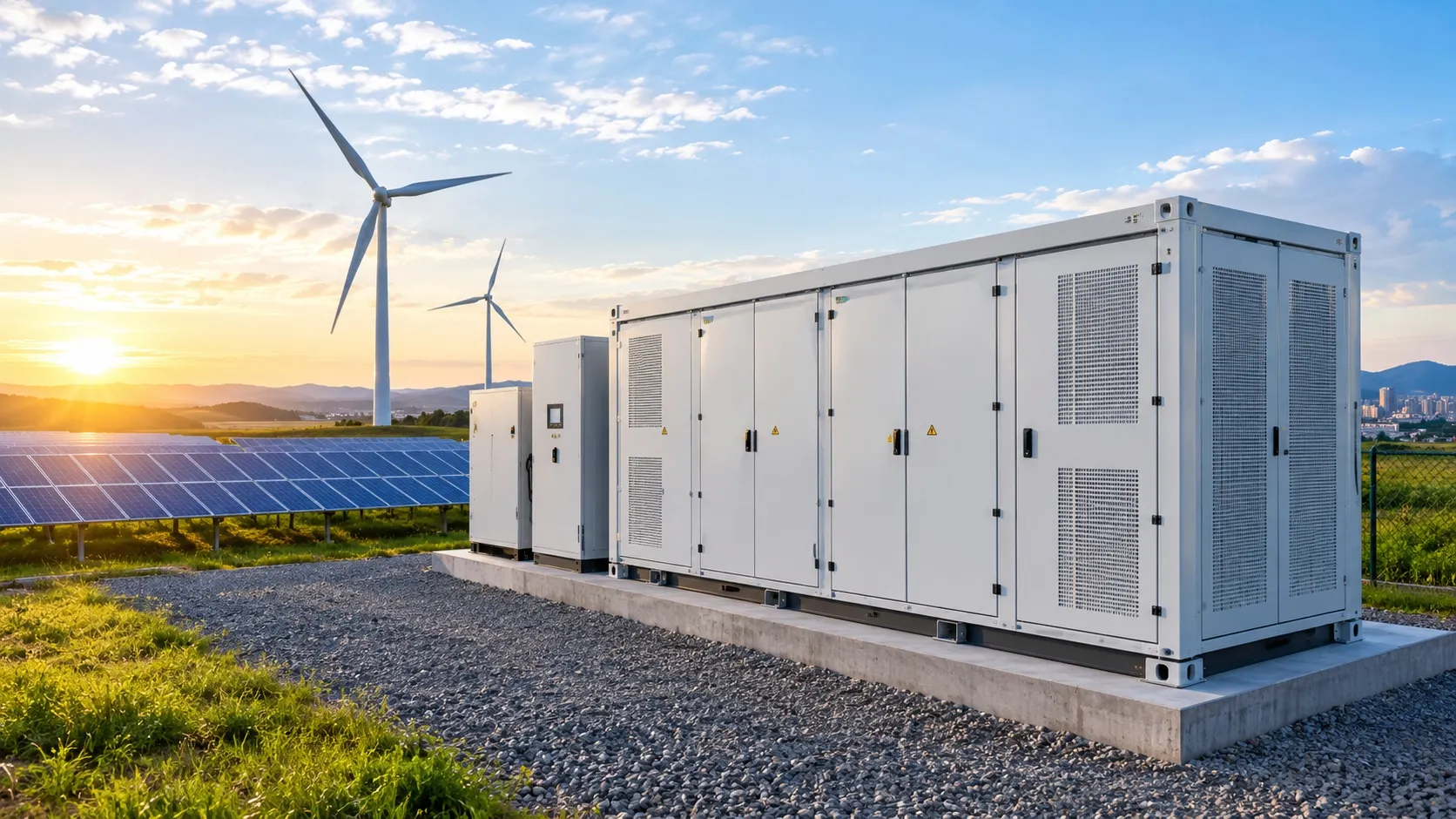
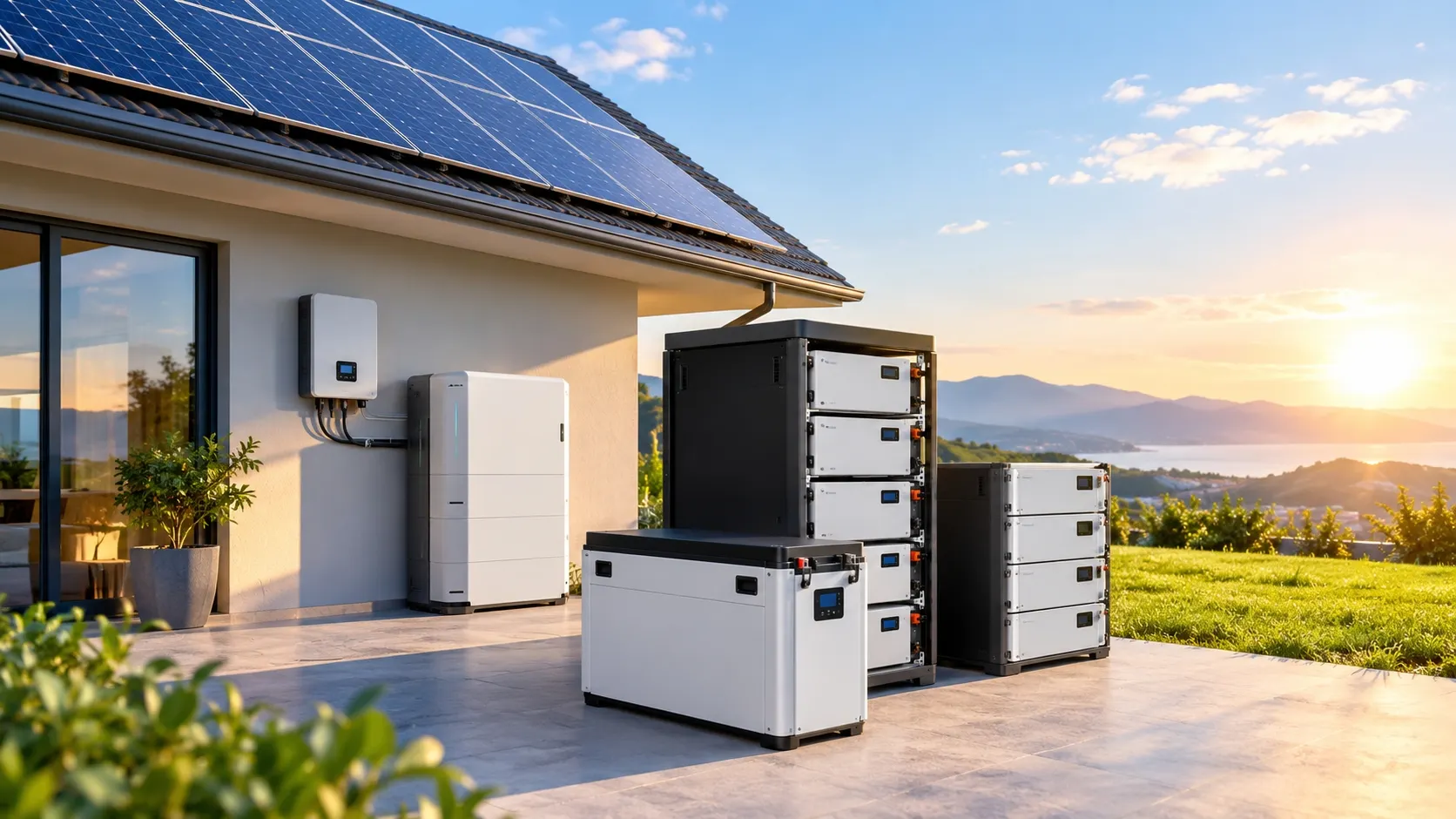

For factories, commercial facilities and infrastructure projects operating on weak or unstable grids, installing solar panels alone does not guarantee reliable electricity. Voltage dips, frequency deviation, short interruptions and long outages require a Power System Solar architecture that can generate, store, convert and actively manage energy.
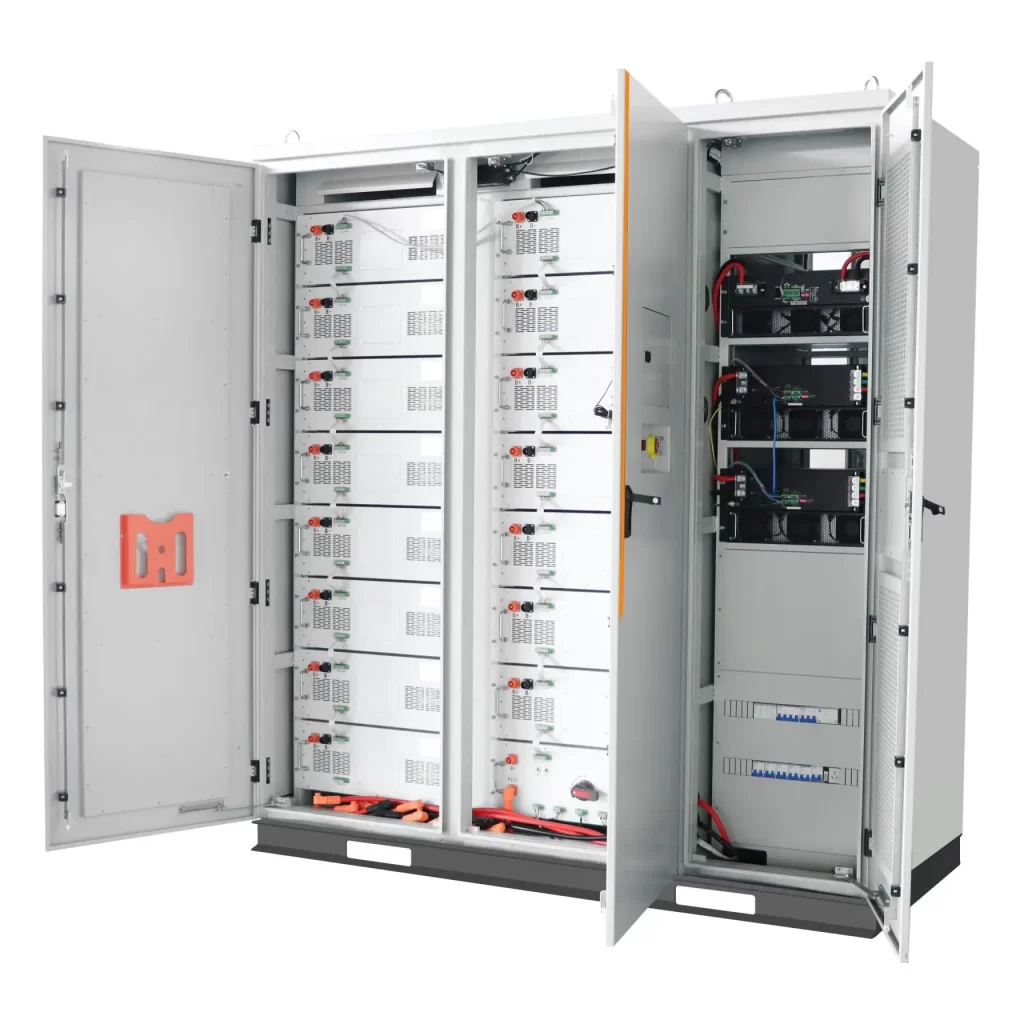
From the JSDSolar engineering perspective, a reliable Power System Solar should coordinate PV generation, PCS, battery storage, EMS, grid supply and, where necessary, a diesel generator. The key question is not simply how many kilowatt-hours of battery are installed, but whether the complete system can respond to the site's actual power disturbance.
Define the Grid Disturbance Before Sizing a Power System Solar
Different grid problems require different technical responses.
| Grid Condition | Typical Site Problem | Required System Capability |
| Voltage dip/swell | VFD, contactor or PLC trip | Voltage support and protection coordination |
| Frequency deviation | Motors or generators operate unstably | Frequency control capability |
| 10–500 ms interruption | Control equipment restarts | Fast transfer and battery response |
| Multi-hour outage | Production stops | Sufficient usable battery energy |
| Sudden load increase | PCS overload or voltage sag | Transient and overload capability |
Before designing a Power System Solar, engineers should therefore record voltage, frequency, interruption duration, harmonic distortion and load profile at the point of common coupling.
Adding more battery capacity cannot correct every power-quality problem.
PCS Power and Battery Energy Must Be Sized Separately
A common design mistake is treating kW and kWh as interchangeable.
• PCS kW denotes the power quick supply capacity.
• Battery kWh denotes the sustained power supply capacity.
• Battery C-rate puts a limitation to how fast stored energy can be charged or discharged.
• EMS logic decides how battery should charge/discharge or be in reserve status of SOC.
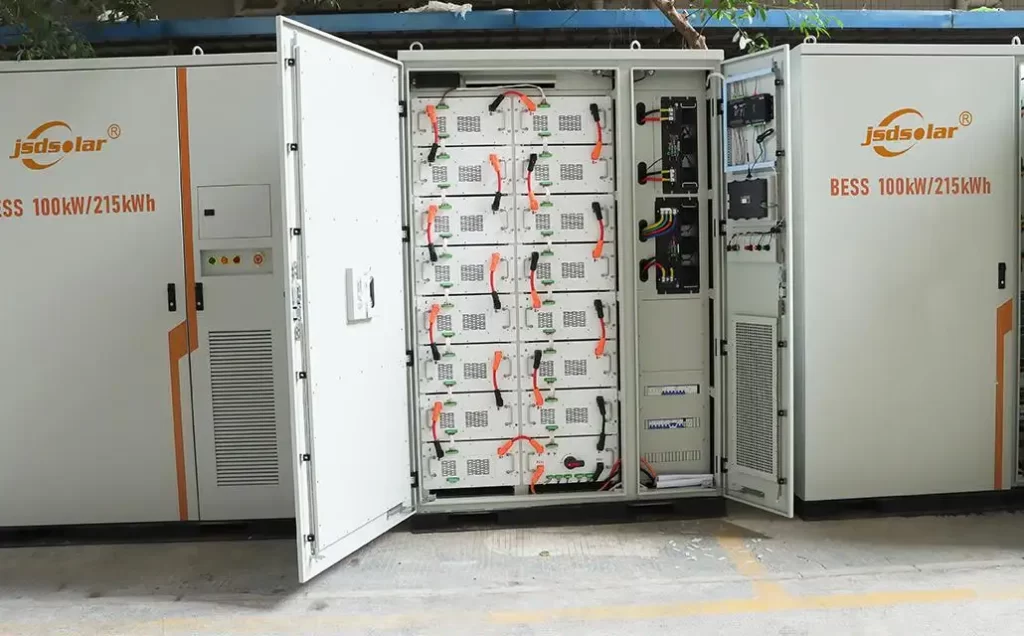
JSDSolar's Outdoor configuration has paired a 100kW PCS with 215.04kWh LFP battery storage and a battery charge/discharge rate limited to 0.5C.
The theoretical battery power capability is:
215.04kWh × 0.5C ≈ 107.5kW
This aligns closely with the 100kW PCS rating and illustrates why battery power capability should be checked together with PCS output.
Backup Time Depends on Critical Load
| Critical Load | Nameplate-Energy Runtime* |
| 30kW | 7.17 h |
| 50kW | 4.30 h |
| 75kW | 2.87 h |
| 100kW | 2.15 h |
*Theoretical values before SOC reserve, conversion losses, auxiliary consumption, temperature derating and battery aging.
A professional Power System Solar design should therefore size storage from critical-load kW × required backup hours, not from daily energy consumption alone.
Compare the Power Architecture Before Selecting Equipment
DC Coupling vs. AC Coupling
For new PV-plus-storage projects, DC coupling can transfer solar energy to the battery through DC/DC conversion without first converting it to AC. JSDSolar's 100kW/215kWh system supports DC-coupled PV input up to 120kW.
DC coupling is particularly useful when:
• PV and BESS are designed together;
• Solar self-consumption is important;
• Surplus PV should charge the battery directly;
• Centralized EMS control is preferred.
AC coupling can be more practical when adding storage to an existing solar plant because the original PV inverter can often remain in service.
Neither architecture is automatically superior.
PCS+BESS vs. Hybrid Inverter
A commercial hybrid inverter offers compact integration, while a dedicated PCS+BESS architecture is generally better suited to projects requiring:
• Higher commercial or industrial power;
• Modular battery expansion;
• Independent PCS and battery control;
• Reactive-power management;
• Multi-source EMS integration;
• Future parallel expansion.
PCS+BESS vs. Online UPS
JSDSolar offers an optional 15ms on/off switching time, but 15ms should not be interpreted as zero interruption.
PLCs, servers, contactors, CNC controllers and VFDs have different ride-through limits. Sensitive control loads may still require an online UPS downstream of the Power System Solar, while the BESS provides longer-duration energy support.
Battery Storage vs. Diesel Generator
A 215kWh battery can address short and medium outages, but it may be uneconomic to size batteries for every prolonged blackout.
For severe grid conditions, a stronger architecture can be:
PV + BESS + Grid + Diesel Generator + EMS
The battery handles fast response and short outages; the generator can support extended events after battery SOC falls to its reserve threshold.
Match the 100kW PCS to Dynamic Load, Not Average Load
A factory averaging 70kW does not automatically fit a 100kW PCS.
Compressors, pumps, chillers and motors may produce high starting currents or sudden step loads. Before selecting a Power System Solar, check:
• Maximum continuous kW;
• Motor starting method;
• Peak and surge duration;
• Inductive/reactive load;
• Nonlinear load percentage;
• Allowable voltage deviation;
• Critical and non-critical load separation.
At 400VAC three-phase output, a 100kW PCS operates at approximately:
100,000 ÷ (√3 × 400) ≈ 144A
This current directly influences cable size, breaker selection, busbar design and transformer coordination.
Reactive Power Matters on Weak Grids
Grid reliability is not only about active power.
The JSDSolar PCS specifies a power-factor adjustment range from 0.8 leading to 0.8 lagging, allowing reactive-power control as part of system operation.
However, buyers should request the actual P-Q capability curve. A nominal PF range does not prove that maximum reactive power remains available while the PCS simultaneously delivers full active power.
Installation and Commissioning Must Reproduce Real Grid Failures
A technically correct Power System Solar still requires proper installation.
Important engineering items include:
• Separating critical and general-load buses;
• Coordinating PCS, breaker and transformer protection;
• Maintaining outdoor cabinet airflow and service clearance;
• Validating RS485/CAN communication between BMS, PCS and EMS;
• Configuring minimum SOC reserve;
• Defining grid-loss and generator-start logic.
Commissioning should test more than simple startup.
Recommended tests include:
• Grid-loss and grid-recovery events;
• 25%, 50%, 75% and 100% load steps;
• Motor-start or high-inrush conditions;
• Actual transfer-time measurement;
• Battery discharge under critical load;
• Voltage, frequency and THD recording;
• BMS or EMS communication-loss response.
The objective is to prove that the Power System Solar solves the grid problem identified during site assessment.
Verify Technical Evidence Before Procurement
Before approving a PCS/BESS supplier, request model-specific documents rather than relying only on catalogue ratings.
Key items include:
• PCS efficiency and derating curves;
• Overload power and allowable duration;
• P-Q capability curve;
• Usable battery capacity and SOC window;
• Battery cycle-life test conditions;
• Transfer-time test report;
• Grid-code compliance;
• System safety certificates;
• Commissioning procedures;
• Warranty, firmware and spare-parts support.
Applicable standards may include IEC requirements for power conversion and energy storage systems, together with local grid codes and market-specific fire-safety requirements.
Build Power System Solar Around the Grid Problem
For unstable grids, battery capacity alone does not create reliability. A robust Power System Solar requires coordinated PCS power, battery energy, C-rate, transfer performance, PV capacity, protection and EMS strategy.
JSDSolar's 100kW/215.04kWh outdoor PCS BESS combines DC-coupled solar input, LFP storage, intelligent air cooling, EMS control, IP54 outdoor construction and modular system architecture for commercial and industrial projects.
For facilities evaluating weak-grid operation, backup power, peak management or PV-plus-storage integration, the next step should be to match the actual load profile and grid disturbance data with the required Power System Solar configuration.
FAQs
Q1. What Power System Solar solution does JSDSolar provide for unstable grids?
JSDSolar provides commercial and industrial solar-plus-storage solutions combining PCS, LFP battery storage, PV input and EMS control. Its 100kW/215.04kWh outdoor system is designed for applications requiring energy storage, backup power and coordinated energy management.
Q2. What is the rated PCS power of the JSDSolar 215kWh storage system?
The system uses a 100kW rated PCS. PCS power determines the continuous AC power available to loads, while battery capacity determines how long that power can be sustained.
Q3. How much battery capacity does the JSDSolar Power System Solar provide?
The referenced JSDSolar system provides 215.04kWh of LFP battery capacity. Actual usable backup energy depends on the configured SOC window, system losses, temperature and operating strategy.
Q4. How long can the JSDSolar 215kWh system support critical loads?
Theoretical runtime depends on load. At 50kW, 215.04kWh corresponds to about 4.3 hours before considering losses and reserve SOC. At 100kW, theoretical runtime is about 2.15 hours.
Q5. Does JSDSolar support DC-coupled solar and battery storage?
Yes. The referenced system uses a DC-coupled architecture with DC/DC power conversion for PV integration. This can be useful for new Power System Solar projects where PV generation and battery storage are designed together.


In This Article
- 1 Define the Grid Disturbance Before Sizing a Power System Solar
- 2 PCS Power and Battery Energy Must Be Sized Separately
- 3 Compare the Power Architecture Before Selecting Equipment
- 4 Match the 100kW PCS to Dynamic Load, Not Average Load
- 5 Reactive Power Matters on Weak Grids
- 6 Installation and Commissioning Must Reproduce Real Grid Failures
- 7 Verify Technical Evidence Before Procurement
