


Off Grid Solar Inverter with 4 MPPT Trackers: How Multi-MPPT Improves Solar Energy Harvesting



An Off Grid Solar Inverter does more than convert DC power into AC power. In systems with multiple roof orientations, partial shading, different string layouts, or oversized PV arrays, the inverter must also keep each PV section operating close to its maximum power point.
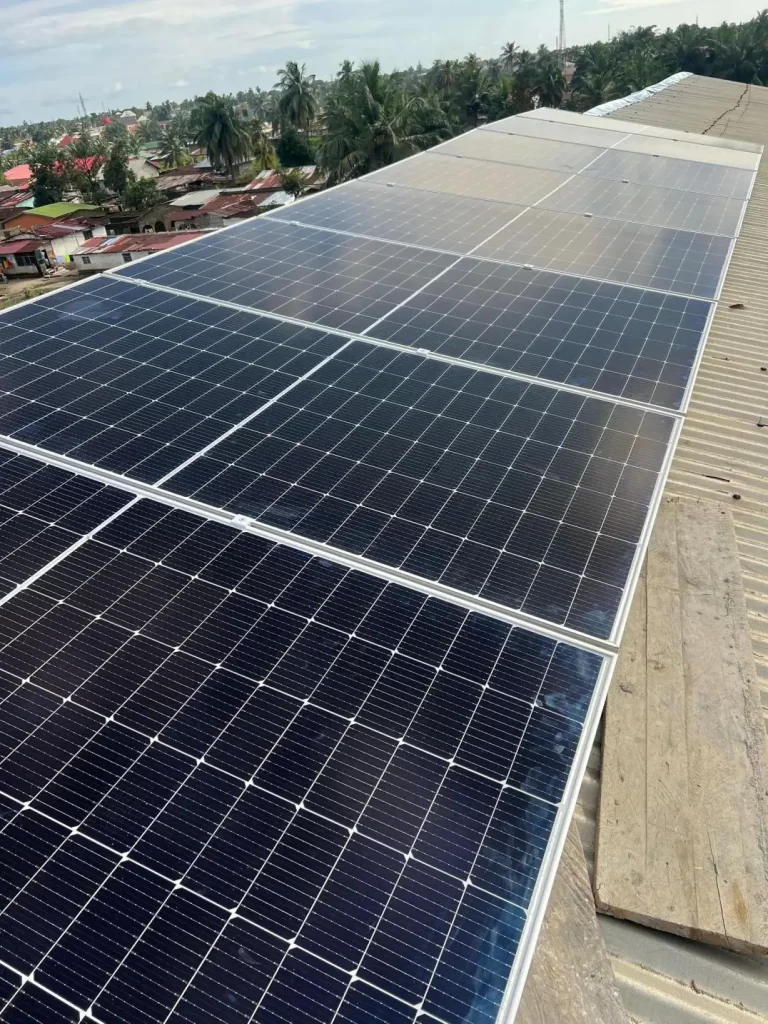
This is where a multi-MPPT architecture becomes important.
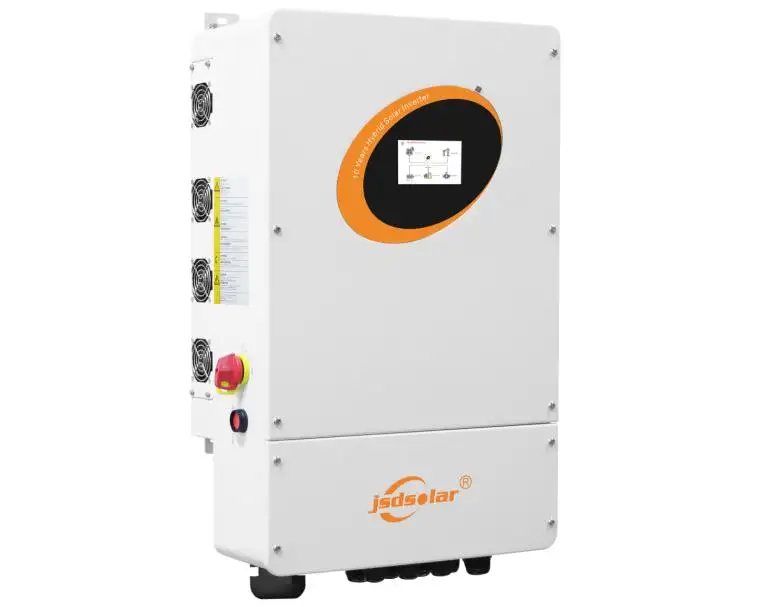
For the JSDSolar J8KHP, the PV side is designed around:
•8kVA rated inverter output
•Up to 12kW PV input
•4 independent MPPT trackers
•120–500V MPPT operating range
•500V maximum DC voltage
•14A listed maximum input current
•20A listed maximum short-circuit current
These specifications make the inverter suitable for more complex residential and light commercial solar-storage layouts, but only when the PV strings are correctly engineered.
Why Multiple Roof Sections Create MPPT Mismatch
Every solar string has an I-V curve and a corresponding P-V curve. The maximum power point changes continuously with irradiance, module temperature, shading, and orientation.
For a simplified PV string:
Power = Voltage × Current
If an east-facing array and a west-facing array share one MPPT, both arrays are forced to operate around the same control point even though their optimal operating conditions may differ.
This can happen when:
•One roof section receives morning sun while another remains weak;
•One string operates at a higher module temperature;
•Part of the array is shaded by a chimney;
•Two roof planes have different tilt angles;
•New panels are added during later system expansion.
A 4-MPPT Off Grid Solar Inverter allows these electrically different PV groups to be tracked more independently.
However, additional MPPTs do not automatically create additional energy. If all four strings use identical modules, orientation, tilt, temperature, and irradiance conditions, four trackers may provide little advantage over two.
1 MPPT, 2 MPPT or 4 MPPT
The correct architecture should follow the PV layout rather than the highest MPPT count available.
| MPPT Architecture | Typical Application | Main Consideration |
| 1 MPPT | Single uniform roof plane | Lowest flexibility |
| 2 MPPT | East/west or two roof sections | Suitable for many residential systems |
| 4 MPPT | Multiple orientations, tilts or independent arrays | Better array separation |
| DC Optimizers | Module-level mismatch | Additional electronics on the roof |
| Microinverters | Highly distributed module-level control | Different inverter and storage architecture |
For an Off Grid Solar Inverter, four MPPT trackers are particularly useful when mismatch occurs between separate arrays.
If shading varies from module to module within the same string, module-level power electronics may provide better control than simply increasing the number of central MPPT trackers.
Voltage Matching Comes Before PV Wattage
One of the most common design mistakes is selecting an Off Grid Solar Inverter only by comparing inverter power with total solar panel wattage.
PV string design must first satisfy voltage limits.
A simplified string operating voltage is:
String Vmp = Module Vmp × Number of Modules in Series
For the JSDSolar J8KHP, the operating string should be designed around the published 120–500V MPPT range.
But operating voltage is only half of the calculation.
Cold-Weather Voc Must Stay Below the DC Limit
PV module open-circuit voltage increases as module temperature falls.
Therefore:
Corrected String Voc = Module Voc × Series Quantity × Temperature Correction
The corrected value must remain below the inverter's 500V maximum DC voltage.
This means a string that appears acceptable under Standard Test Conditions may exceed the inverter limit during very cold weather.
Professional design should therefore verify:
•Module Voc temperature coefficient;
•Lowest expected site temperature;
•Maximum modules per string;
•Operating Vmp during high-temperature conditions.
Current Limits Matter When Strings Are Paralleled
Series-connected modules primarily increase voltage. Parallel-connected strings increase current.
For each MPPT channel, designers should evaluate:
•Vmp — normal operating voltage;
•Voc — maximum open-circuit voltage;
•Imp — operating current;
•Isc — short-circuit current.
The J8KHP offers 14A maximum input current and 20A maximum short-circuit current.
Because the public specification does not clearly state whether the 14A rating applies per tracker, per PV input, or another input configuration, final string design should confirm this point with JSDSolar before installation.
This is especially important with modern high-current PV modules.
Why an 8kW Off Grid Solar Inverter Can Use Up to 12kW of PV
The J8KHP supports up to 12kW of PV input with 8kVA rated inverter output.
That gives a theoretical maximum:
DC/AC Ratio = 12kW ÷ 8kW = 1.5
PV oversizing can improve energy availability when solar conditions are below peak levels.
Typical benefits include:
•Stronger morning and late-afternoon production;
•Improved winter energy yield;
•Better utilization under cloudy conditions;
•More charging power available for the battery;
•Improved performance on east/west arrays.
However, a 1.5 DC/AC ratio is not automatically the correct design for every project.
If PV production exceeds the inverter, load, and battery charging capacity, energy may be curtailed or clipped.
The correct ratio depends on solar resource, load profile, battery size, panel orientation, and operating strategy.
Practical Four-MPPT Array Allocation
A multi-roof installation could be structured as follows:
| MPPT | PV Array | Main Condition |
| MPPT 1 | East roof | Morning generation |
| MPPT 2 | South roof | Midday generation |
| MPPT 3 | West roof | Afternoon generation |
| MPPT 4 | Garage or extension | Different tilt or shading |
As a general engineering rule, modules sharing one MPPT should have similar:
•Orientation;
•Tilt angle;
•Module electrical characteristics;
•Shading profile;
•String voltage.
This reduces electrical mismatch and makes system troubleshooting easier.
Commissioning and MPPT Performance Diagnosis
After an Off Grid Solar Inverter is commissioned, installers should not only check total daily energy.
Each tracker should be reviewed independently.
Useful commissioning data include:
•MPPT voltage;
•PV current;
•Tracker power;
•Daily energy per tracker;
•Battery charging power;
•Abnormal voltage or current fluctuations.
If one tracker consistently underperforms, investigate the array before assuming an inverter defect.
Possible causes include:
•Partial shading;
•Loose MC4 connections;
•Reversed polarity;
•Damaged modules;
•Different string lengths;
•Excessive cable voltage drop;
•Module mismatch.
MPPT Efficiency Is Not Conversion Efficiency
The JSDSolar J8KHP offers:
•99.9% MPPT efficiency
•97% Euro efficiency
•97.6% maximum conversion efficiency
These figures describe different parts of inverter performance.
MPPT efficiency describes how accurately the tracker follows the available maximum power point.
Conversion efficiency describes how efficiently the inverter converts electrical power through its power electronics.
Buyers evaluating an Off Grid Solar Inverter should therefore avoid comparing a 99.9% MPPT figure directly with a 97.6% conversion figure.
For technical procurement, request applicable test reports, safety documentation, IP rating evidence, battery compatibility information, and destination-market compliance documents.
Selecting the Right Off Grid Solar Inverter
A 4-MPPT design is most valuable when the PV installation actually contains four distinct electrical operating conditions.
Before purchasing an Off Grid Solar Inverter, verify:
•Number of independent MPPT trackers;
•MPPT voltage range;
•Maximum DC voltage;
•Current and Isc limits;
•Allowable PV oversizing;
•Battery voltage and BMS protocol;
•Monitoring functions;
•Parallel expansion capability;
•Applicable safety and market certifications.
At JSDSolar, the J8KHP combines a 48V battery architecture, four MPPT trackers, up to 12kW PV input, CAN/RS485 communication, IP65 enclosure protection, and multi-unit expansion capability.
For projects involving multi-orientation PV arrays, battery storage, or future solar expansion, the J8KHP can provide a flexible starting architecture. Final design should still be based on string voltage, current, battery compatibility, site temperature, and local compliance requirements.
FAQs
Q1. Does JSDSolar offer an Off Grid Solar Inverter with multiple MPPT trackers?
Yes. The JSDSolar J8KHP 48V 8kW storage inverter is designed with four MPPT trackers, allowing separate PV array sections to operate under different solar conditions.
Q2. What is the maximum PV input supported by the JSDSolar 8kW inverter?
The J8KHP supports up to 12kW of PV input with an 8kVA rated inverter output, allowing PV oversizing where project conditions support it.
Q3. What is the MPPT voltage range of the JSDSolar J8KHP?
The published MPPT operating range is 120–500V. PV string voltage should be engineered to remain within this range under expected operating temperatures.
Q4. Why does JSDSolar use four MPPT trackers in this Off Grid Solar Inverter?
Four independent trackers provide more flexibility for systems with east-, south-, and west-facing arrays, different roof angles, or separated PV sections.
Q5. Can different PV orientations be connected to the JSDSolar inverter?
Yes, different orientations can be assigned to separate MPPT trackers when their voltage and current characteristics meet the inverter's electrical limits.


In This Article
- 1 Why Multiple Roof Sections Create MPPT Mismatch
- 2 1 MPPT, 2 MPPT or 4 MPPT
- 3 Voltage Matching Comes Before PV Wattage
- 4 Current Limits Matter When Strings Are Paralleled
- 5 Why an 8kW Off Grid Solar Inverter Can Use Up to 12kW of PV
- 6 Practical Four-MPPT Array Allocation
- 7 Commissioning and MPPT Performance Diagnosis
- 8 MPPT Efficiency Is Not Conversion Efficiency
- 9 Selecting the Right Off Grid Solar Inverter
