


DC-Coupled vs. AC-Coupled Off Grid Solar Electric System: Which Architecture Is Better?
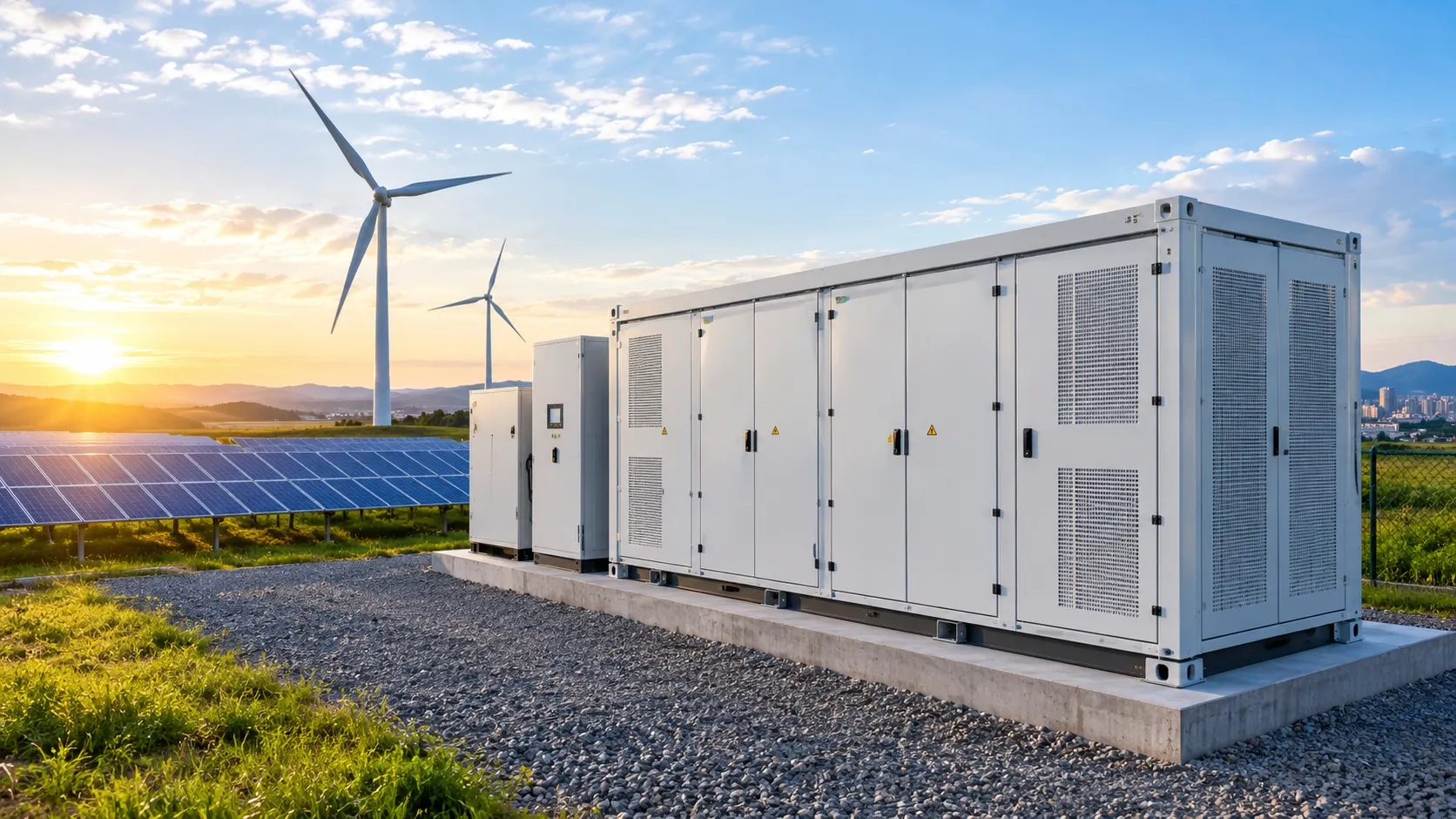
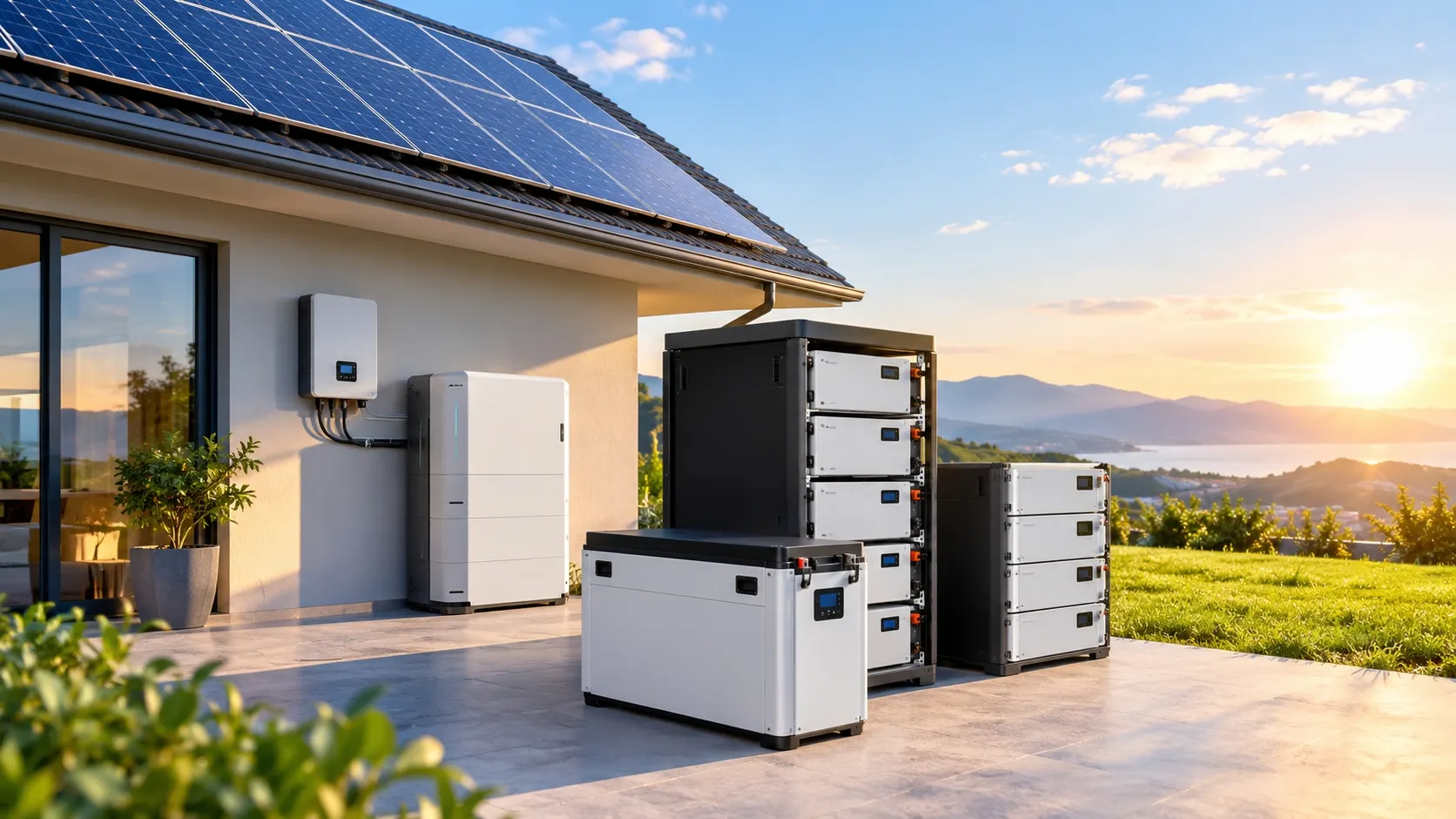

A DC-coupled Off Grid Solar Electric System is better for new battery-centric projects that require direct PV-to-battery charging and fewer conversion stages and centralized control. AC coupling is usually more convenient for existing PV plant upgrades, PV and storage independent expansions, and integrating multiple AC power sources.
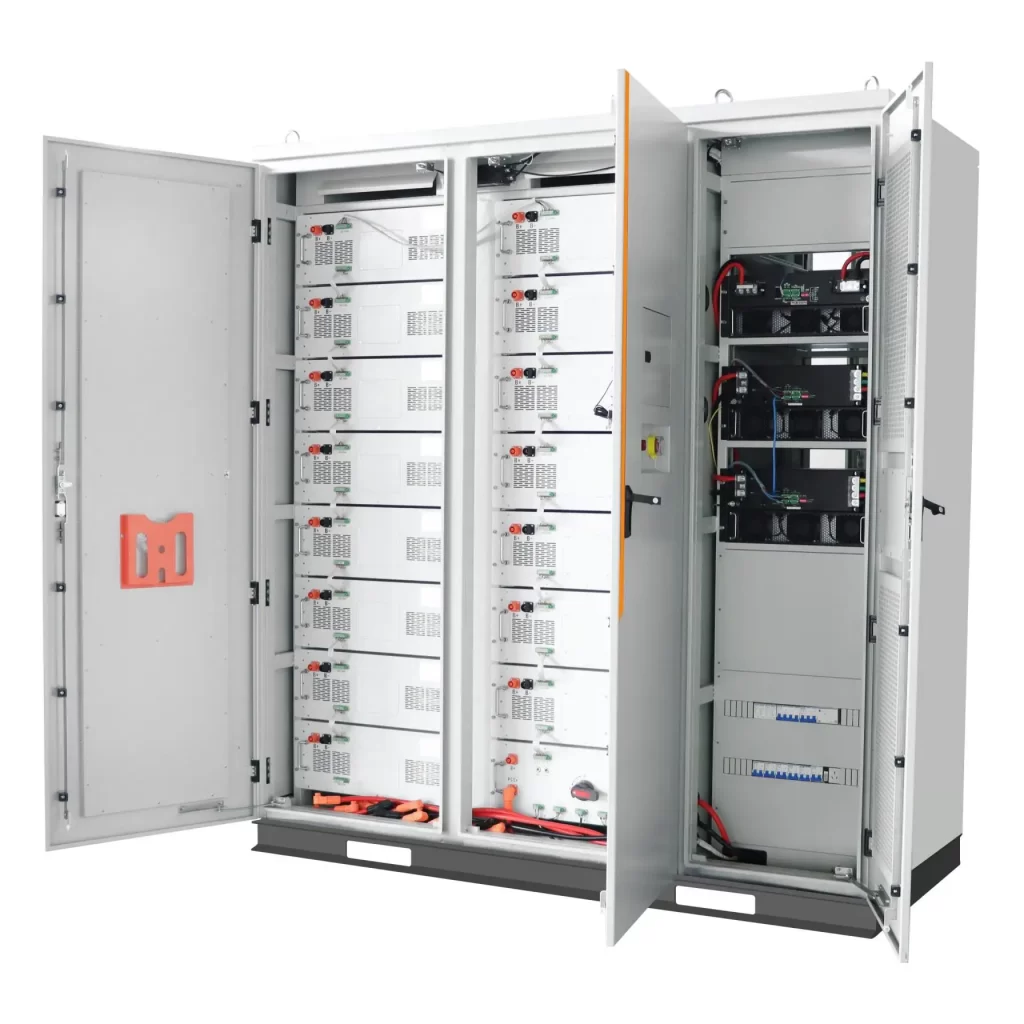
Neither architecture is universally superior. The correct choice depends on the load curve, PV and battery voltage, required autonomy, PCS capability, generator strategy, and future expansion.
What An Off Grid Solar Electric System Must Do
An Off Grid Solar Electric System operates without a utility voltage or frequency reference. It must generate energy, maintain battery reserves, form a stable AC bus, and respond to load changes in real time.
A commercial system normally combines PV modules, MPPT or DC/DC stages, battery storage, BMS, bidirectional PCS, EMS, AC protection, and an optional generator.
Because PV modules and batteries are DC devices while most commercial loads use AC, the PCS performs both power conversion and system control. In a fully isolated Off Grid Solar Electric System, it may also provide black start, voltage regulation, frequency regulation, reactive-power support, and short-term overload response.
How DC Coupling Works
In a DC-coupled Off Grid Solar Electric System, the PV array and battery share a DC-side architecture. MPPT or DC/DC modules regulate PV voltage and charging current before power reaches the battery or PCS.
Typical energy paths are:
PV → DC/DC → battery
PV → PCS → AC load
Battery → PCS → AC load
This architecture can avoid the PV-to-AC-to-DC conversion sequence during battery charging. It also allows one EMS to coordinate PV priority, battery SOC, charge limits, and load supply.
DC coupling is particularly suitable when the project is new, battery storage is central to operation, and PV, battery, and PCS can be engineered as one platform.
However, it is not automatically more efficient. Performance depends on DC/DC efficiency, voltage matching, PCS part-load efficiency, cable losses, standby demand, battery temperature, and EMS scheduling.
How AC Coupling Works
In an AC-coupled system, the PV inverter and battery PCS connect separately to a common AC bus.
Typical paths are:
PV → PV inverter → AC load
PV → PV inverter → PCS → battery
Battery → PCS → AC load
This arrangement is useful when storage is added to an existing solar plant. PV and battery capacity can be expanded independently, and generators can connect directly to the AC bus.
The main issue is the coordination of grid-forming and grid-following inverters, generator loading, battery SOC, frequency response, and restarts.
DC vs. AC Coupled Off Grid Solar Systems
| Engineering Factors | DC-Coupled | AC-Coupled |
| PV-to-battery path | Direct DC path DC/DC conversion | PV to AC and then to DC |
| Primary components | DC/DC converters and a shared PCS | Separate PV inverter and battery PCS |
| System Design | More integrated system design | Stronger system integration |
| Existing PV Retrofits | May require DC redesign | Generally easier |
| Expansion | Restricted by DC bus, MPPT, and PCS Capacities | PV and storage can expand separately |
| Generator Integration | Requires an AC interface | Generally easier |
| Best suited | For New battery centered projects | Retrofits and multi source microgrids |
For New Commercial Off Grid Solar Electric Systems, DC Coupling offers better overall system integration. For existing PV and other mixed source microgrids AC Coupling offers better Retrofits.
Which Architecture Is More Efficient?
Efficiency must be evaluated by energy path, not by the peak value on one inverter datasheet.
A site with large daytime AC loads may benefit from direct PV-to-load conversion in an AC-coupled system. A site that stores most daytime generation for evening operation may benefit from the shorter charging path of DC coupling.
The calculation should include:
•DC/DC, inverter, and PCS efficiency
•Full-load and partial-load operation
•Battery round-trip losses
•Cable and transformer losses
•Cooling and standby consumption
•Daily EMS dispatch strategy
The most efficient Off Grid Solar Electric System is the one matched to the site's real energy-flow profile.
Why Partial-Load Efficiency Matters
Commercial loads rarely remain at rated power throughout the day. A PCS may operate at 20–60% load for long periods, especially during early morning, late afternoon, or low-production seasons.
Therefore, engineers should review:
•Efficiency curves rather than one maximum value
•Night-time auxiliary consumption
•Cooling-system power demand
•Transformer magnetizing losses
•Battery charging efficiency at different C-rates
These factors can materially affect annual system performance.
Stability Depends More on PCS Control
Coupling method alone does not determine off-grid stability. A reliable Off Grid Solar Electric System requires a grid-forming PCS with:
•Black-start capability
•Voltage and frequency regulation
•Fast active and reactive power response
•Motor-starting and surge support
•Minimum SOC reserve
•Generator synchronization
•Parallel power sharing
Engineers must verify sudden PV loss, motor starting, low-SOC operation, and parallel-unit trips. PCS overload duration, response speed, protection selectivity, and restart logic may matter more than nominal power.
Motor Starting and Transient Loads
Pumps, compressors, HVAC equipment, and industrial motors can draw several times their rated current during startup. If the PCS cannot support the transient demand, voltage may collapse or protection devices may trip.
PCS selection should therefore consider:
•Peak starting current
•Starting duration
•Simultaneous motor operation
•Soft-starter or variable-frequency-drive use
•Acceptable voltage deviation
•Battery instantaneous discharge capability
Expansion Limits to Check
For DC-coupled expansion, verify:
•DC bus and battery voltage range
•MPPT count and input current
•DC/DC module capacity
•Battery C-rate and BMS limits
•PCS rated and overload power
•Parallel communication and protection
For AC-coupled expansion, verify:
•AC bus and switchgear capacity
•Grid-forming/grid-following compatibility
•Multi-inverter synchronization
•Generator minimum loading
•Frequency-based power control
•EMS access to third-party equipment
AC coupling often simplifies equipment-level expansion. DC coupling provides stronger system-level coordination when future capacity is included in the original design.
Common Engineering Problems
| Problem | Operational Risk | Design Focus |
| Mismatched PV Voltage | Reduced Charging Power | MPPT range and DC/DC capability |
| Undersized PCS | Overload Trips | Peak Load and Surge Analysis |
| Inadequate Battery Energy | Insufficient Autonomy | Daily Demand, DoD, and Reserve |
| Inadequate Battery Power | Output Is Restricted With Stored Energy | C-rate, BMS, and PCS limits |
| Inadequate Thermal Control | Derating and Uneven Aging | Airflow and Temperature Control |
| Inadequate Communication | Uncoordinated Dispatch | CAN, RS485, and Protocol Mapping |
| No Black Start Plan | Recovery Failure | SOC reserve and startup sequence |
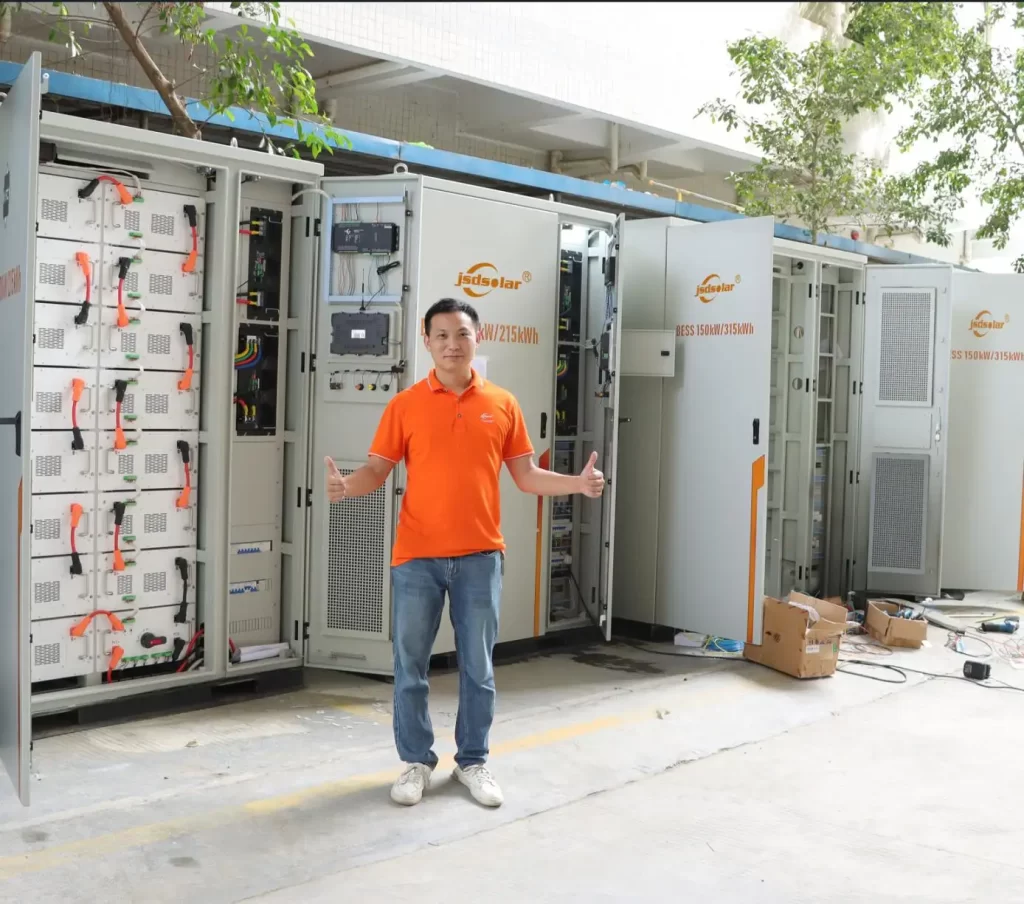
How JSDSolar Resolves DC-Coupled Problems
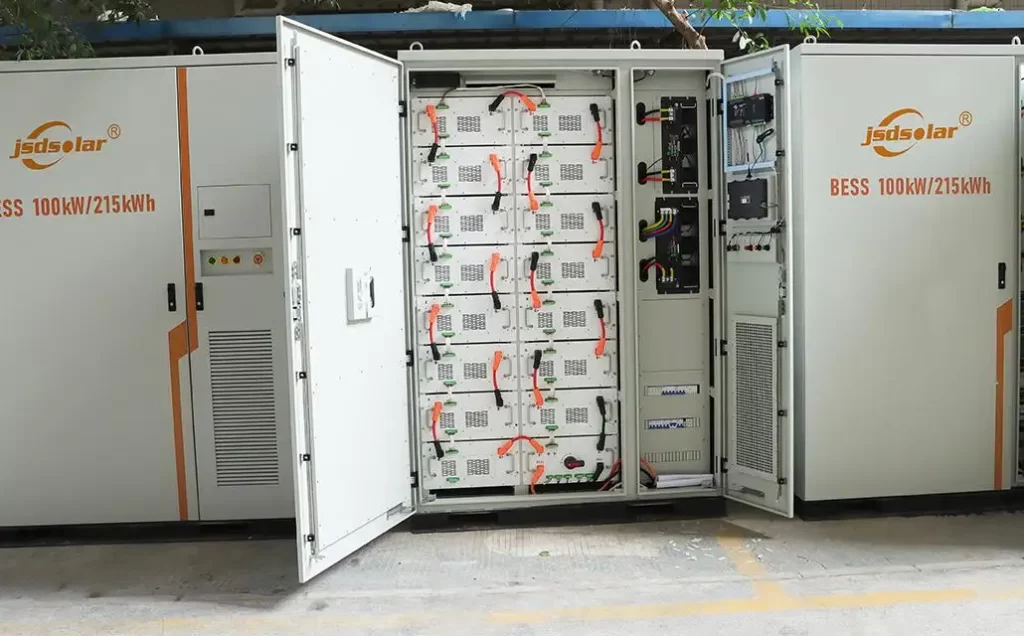
JSDSolar uses DC/DC power modules dedicated to PV input and battery charging on the DC side. The EMS manages PV priority, charge limits, minimum
The PCS supports voltage and frequency regulation for the local off-grid AC bus. Its accessible external arrangement also reduces the need to dismantle or move the complete storage cabinet during inspection or module replacement.
The system approach further includes:
•Intelligent air cooling and temperature monitoring
•Separation of battery and power-electronics heat sources
•IP54 enclosure protection under specified conditions
•Battery voltage, current, temperature, and SOC monitoring
•Alarm, shutdown, and integrated fire-suppression functions
•Modular architecture for planned parallel expansion
These functions address practical issues in an outdoor Off Grid Solar Electric System, including thermal concentration, maintenance access, energy dispatch, communication, and phased capacity growth.
Which Architecture Should You Choose?
Choose a DC-coupled Off Grid Solar Electric System when:
•The project is new and battery-centered
•Direct PV-to-battery charging is important
•PV, battery, and PCS can be sized together
•Centralized EMS control is preferred
•Future expansion is planned from the start
Choose AC coupling when:
•An existing PV inverter must remain in service
•Storage is being added as a retrofit
•PV and battery capacity must expand independently
•Multiple AC sources must be integrated
•Independent equipment maintenance is a priority
Which Off Grid Solar Electric System Architecture Is Better?
DC coupling is the preferred method for an Off Grid, Solar Electric System with a battery center and active solar charging with controlled energy. AC coupling is typically better for retrofits, standalone equipment capable of being added to, and also for AC microgrids.
Decisions should be made based on load profiles, demand, autonomy, PV voltage, battery C-rates, PCS overload capacity, generator choice, conditions, and growth.
Planning an Off Grid Solar Electric System is much more than selecting equipment. JSDSolar can do a complete system design which includes load analysis, battery sizing, PV assessment, PCS configuration, EMS control, and growth options. Please contact us to discuss how we can provide a design specifically built for your site and how it will meet the challenges of your site and the demands of your operation.
FAQs
Q1. Does JSDSolar offer DC-coupled Off Grid Solar Electric System solutions?
Yes. We can design a DC-coupled Off Grid Solar Electric System in which PV generation charges the battery using dedicated MPPT and DC/DC power modules. This design is appropriate for new battery-centered commercial and industrial projects.
Q2. What factors lead JSDSolar to determine battery capacity?
There are many factors, including daily energy usage, night loads, peak demand, backup duration, battery depth of discharge, system losses, and low-solar conditions. Battery energy and discharge power must be analyzed separately.
Q3. Is it possible to design the PCS for off-grid operation at JSDSolar?
Yes. The PCS can be designed to create and manage the local AC bus without a utility-grid reference. There are rated power and overload durations, voltage, frequency, motor-starting current, and black-start considerations to take into account for the design.
Q4. What does an EMS control at JSDSolar?
The EMS controls the generation of PV, charging of batteries, the minimum SOC, priority of critical loads, operation of the PCS, alarms, generator/logic, and parallel units. Control strategies are designed according to the actual load profile of the project.
Q5. Is it possible to integrate a diesel generator with a JSDSolar Off Grid Solar Electric System?
Yes. Based on the design and the control logic, a generator can be integrated as a secondary power source. The EMS can also control generator start and stop, charging the battery, maintaining a minimum load, and load changes.


In This Article
- 1 What An Off Grid Solar Electric System Must Do
- 2 How DC Coupling Works
- 3 How AC Coupling Works
- 4 DC vs. AC Coupled Off Grid Solar Systems
- 5 Which Architecture Is More Efficient?
- 6 Why Partial-Load Efficiency Matters
- 7 Stability Depends More on PCS Control
- 8 Motor Starting and Transient Loads
- 9 Expansion Limits to Check
- 10 Common Engineering Problems
- 11 How JSDSolar Resolves DC-Coupled Problems
- 12 Which Architecture Should You Choose?
