


Top Solar Street Light Manufacturer
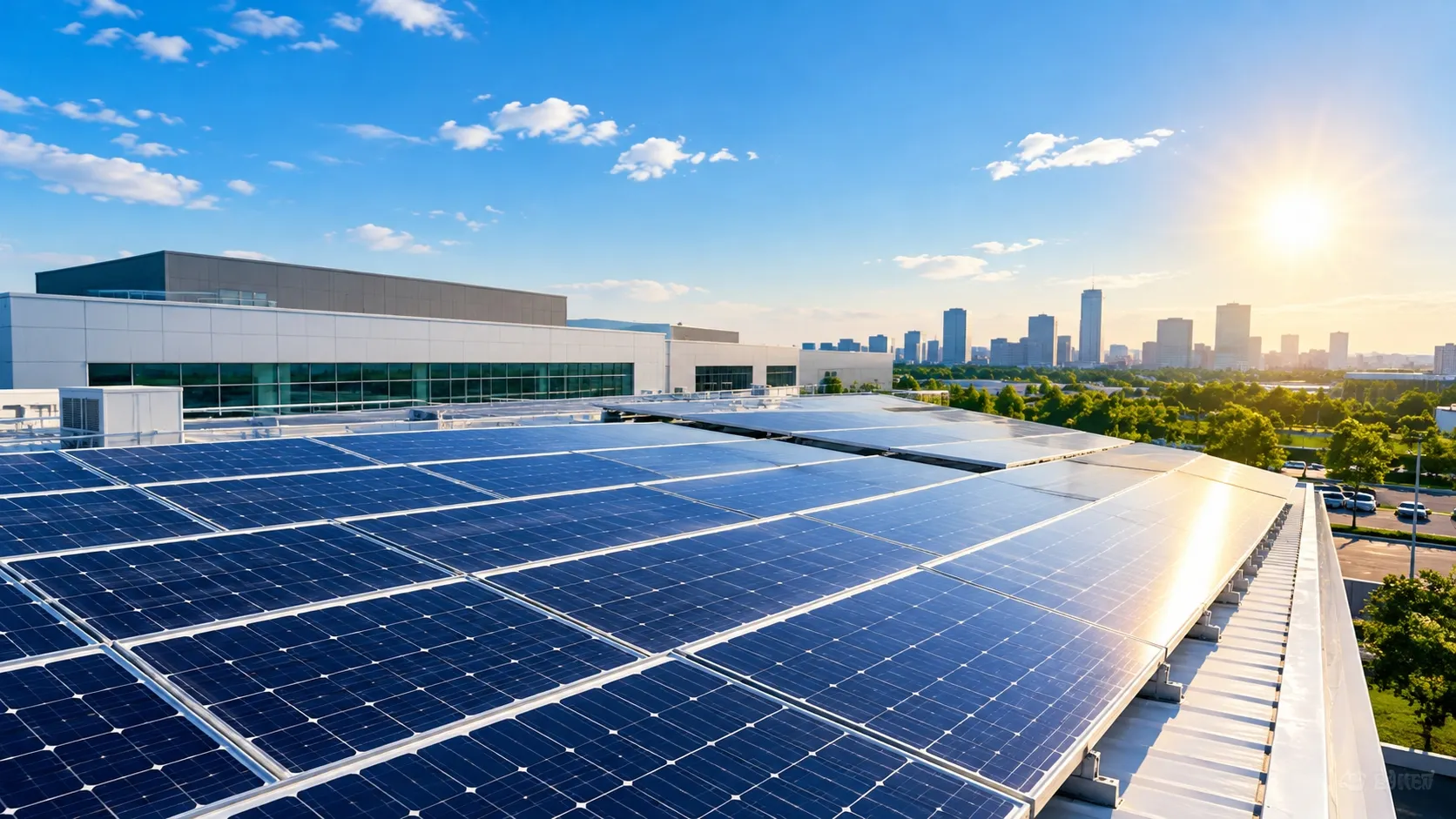
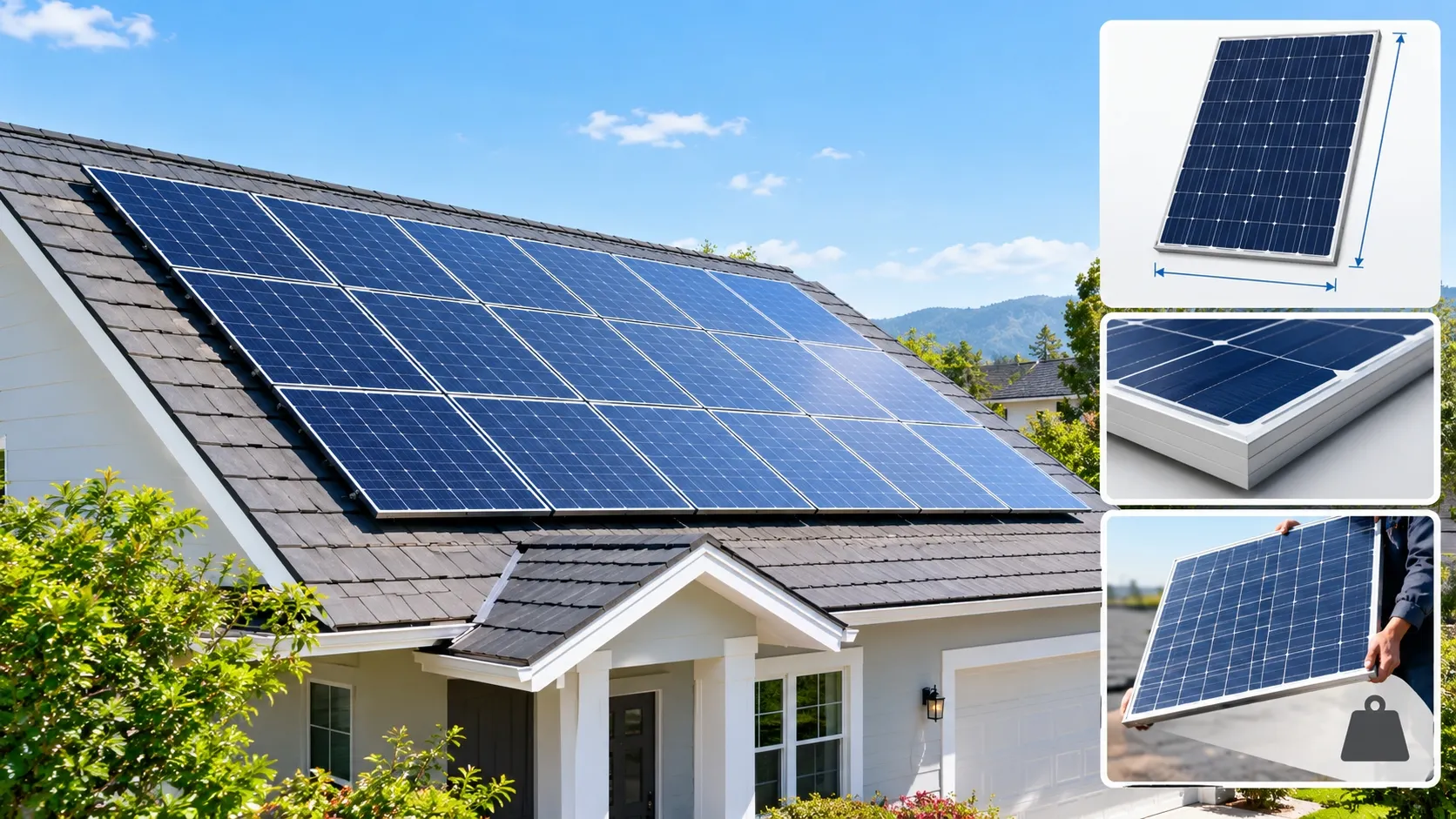
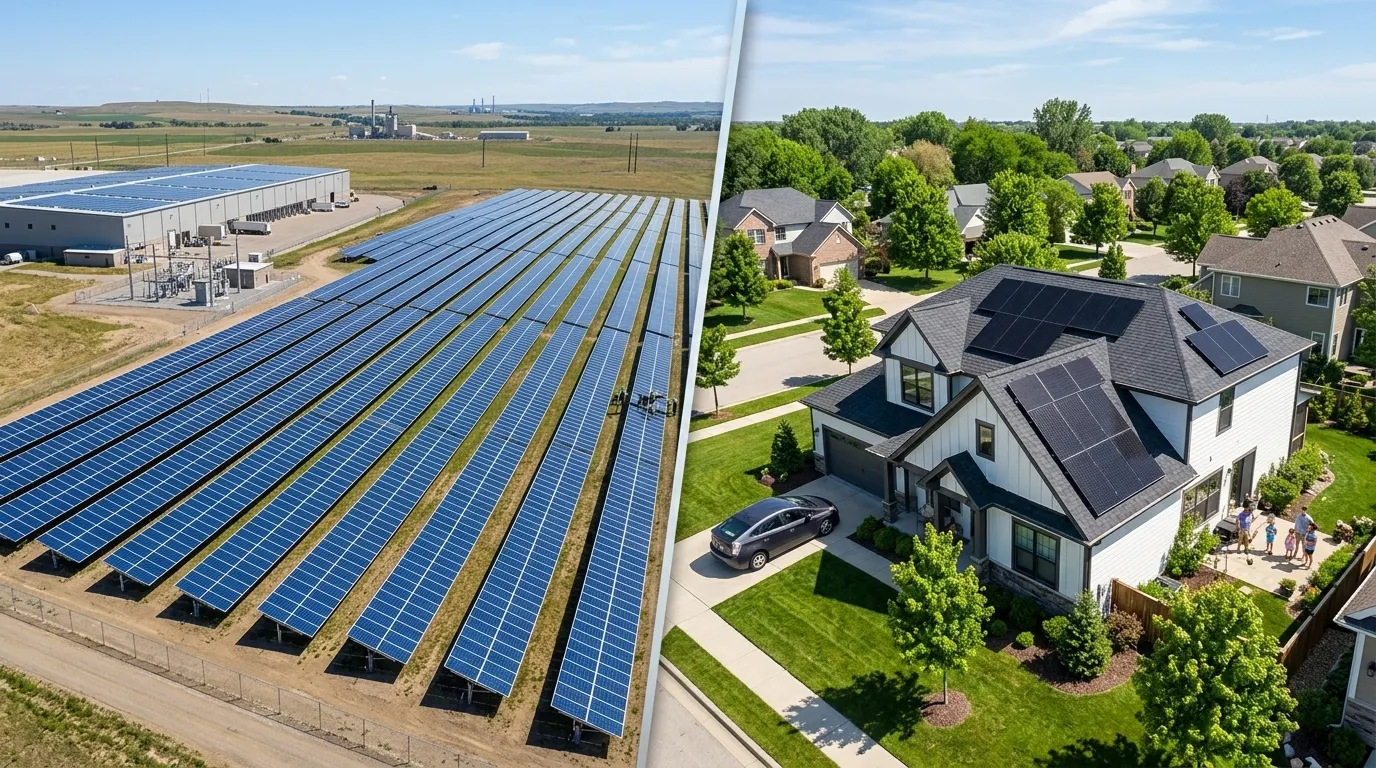
As a result, solar street lighting is becoming an increasingly important solution for cities, industrial parks and complexes, commercial buildings, highways, residential communities and remote areas. Modern solar street lights feature solar panels, intelligent controllers, batteries, and LED lights, which work together to deliver reliable outdoor lighting that can supplement or replace conventional grid electricity.
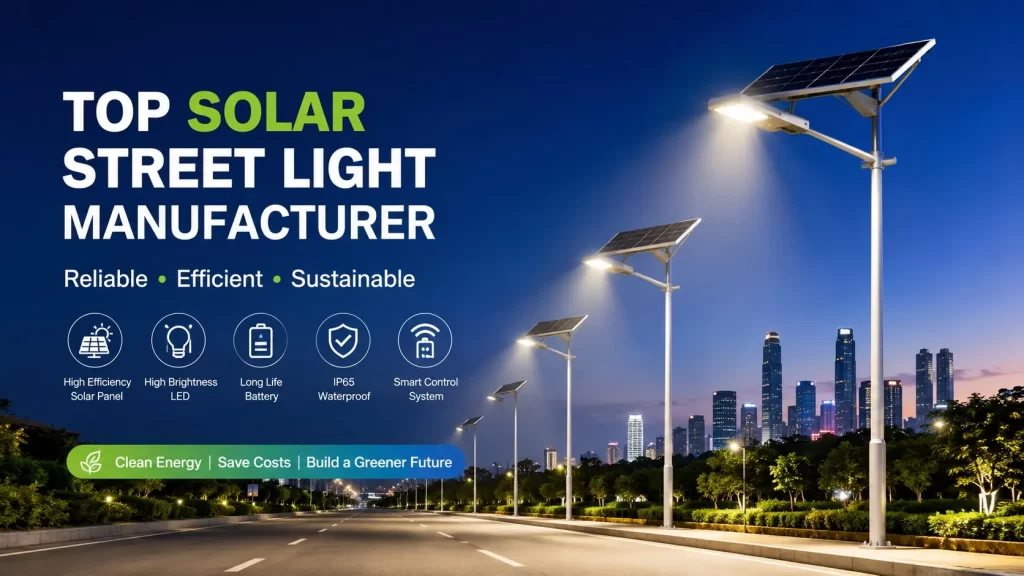
Selecting the best solar street light manufacturer is crucial for distributors, contractors, project developers, and municipal buyers. The right manufacturer can offer not only a high-quality lighting product but also a reliable supply, tailored solutions, technical support, and value.
What Is a Solar Street Light?
Solar Street Light: Outdoor lighting system primarily powered by solar power. In daytime, the solar panel will use sunlight to generate electricity and store the electricity in the battery. The battery is used to light an LED lamp at night.
The typical solar street light consists of:
- Solar panel
- High-efficiency LED lamp
- Lithium or other rechargeable battery
- Solar charge controller
- Lighting pole and mounting structure
- Optional motion sensor
- Intelligent control system
Solar street lights are able to function without relying on the electrical grid compared to regular street lights. This is especially useful in areas where digging up the ground for cables or extending the power grid would be costly.
Why Choose a Professional Solar Street Light Manufacturer?
The manufacturer can directly affect product performance, reliability, installation costs and profitability of the project.
A professional solar street light manufacturer would normally provide optimized design of the system, instead of just individual components. All components of the solar panel, battery, LED module, controller and lighting power should be operating in harmony under local weather conditions and operational time.
The size of the solar panel and battery needed for a lighting project could be bigger if the project is in a low-sunlight area versus a high-sunlight area, for instance.
With the assistance of a qualified manufacturer, buyers can choose the correct configuration, depending on:
- Average daily sunlight
- Required lighting hours
- Installation location
- Road width and pole height
- Desired illumination level
- Local climate
- Battery backup requirements
- Project budget
This system-level approach can significantly improve long-term performance.
Key Features of High-Quality Solar Street Lights
When comparing solar street light manufacturers, buyers should look beyond appearance and advertised wattage.
1. High-Efficiency LED Technology
LED modules provide high luminous efficiency, long service life, and lower energy consumption compared with traditional lighting technologies. A quality manufacturer should clearly specify LED efficiency, color temperature, beam angle, and expected lifetime.
2. Reliable Solar Panels
Solar panels determine how effectively the system can recharge its battery. High-quality panels can improve energy collection and system stability, especially in challenging weather conditions.
3. Long-Life Batteries
Battery performance is one of the most important factors in an off-grid lighting system. Lithium-based batteries are widely used in modern solar street lights because of their energy density, cycle life, and compact size.
Manufacturers should provide clear information about battery capacity, operating temperature, expected cycle life, and protection functions.
4. Intelligent Controllers
A modern solar street light controller can manage charging, discharging, lighting schedules, and energy-saving functions. Some systems also support motion sensing, remote monitoring, and automatic brightness adjustment.
5. Durable Housing
Outdoor lighting equipment must withstand rain, dust, heat, cold, and long-term UV exposure. A durable housing with appropriate IP protection can help protect internal components from environmental damage.
How to Select the Top Solar Street Light Manufacturer
There are many suppliers in the global market, but not every manufacturer offers the same level of engineering and production capability.
Consider these factors before placing an order.
Manufacturing Experience
An experienced manufacturer is more likely to understand different application scenarios and regional requirements. Look for companies with a proven history in solar lighting and international projects.
Product Customization
Commercial and municipal projects often have different technical requirements. A strong manufacturer should provide OEM and ODM services, including customized LED power, solar panel capacity, battery configuration, pole design, housing, branding, and packaging.
Customization is especially valuable for distributors that want to build their own solar lighting brand.
Quality Control
Ask about incoming material inspection, production testing, waterproof testing, battery testing, LED testing, and finished-product inspection.
A professional quality-control process reduces the risk of premature component failure and inconsistent product performance.
Certifications and Compliance
Depending on the target market, buyers may need products that comply with applicable safety and electromagnetic standards. Manufacturers should be able to provide relevant test reports and certifications for their products.
For international projects, documentation can be just as important as product quality.
Production Capacity
For large projects, production capacity matters. A supplier should be able to maintain consistent product quality while meeting required delivery schedules.
Ask about monthly production capacity, lead times, component availability, and quality consistency between batches.
Solar Street Lights for Different Applications
Solar street lights are suitable for a wide range of environments.
Urban Roads: Integrated solar street lights can provide illumination for roads, sidewalks, and public spaces while reducing dependence on grid infrastructure.
Industrial Parks: Solar lighting can illuminate internal roads, parking areas, warehouses, and security zones.
Residential Communities: Solar street lights can improve safety around entrances, walking paths, community roads, and recreational areas.
Rural Roads: Off-grid operation makes solar street lighting especially useful in rural areas where electrical infrastructure is limited.
Parking Areas: Solar lighting can provide flexible illumination without extensive electrical installation.
Construction and Remote Sites: Portable or standalone solar lighting systems can support temporary infrastructure and remote operations.
Integrated vs. Split Solar Street Lights
Buyers should also understand the difference between integrated and split designs.
An all-in-one solar street light combines the solar panel, LED lamp, battery, and controller into a compact unit. It is easy to transport and install and is often suitable for residential roads, pathways, and smaller commercial projects.
A split solar street light separates the solar panel from the lighting unit and battery. This configuration provides greater flexibility in system design and can be useful for applications requiring larger solar panels or higher energy storage.
The best choice depends on the project environment, lighting requirements, installation conditions, and budget.
Why Solar Street Lights Are Becoming More Popular
The growing adoption of solar street lighting is driven by several factors. First, solar energy reduces dependence on grid electricity. Second, LED technology provides efficient illumination with relatively low energy consumption. Third, wireless and intelligent controls are making outdoor lighting systems more flexible.
Solar street lights can also simplify installation because many standalone systems do not require extensive trenching or electrical cabling.
For governments, businesses, and infrastructure developers, this combination of energy independence and flexible installation can make solar lighting attractive for both new construction and lighting upgrades.
Questions to Ask a Solar Street Light Manufacturer
Before selecting a supplier, buyers should request clear answers to several practical questions:
- What solar street light configurations do you offer?
- Which battery technology do you use?
- What is the recommended operating time per night?
- How does the system perform during several consecutive cloudy days?
- What IP rating does the lamp have?
- Can you provide OEM and ODM customization?
- What certifications and test reports are available?
- What is your production capacity?
- What warranty do you provide?
- Can you support installation and technical design?
You can more easily collaborate with a manufacturer that gives you clear technical details and expertise answers.
Conclusion
When selecting an excellent solar street light manufacturer, it is essential to consider more than just the price of the products. When considering global buyers, they should take into account technology, component quality, customization options, certifications, production capacity, quality control, warranty support, and overall project experience.
The best supplier should be a technical partner, who can guide the customer to choose the most suitable configuration of solar panels, batteries, LEDs, controllers and mechanical components for their application.
Energy-efficient and energy-independent outdoor lighting is gaining significance as well, and professionally engineered solar street lights are suitable for roads, communities, industrial sites, parking lots and remote installations.
A knowledgeable solar street light manufacturer can provide distributors and project developers with a better base to build on in terms of producing quality products, project pricing, and business expansion.
Share on Social:


In This Article
- 1 What Is a Solar Street Light?
- 2 Why Choose a Professional Solar Street Light Manufacturer?
- 3 Key Features of High-Quality Solar Street Lights
- 4 How to Select the Top Solar Street Light Manufacturer
- 5 Solar Street Lights for Different Applications
- 6 Integrated vs. Split Solar Street Lights
- 7 Why Solar Street Lights Are Becoming More Popular
- 8 Questions to Ask a Solar Street Light Manufacturer
- 9 Conclusion
