


Solar Inverter vs Hybrid Inverter: What's the Difference?

One of the most crucial choices in a solar energy system installation is picking the right inverter. The inverter converts the electrical energy produced by the solar panels into the electrical energy that can be used for your home or business. Not every inverter is the same though.
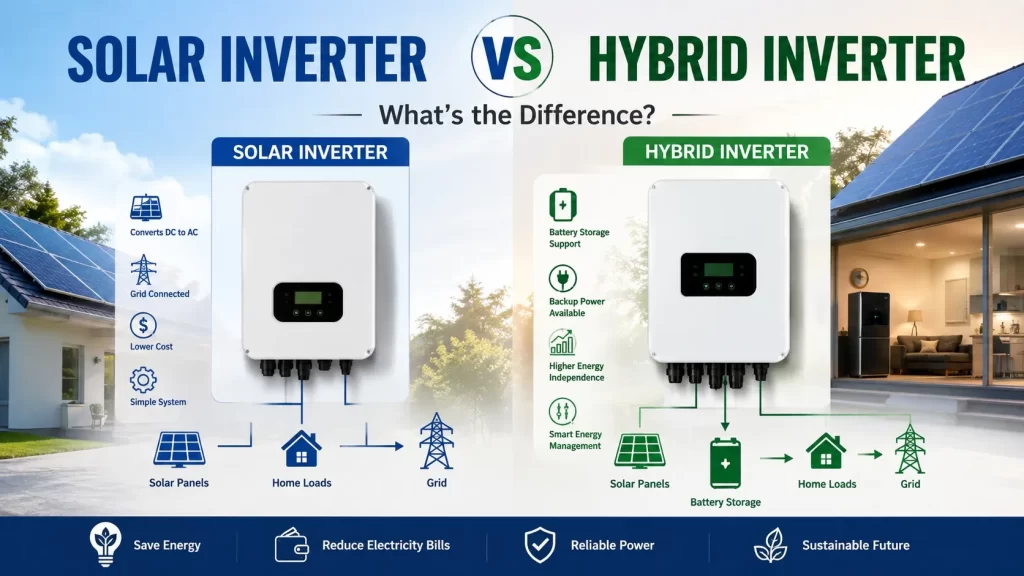
The primary difference between a solar inverter and hybrid inverter is the ability to store energy. A traditional solar inverter is mainly used to transform solar energy for immediate use or for exporting to the grid while a hybrid inverter can control solar panels, batteries, domestic loads, and the utility grid in a single unit.
The knowledge of these differences will assist homeowners, installers, and companies in selecting the optimum solar energy solution.
What Is a Solar Inverter?
A solar inverter, or PV inverter as it's also known, is a device that changes the direct current (DC) energy generated by solar panels into alternating current (AC) energy that can be used by domestic appliances and electrical devices.
In a typical solar PV system, solar panels generate electricity during the day. This is then converted to useable AC power by the solar inverter. Depending on the system configuration, excess electricity can be sent to the utility grid.
With respect to this, traditional solar inverters are frequently employed in grid coupled solar energy systems as they are fairly simple, efficient and inexpensive.
Key Features of a Solar Inverter
- Converts solar DC power into AC electricity
- Optimizes solar energy production
- Supplies electricity to household or commercial loads
- Can send excess electricity to the grid
- Usually works without battery storage
- Suitable for standard grid-connected solar systems
Another drawback is that a standard grid-tied solar inverter typically doesn't offer power backup if the power grid goes down, unless extra backup equipment is used.
What Is a Hybrid Inverter?
Hybrid Inverters are a type of inverter that incorporates the capabilities of both a solar inverter and a battery inverter. It is capable of controlling electricity from a solar panel, batteries, the grid, and electrical loads.
This is especially beneficial for residential buildings and businesses aiming to integrate energy storage with their solar power solutions.
Solar energy may be used to power appliances or equipment during the day. The battery can be charged by any surplus electric power. If solar generation is reduced, the hybrid inverter can also provide power to the loads from the battery.
Meanwhile, a hybrid inverter can also serve as a backup power source in the event of a power outage, depending on the system model and configuration.
Key Features of a Hybrid Inverter
- Supports solar PV systems and battery storage
- Manages multiple energy sources
- Stores excess solar energy
- Can reduce electricity purchased from the grid
- May provide backup power
- Supports flexible energy management
- Can improve solar self-consumption
Solar Inverter vs Hybrid Inverter: Key Differences
The biggest difference between a solar inverter and a hybrid inverter is how they manage energy storage.
| Feature | Solar Inverter | Hybrid Inverter |
|---|---|---|
| Solar panel connection | Yes | Yes |
| Converts DC to AC | Yes | Yes |
| Battery support | Usually no | Yes |
| Energy storage management | Limited | Yes |
| Grid connection | Yes | Yes |
| Backup power | Usually no | Often available |
| Energy source management | Basic | Advanced |
| System complexity | Lower | Higher |
| Initial cost | Lower | Higher |
| Energy flexibility | Standard | High |
A solar inverter is often the better choice when the goal is simply to generate solar electricity and reduce grid consumption.
A hybrid inverter is generally more suitable when battery storage, backup power, or advanced energy management is important.
How Do Solar and Hybrid Inverters Work?
A traditional solar inverter follows a relatively straightforward energy flow.
Solar panels → Solar inverter → Home appliances → Grid
If the solar panels produce more electricity than the property needs, the excess power may be exported to the grid, depending on local regulations and the utility's net metering or export policies.
A hybrid system provides additional flexibility:
Solar panels → Hybrid inverter → Home loads / Battery / Grid
The hybrid inverter determines where electricity should go based on the system settings, energy demand, battery state of charge, solar production, and grid conditions.
For example, during sunny hours, solar power can run household appliances while charging the battery with excess energy. In the evening, the battery can supply stored electricity, reducing reliance on the grid.
Which Is More Efficient?
Both solar and hybrid inverters can achieve high conversion efficiency, but overall system efficiency depends on the system design.
A solar inverter can be highly efficient because solar energy is converted directly from DC to AC for immediate use.
A hybrid system may involve additional energy conversion when electricity is stored in and later discharged from a battery. However, the ability to store surplus solar power can significantly increase solar self-consumption.
Therefore, the most efficient solution depends on how the electricity is used.
For properties that consume most electricity during the daytime, a traditional solar inverter may be sufficient. For properties with high evening or nighttime electricity demand, a hybrid inverter with battery storage may provide greater practical value.
Solar Inverter vs Hybrid Inverter: Which One Is Better?
There is no single answer because the best inverter depends on your energy requirements.
Choose a Solar Inverter If:
- You want a simple grid-connected solar system.
- Most of your electricity consumption occurs during daylight hours.
- You do not currently need battery storage.
- Your main goal is reducing electricity bills.
- You want a lower initial system cost.
Choose a Hybrid Inverter If:
- You want to install solar panels with batteries.
- You want to store excess solar energy.
- Your electricity consumption is high at night.
- You want greater energy independence.
- Backup power is important.
- You may add battery storage in the future.
A hybrid inverter can also be a good option for homeowners who want flexibility for future energy storage upgrades.
Can a Hybrid Inverter Work Without a Battery?
Yes. Many hybrid inverters can operate with solar panels and the grid even when a battery is not installed.
However, battery compatibility and operating modes vary by manufacturer and model. Before purchasing a hybrid inverter, check its supported battery chemistry, voltage range, capacity limits, communication protocols, and backup functions.
If battery storage is planned for the future, selecting a compatible hybrid inverter from the beginning can make system expansion easier.
What Should You Consider When Choosing an Inverter?
When comparing solar inverters and hybrid inverters, consider more than the purchase price.
1. System Size
Choose an inverter with a suitable power rating for your solar array and expected electricity demand.
2. Battery Requirements
If you plan to use energy storage, verify battery compatibility and charging specifications.
3. Backup Power
If backup electricity is important, check whether the inverter supports backup output and what loads it can supply during a power outage.
4. Efficiency
Pay more attention to efficiency of the entire system and conversion efficiency than just the rated efficiency of the inverter.
5. Monitoring
Additionally, modern inverters can offer mobile applications and online monitoring systems that enable the user to monitor their solar production, battery status, energy use, and grid consumption.
6. Warranty and Support
Long-term operations of solar systems may depend on a reliable warranty and technical support as well as easily accessible replacement parts.
Final Thoughts
The main difference between solar inverter vs hybrid inverter is energy storage vs energy management.
For grid-tied solar installations where using solar power is the top priority, a traditional solar inverter is a practical and cost-effective choice. The hybrid inverter offers more flexibility by combining solar energy generation, battery storage, domestic loads, and the electrical grid.
For simple solar power conversion duties, a solar inverter might be the better option. For those looking to achieve more energy independence, backup power, and battery storage products, a hybrid inverter is typically the more flexible choice.
Consider the amount of electricity you use, how much solar energy you generate, your battery strategies, your budget, your backup needs, and the regulations from your electrical grid before you choose a system. The type of inverter selected can enhance inverter performance and maximize the benefits from your solar investment.
Share on Social:


In This Article
- 1 What Is a Solar Inverter?
- 2 What Is a Hybrid Inverter?
- 3 Solar Inverter vs Hybrid Inverter: Key Differences
- 4 How Do Solar and Hybrid Inverters Work?
- 5 Which Is More Efficient?
- 6 Solar Inverter vs Hybrid Inverter: Which One Is Better?
- 7 Can a Hybrid Inverter Work Without a Battery?
- 8 What Should You Consider When Choosing an Inverter?
- 9 Final Thoughts
