


commercial vs residential solar panels
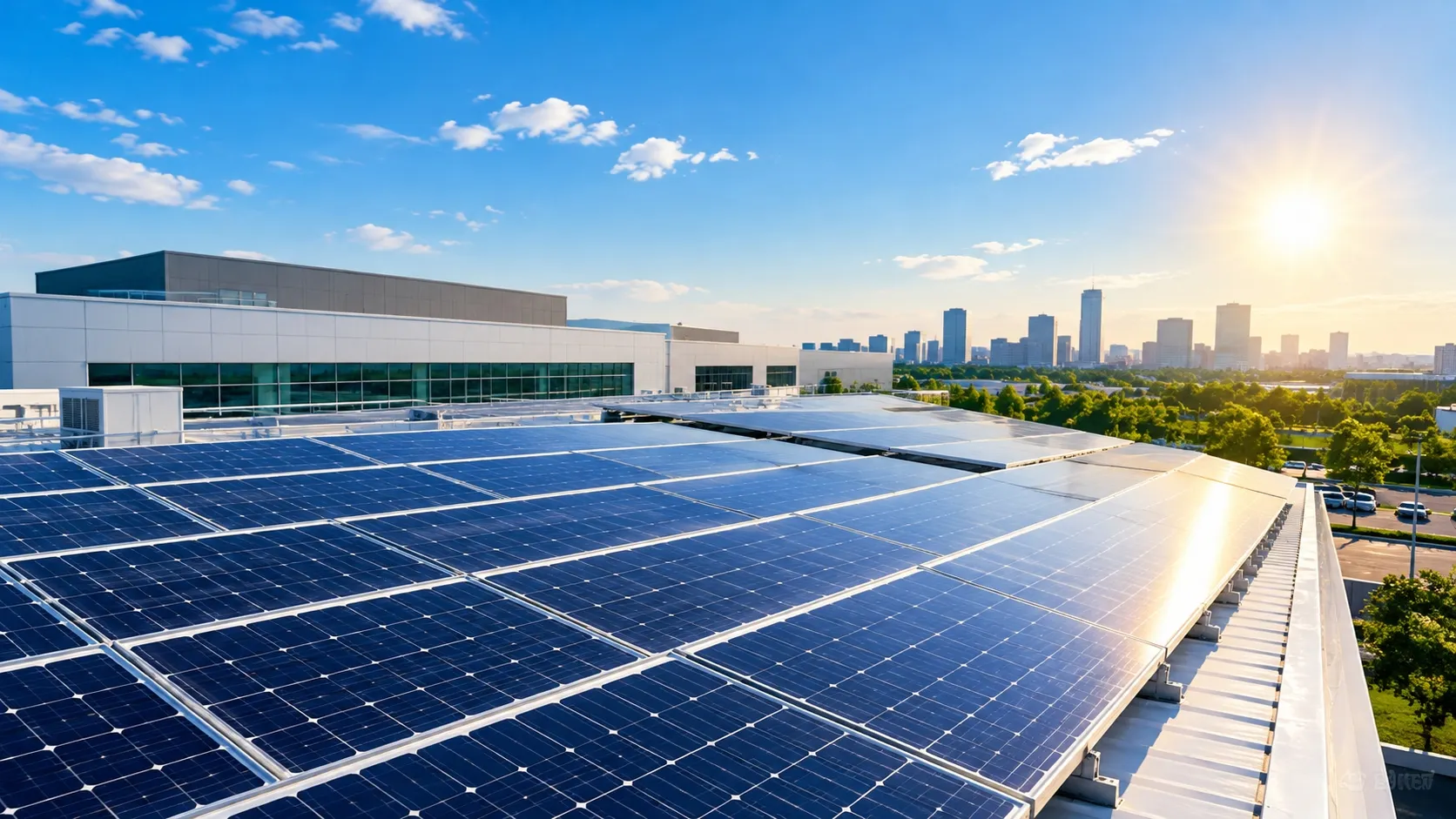
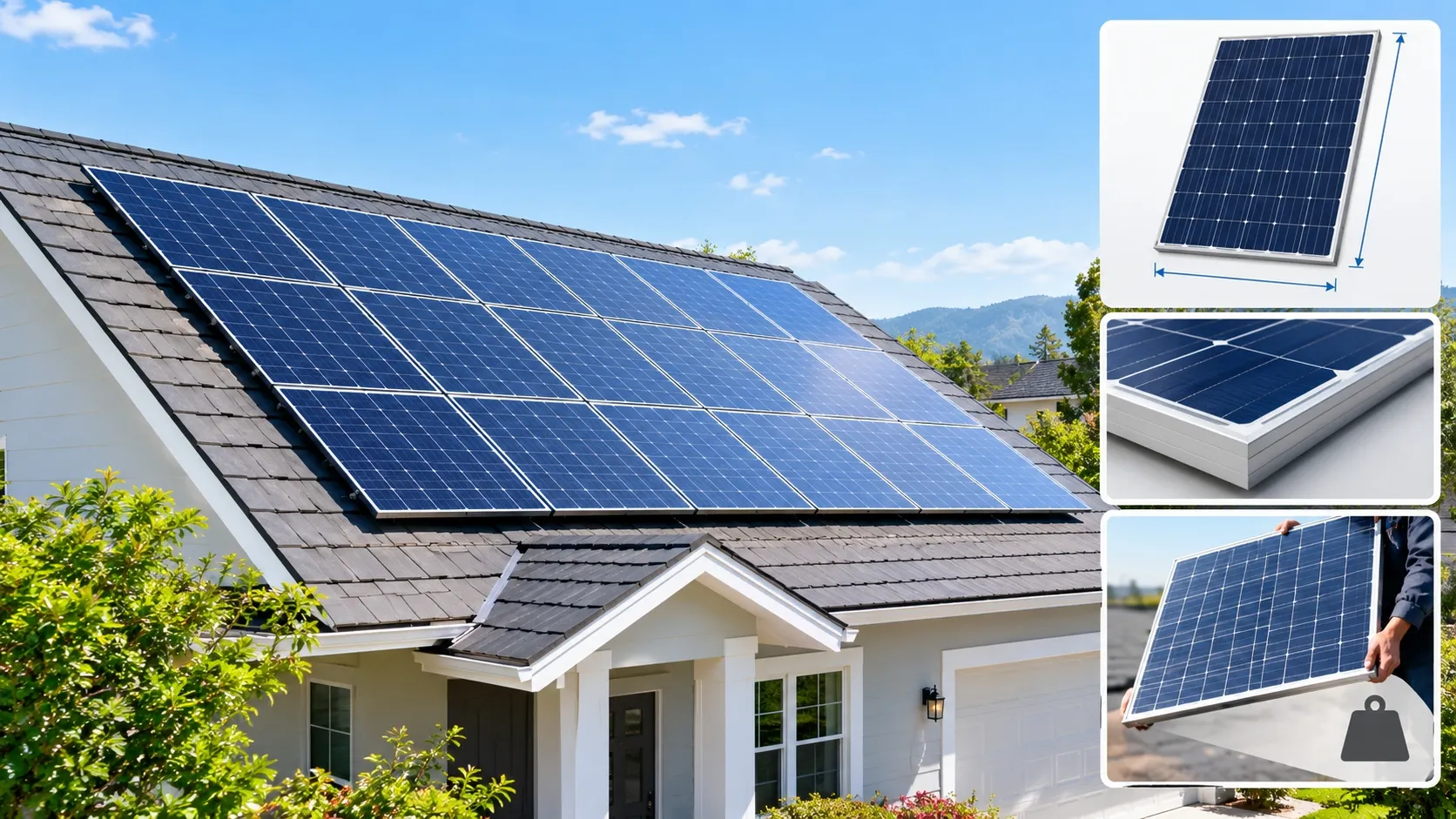
As energy costs continue to rise, solar power is becoming a more attractive option to help lower electricity bills and increase energy independence. But when deciding between commercial and residential solar panels, you need to do more than just look at the panel cost. It involves energy consumption, roof design, installation requirements, long-term financial returns and system capacity.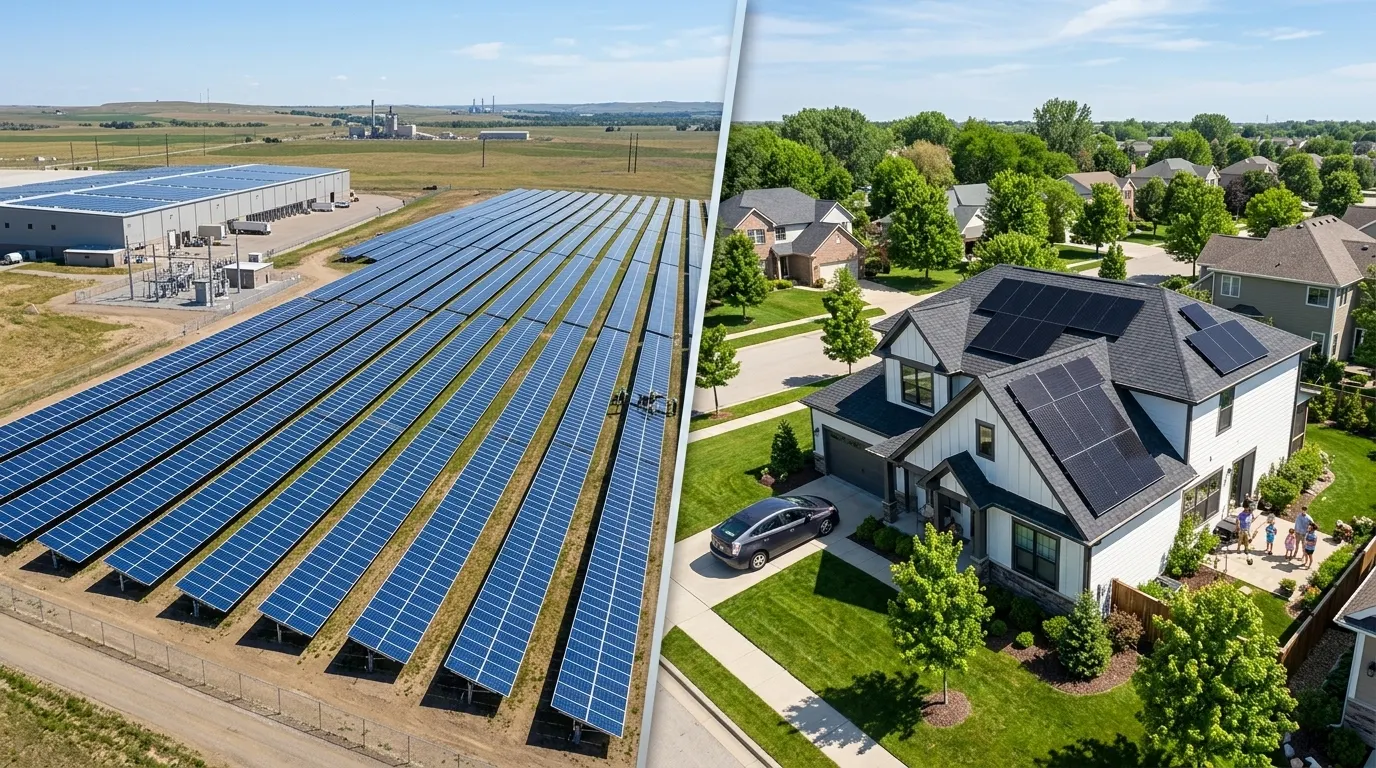
While PV technology is used in both systems to generate electric power from sunlight, commercial and domestic solar power systems have different functions. Recognizing these disparities can help homeowners, business owners and property managers select a solar solution that works for them.
This guide outlines the key distinctions between commercial and residential solar panels, such as size, efficiency, installation expenses, maintenance, and performance.
What Are Commercial and Residential Solar Panels?
Residential solar panels are typically constructed for residential properties, such as houses and townhomes. Their primary function is to balance electricity demand in the home, such as lighting, appliances, heating, cooling and charging electric vehicles.
Residential solar systems are usually quite small and mounted on sloping roofs. The ground mounted systems can also be installed on homes where roof space is limited or not suitable.
Businesses such as offices, warehouses, factories, shopping centers, agricultural facilities, schools and other commercial buildings use commercial solar panels. The systems are systems with higher electricity demand and can be a small commercial system or large, megawatt scale system.
Both types harness sunlight as a source for electricity. The primary distinctions have to do with the scale of the system, equipment design, installation design, and the investment goals of the property owner.
Commercial vs. Residential Solar Panels: Quick Comparison
| Feature | Residential Solar | Commercial Solar |
|---|---|---|
| Primary application | Houses and residential properties | Offices, factories, warehouses, and businesses |
| Typical system capacity | Approximately 5–20 kW | Approximately 25 kW to 1 MW or more |
| Panel configuration | Often smaller, residential-oriented modules | Often higher-output modules for large installations |
| Installation locations | Sloped roofs, garages, or ground mounts | Flat roofs, large rooftops, carports, or open land |
| Electricity demand | Household consumption | Business and industrial consumption |
| Electrical design | Commonly single-phase or split-phase service | Often three-phase electrical infrastructure |
| Project complexity | Generally lower | Often higher due to engineering and permitting |
| Monitoring | Homeowner monitoring applications | Commercial monitoring and performance management |
| Financial priorities | Household bill savings | Operating cost reduction and investment returns |
| Maintenance | Periodic inspections and performance checks | Scheduled maintenance and operational monitoring |
These figures are general examples rather than strict technical limits. Actual system capacity and equipment selection depend on the property's energy demand, available installation area, local regulations, and electrical infrastructure.
1. System Size and Power Output
One of the key differences between commercial and residential solar panels is the scale of the solar panel installation.
Most residential solar installations are between 5 and 20 kW but may be greater for large homes with heavy electrical loads, charging electric vehicles, and/or heating and cooling requirements.
Bigger solar installations tend to be found in commercial buildings, as these structures may use electricity at any time of the day. A 50 kW, 100 kW or many hundreds of kilowatts system can be installed in a warehouse, manufacturing plant or office building to use a significant amount of its energy.
For larger installations, some costs of the project can be split across multiple panels, which may allow the installation cost per watt to be lower. The final economics, however, are dependent on the site, equipment options, labor, electrical upgrades and utility interconnection requirements.
Which size of system are you looking for? The most effective way is to go over old electric bills, look for when most energy is used, and determine what percentage of your electricity usage is feasible to be replaced by solar.
2. Panel Size, Efficiency, and Technology
Commercial solar panels are usually built to be higher power density, suitable for larger rooftops and ground mounted arrays. For residential applications, panels may be selected for a combination of high efficiency, aesthetics, size and roof compatibility.
Commercial panels however, are not necessarily more efficient than residential panels. In both markets, high-tech solutions such as monocrystalline silicon, half-cut cells and high efficiency cell architectures are employed.
A few commercial installations also utilize bifacial solar modules, which also produce electricity when the mounting system and ground or roof surface are appropriate.
These are the factors to consider when comparing solar panels:
-
Module efficiency: The percentage of sunlight converted into electricity.
-
Rated power: The panel's output under standardized test conditions.
-
Temperature performance: How output changes as operating temperatures rise.
-
Degradation rate: How gradually electricity production declines over time.
-
Product and performance warranties: The protections provided by the manufacturer.
Higher-efficiency modules can help in maximizing the generation where space is limited. For a large commercial property, the total system cost, energy yield and lifetime performance may be more important than the best efficiency.
3. Installation Requirements and Roof Design
Installation on residential roofs is usually on a pitched roof that is covered with asphalt shingles, metal roofing or tile. Installers need to assess the roof condition, shading, orientation and structure before panels are installed.
Commercial solar installations are often on large flat roofs, industrial buildings, parking facilities, or on a ground-mounted array. Such conditions add other design variables, such as wind uplift, roof loading, drainage, fire access, and maintenance pathways.
A commercial building might also need a structural engineering appraisement to verify that the roof of the building can hold the solar apparatus. Any existing roof that has to be replaced or strengthened should be considered prior to installation.
Although ground mounted commercial systems provide flexibility in terms of panel orientation and spacing, they can also require additional land preparation, foundation, trenching, and permitting.
It is important to keep in mind that a great design for the installation will depend on each property, not just the fact that it's a residential or commercial project.
4. Commercial vs. Residential Solar Installation Costs
The price of the solar system is much larger than that of the panels. The end price of the project includes equipment, inverters, mounting hardware, labor, permitting, electrical upgrades, and utility interconnection.
Residential systems are smaller and typically don't require a lot of engineering and coordination. However, on more sophisticated roofs or buildings needing an electrical upgrade this can be costly.
Commercial projects can often have a higher startup cost due to size and complexity. Meanwhile, larger installations can take advantage of economies of scale, thereby reducing the cost per watt.
When choosing quotes, consider:
-
Total installed cost and cost per watt.
-
Estimated annual electricity production.
-
Expected utility bill savings.
-
Inverter replacement and maintenance costs.
-
Financing fees and ongoing payments.
-
Available incentives and applicable tax treatment.
-
Expected system lifespan and degradation.
A low initial price does not always mean the best long-term value. A reliable comparison should consider the expected cost and performance of the entire system over its useful life.
5. Energy Savings and Return on Investment
The main advantage of home solar is typically the electricity bill savings of the homeowner. Savings will vary based on the amount of solar electricity used on-site, the price of the electricity from the utility, compensation received for electricity exported to the utility, and the installation costs.
Energy flexibility can be enhanced by battery storage, which can store excess generation during the day for use at night. Installing batteries does come at an initial cost, however, and the cost savings will vary based on electricity pricing, risk of outage, and system design.
Commercial solar can generate significant savings for businesses, who typically have large, predictable electricity costs. If a building uses a large amount of electricity in the day, it may be possible to utilise a lot of the solar power generated in the day directly.
For instance, a manufacturing plant which runs during the daylight can help to compensate for some of the electricity it consumes for its machines, lighting, ventilation and air conditioning.
Many other factors are worth considering, such as demand charges, time-of-use rates, export compensation, seasonal operating schedules, etc. Such factors can significantly impact a commercial solar project's bottom line.
For either system type, there is no single payback period. A good estimate needs to be based on a site specific financial analysis, based on installation costs, energy bills, the amount of energy generated, the cost of electricity, financing options and applicable incentives.
6. Installation Timelines and Permitting
When design, permits and utility approvals have been finalized, residential solar installation is often fairly simple. Physical installation can be performed within a few days, but the process could take a longer time.
The preparation of commercial solar projects is usually more extensive. This can include energy assessments, structural reviews, electrical engineering, fire-code compliance, building permits, utility interconnection studies, and working with property managers, depending on the project.
A small scale commercial rooftop project could be installed relatively quickly, a large-scale commercial or industrial or ground-mounted project could take several months or longer.
Owners of the property should ask for a project timeline that breaks it down into design, permitting, ordering equipment, physical work, inspections, and permission to operate.
7. Maintenance, Monitoring, and Lifespan
Both commercial and residential solar panels can provide electricity for 25 years or longer. The performance and actual lifetime of their products depend on product quality, environmental conditions, installation and maintenance.
The production can be generally tracked by a residential inverter application or an online portal. Regular checks may reveal the presence of damaged wires, loose connections, shading changes or performance issues.
Structured monitoring is also advantageous for commercial systems as a loss in production may impact costs of the operation. It is possible to detect some problems by remote monitoring, preventive maintenance, inverter diagnostics and periodic checks before they have the potential to cause a substantial loss of energy.
Local weather, dust accumulation, snow, vegetation and access to roofs are all factors that should be considered when planning maintenance. Cleaning schedules should be determined on a site-by-site basis, and with manufacturer recommendations in mind, instead of thinking that all panels should be washed frequently.
Before choosing equipment, check warranty for product, performance, inverter and installer.
8. Can You Use Commercial Solar Panels on a Residential Property?
Yes. Occasionally, a solar module that is designed for commercial applications can be installed on a home. However, the equipment must complement the roof structure, mounting system, inverter and electrical design.
However, a commercial panel is not necessarily the best choice for a home. Installed size may become more problematic on complicated roofs, and larger modules may not provide as much flexibility.
Furthermore, it is necessary to realize that panel selection and electrical system design are not one and the same. Just because a module is commercial doesn't mean it's not suitable for a home electrical installation.
If you need to increase panel size or output, consult a qualified installer to assess roof space, loading, electrical compatibility, local code, and the overall installation expense.
In many instances, the standard residential module proves to be simpler and more practical.
9. How to Choose the Right Solar System
Choosing between commercial and residential solar panels starts with understanding your property and electricity usage.
For homeowners:
-
Review at least 12 months of electricity bills.
-
Check roof age, orientation, shading, and available space.
-
Compare panel efficiency, warranties, and installation quality.
-
Evaluate battery storage if backup power or time-shifting is important.
-
Review local utility policies and financing options.
For business owners:
-
Analyze electricity consumption and peak demand.
-
Evaluate rooftop, parking-canopy, and ground-mount opportunities.
-
Confirm structural capacity and electrical infrastructure.
-
Compare cash purchases, loans, leases, and power purchase agreements.
-
Calculate projected savings using realistic utility rates and generation estimates.
-
Investigate current local, state, and federal incentives with qualified professionals.
An experienced solar installer can assess these variables and recommend a system that balances energy production, project cost, and long-term reliability.
Frequently Asked Questions
What is the main difference between commercial and residential solar panels?
The main difference is how the panels and overall systems are selected and configured. Residential installations are designed around household energy needs and roof constraints, while commercial systems are generally built for larger electricity loads, bigger installation areas, and more complex electrical infrastructure.
Are commercial solar panels more efficient than residential panels?
Not necessarily. Both categories include high-efficiency modules. The best comparison considers rated efficiency, power output, temperature performance, degradation, warranties, and the total energy generated under actual site conditions.
Are commercial solar panels cheaper per watt?
They can be. Larger commercial projects may spread design, labor, and equipment costs across more installed capacity. However, complex engineering, electrical upgrades, permitting, and utility requirements can affect the final cost per watt.
How long do commercial and residential solar panels last?
Many solar panels are designed to operate for 25 years or longer. Their output gradually declines over time, and the actual service life depends on product quality, environmental conditions, installation, and maintenance.
Can solar panels power air conditioning?
Yes. Properly sized solar systems can supply electricity for air conditioning in homes and commercial buildings. The system design should account for cooling demand, operating schedules, inverter capacity, and whether battery backup is required.
Is commercial solar worth the investment?
Commercial solar may be worthwhile for businesses with high electricity consumption, suitable installation space, and favorable utility rates. A detailed financial analysis should compare installation costs with expected savings, maintenance expenses, financing, and applicable incentives.
How do I estimate the payback period for a solar system?
Divide the net upfront investment by the estimated annual net savings for a simple payback estimate. A more complete financial model should account for changing electricity rates, system degradation, financing, maintenance, incentives, and the time value of money.
Conclusion
When deciding between commercial solar panels and residential solar panels, it is important to consider energy needs, available space, electrical infrastructure, installation costs, and long-term financial goals.
Residential solar is typically most suitable for residential customers who want to decrease their residential electricity bills and become more energy independent. Commercial solar work is suitable for larger sized installations with the aim of lowering operating expenses for businesses and aiding their sustainability objectives.
Instead of considering only panels size and efficiency, consider the entire solar system, such as the amount of energy it will produce, the installation, warranties, and financial performance.
Sunergy Solutions offers residential and commercial solar services to assist property owners in determining their solar choices and planning installations in relation to their energy requirements. A professional site evaluation and tailored proposal can guide and advise you on what solar solution is suitable for your property.
Share on Social:


In This Article
- 1 What Are Commercial and Residential Solar Panels?
- 2 Commercial vs. Residential Solar Panels: Quick Comparison
- 3 1. System Size and Power Output
- 4 2. Panel Size, Efficiency, and Technology
- 5 3. Installation Requirements and Roof Design
- 6 4. Commercial vs. Residential Solar Installation Costs
- 7 5. Energy Savings and Return on Investment
- 8 6. Installation Timelines and Permitting
- 9 7. Maintenance, Monitoring, and Lifespan
- 10 8. Can You Use Commercial Solar Panels on a Residential Property?
- 11 9. How to Choose the Right Solar System
-
12
Frequently Asked Questions
- 12.1 What is the main difference between commercial and residential solar panels?
- 12.2 Are commercial solar panels more efficient than residential panels?
- 12.3 Are commercial solar panels cheaper per watt?
- 12.4 How long do commercial and residential solar panels last?
- 12.5 Can solar panels power air conditioning?
- 12.6 Is commercial solar worth the investment?
- 12.7 How do I estimate the payback period for a solar system?
- 13 Conclusion
