


Solar System Solar Panel MPPT Design Guide: Voltage, Current and String Configuration Explained
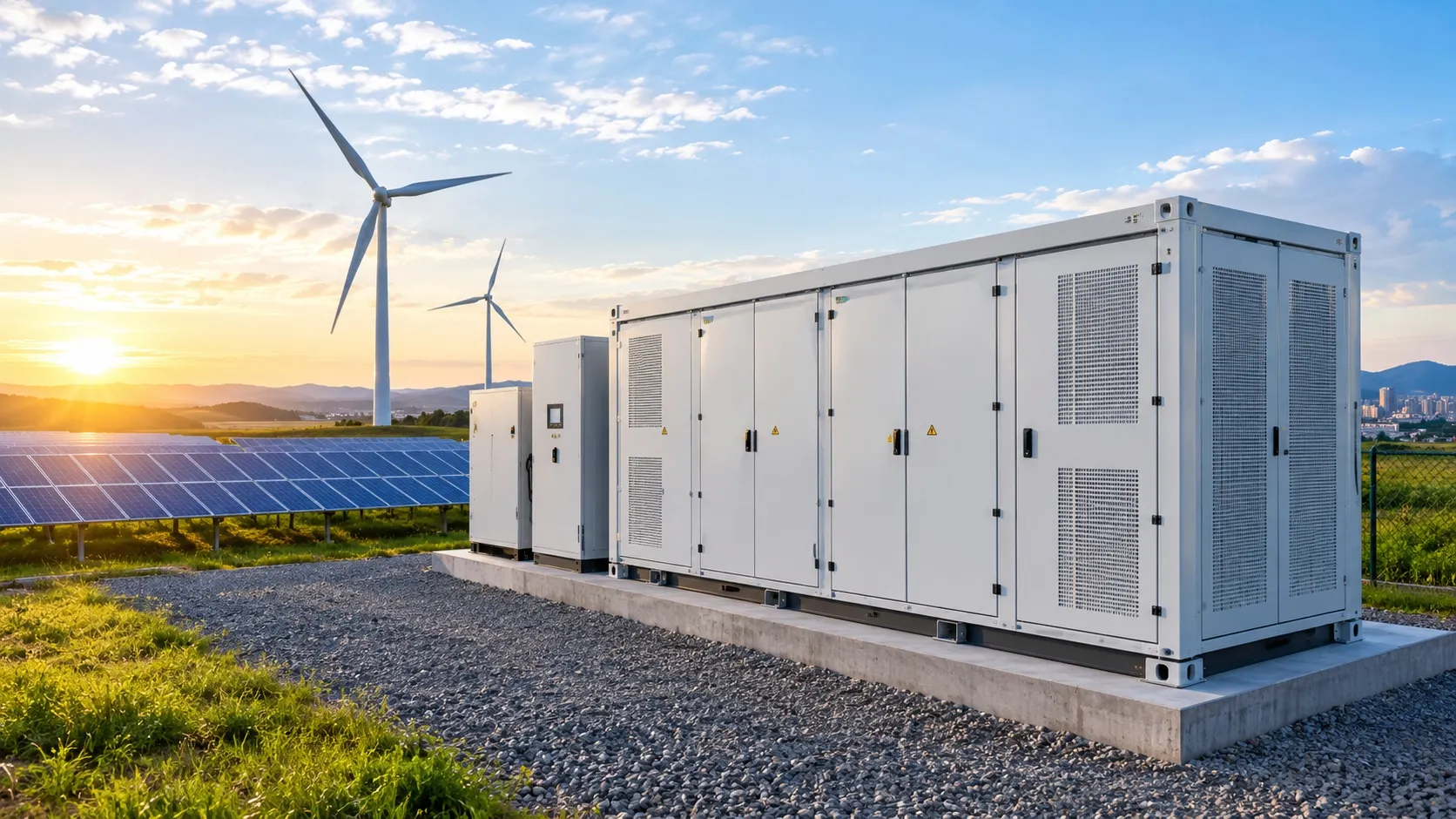


A Solar System Solar Panel array should never be matched to an inverter by wattage alone. For a stable residential solar system, installers must also verify string voltage, MPPT operating range, input current, temperature behavior and roof conditions.
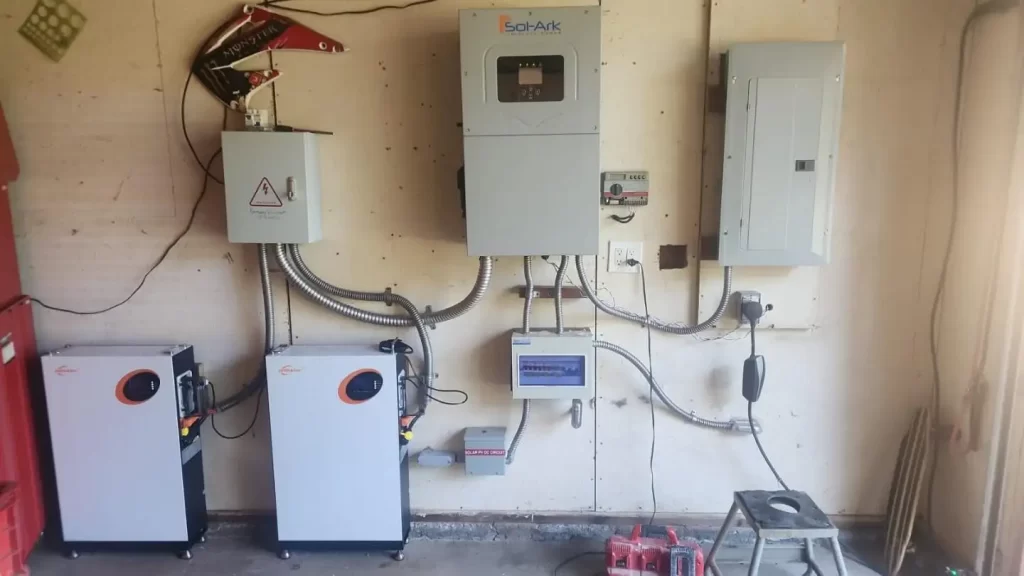
At JSDSolar, we view MPPT design as a system-level engineering task. The panel, inverter, battery and DC-side protection must work within the same electrical window under both normal and extreme operating conditions.
Why Solar Panel Wattage Alone Is Not Enough
Consider a Solar System Solar Panel array using eight 580W modules:
8 × 580W = 4.64kWp
This tells us the nominal PV capacity, but it does not tell us whether the array is electrically compatible with the inverter.
A correct MPPT design must independently check three boundaries:
• Maximum voltage: Cold-weather string Voc must remain below the inverter's maximum PV input voltage.
• Minimum operating voltage: Hot-weather string Vmp must stay above the lower MPPT threshold.
• Maximum current: Parallel strings must remain within the MPPT input-current and short-circuit-current limits.
This is the first important design rule:
PV power, PV voltage and PV current must be evaluated separately.
Four Solar System Solar Panel Parameters Control MPPT Design
Every professional string calculation begins with Voc, Vmp, Isc and Imp.
| Parameter | Technical Meaning | Main Design Use |
| Voc | Open-circuit voltage | Determines maximum string length |
| Vmp | Voltage at maximum power | Determines MPPT operating voltage |
| Isc | Short-circuit current | Used for current and protection checks |
| Imp | Current at maximum power | Used for normal MPPT input-current checks |
| Temperature coefficient | Voltage/power change with temperature | Used for cold and hot corrections |
For identical Solar System Solar Panel modules:
• Series connection increases voltage.
• Parallel connection increases current.
• Total wattage may stay the same even when electrical behavior changes significantly.
That distinction is critical when selecting between long strings and parallel strings.
Cold Voc Sets the Maximum Number of Panels in Series
PV module voltage increases as cell temperature falls. This means the Voc printed on the module datasheet at STC is not always the highest voltage the system will experience.
The key design condition is:
Cold-corrected String Voc < Inverter Maximum PV Voltage
A professional calculation should therefore use:
• Module Voc at STC;
• Voc temperature coefficient;
• Minimum expected module temperature;
• Number of modules in series.
If too many Solar System Solar Panel modules are placed in one string, a cold winter morning may push the DC voltage above the inverter's allowable input limit.
This is a voltage-design issue, not a wattage issue.
High Temperature Determines the Minimum String Length
The opposite problem occurs when modules become hot.
As cell temperature rises, Vmp decreases. If the total string Vmp becomes too low, the inverter may remain outside its optimum MPPT operating range.
The design check becomes:
Hot-condition String Vmp > MPPT Minimum Operating Voltage
This means a string can be:
• Too long for cold conditions;
• Too short for hot conditions.
For reliable Solar System Solar Panel operation, both limits should be checked before the installation layout is finalized.
8S1P vs. 4S2P: Same Power, Different MPPT Behavior
Eight 580W modules can theoretically be arranged in different ways. Two common examples are 8S1P and 4S2P.
| Design Factor | 8S1P | 4S2P |
| Total PV Power | 4.64kWp | 4.64kWp |
| Array Voltage | Higher | Lower |
| Array Current | Lower | Higher |
| Cold-voltage risk | Higher | Lower |
| Low-MPPT-voltage risk | Lower | Higher |
| Cable current loss | Usually lower | Usually higher |
| Main design check | Maximum DC voltage | MPPT current + minimum voltage |
8S1P
Eight panels in series produce a higher operating voltage and lower array current.
Potential advantages include:
• Lower current through DC cables;
• Lower I²R losses;
• Improved voltage margin above the MPPT minimum.
However, the cold-corrected string Voc must remain below the inverter maximum.
4S2P
Two four-panel strings connected in parallel reduce string voltage but approximately double the array current.
This configuration requires closer attention to:
• Maximum current per MPPT;
• Maximum short-circuit current;
• Conductor sizing;
• Connector current rating;
• Parallel-string protection requirements.
Neither configuration is automatically better. The correct Solar System Solar Panel string design depends on the exact module and inverter datasheets.
One MPPT or Two Depends on Roof Conditions
Multiple MPPTs are most valuable when different panel groups operate under different conditions.
A single MPPT is typically more suitable when modules share:
• The same orientation;
• Similar tilt angle;
• Similar irradiance;
• Similar shading pattern;
• Identical electrical characteristics.
Separate MPPT inputs are more useful for:
• East-west roof layouts;
• Different roof pitches;
• Partial chimney or tree shading;
• Separate panel groups with different operating conditions.
Connecting mismatched arrays to one tracker can force the MPPT to operate at a compromise point rather than the optimum point for each group.
Matching the JSDSolar 6kW System Correctly
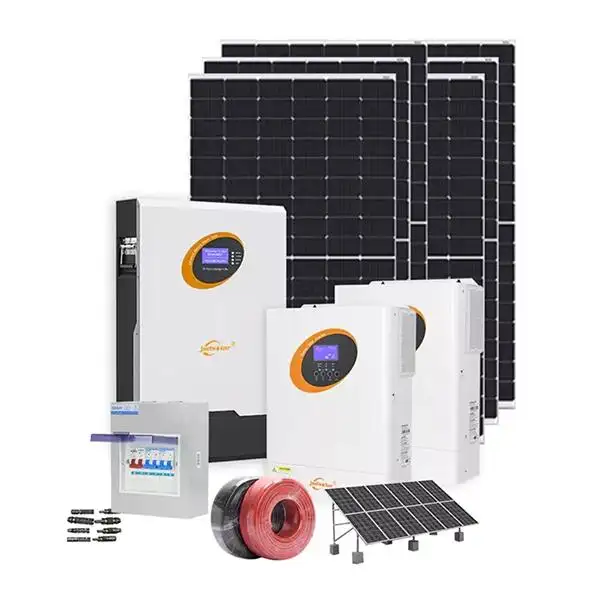
The JSDSolar 6kW residential solar kit uses eight 580W modules, giving a nominal PV array capacity of 4.64kWp. The system also integrates a 48V/51.2V 200Ah LiFePO₄ battery, inverter architecture, PV cabling and electrical distribution components.
It is important to distinguish four different ratings:
• PV array capacity: 4.64kWp
• Inverter/load rating: Up to 6kW
• Battery capacity: Based on battery voltage × amp-hour rating
• Daily energy production: Measured in kWh and dependent on irradiation and system losses
A Solar System Solar Panel array does not need to equal the inverter's AC rating exactly.
Before approving the final configuration, JSDSolar engineers or installers should verify:
• Maximum PV input voltage;
• MPPT voltage window;
• Startup voltage;
• Maximum input current per MPPT;
• Maximum short-circuit current;
• Maximum supported PV power;
• Battery charging limits;
• DC protection requirements.
Cable Loss and DC Installation Still Matter
A correct string calculation can still perform poorly if the DC installation is not designed properly.
Because resistive losses follow:
P loss = I²R
higher-current configurations require more attention to cable size and run length.
For each Solar System Solar Panel circuit, installers should verify:
• DC cable cross-section;
• Voltage drop;
• Connector rating;
• Fuse or breaker selection;
• DC isolator rating;
• Surge protection;
• Polarity;
• Grounding requirements.
Parallel strings usually require more current-related checks than a single high-voltage string.
Commissioning Should Confirm the MPPT Design
After installation, measured values should be compared with the design calculations.
Important commissioning checks include:
• Actual string Voc;
• Operating Vmp;
• Array current;
• String-to-string current balance;
• Inverter MPPT status;
• Unexpected clipping;
• Connector heating;
• Abnormal shading;
• Polarity and insulation condition.
If the measured values differ significantly from the calculated values, the Solar System Solar Panel configuration should be reviewed before long-term operation.
What Buyers Should Request Before Ordering
A professional solar kit quotation should include more than panel wattage and inverter output.
Buyers should request:
• Panel electrical datasheet;
• Inverter MPPT specifications;
• Proposed string configuration;
• Minimum and maximum operating temperature assumptions;
• DC wiring diagram;
• Protection-device specifications;
• Applicable module and inverter certifications;
• Commissioning requirements.
The correct procurement sequence is:
Module Data → Temperature Check → String Design → MPPT Check → Roof Layout → Protection Design → Standards Verification
A More Reliable Approach to Solar System Design
A well-designed Solar System Solar Panel system is built around electrical compatibility, not only nominal wattage. Voc, Vmp, Isc, Imp, MPPT limits, roof orientation and temperature must all be evaluated together.
JSDSolar's 6kW Complete Solar Kit combines solar modules, LiFePO₄ storage, inverter conversion and system accessories within one residential solar architecture. For project buyers and installers, the next step should always be to confirm the final MPPT and string configuration against the exact site conditions and selected equipment datasheets before installation.
FAQs
Q1. What Should Buyers Check Before Choosing a Solar System Solar Panel Kit?
Buyers should review the panel Voc, Vmp, Isc and Imp, inverter MPPT voltage range, maximum PV voltage, input-current limits, battery capacity, roof conditions and expected local temperatures. These parameters determine whether the complete system is electrically compatible.
Q2. How Many Solar Panels Are Included in the JSDSolar 6kW Complete Solar Kit?
The JSDSolar 6kW residential kit lists eight 580W solar panels, providing approximately 4.64kWp of nominal PV array capacity. The PV array rating should be distinguished from the inverter or maximum load rating.
Q3. Does a 6kW JSDSolar System Require Exactly 6kW of Solar Panels?
No. The Solar System Solar Panel DC capacity and inverter AC rating do not have to be identical. System designers must consider DC/AC sizing, MPPT limits, expected solar irradiation, battery charging requirements and load profile.
Q4. How Should JSDSolar Solar Panels Be Configured for MPPT Input?
The correct series and parallel configuration depends on the exact panel electrical parameters and inverter limits. Installers should calculate cold-weather Voc, hot-condition Vmp, operating current and short-circuit current before selecting an 8S1P, 4S2P or other configuration.
Q5. What Battery Is Used With the JSDSolar 6kW Solar Kit?
The product configuration includes a 48V/51.2V 200Ah LiFePO₄ battery. Battery voltage should not be confused with the PV string voltage because the inverter and MPPT power-conversion stage manage energy transfer between the solar array and battery.


In This Article
- 1 Why Solar Panel Wattage Alone Is Not Enough
- 2 Four Solar System Solar Panel Parameters Control MPPT Design
- 3 Cold Voc Sets the Maximum Number of Panels in Series
- 4 High Temperature Determines the Minimum String Length
- 5 8S1P vs. 4S2P: Same Power, Different MPPT Behavior
- 6 One MPPT or Two Depends on Roof Conditions
- 7 Matching the JSDSolar 6kW System Correctly
- 8 Cable Loss and DC Installation Still Matter
- 9 Commissioning Should Confirm the MPPT Design
- 10 What Buyers Should Request Before Ordering
