


Solar Power System for Home: Complete Guide to Home Solar
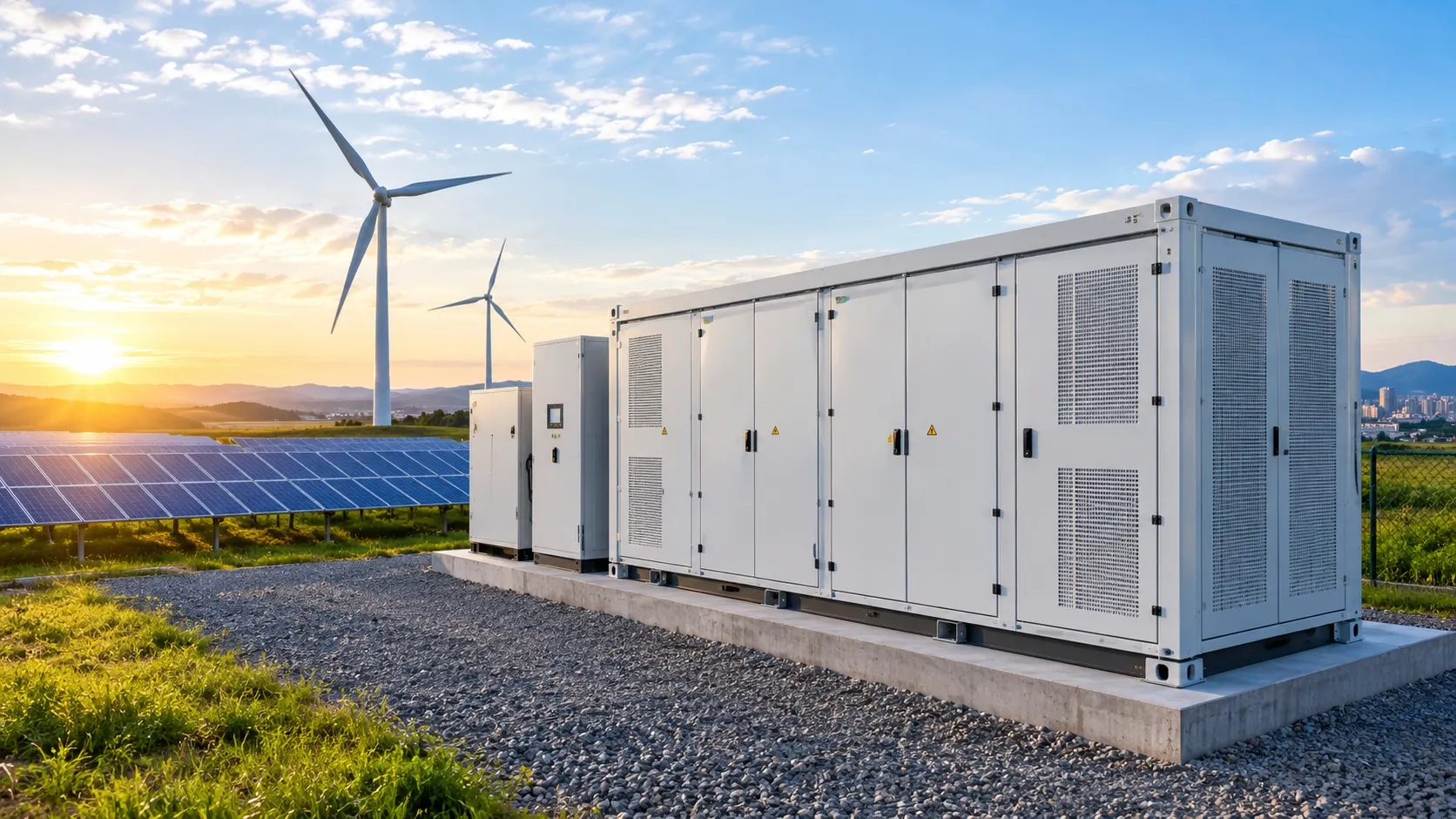
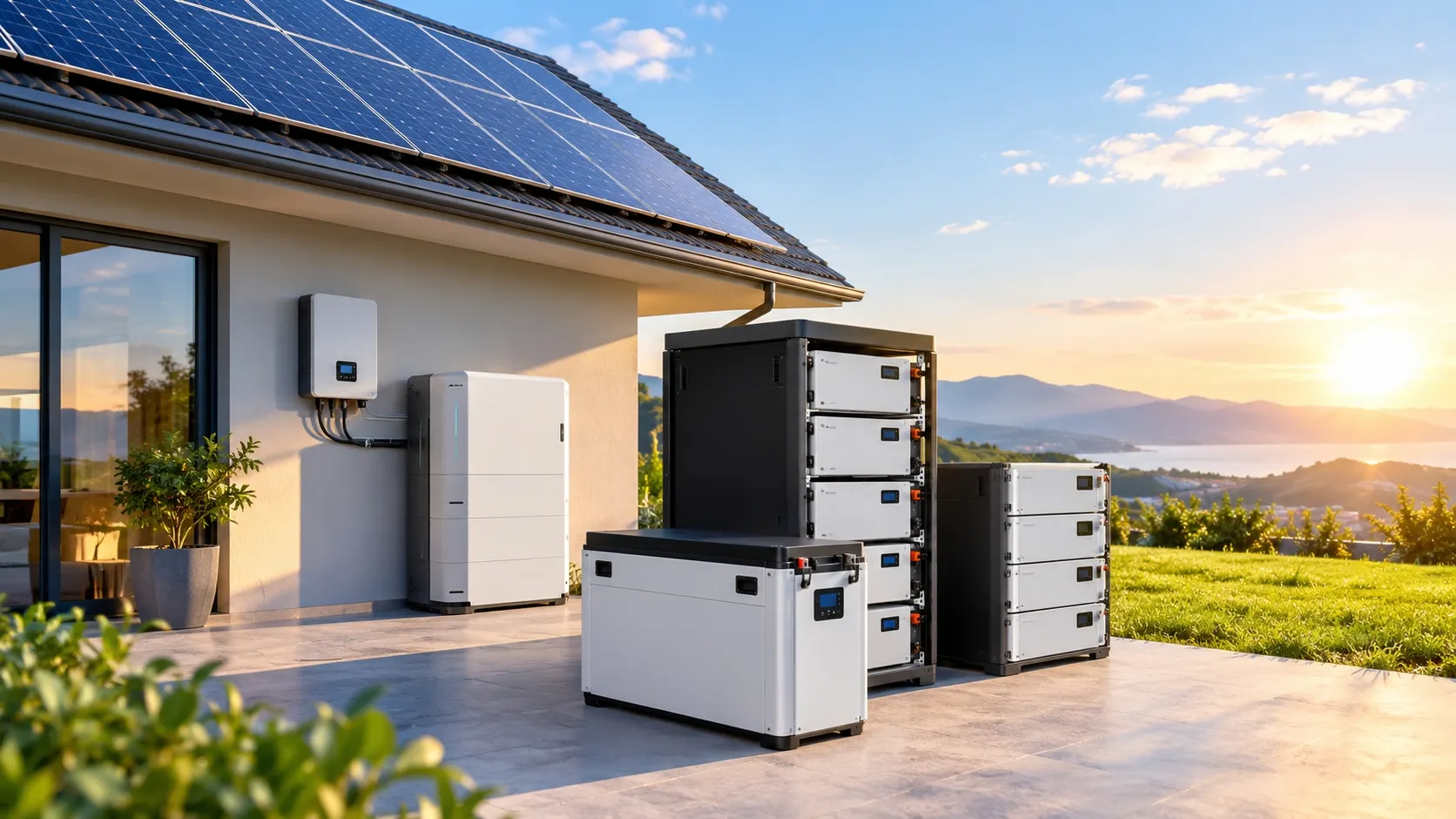
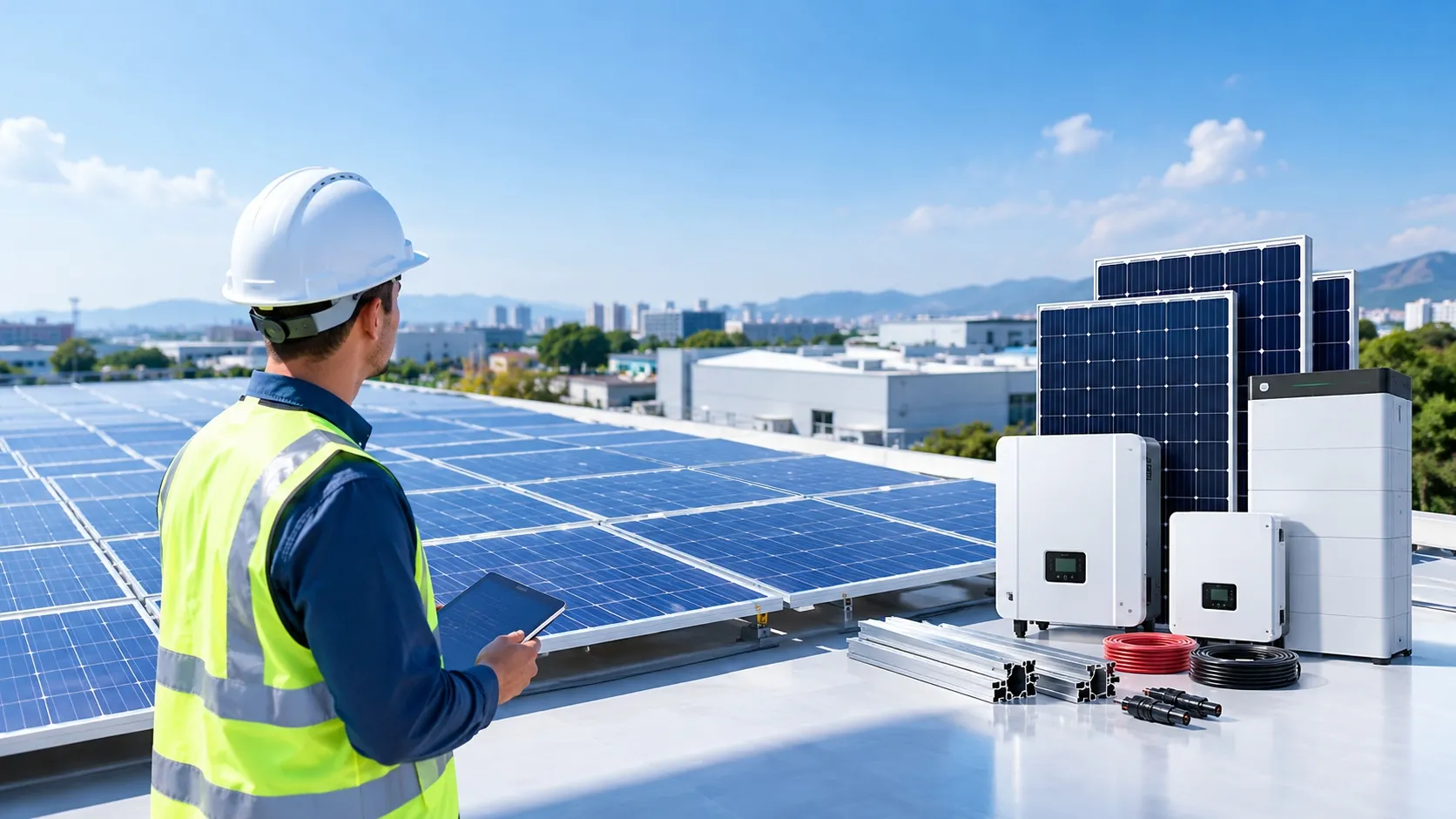
With utilities on the rise and power outages becoming a more and more prevalent issue, homeowners are turning to their own power generation, storage, and management systems. A solar power system for home can enable you to lessen your reliance on the utility grid, save on electricity bills, and provide electric power in case a power outage occurs.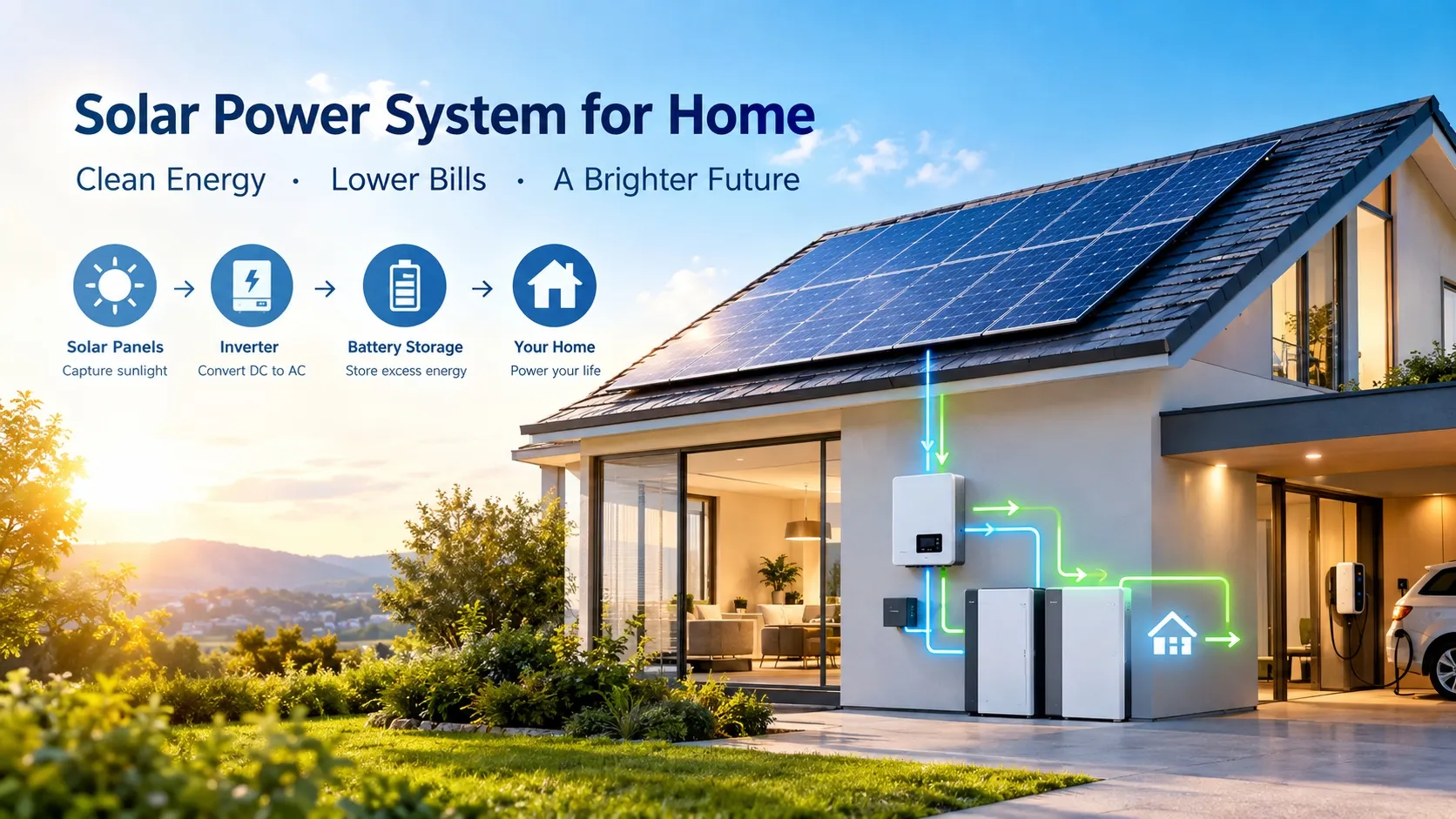
But picking a residential solar system isn't simply about putting solar panels up. Full installation can consist of solar panels, an inverter, batteries, energy management hardware, and connection to the utility grid.
This guide will explain the basics of a home solar power system, the main types, the amount of battery storage you may require and what aspects you should consider when selecting a system.
What Is a Solar Power System for Home?
Solar power system for home is a power system used for generating power through the sun to power home appliances and electrical systems.
There are four main things that a residential solar system contains:
- Solar panels – Convert sunlight into DC electricity.
- Solar inverter – Converts DC electricity into AC power used by household appliances.
- Solar battery – Stores excess electricity for nighttime use or backup power.
- Energy management system – Controls how electricity is generated, stored, consumed, and exported.
During sunny hours, solar panels generate electricity for the home. If production exceeds household demand, the surplus can charge the battery. Stored energy can then be used at night, during expensive utility periods, or during a power outage.
This combination makes a modern home solar system more than a simple electricity-generation solution. It becomes an integrated home energy management system.
How Does a Home Solar System Work?
The operating process is relatively straightforward.
1. Solar Panels Generate Electricity
Solar panels capture sunlight and convert it into direct-current electricity. The amount of electricity produced depends on factors such as solar irradiance, panel efficiency, roof orientation, shading, temperature, and system design.
2. The Inverter Converts the Electricity
Household appliances generally use alternating-current electricity. The solar inverter converts the DC electricity generated by the panels into AC electricity that can be used by the home's electrical system.
Modern hybrid inverters can also manage battery charging and discharging, making them an important part of an integrated residential solar power system.
3. The Home Uses Solar Electricity
When solar production is higher than household demand, the available electricity can directly power appliances such as refrigerators, air conditioners, washing machines, lighting, computers, and EV chargers.
Using solar electricity directly can improve self-consumption and reduce the amount of electricity purchased from the utility.
4. Excess Energy Charges the Battery
Instead of sending all surplus electricity to the grid, a system with battery storage can store some of that energy.
The battery can later supply electricity after sunset or during periods when electricity rates are higher.
5. Stored Energy Provides Backup
During a utility outage, a properly designed solar-plus-storage system can continue supplying selected circuits or, depending on system capacity and installation, much of the home.
This is one of the major differences between a basic grid-connected solar installation and a complete home solar battery system.
Main Types of Solar Power Systems for Homes
There are three common system architectures: grid-tied, off-grid, and solar-plus-storage.
Grid-Tied Solar System
A grid-tied solar system remains connected to the utility grid.
Solar panels generate electricity during the day, while the home can draw electricity from the grid when solar production is insufficient.
The main advantages include:
- Lower upfront complexity
- Reduced electricity purchases
- Ability to use the utility grid when solar production is low
- Suitable for many suburban and urban homes
However, traditional grid-tied solar systems without batteries generally do not provide backup power during a grid outage. In many installations, the solar inverter must shut down when the grid fails for safety reasons.
Off-Grid Solar System
An off-grid solar power system operates independently of the utility grid.
This configuration is often used for remote homes, cabins, agricultural properties, and locations where grid electricity is unavailable or unreliable.
Because there is no utility grid to provide backup, an off-grid system normally requires enough solar generation and battery capacity to cover periods of low solar production.
System sizing is therefore particularly important.
Solar System With Battery Backup
For homeowners who want both energy savings and backup power, a solar-plus-battery system can provide a more flexible solution.
Solar panels generate electricity during the day, while batteries store excess energy. The stored electricity can then be used at night or during an outage.
This setup can also help homeowners manage time-of-use electricity rates by shifting energy consumption from expensive periods to lower-cost periods.
How Much Solar Power Does a Home Need?
There is no universal solar system size that works for every household.
The correct system depends on several factors:
- Annual electricity consumption
- Average daily energy usage
- Local sunlight conditions
- Roof size and orientation
- Roof shading
- Utility electricity rates
- Desired backup duration
- Electric vehicle charging
- Heating and cooling loads
- Future energy consumption
For example, a home with central air conditioning, an electric heat pump, and an EV will typically require more generation and storage capacity than a smaller home with modest electricity consumption.
The best starting point is therefore your electricity bill rather than simply the size of your roof.
Review at least 12 months of electricity consumption to identify seasonal patterns. Then consider future loads such as an EV, pool equipment, heat pump, or home addition.
How Much Battery Storage Does a Home Need?
Battery capacity is measured in kilowatt-hours (kWh).
A battery with higher usable capacity can provide power for a longer period, but the correct size depends on which appliances you want to operate during an outage.
Essential loads may include:
- Refrigerator
- Lighting
- Wi-Fi router
- Security systems
- Computers
- Medical equipment
- Garage doors
- Heating or cooling equipment
A homeowner focused on emergency backup may only need enough storage for essential circuits. Someone seeking greater energy independence may require substantially more battery capacity.
It is also important to distinguish energy capacity from power output.
kWh measures how much energy a battery stores, while kW measures how much power the system can deliver at one time.
A battery may have enough stored energy to operate a refrigerator for many hours but still need sufficient power output to handle high-demand appliances or motor startup loads.
Why Add Battery Storage to a Home Solar System?
Solar batteries provide several benefits beyond emergency backup.
Use More of Your Own Solar Energy
Solar production is usually highest during daylight hours, while household electricity consumption can remain high in the evening.
Battery storage allows excess daytime generation to be used later.
Reduce Grid Dependence
With sufficient solar generation and storage, homeowners can purchase less electricity from the utility.
This can become particularly valuable when electricity prices increase.
Backup During Power Outages
Battery storage can keep important household loads operating when the utility grid fails, provided the system is correctly designed and installed for backup operation.
Improve Energy Management
Smart energy systems can automatically determine when to charge and discharge batteries based on solar production, household demand, electricity rates, and backup requirements.
This can make a solar power system for home more efficient and easier to manage.
What Should You Consider Before Installing Solar?
Before choosing a residential solar system, evaluate the entire energy system rather than focusing only on panel wattage.
1. Analyze Your Electricity Consumption
Start with historical electricity bills. Look for monthly and seasonal usage patterns.
2. Evaluate Your Roof
Roof orientation, pitch, shading, structural condition, and available installation area can all affect solar production.
3. Plan for Future Loads
Consider whether you may add an EV, heat pump, pool, workshop equipment, or other high-power appliances.
4. Decide Your Backup Goals
Do you want emergency power for essential appliances, or do you want whole-home backup?
Your answer will significantly affect battery capacity, inverter output, and system cost.
5. Check Local Requirements
Residential solar installations may require permits, utility interconnection approval, inspections, and equipment that meets applicable electrical and safety requirements.
A qualified installer can help determine which requirements apply to your property.
Is a Solar Power System for Home Worth It?
For many homeowners, solar can provide both economic and energy-resilience benefits.
The value of a system depends on factors such as local electricity prices, available incentives, solar production, installation costs, battery pricing, utility policies, and household electricity consumption.
A solar system can be particularly attractive for homeowners who:
- Have high electricity consumption
- Experience frequent power outages
- Live in areas with strong solar resources
- Have significant daytime or evening energy demand
- Own an EV
- Want greater control over household energy costs
- Prefer to increase energy independence
However, every property is different. A professional system assessment is recommended before making a major investment.
Frequently Asked Questions
Can solar panels power an entire house?
Yes. A properly sized residential solar system can generate enough electricity to cover a home's annual consumption. The actual system size depends on energy usage, solar conditions, roof characteristics, and system design.
Can solar panels work during a power outage?
Solar panels alone generally cannot provide conventional backup power when the utility grid fails. A compatible battery and backup-capable inverter are typically required for continued operation during an outage.
Is battery storage necessary for home solar?
No. A grid-connected solar system can operate without batteries. However, battery storage can increase solar self-consumption, provide backup power, and improve control over when stored electricity is used.
What is the difference between kW and kWh?
The difference is that kW is a measure of power output, whereas kWh is a measure of energy capacity and/or consumption over a period of time. Simple explanation: kW indicates the amount of power that a system can provide at a single time, while kWh indicates the amount of energy that can be provided.
Can a home solar system be expanded later?
Many modern systems are modular and can be expanded with additional energy (usually battery) when the energy needs of the household grow. Expansion must be carefully thought out, and should be compatible and meet system specifications.
Final Thoughts
A contemporary solar energy system for the house is a lot more than solar panels. The best energy solutions for the home involve intelligent energy management, battery storage, and solar energy generation, all with the right grid connections.
A small grid-tied solar system might be the most cost effective energy-saving solution for some homeowners. If you're on the property, an off-grid solar system might be better. A solar-plus-battery solution may provide more holistic options for homeowners who want to save money on electricity and also have a reliable backup power source.
The trick is to design the system to fit your specific load, energy requirements, backup needs, and location and climate. When properly designed, residential solar can give homeowners a greater sense of energy independence, energy resilience, and of long-term energy costs.
Share on Social:


In This Article
- 1 What Is a Solar Power System for Home?
- 2 How Does a Home Solar System Work?
- 3 Main Types of Solar Power Systems for Homes
- 4 How Much Solar Power Does a Home Need?
- 5 How Much Battery Storage Does a Home Need?
- 6 Why Add Battery Storage to a Home Solar System?
- 7 What Should You Consider Before Installing Solar?
- 8 Is a Solar Power System for Home Worth It?
- 9 Frequently Asked Questions
- 10 Final Thoughts
