


Best Home Power Inverter for Solar Systems
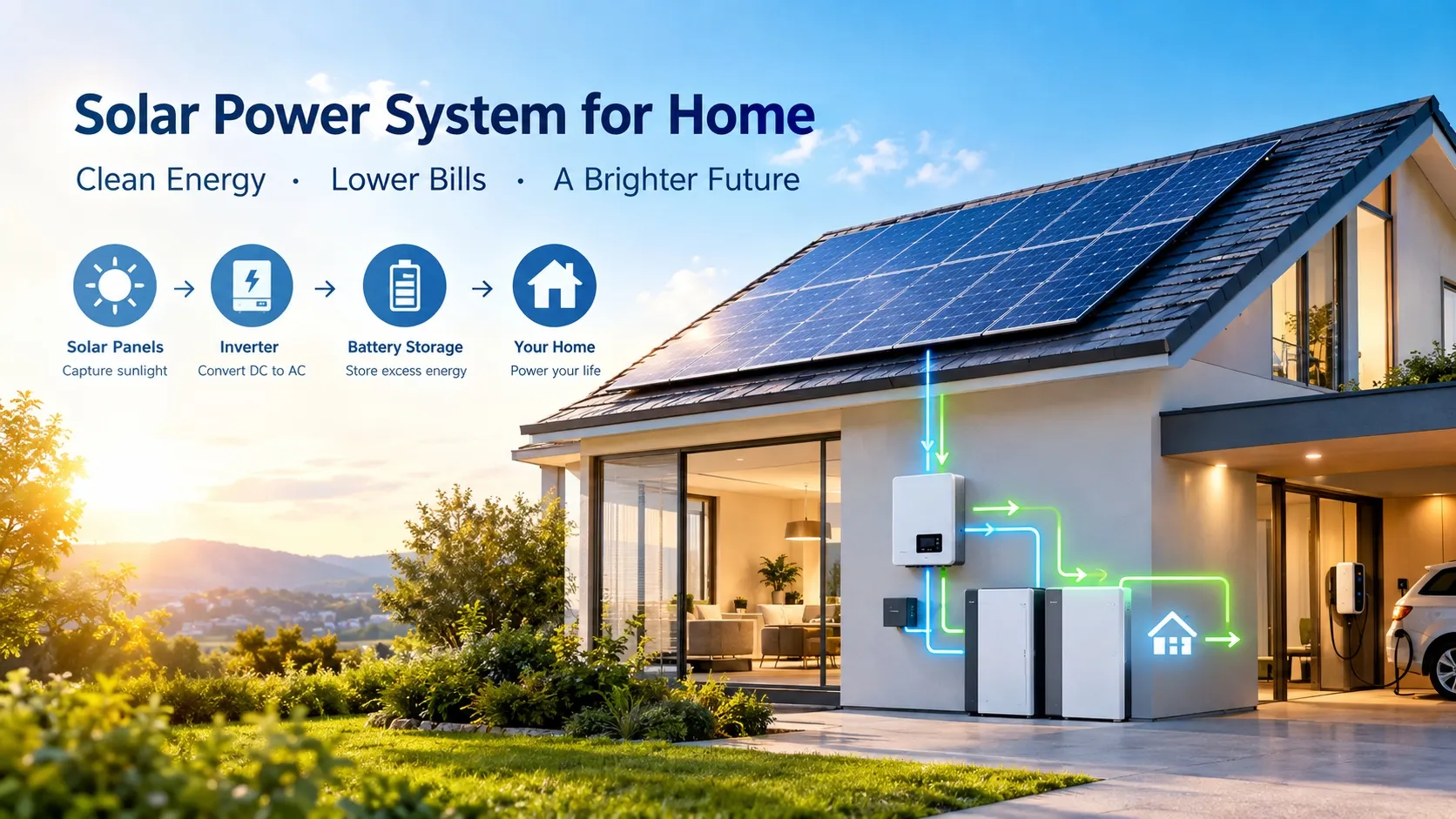
When designing a solar system for home use, one of the most crucial choices is picking the correct house power inverter. One drawback of solar energy is that panels produce direct current (DC) electricity, while most appliances in homes and buildings require alternating current (AC). This is an important conversion that the inverter does, in addition to its role in energy management, system monitoring, battery integration, and backup power.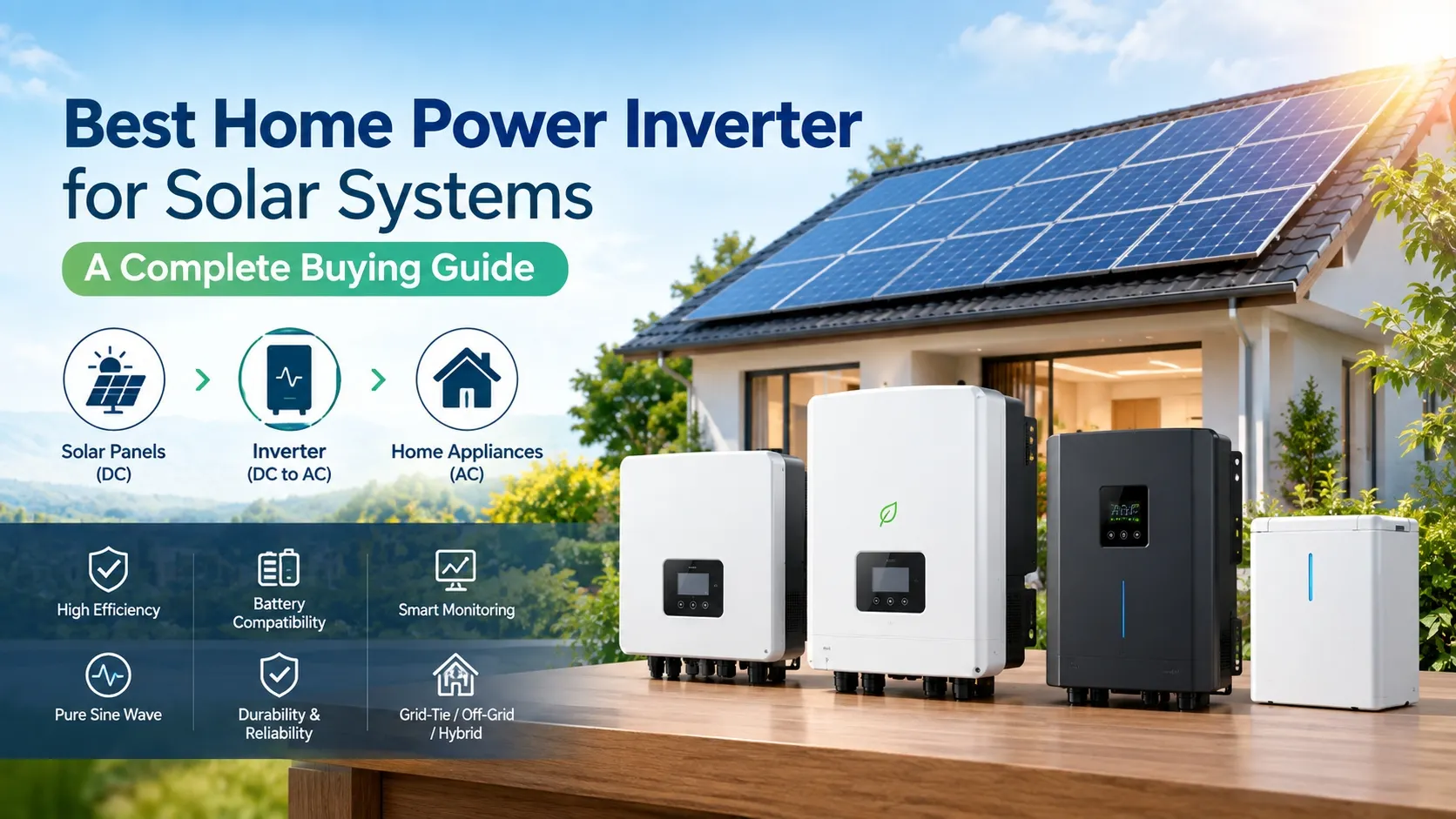
So, which inverter is the best home power inverter for solar?
It varies with the energy use in your home, type of solar panels, any shading, storage batteries and the type of system whether it's grid-tied, hybrid or fully off-grid.
In this guide, you will learn about major categories of solar inverters, features to be compared and how to select the most appropriate solar inverter for home.
What Is a Home Solar Power Inverter?
The home solar power inverter is the electrical device that transforms the energy generated by the solar panels into energy that can be utilized by the appliances.
Here are the steps that a typical residential solar system goes through:
The process starts with solar panels which generate DC electricity, then translates this into AC electricity by means of a solar inverter, and finally supplies AC electricity to home appliances.
If the solar generation is greater than the household's consumption, a correctly-designed system can feed electricity into a battery or, if the solar system is connected to a utility grid, into the grid.
Modern Inverters are not just electricity converters. In addition to battery charging, they can control energy flow, communicate with monitoring platforms, monitor solar production and provide backup power, depending on the model.
This means that the inverter is a key part of a solar home energy system.
Why Is the Inverter So Important for a Home Solar System?
The solar panels dictate the amount of energy your system can produce, while the inverter dictates the efficiency of converting that energy and delivering it to your home.
A properly-sized inverter can aid:
- Convert solar DC power into usable AC electricity
- Improve overall system efficiency
- Manage energy between solar panels, batteries, and loads
- Provide backup power during outages when properly configured
- Monitor energy production and consumption
- Support future battery or solar expansion
- Improve system safety and reliability
If the inverter is too small, it will either reduce the solar energy that can be generated from the solar power system or it will not be able to manage high loads in the households. A poorly sized solar array/battery bank can also affect overall system performance.
Therefore, inverter selection is crucial and should be taken into account in the early design of the solar system and not as an afterthought.
What Are the Main Types of Home Solar Inverters?
There are three common inverter configurations for residential solar systems: string inverters, microinverters, and hybrid inverters.
1. String Inverters
A string inverter is an electrical device used to connect several solar panels together to create a series of panels, or to create a single series string from a collection of solar panels.
This set-up is favored due to its relatively simple and inexpensive nature. It may be effective for panels with similar orientations and equally exposed to sunlight during the day.
But shading or different operating conditions in one or more panels can impact the performance of a string.
Best for:
- Simple roof layouts
- Consistent sunlight exposure
- Cost-conscious solar installations
- Homes with similar panel orientations
2. Microinverters
Microinverters are mounted per solar panel. Each panel has its own power conversion device, rather than having one central inverter handle multiple panels.
This can be beneficial when you have a complex roof, have multiple roof orientations, or have some roof shading.
Each panel works on its own to a certain degree, which means that the performance of one panel doesn't have as much effect on the other panels.
Best for:
- Complex roofs
- Multiple panel orientations
- Partially shaded roofs
- Homeowners who want panel-level monitoring
3. Hybrid Solar Inverters
A hybrid solar inverter combines solar power conversion with battery energy management.
This makes hybrid inverters particularly attractive for homeowners who want solar energy, battery storage, and backup power in one system.
During the day, solar energy can supply household loads and charge the battery. When solar production is insufficient, stored energy can be used to power the home.
Best for:
- Homes with battery storage
- Backup power applications
- Energy independence
- New solar installations designed for future expansion
- Hybrid or off-grid systems
What Makes the Best Home Power Inverter?
There is no single inverter that is best for every home. Instead, the best home power inverter should match your electrical requirements and long-term energy goals.
Here are the most important factors to evaluate.
1. Inverter Efficiency
Efficiency determines how much of the available DC energy is converted into usable AC electricity.
For example, an inverter with approximately 95% or higher efficiency can convert most of the incoming solar energy while minimizing conversion losses.
When comparing products, look beyond the headline efficiency number and review the manufacturer's technical specifications and operating conditions.
2. Correct Power Capacity
Inverter capacity must be matched to your home's electrical loads and solar array.
Consider both:
- Continuous power requirements
- Short-term surge requirements
Large appliances such as air conditioners, refrigerators, pumps, and power tools may require significantly more power when starting than when running.
For off-grid systems, correct inverter sizing becomes even more important because the inverter may need to handle several loads simultaneously.
3. Battery Compatibility
If you plan to install energy storage, check whether the inverter supports your battery technology and voltage requirements.
A battery-compatible hybrid inverter can simplify system design and provide better coordination between solar generation, household loads, and stored energy.
Even if you do not need batteries today, choosing an inverter with future battery compatibility can make later upgrades easier.
4. Pure Sine Wave Output
For residential applications, pure sine wave output is an important consideration.
Pure sine wave inverters produce AC electricity that closely resembles utility-grid power and are suitable for many sensitive electronic devices, appliances, computers, and other household equipment.
This is particularly important for off-grid homes where the inverter may become the primary source of AC power.
5. Monitoring and Smart Controls
Modern solar inverters increasingly include digital monitoring.
Depending on the system, homeowners may be able to monitor:
- Solar energy production
- Household energy consumption
- Battery charge levels
- Grid electricity usage
- System status
- Fault notifications
Real-time monitoring makes it easier to understand how a solar system is performing and identify potential problems.
6. Durability and Environmental Protection
Residential inverters are often installed in garages, utility rooms, outdoor areas, or other locations exposed to temperature changes, dust, or moisture.
Look for an inverter designed for the intended installation environment.
Important considerations include:
- Operating temperature range
- Enclosure protection
- Cooling and ventilation
- Installation requirements
- Long-term reliability
Always follow the manufacturer's installation requirements and local electrical codes.
How Do You Choose the Right Inverter for Your Home?
Start by understanding your home's energy requirements.
Step 1: Review Your Electricity Consumption
Check your electricity bills and determine your average daily and monthly energy use.
Also identify major loads such as:
- HVAC systems
- Water heaters
- Refrigerators
- Electric ovens
- Well pumps
- EV chargers
- Power tools
Step 2: Evaluate Your Roof and Solar Array
Consider roof direction, roof pitch, available installation space, and shading.
A simple roof with consistent sunlight may be suitable for a string inverter, while a complex roof with multiple orientations may benefit from microinverters.
Step 3: Decide Whether You Need Battery Storage
If your primary goal is reducing daytime grid consumption, a standard grid-connected system may be sufficient.
If you want backup power or greater energy independence, consider a hybrid inverter with battery compatibility.
Step 4: Consider Future Expansion
Think about where your energy needs may go over the next several years.
You may eventually add:
- More solar panels
- Battery storage
- An electric vehicle
- Additional appliances
- Backup power capacity
Selecting a scalable inverter can reduce the cost and complexity of future upgrades.
What Is the Best Inverter for an Off-Grid Home?
For an off-grid home, the requirements are different from those of a typical grid-connected system.
An off-grid inverter may need to manage solar generation, batteries, household loads, and backup charging sources without relying on utility power.
A suitable off-grid inverter should therefore provide adequate continuous and surge power, battery compatibility, reliable AC output, and effective energy management.
For remote cabins, workshops, RVs, and fully independent homes, an integrated inverter-charger can also simplify the overall system architecture.
What Is the Best Home Power Inverter for Battery Backup?
If backup power is your priority, a hybrid solar inverter is often one of the most practical choices.
A hybrid system can combine solar panels, batteries, household loads, and the utility grid within one coordinated energy system.
During normal operation, solar energy can power the home and charge the battery. During an outage, stored energy can provide backup power, depending on the inverter configuration, battery capacity, and electrical installation.
The right battery-inverter combination should be designed according to your essential loads and desired backup duration.
Common Mistakes When Choosing a Solar Inverter
Homeowners should avoid choosing an inverter based solely on its price or maximum wattage.
Common mistakes include:
Choosing an undersized inverter: This can limit usable power and create problems with high-demand appliances.
Ignoring surge requirements: Motors and compressors can require significantly more power during startup.
Overlooking shading: Roof shading can influence whether a string inverter or microinverter architecture is more appropriate.
Forgetting battery plans: If you expect to add storage later, make sure the inverter supports your future system configuration.
Ignoring monitoring: A system without convenient monitoring can make performance troubleshooting more difficult.
Frequently Asked Questions
Is a higher-wattage inverter always better?
No. The inverter should be appropriately sized for the solar array, battery system, and household loads. A larger inverter is not automatically more efficient or economical.
Are hybrid inverters better than string inverters?
Not necessarily. A string inverter can be an excellent choice for a straightforward grid-connected solar system. A hybrid inverter becomes more attractive when battery storage and backup power are important.
What type of inverter is best for a shaded roof?
Microinverters can be advantageous when individual panels experience different shading conditions because each panel can operate more independently.
Can a solar inverter work without batteries?
Yes. Many grid-connected solar systems operate without batteries. However, battery storage is necessary if you want to store excess solar electricity for later use.
How long should a home solar inverter last?
Service life depends on the inverter design, operating environment, installation quality, maintenance, and usage. Always review the manufacturer's warranty and technical specifications when comparing models.
Final Thoughts
Not all home power inverter units for solar systems are the most powerful or expensive. The best one is the one that suits your solar array, household loads, roof, your battery storage, and your long-term energy objectives.
If it is a simple residential installation, a string inverter could be an economical solution. Microinverters may be better for homes with a complex roof or partial shading. A hybrid solar inverter might be the superior option over the long haul in the event that battery storage, backup power or energy independence is the priority.
When buying, be sure to check inverter efficiency, capacity, surge protection, battery compatibility, performance monitoring, environmental protection, inverter warranty protection, and installation options.
A domestic photovoltaic system could supply dependable, effective energy to the home for many years to come with the right inverter and suitable solar parts.
Share on Social:


In This Article
- 1 What Is a Home Solar Power Inverter?
- 2 Why Is the Inverter So Important for a Home Solar System?
- 3 What Are the Main Types of Home Solar Inverters?
- 4 What Makes the Best Home Power Inverter?
- 5 How Do You Choose the Right Inverter for Your Home?
- 6 What Is the Best Inverter for an Off-Grid Home?
- 7 What Is the Best Home Power Inverter for Battery Backup?
- 8 Common Mistakes When Choosing a Solar Inverter
- 9 Frequently Asked Questions
- 10 Final Thoughts
