


solar powered tiny home
Tiny homes are built with the goal of consuming less space, energy and resources than traditional homes. This is why solar energy is an ideal solution for homeowners seeking to reduce their electricity costs, gain increased control over their energy usage, and adopt an eco-friendly lifestyle.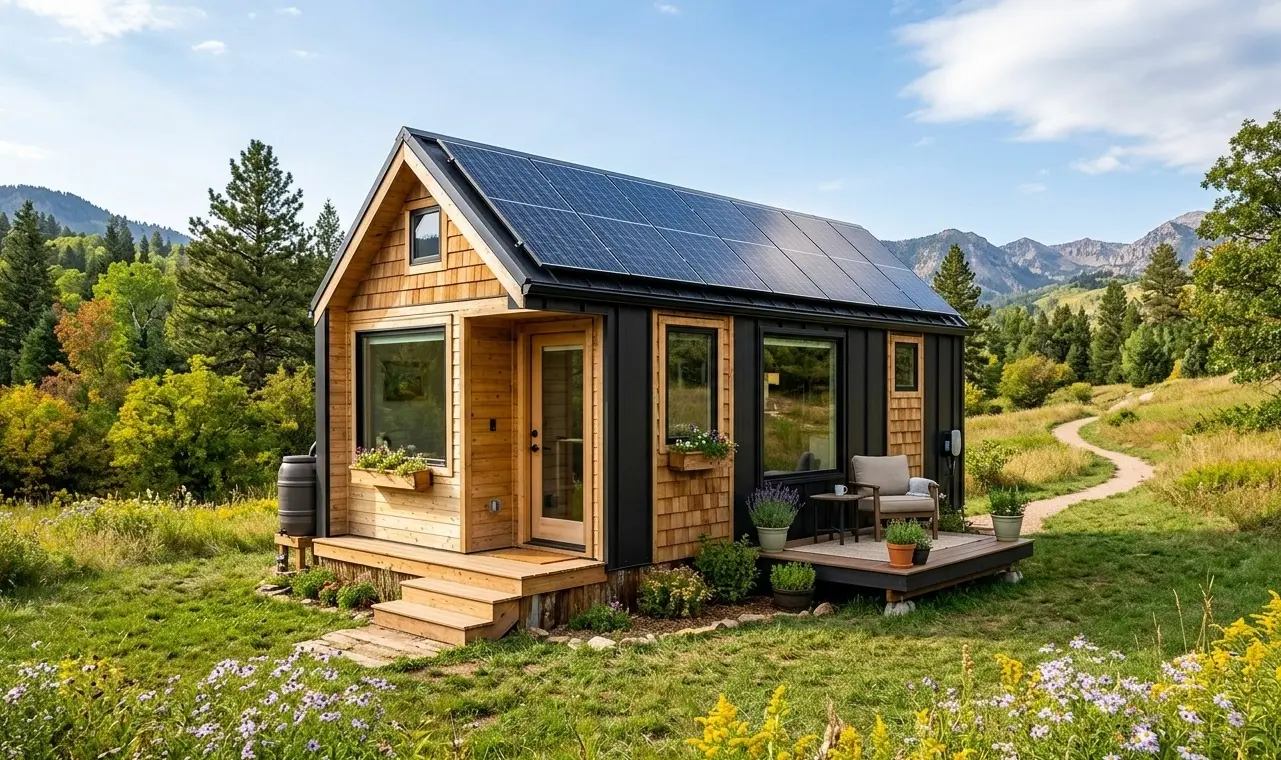
However, what number of solar panels does a tiny home really require? What is the cost of a Tiny house solar system? And can solar panels provide enough electricity for an off-grid tiny home?
The answer varies based on your energy usage, roof size, geographic location, amount of sunlight, appliances and whether you're looking for a grid-tied or a totally off-the-grid system.
The aim of this guide is to cover the design of a solar power system for a Tiny House, including solar panel, battery, inverter, installation and energy saving considerations.
Why Solar Power Is a Good Choice for Tiny Houses
The electric demand of a tiny home is typically less than for a normal house, making solar panels an interesting option.
If a tiny-home owner:A solar system of a suitable size can help:
- Reduce or eliminate monthly electricity bills
- Generate clean, renewable electricity
- Increase energy independence
- Provide backup power during outages
- Support off-grid living
- Reduce dependence on utility electricity
- Customize the system according to available space
Solar power is modular, unlike traditional energy systems. A decent installation can be done and expanded upon in the future as power use increases.
Solar can also eliminate the need for a conventional grid connection for tiny homes in remote areas, allowing for a more independent energy supply.
How Many Solar Panels Does a Tiny House Need?
The dimensions of the solar panels will vary by design depending on the specific tiny home.
If the tiny home is very efficient at consuming electricity, it might need only 1 kW to 3 kW of solar energy. Homes that rely on electric heating, air conditioning, electric water heaters, induction cooking, or other high-power equipment, however, might need a bigger system.
A 400 watts solar panel yields about 0.4 kW of max power output. So, the simplified system might look something like this:
- 3 panels × 400 W = 1.2 kW
- 5 panels × 400 W = 2.0 kW
- 8 panels × 400 W = 3.2 kW
Actual energy production will vary based on solar availability, panel orientation, shading, weather, system losses and location.
Don't just consider the size of the house; first figure out how much electricity the house uses every day.
Estimate Your Daily Energy Usage
List the appliances and devices you expect to use and estimate their daily operating hours.
For example:
| Appliance | Power | Daily Use | Approx. Daily Energy |
|---|---|---|---|
| Refrigerator | 100 W average | 10 hours | 1.0 kWh |
| LED lighting | 50 W | 5 hours | 0.25 kWh |
| Laptop | 60 W | 6 hours | 0.36 kWh |
| TV | 100 W | 3 hours | 0.30 kWh |
| Water pump | 500 W | 1 hour | 0.50 kWh |
| Other devices | — | — | 1.00 kWh |
This example uses roughly 3.4 kWh per day.
Once you know your average daily consumption, you can estimate the solar panel capacity and battery storage needed for your tiny house.
Roof Space Is One of the Biggest Challenges
One of the main limitations of installing solar panels on a tiny house is surprisingly simple: there may not be enough roof space.
A tiny house has a smaller roof than a conventional home, and part of that roof may already be occupied by skylights, vents, chimneys, air-conditioning equipment, or other structures.
This makes solar panel efficiency particularly important.
Choose High-Efficiency Solar Panels
High-efficiency solar panels can produce more electricity from a smaller physical area.
This is useful when you want to maximize energy production without covering the entire roof.
Before installation, consider:
- Available roof area
- Roof orientation
- Roof pitch
- Shade from trees or buildings
- Panel dimensions
- Panel efficiency
- Required walking and maintenance space
If the roof cannot accommodate enough panels, a ground-mounted solar array can be an alternative.
Ground-mounted panels can provide additional capacity, although they require available land and are less convenient for mobile tiny houses.
Solar Batteries for Tiny Houses
Solar panels produce electricity primarily during daylight hours, but many tiny homes consume electricity at night.
This is where battery storage becomes important.
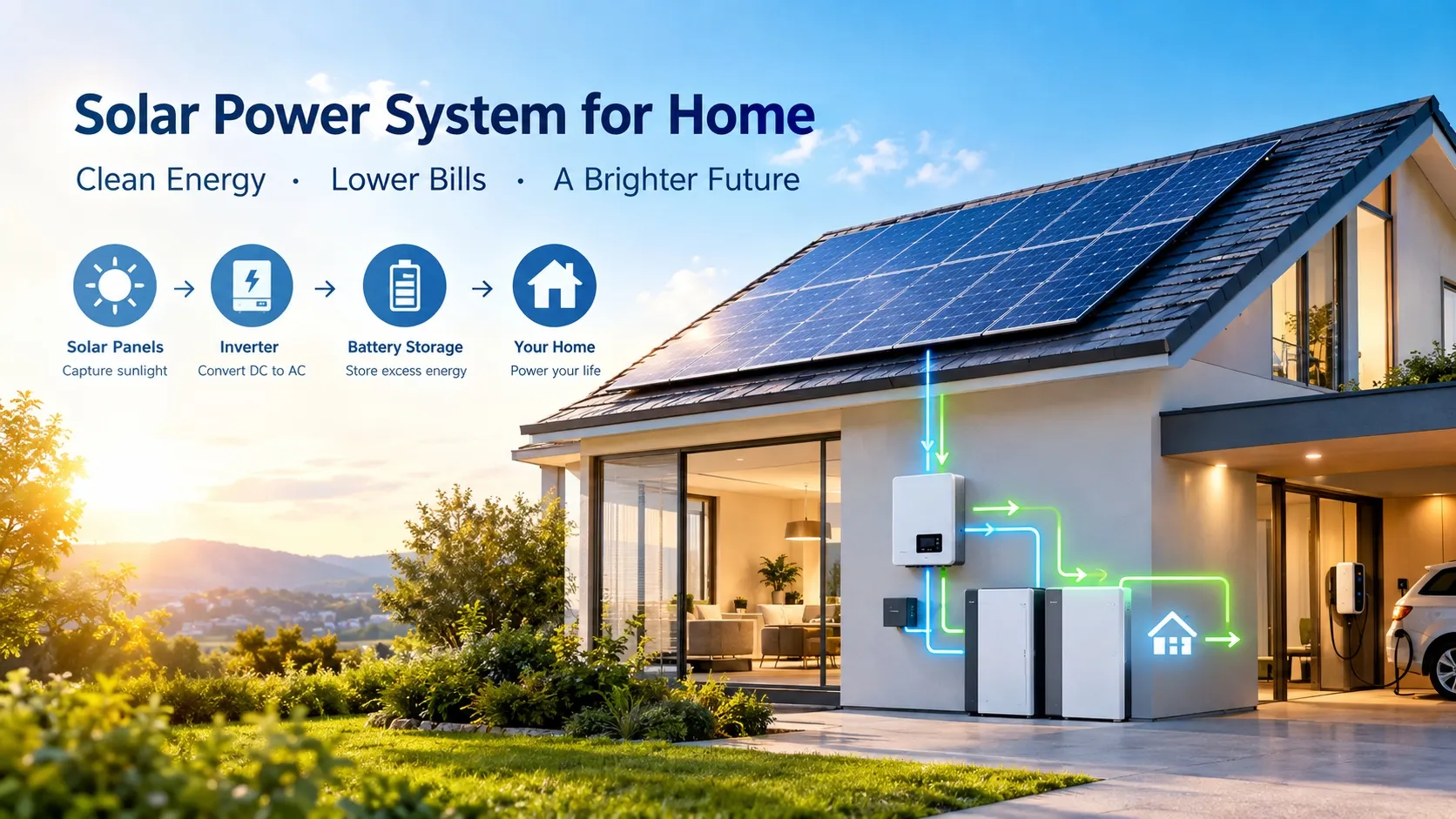
A solar battery stores excess electricity generated during the day and makes it available when the solar panels are not producing enough power.
For example:
Daytime:
Solar panels → power appliances → charge battery
Nighttime:
Battery → inverter → household appliances
Battery storage is especially important for an off-grid tiny house because there may be no utility grid available as backup.
How Much Battery Storage Do You Need?
Battery capacity should be based on your expected nighttime consumption and your backup requirements.
For example, if your tiny house uses approximately 5 kWh of electricity overnight, a battery system with around 5 kWh of usable capacity could cover one night under ideal conditions.
However, practical battery sizing should also consider:
- Battery depth of discharge
- System efficiency
- Temperature
- Backup requirements
- Several days of cloudy weather
- Battery degradation
Lithium-based batteries, particularly lithium iron phosphate (LiFePO4) batteries, are increasingly popular for solar applications because of their energy density, cycle life, and relatively compact size.
Grid-Tied vs. Off-Grid Solar for Tiny Houses
There are two major approaches to powering a tiny house with solar energy.
Grid-Tied Solar
A grid-connected system works alongside the utility grid.
During sunny periods, solar panels generate electricity for the home. Excess energy may be exported to the grid depending on local utility rules and compensation programs.
The grid supplies electricity when solar production is insufficient.
This approach generally requires less battery storage and can be more affordable.
Off-Grid Solar
An off-grid tiny house is designed to operate independently of the utility grid.
A typical system includes:
Solar panels + charge controller/inverter + battery storage + household loads
Because there is no utility grid available when solar production is low, an off-grid system must be carefully sized.
You may need additional solar capacity and enough battery storage to handle cloudy periods.
Energy efficiency becomes particularly important for off-grid tiny homes.
Energy Efficiency Can Reduce Your Solar System Size
One of the smartest ways to reduce the cost of a tiny house solar system is to reduce electricity consumption before installing more panels.
Energy-efficient appliances can significantly reduce the required solar capacity.
Consider using:
- LED lighting
- Energy-efficient refrigerators
- High-efficiency heat pumps
- Efficient water heaters
- Low-power electronics
- Energy-efficient ventilation
- Smart power controls
For an off-grid tiny house, avoid unnecessarily high-power appliances whenever possible.
For example, replacing a high-energy electric appliance with a more efficient alternative can reduce both the required solar panel capacity and battery size.
This can make the entire system smaller and less expensive.
Choosing the Right Solar Inverter
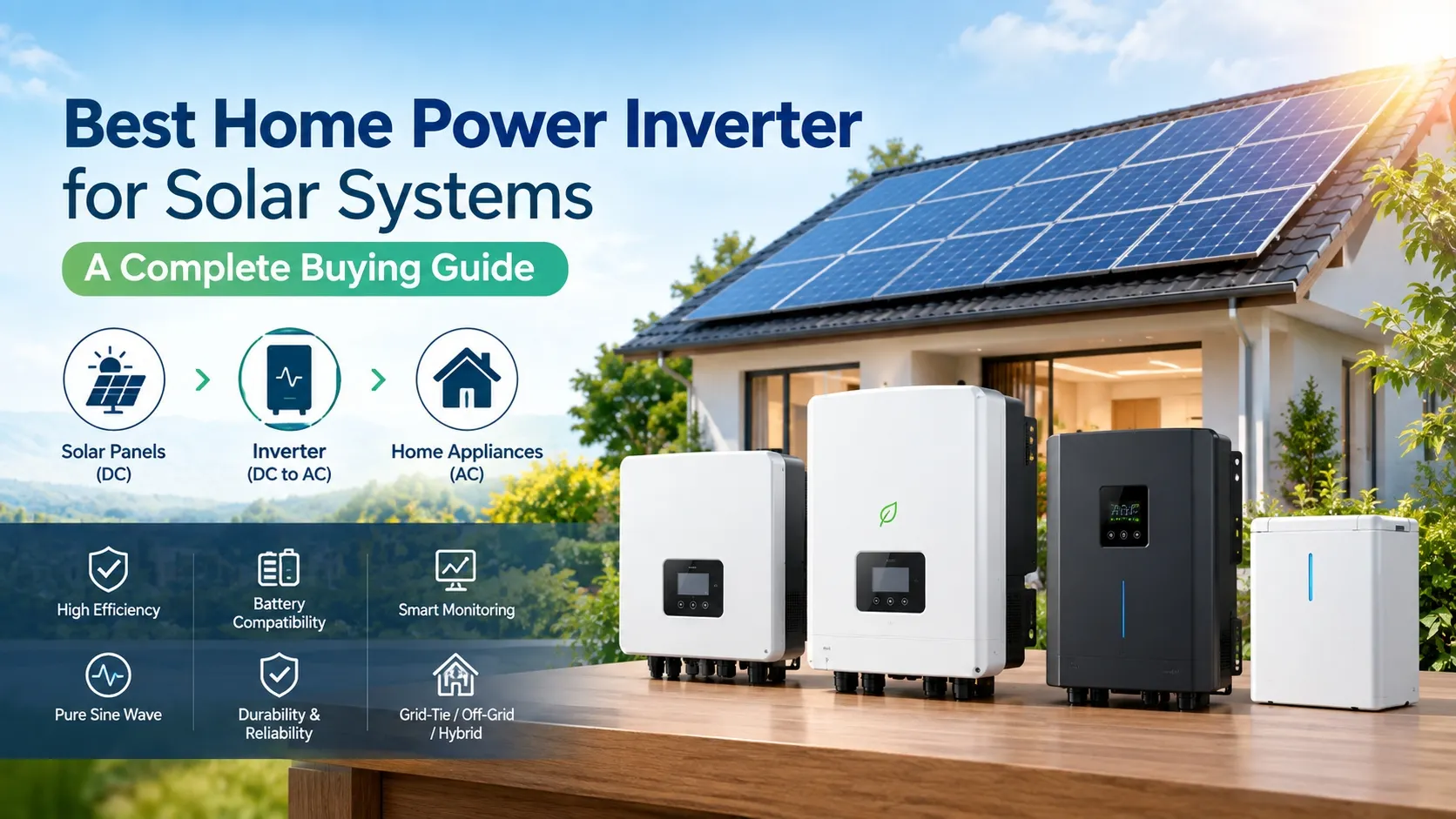
The solar inverter is another critical component of a tiny house solar system.
Solar panels generate DC electricity, while most household appliances use AC electricity. The inverter converts the electricity into a form that household appliances can use.
Common inverter configurations include:
String Inverter
Several solar panels are connected into one or more strings connected to a central inverter.
String inverters are often cost-effective and relatively simple, making them suitable for many installations.
Microinverters
Microinverters are installed with individual solar panels.
They can be useful when panels have different orientations or partial shading. They also eliminate the need for one large central inverter.
However, microinverter systems can have a higher upfront cost.
Hybrid Inverter
A hybrid inverter can manage solar panels, batteries, and household loads in one system.
For tiny houses that want both solar generation and battery storage, a hybrid inverter can provide a convenient system architecture.
How Much Does a Tiny House Solar System Cost?
The cost of solar for a tiny house varies significantly.
Important factors include:
- Solar panel capacity
- Panel efficiency
- Battery capacity
- Inverter type
- Mounting equipment
- Installation labor
- Electrical upgrades
- Location
- Permitting
- Off-grid requirements
A small grid-connected system may cost substantially less than a large off-grid system with several days of battery storage.
The battery can become one of the largest components of an off-grid system, especially if you want to maintain power during extended cloudy periods.
Therefore, homeowners should compare the total system cost rather than focusing only on the price of solar panels.
Can Solar Panels Power a Tiny House Completely?
Yes, solar panels can potentially provide most or all of the electricity required by a tiny house.
However, achieving complete energy independence requires more than simply installing several panels.
A reliable off-grid system needs to balance:
Solar generation + battery storage + electricity consumption
If electricity consumption is too high, the solar array may not produce enough power.
If the battery is too small, you may run out of stored energy overnight or during cloudy weather.
If the solar array is too small, the battery may not recharge adequately.
This is why system design is more important than simply purchasing the largest available solar panel.
Is Solar Power Worth It for a Tiny House?
For many tiny-house owners, solar power can be an excellent investment.
The combination of low energy consumption and renewable electricity makes tiny homes particularly suitable for solar energy.
Solar can be especially attractive if your tiny house is:
- Located far from the electrical grid
- Designed for off-grid living
- In an area with strong sunlight
- Used as a vacation or weekend home
- Built around energy efficiency
- Subject to high electricity prices
However, solar may be less attractive if your home has very limited sunlight, insufficient roof space, or unusually high electricity consumption.
Final Thoughts
Using solar panels for tiny homes can offer a more sustainable and independent way of life and help to generate clean, cheap, and flexible power.
It is not necessary to have the largest system. Rather, it should align with your real energy usage, roof area, solar resources and level of energy autonomy.
If a tiny house is connected to the grid, a fairly modest solar setup can substantially cut down on electricity bills. When it comes to off-grid tiny house, a combination of efficient appliances, high-efficient solar panels, an appropriate battery size, and an inverter can be a dependable stand-alone power system.
The first step is to determine the electrical requirements prior to equipment selection. You can design a small solar system that produces power reliably and efficiently by cutting down on unnecessary energy use and maximizing solar production, without sacrificing the simplicity of living tiny house.
Share on Social:


- NEXT: Best Home Power Inverter for Solar Systems
- NEXT: Null
In This Article
- 1 Why Solar Power Is a Good Choice for Tiny Houses
- 2 How Many Solar Panels Does a Tiny House Need?
- 3 Roof Space Is One of the Biggest Challenges
- 4 Solar Batteries for Tiny Houses
- 5 Grid-Tied vs. Off-Grid Solar for Tiny Houses
- 6 Energy Efficiency Can Reduce Your Solar System Size
- 7 Choosing the Right Solar Inverter
- 8 How Much Does a Tiny House Solar System Cost?
- 9 Can Solar Panels Power a Tiny House Completely?
- 10 Is Solar Power Worth It for a Tiny House?
- 11 Final Thoughts
