


How to Choose the Best Solar Battery for Your Home

Clean energy production from solar panels can occur during the day, but when the sun sets or the power grid is down? A solar battery storage system is a way to store surplus electricity generated by a solar power system and utilize it during periods of low production.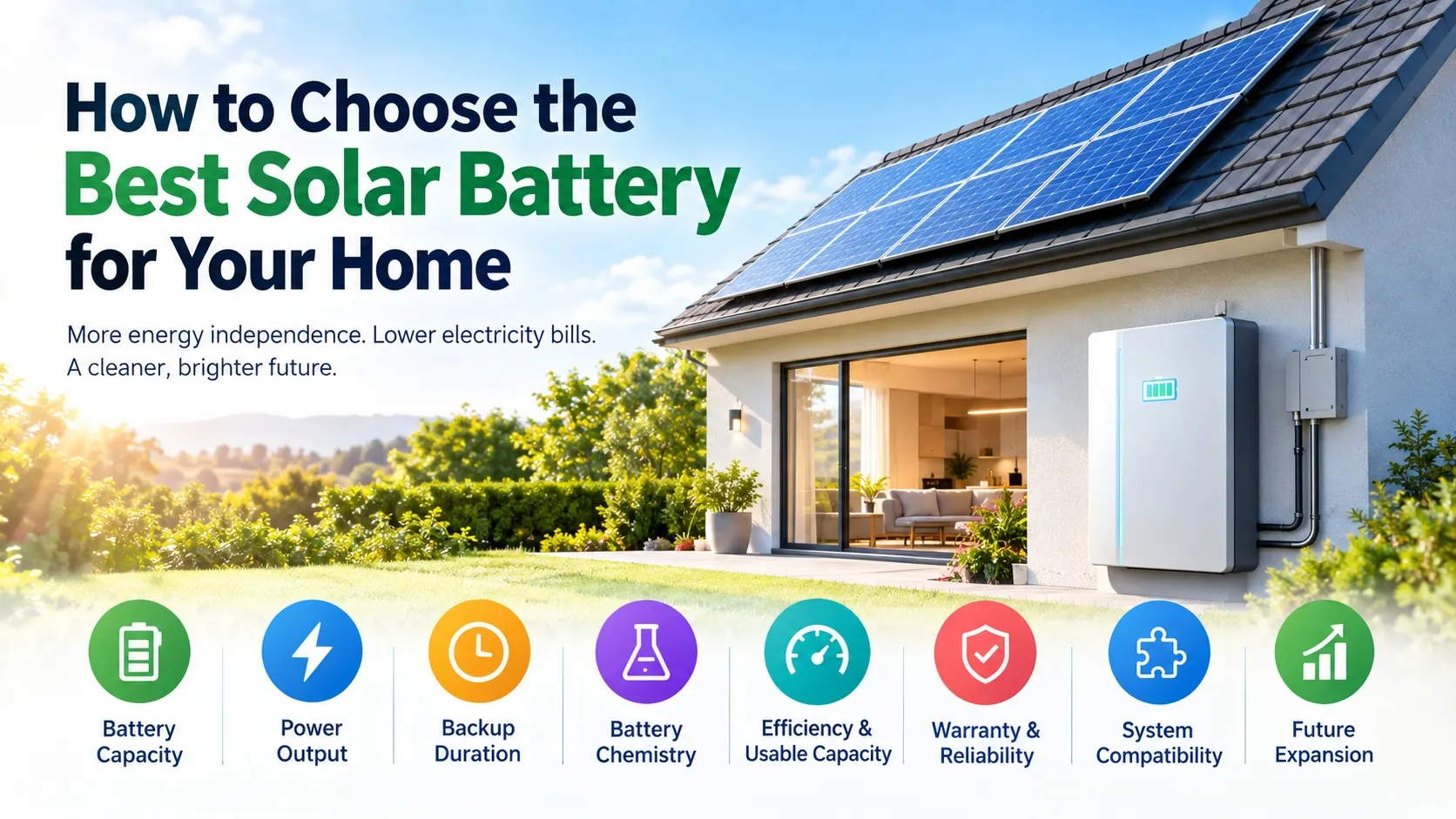
When selecting the right solar battery for your residence, you can't compare the costs of batteries. Battery capacity, power output, backup time, battery chemistry, efficiency, warranty, and system compatibility must be taken into account, as well as the power required by your house.
This guide will tell you what are the most important points that you need to take into consideration when selecting a home solar battery.
What Is a Solar Battery?
A solar battery is a device used to store sunlight energy produced by solar panels for future use. Your solar panels could generate more electricity than your house consumes during sunny times of day. When the grid has excess energy, a battery can store it for later use, at night or in the event of a power outage.
There are several benefits to a typical solar-plus-storage system:
- Store excess solar energy
- Reduce electricity purchased from the grid
- Provide backup power during outages
- Increase solar energy self-consumption
- Help manage electricity costs
- Improve household energy independence
For homeowners who experience frequent outages or want greater control over their electricity use, battery storage can be an important addition to a solar power system.
How Does a Home Solar Battery Work?
The overall process is simple.
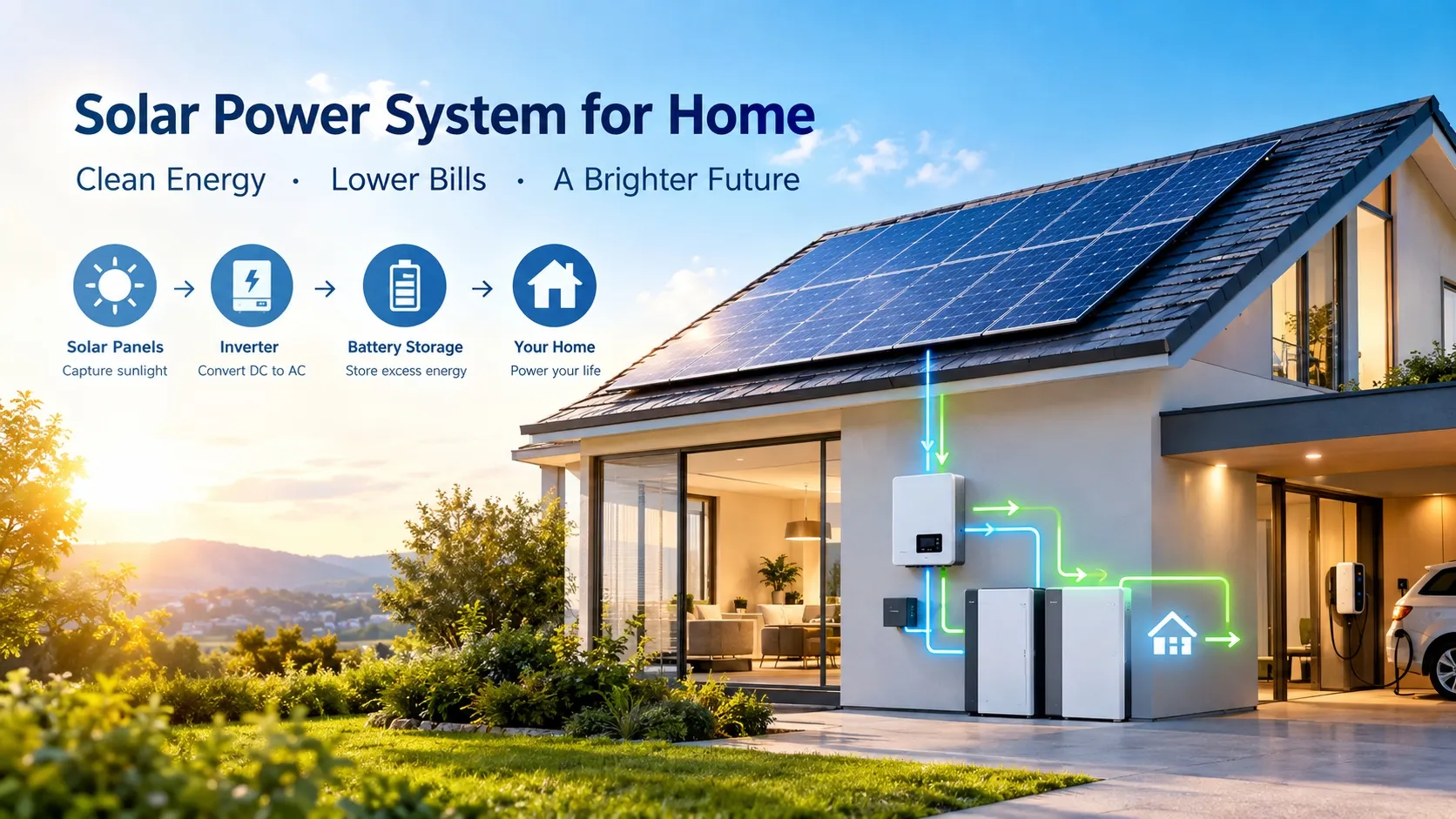
The solar panels produce electricity throughout the day. Your house consumes the electricity it requires first. The remaining electricity available can then be used to charge the battery.
During the evening hours, when the sun is not producing electricity, the battery can provide electricity to the household appliances. A backup system that is designed correctly can provide power to selected circuits or to the entire home during a grid outage, depending on the design of the system.
This can make a solar battery a valuable addition to the home where people would like to consume more of their own solar energy rather than going through the utility grid.
1. Consider Battery Storage Capacity
Battery capacity is measured in kilowatt-hours (kWh), and it's one of the most critical specifications.
The capacity is a measure that indicates the amount of energy that a battery can store. The bigger the battery the longer the backup time, however bigger isn't always best.
If a home has only a few essential appliances to power during brief outages, for instance, then the storage capacity requirement isn't as high as a large home that requires air conditioning, refrigeration, lighting, internet equipment and other appliances to operate for hours during a power outage.
When choosing battery size, the following are important factors to take into account:
- Average daily electricity consumption
- Number of people in the household
- Essential appliances
- Typical outage duration
- Nighttime electricity consumption
- Future energy needs
- Whether you plan to add more solar panels or batteries
A professional installer can use your historical electricity consumption to help determine an appropriate storage size.
2. Check Continuous Power Output
Battery capacity tells you how much energy a battery can store, while power output tells you how much electricity it can deliver at one time.
Power output is usually measured in kilowatts (kW).
This distinction is important. A battery could have plenty of stored energy but still be unable to operate several high-power appliances simultaneously if its output rating is too low.
High-power appliances may include:
- Central air conditioning
- Heat pumps
- Electric water heaters
- Electric ovens
- Sump pumps
- Well pumps
- Power tools
- EV chargers
If whole-home backup is your goal, pay close attention to the battery's continuous and peak power ratings.
3. Choose the Right Battery Chemistry
Most modern residential energy storage systems use lithium-based battery technology. Lithium iron phosphate (LiFePO4 or LFP) batteries have become increasingly popular because of their combination of safety, durability, and long service life.
When comparing battery technologies, look at:
- Expected lifespan
- Safety characteristics
- Usable capacity
- Operating temperature range
- Depth of discharge
- Warranty
- Maintenance requirements
The battery chemistry should match your home's environment and expected usage pattern.
4. Understand Usable Capacity and Depth of Discharge
A battery's advertised capacity does not always equal the amount of energy you can regularly use.
Usable capacity indicates how much stored energy is available for household consumption.
Another important specification is depth of discharge (DoD). A higher DoD generally means you can use more of the battery's stored energy before it needs to recharge.
When comparing different solar batteries, don't compare headline capacity alone. Check the usable capacity and understand how the manufacturer defines the battery's rated capacity.
5. Evaluate Backup Duration
How long should your solar battery power your home?
There is no universal answer.
If your primary objective is emergency backup, you may want enough storage to operate essential appliances for several hours. If outages can last overnight or multiple days, you may need additional battery capacity, solar generation, or a combination of both.
For example, a basic backup system might prioritize:
- Refrigerator
- Lighting
- Wi-Fi router
- Phones and computers
- Security systems
- Medical equipment
A whole-home system may also support larger electrical loads such as air conditioning and heating.
The best solar battery is therefore the one that matches your specific backup priorities.
6. Check Solar and Inverter Compatibility
Not every battery works with every solar installation.
Before purchasing a battery, confirm compatibility with your:
- Solar panels
- Solar inverter
- Electrical panel
- Backup equipment
- Energy management system
- Existing solar installation
Some modern battery systems include an integrated inverter, while others require separate equipment.
If you already have solar panels installed, ask whether the battery can be added to your existing system and whether additional electrical equipment will be required.
7. Compare Warranty and Long-Term Value
Solar batteries represent a significant investment, so warranty coverage matters.
Look at:
- Warranty length
- Cycle limitations
- Retained capacity guarantee
- Throughput limitations
- Product replacement terms
- Labor coverage
- Manufacturer support
A battery with a lower upfront price may not necessarily provide the best long-term value.
Instead of focusing only on purchase price, consider the total cost of ownership, expected lifespan, usable capacity, efficiency, warranty, and potential savings.
8. Think About Future Expansion
Your electricity requirements will vary from time to time.
It may involve buying an electric vehicle, installing a heat pump, having an addition installed or adding more electricity use. Expansion can be made easier in the future with a modular battery system.
If comparing with other systems, ask about the possibility of adding battery units and if the inverter and energy management system is compatible with the future expansion.
What Is the Best Solar Battery for a Home?
No single solar battery can be termed as the best one for all homeowners.
This will depend on your energy usage, what type of solar system you are using, your backup needs, budget, available room for installation, and local electricity pricing.
If, for instance, the person who owns the home is more interested in short-term protection from outages, they may put more importance on the power output. Maximum solar self-consumption and system efficiency could be more significant for someone who is interested in using as much solar power as they can.
There are also some homeowners who may want to opt for a whole home battery system, and others that may want to consider a modular system that can be expanded as time goes on.
Are Solar Batteries Worth It?
Many homeowners would see a value in a solar battery beyond just the energy savings.
Energy autonomy, energy security, higher solar energy self-consumption, and higher electricity consumption control are the main benefits.
Battery storage can be particularly appealing in locations where power is frequently lost or costs are high, or where utility rates offer a cost advantage to storing solar energy during the day for use at night.
The financial worth, however, is dependent on battery cost, electricity costs, electricity generation from the sun, incentives, financing, etc., and how often the battery is used.
Final Thoughts
When selecting the optimum solar battery one should not only consider the battery size and cost, but also need to consider other factors. The perfect system will be sized for the electrical needs of your home, meet the needs of the power back-up, match your solar energy production and match your long term energy goals.
Consider the usable capacity, continuous power output, battery chemistry, efficiency, depth of discharge, warranty, compatibility, scalability, and full ownership cost before buying.
The right size solar battery can make a standard solar panel system a more flexible home energy solution, enabling you to store clean energy from the sun during the day and access it when you need it most.
Share on Social:


In This Article
- 1 What Is a Solar Battery?
- 2 How Does a Home Solar Battery Work?
- 3 1. Consider Battery Storage Capacity
- 4 2. Check Continuous Power Output
- 5 3. Choose the Right Battery Chemistry
- 6 4. Understand Usable Capacity and Depth of Discharge
- 7 5. Evaluate Backup Duration
- 8 6. Check Solar and Inverter Compatibility
- 9 7. Compare Warranty and Long-Term Value
- 10 8. Think About Future Expansion
- 11 What Is the Best Solar Battery for a Home?
- 12 Are Solar Batteries Worth It?
- 13 Final Thoughts
