


Solar Panel Solar System for Energy Independence: A 2027 Guide
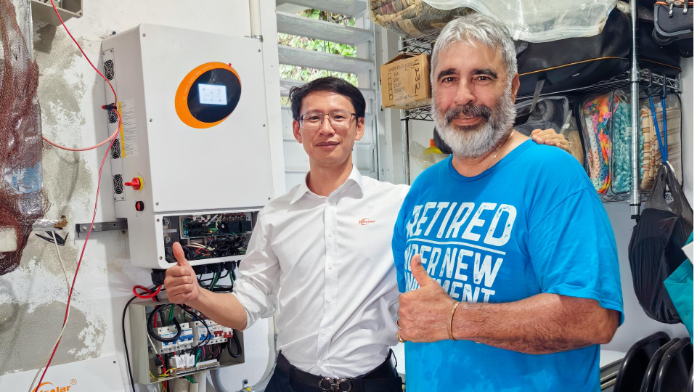
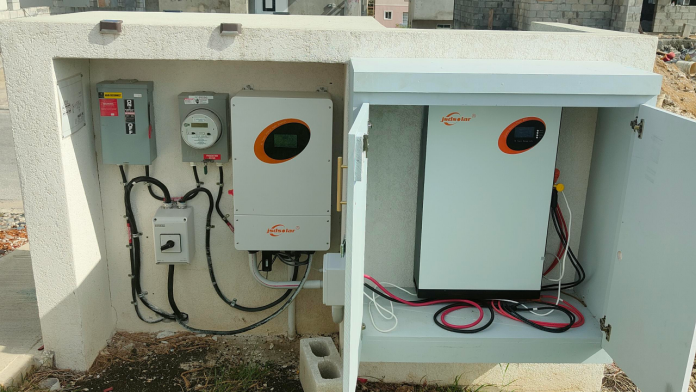
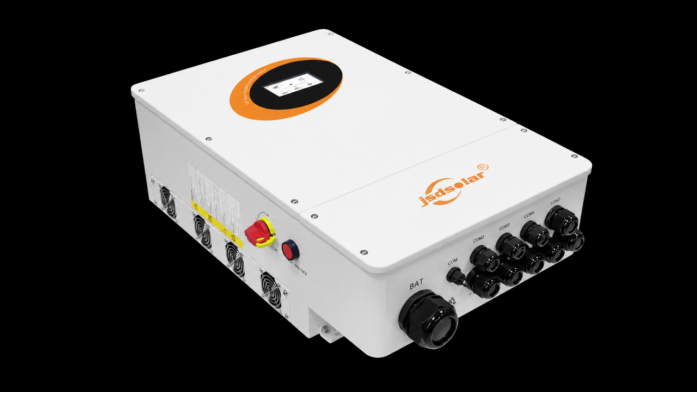
Homes powered by solar may still lose power when the utility grid fails. A traditional grid-tied inverter disconnects under anti-islanding protection. Solar panels do not create backup power by themselves.
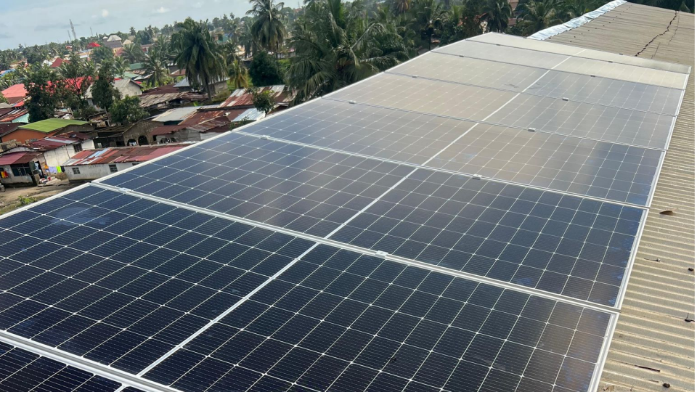
A Solar Panel Solar System should be designed for 2027 projects for three reasons: to reduce grid purchases, to keep essential loads running during outages, or to operate off the grid year-round.
The proper design configuration will depend on the actual electricity demands, seasonal solar generation, battery capacity and inverter limitations.
Solar Self-Consumption vs. Energy Self-Sufficiency
Solar self-consumption measures the share of PV generation that is used on-site, and energy self-sufficiency measures the share of the total electricity demand that is met by locally generated energy. Neither ensures blackout protection.
Analyze before selecting a Solar Panel Solar System:
•Day/Night power consumption - total power demand in kWh.
•Peak Demand - maximum energy demand in kW.
•Critical loads - Refrigeration, lights, telecommunications, water pumps and other essential circuits.
•Blackstart duration - time that utility power is unavailable.
•Seasonal variations - caused by heating and cooling.
Where possible, request 15-60 minute load data instead of monthly bills. Motor starting currents and night time consumption are important.
Operation of a Solar Power System During a Utility Grid Failure
A hybrid inverter manages solar generation and battery charging. It also delivers AC power. The inverter's MPPT controller follows the operating point of the solar array, and the battery management system (BMS) follows the cell voltage and temperature and cell current.
When the power failure occurs, the solar power system is required to first break the connection to the utility and then provide a separate AC power source.
The following functions are required to be evaluated:
•Grid-forming: Can the inverter create a voltage and frequency without the utility?
•Black start: Can the system restart under specified conditions after a shutdown?
•Backup transfer: What is the time to transfer and which circuits remain powered?
•Off-grid PV charging: Can the solar array charge the battery when the grid is not available?
A hybrid designation does not confirm these abilities. Sensitive equipment may require a separate UPS if the transfer interrupts the equipment's tolerance.
Comparison of Hybrid and Off-Grid Solar Panel Systems
| Configuration | Main Advantage | Technical Limitations | Typical Situation |
| Grid-Tied PV | Reduces utility expenses | Cannot supply loads during outages | Residences with stable grid |
| Hybrid PV + Battery | Supports energy shifting and provides backup | Limited by battery and inverter sizes | Residences requiring backup |
| Off-Grid PV + Battery | Utility electricity not required | Depends on adequate generation and storage | Farm and remote residences |
Battery Chemistry and Storage Architecture
Design choices impact system performance:
•Lead-acid and LiFePO4 batteries: compare maintenance, DoD, discharge capability, and cycle life.
•DC-Coupled and AC-Coupled Storage: DC-coupled is preferred for integrated systems; AC-coupling for existing PV systems (with respect to coordination).
•Critical-Load vs. Whole-Home Backup: Backup critical loads requires less inverter size and storage capacity.
•Expandable vs. Fixed Batteries: Parallel expansion of batteries should consider manufacturer's BMS and firmware.
For extended periods of cloudy weather, one might consider using a generator to support the off-grid solar system. Compare how much additional PV and battery capacity costs vs. a generator's fuel, maintenance and automatic start costs.
How to Size a Solar Panel Solar System for Energy Independence
System sizing depends on the power and energy demands.
1. Calculate Solar Generation
The daily energy generation of a solar PV array can be calculated as follows:
Solar PV Array Peak Energy Production (kWh) = Solar PV Array Peak Power (kW) × Peak Sun Hours × Performance Ratio
Assume a solar PV array of peak power of 6.96 kW, and a peak sun hour of 4; and a performance ratio of 0.8, then:
6.96 × 4 × 0.8 = 22.27 kWh
This is an illustrative calculation and not a guarantee of production. Actual production is a function of solar PV array orientation, season, temperature, and shading among other factors.
For energy independent operation, take into consideration the least sunny month, rather than average annual generation.
2. Determine Usable Battery Capacity
Usable AC Energy = Nominal Battery Capacity × Permitted DoD × Inverter Efficiency
With a permissible DoD of 80% and an inverter efficiency of 90%, the battery can provide AC Energy of 7.37 kWh.
Under a constant load of 1 kW, the battery can keep the backup power for 7.4 hours.
Actual run-time may vary depending on real-world conditions and constraints. The battery runtime can be affected by the SoC, aging, temperature and standby loss.
3. Verify Inverter and Battery Power Compatibility
A 10 kW inverter does not mean that a 10 kWh battery can output 10 kW continuously.
At 48V DC and 90% conversion efficiency, supplying 10 kW AC requires approximately 231A DC.
Therefore, one must consider the following:
•Continuous discharge currents and surges limits of the BMS.
•Operating voltage of the battery and the inverter.
•DC cable protection, size and voltage drop.
•Motor starting currents and how long an inverter can be overloaded.
Simulate how long a battery system can provide power for the load in cases of off-grid autonomy, taking into account the potential generator and solar contributions, as well as worst case scenarios including consecutive low-sun days and minimum reserve SoC.
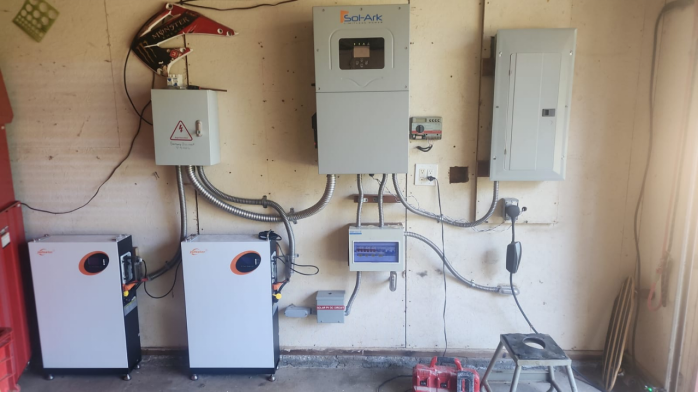
Installation and Maintenance checks for Solar Backup Systems
Prior to commissioning a Solar Panel Solar System ensure:
•PV input: Open circuit voltage at cold temperatures, maximum power point tracking (MPPT) range, string current and DC isolation.
•AC Compatibility: Voltage, frequency, phase, grounding and protective devices.
•Battery Integration: Communication protocol, charging limits, and protection temperature and enclosure rating.
•Backup Operation: Conditions for isolating the grid and transfer, black-start conditions, and low state of charge (SOC) recovery.
•Routine Maintenance shall include: Electrical connections inspection, mount corrosion, cooling path obstruction, inverter alarms, battery health records.
Controlled grid-loss testing must be performed prior to commissioning by qualified personnel.
Which Certifications Should Solar System Buyers Verify?
Applicable standards depend on equipment type and destination market.
| Equipment | Relevant Standards | Verification Focus |
| Solar Modules | IEC 61215 / IEC 61730 | Module qualification and safety |
| PV Inverters | IEC 62109 | Power-conversion equipment safety |
| Lithium Batteries | IEC 62619 | Battery safety requirements |
| Energy Storage Systems | UL 9540, where applicable | System-level safety |
| PV Commissioning | IEC 62446-1 | Documentation and testing |
US projects may also require UL 1741, IEEE 1547, and applicable electrical and fire-code compliance. UL 9540A is a thermal-runaway test method, not an ESS certification. Battery transportation may require UN 38.3 documentation.
Component certification does not automatically establish complete-system compliance or local grid approval.
JSDSolar: Solar System Configuration and Procurement
At JSDSolar, we assess PV generation, inverter output, battery storage and electrical compatibility, as separate design requirements.
As an illustration, our Complete 10kW Hybrid Solar Energy System, consists of the following:
•PV Array: A 6.96kWp mono-crystalline PV array
•Inverter: A 10kW class split phase hybrid inverter
•Battery: 48V, 200Ah Li-Ion battery
•Miscellaneous: Balance of the System (BoS) accessories
The 10kW inverter rating should not be misconstrued to reflect the solar array capacity of 6.96kWp.
For storage applications, the LFP48200 LiFePO4 Powerwall Battery, offers the following:
•51.2V nominal voltage and 200Ah capacity
•Nominal energy of 10.24kWh
•Communication interfaces of RS232/RS485/CAN
•A maximum charge/discharge current of 200A
This maximum current should not be interpreted to be guaranteed continuous AC output. The inverters used, operating limits and configuration should be reviewed for continuous parallel operation.
What to Request Before Ordering
Prior to ordering a solar energy system, JSDSolar should provide BOMs, a single line diagram, an estimate of seasonal generation, backup autonomy calculations, equipment compatibility documents, certifications, and warranty information. Customers should also review limitations for expansion.
Invert those costs over the life cycle of the system and compare to assess the total cost of ownership.
JSDSolar should review your required backup hours and peak load to assess the solar and battery system configuration prior to purchase.
FAQs
Q1. Can a JSDSolar Solar Panel Solar System provide energy independence?
Yes. A properly sized JSDSolar hybrid or off-grid system can reduce grid dependence through solar generation and battery storage. Full independence requires sufficient year-round generation and backup capacity.
Q2. What is included in a JSDSolar 10kW Hybrid Solar System?
One JSDSolar configuration includes twelve 580W solar panels, a 10kW hybrid inverter, a 48V 200Ah lithium battery, and installation accessories. The PV array totals 6.96kWp.
Q3. How much battery storage does JSDSolar's LFP48200 battery provide?
The JSDSolar LFP48200 LiFePO4 battery has a nominal voltage of 51.2V, a 200Ah capacity, and 10.24kWh of nominal energy. Actual usable capacity depends on operating limits and system conditions.
Q4. Can a JSDSolar hybrid solar inverter operate during a power outage?
A compatible JSDSolar hybrid inverter can supply designated backup loads when properly configured with battery storage and grid isolation. Backup functionality must be confirmed for the selected model.
Q5. Can one JSDSolar 10kWh battery support a 10kW inverter?
Not necessarily. Battery discharge current, BMS limits, voltage, and conversion losses determine available AC power. Buyers should verify continuous output capability before pairing equipment.


In This Article
- 1 Solar Self-Consumption vs. Energy Self-Sufficiency
- 2 Operation of a Solar Power System During a Utility Grid Failure
- 3 Comparison of Hybrid and Off-Grid Solar Panel Systems
- 4 How to Size a Solar Panel Solar System for Energy Independence
- 5 Installation and Maintenance checks for Solar Backup Systems
- 6 Which Certifications Should Solar System Buyers Verify?
- 7 JSDSolar: Solar System Configuration and Procurement
