


On Grid Solar Inverter Efficiency: What Affects Real-World Power Conversion?

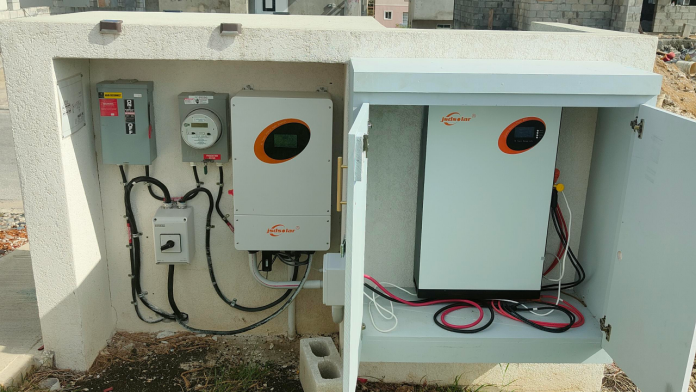
An On Grid Solar Inverter with a stated 98% efficiency does not mean that it loses 2% of the available solar energy over the course of a year. Several other factors such as DC voltage, loading conditions, MPPT, inverter clipping, thermal derating and requirements of the grid impact the performance of an inverter.
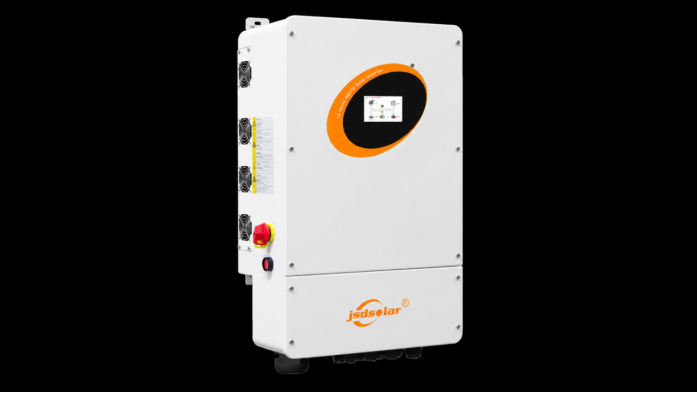
What is of primary concern to the installer/EPC contractor is not which inverter has the highest efficiency, but which configuration produces the most usable AC power.
What Causes Variation in the Efficiency of an On Grid Inverter?
An On Grid Solar Inverter is used to convert photovoltaic DC power to grid synchronized AC power. Efficiency is defined as:
Efficiency (%) = AC Output Power / DC Input Power × 100
Say an Inverter has 5,000 W DC input and 4,850 W AC output, then the inverter efficiency is 97%.
This definition describes a single operating point. How an inverter operates over the course of a year is more complex.
Peak Efficiency vs Weighted Efficiency
| Efficiency Metric | What It Measures | Engineering Relevance |
| Maximum Efficiency | Highest measured conversion efficiency | Best-case operating point |
| European Efficiency | Weighted efficiency at defined loading levels | Partial-load comparison |
| CEC Efficiency | Weighted efficiency across prescribed power and voltage conditions | Standardized evaluation |
| MPPT Efficiency | Accuracy of maximum power point tracking | Available PV power extraction |
European and CEC efficiency values use different weighting methods. They should not be compared as interchangeable measurements.
How Partial Load and DC Voltage Affect Losses
At low irradiance, fixed control and auxiliary consumption represents a larger proportion of input power. Consequently, conversion efficiency may fall during early morning and late afternoon operation.
DC voltage also influences semiconductor conduction losses, switching losses, and operating current.
Higher input voltage does not automatically mean higher efficiency. The relevant comparison is the manufacturer's efficiency curve across the intended DC voltage and loading range.
MPPT Configuration: When Does It Affect Energy Yield?
MPPT controllers continuously adjust the PV operating point to extract available power.
A single-MPPT inverter may work for uniform arrays. Multiple independent MPPT trackers can be advantageous for roof sections with varying orientations, tilt angles and shading patterns.
There is a difference between MPPT efficiency and DC-to-AC conversion efficiency.
There are four factors affecting total MPPT performance, including:
•Static MPPT efficiency: This determines tracking accuracy in stable irradiance conditions.
•Dynamic MPPT efficiency: This determines the MPPT's response to varying irradiance conditions.
•Conversion efficiency: This refers to the electrical losses between the DC input and the AC output.
An MPPT efficiency rating does not correlate to string voltage, clipping, or thermal derating.
How DC/AC Ratio Changes On Grid Solar Inverter Output
The DC/AC ratio compares installed PV capacity with inverter AC power:
DC/AC Ratio = PV Array STC Capacity / Rated Inverter AC Power
For example, a 10 kWp PV array paired with an 8 kW inverter has a DC/AC ratio of 1.25.
At moderate to high levels of irradiance, DC oversizing improves inverter utilization. At peak levels of irradiance, inverters can clip additional PV power and reach their limits.
| Configuration | Potential Advantage | Main Trade-Off |
| Lower DC/AC ratio | Less peak clipping | Lower inverter utilization |
| Higher DC/AC ratio | More generation during moderate irradiance | More clipping |
| Single MPPT | Simple string configuration | Limited independent tracking |
| Multiple MPPT | Better separation of PV strings of different orientations | Complex string configuration |
| String inverter | Centralized conversion and maintenance | Shared string limitations |
| Microinverter | Module-level conversion and tracking | Dispersed equipment and maintenance |
Design configuration is determined by the trade-off between local irradiance, component orientation, cost of components, and modeled AEP.
Three Electrical Limits Must Be Checked
•Voltage: Cold weather string Voc must be under maximum DC voltage. Operating Vmp must be within usable MPPT range.
•Current: String current and short circuit current must be within limits.
•AC capacity: Consider kW, kVA, power factor, and limits of permitted export to the grid, separately.
Reactive power may be the limit for available active power.
Thermal Derating, Grid Constraints and Installation Losses
An on-grid solar inverter may limit output if internal inverter components exceed specified limits.
Temperature effects of PV modules and inverters must be assessed independently. Hot modules produce less DC power and thermal protection of the inverter limits AC output.
Other Considerations include:
•Ensure the manufacturer specified clearance for ventilation is maintained.
•Avoid unnecessary direct solar exposure and enclosed hot spaces.
•Size DC and AC cables for installation, voltage drop and current.
•Inspect and test the inverter for proper operation and evaluate logs.
Diagnosing Low Solar Output
| Symptom | Possible Cause | Verification Method |
| Flat midday power curve | AC clipping or export restriction | Compare power limits and event logs |
| Output falls in hot weather | Thermal derating | Review temperature and derating records |
| Unequal string production | Shading or MPPT mismatch | Compare string voltage and current |
| Repeated shutdowns | Grid voltage/frequency deviations | Check grid-event history |
| Low delivered AC energy | Conversion, cable, or downtime losses | Compare time-aligned DC/AC energy records |
These loss categories should be calculated separately. In particular, grid curtailment and inverter clipping are not conversion-efficiency losses.
How to Verify On Grid Solar Inverter Performance
Before procurement, review the measurement methods behind published efficiency ratings.
Relevant technical references include:
•IEC 61683: Conversion efficiency measurement.
•IEC 62891: Static and dynamic MPPT efficiency.
•EN 50530: Grid-connected inverter efficiency assessment.
•IEC 62109: Electrical safety requirements.
•IEC 61724-1: PV system performance monitoring.
• IEEE 1547 / UL 1741: Applicable US interconnection requirements.
Buyers should ask for the following model specific data: Efficiency curves, thermal derating data, test reports, grid certificates, warranty terms. Certification should match the market and the specific product version.
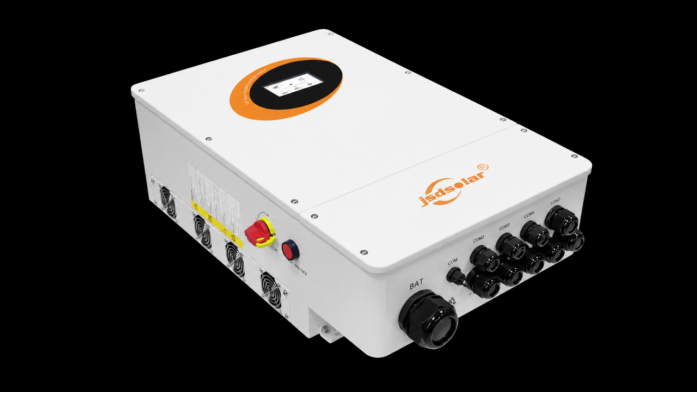
JSDSolar J8KHP: A Case Study of a Practical Hybrid Inverter
At JSDSolar, when evaluating inverters, we consider the compatibility of the PV input, number of independent MPPTs, limits of AC output, compatibility with energy storage, etc.
Our J8KHP 8kW Hybrid Solar Inverter illustrates these considerations.
| Parameter | J8KHP Specification |
| Maximum PV Input Power | 12 kW |
| Nominal On-Grid Output | 8 kVA |
| MPPT Trackers | 4 |
| MPPT Operating Range | 120–500 V |
| Maximum DC Voltage | 500 V |
| Maximum Efficiency | 97.6% |
| European Efficiency | 97% |
| MPPT Efficiency | 99.9% |
The four MPPT trackers accommodate separate PV input sections. The J8KHP also supports 48V battery systems and CAN/RS485/Wi-Fi/LAN communications.
Unlike a traditional inverter with a grid-only mode, the hybrid inverter model consists of battery operation as well. Thus, in addition to PV-to-grid conversion losses, battery conversion losses will also need to be taken into account and operating mode will be critical in these cases.
What Should Buyers Confirm Before Ordering?
Energy simulations and efficiency curves must be analyzed while considering lifecycle costs and setting temperature limits and grid compatibility. Evaluate lifecycle costs considering the service constraints and limitations.
If you need help matching inverters to a specific project, contact JSDSolar and provide details of your PV array layout, the grid you will be connected to and where you expect to operate. The team will discuss possible solutions and provide background on hybrid inverters.
FAQs
Q1: What is the maximum efficiency of JSDSolar's J8KHP inverter?
A: The JSDSolar J8KHP has a published maximum conversion efficiency of 97.6%, European efficiency of 97%, and MPPT efficiency of 99.9%.
Q2: Is the JSDSolar J8KHP an On Grid Solar Inverter?
A: The J8KHP is a hybrid solar inverter supporting on-grid operation, battery storage, and backup output. It is not a conventional grid-only inverter.
Q3: How many MPPT trackers does the JSDSolar J8KHP provide?
A: The J8KHP features four independent MPPT trackers with a published operating voltage range of 120–500V, supporting different PV string configurations.
Q4: What is the maximum PV input capacity of the JSDSolar J8KHP?
A: The J8KHP supports up to 12kW of PV input power, with a nominal on-grid output rating of 8kVA. String voltage and current limits must also be checked.
Q5: Does higher MPPT efficiency mean higher inverter conversion efficiency?
A: No. MPPT efficiency measures solar power tracking accuracy, while conversion efficiency measures DC-to-AC power losses. JSDSolar specifies these values separately.


In This Article
- 1 What Causes Variation in the Efficiency of an On Grid Inverter?
- 2 MPPT Configuration: When Does It Affect Energy Yield?
- 3 How DC/AC Ratio Changes On Grid Solar Inverter Output
- 4 Thermal Derating, Grid Constraints and Installation Losses
- 5 How to Verify On Grid Solar Inverter Performance
- 6 JSDSolar J8KHP: A Case Study of a Practical Hybrid Inverter
