


Custom Solar Panel System with Split-Phase Inverter for 120/240V Loads
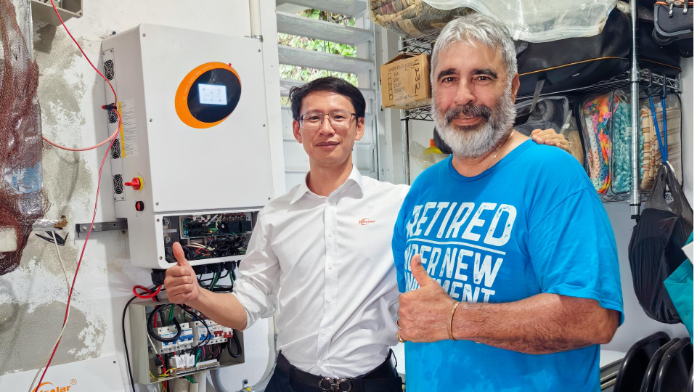
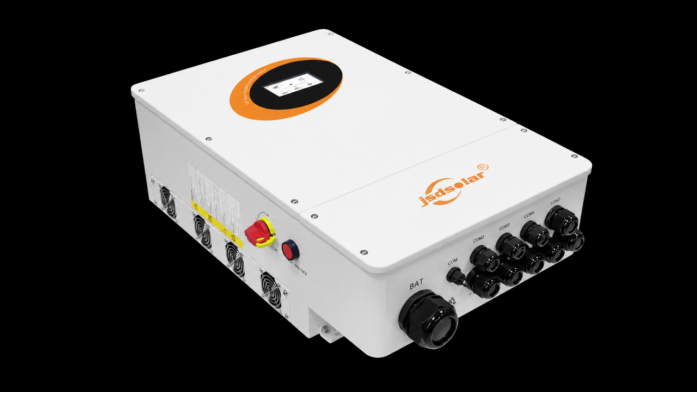
Solar inverters require more from an electrical system when dealing with higher voltage loads. In most cases, only a fraction of a system uses the higher voltage. 120/240V electrical systems commonly have lighting, refrigeration, and plug-in receptacles on the 120V leg, with a well pump, HVAC, and workshop equipment on the 240V leg. A custom solar panel system must be able to handle both voltage loads without exceeding the individual output-leg ratings, motor starting limits, or battery discharge limits.
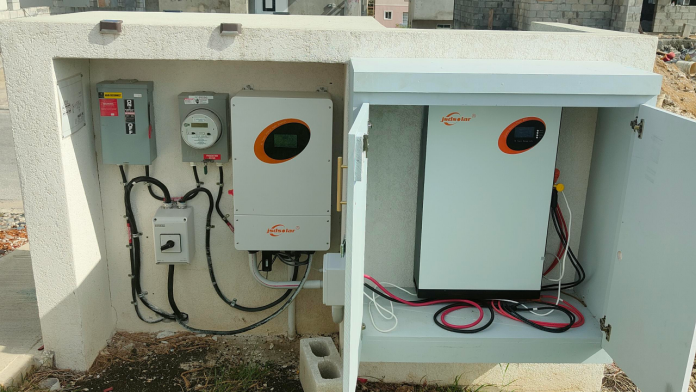
When doing an electrical assessment at JSDSolar, we consider these constraints prior to selecting an inverter, photovoltaic array, and storage configuration.
How Does a 120/240V Split-Phase Solar System Work?
In a split phase system, both L1 and L2 are referenced to neutral and are at 120V. They are 180 degrees out of phase with each other . So the voltage between L1 and L2 is 240V . This is different than a 120/208V 3 phase distribution system.
Three factors will determine a Custom Solar Panel System's ability to work with mixed voltage loads:
• Continuous Output: maximum sustained AC power, and is expressed in kW or kVA.
• Per-Leg Capacity: maximum amperage allowed on a given 120V leg.
• Unbalanced-Load Tolerance: the difference in loading allowed between L1 and L2.
A 12kW inverter does not mean a 12kW load on one of the 120V legs. The manufacturer's limits on per-leg amperage and imbalance will apply to the case.
Calculate 120V and 240V Circuit Demand
Consider the following illustrative load schedule, assuming unity power factor:
| Equipment | Voltage | Power | Current |
| Lighting and outlets, L1 | 120V | 1,800W | 15A |
| Refrigeration, L2 | 120V | 900W | 7.5A |
| Water pump | 240V | 3,600W | 15A per leg |
| Combined demand | 6,300W | L1: 30A; L2: 22.5A |
Despite a combined demand of 6.3kW, L1 carries considerably more current. In this simplified example, neutral current is 7.5A.
Real motor current also depends on power factor. A pump rated at 3.6kW input power may draw more than 15A at 240V when its power factor is below unity.
Which Split-Phase Inverter Configuration Is Suitable?
A Custom Solar Panel System can use several electrical architectures.
| Configuration | Main Advantage | Engineering Limitation |
| Native split-phase inverter | Integrated 120/240V output | Per-leg current restrictions |
| Two synchronized 120V inverters | Modular configuration | Requires approved synchronization |
| Inverter with autotransformer | Voltage conversion or load balancing | Transformer rating and losses |
| Grid-interactive hybrid inverter | Solar, battery, and utility coordination | Additional interconnection requirements |
For conventional residential distribution, a native split-phase inverter often simplifies equipment selection.
An autotransformer cannot increase available inverter power. Similarly, two independent 120V inverters must not be connected together unless their manufacturer explicitly supports that configuration.
Sizing the Inverter, Battery, and Solar Array
Check Motor Starting Current and Surge Duration
Compressors and induction motors may demand several times their running current during startup.
Ensure the following when choosing an inverter:
• Nameplate current and LRA
• Method of starting: direct-on-line, soft starter, or VFD
• Inverter surge capacity in watts or VA
• Overload period and thermal derating
• Peak-discharge capability of the battery BMS
A stated 18kW surge rating is insufficient without its corresponding duration and operating conditions.
Match Battery Discharge Capability to Inverter Output
A battery-based Custom Solar Panel System can be limited by DC current.
Approximate DC input current:
I = AC output power ÷ (Battery voltage × Inverter efficiency)
At 10kW AC output, 48V battery voltage, and assuming a 90% conversion efficiency:
I ≈ 231.5A
A 48V, 200Ah battery provides nominal 9.6kWh storage, however the battery’s continuous discharge capability will be limited by the Battery Management System (BMS).
It is important to size the battery to know:
• kW: Maximum power that the battery can provide.
• kWh: Energy that the battery can provide for backup operation.
• Usable capacity bounds: DOC and SOC.
• Continuous and short-time discharge limits: As set by the BMS.
For example, to deliver 8kWh of AC energy would allow a battery to continuously support a 2kW load for 4 hours.
Verify PV String and MPPT Compatibility
Sizing of the PV array is more involved than dividing the daily load by the wattage of the PV panel.
Account for cold-corrected string open circuit voltage (Voc), operating voltage (Vmp), and MPPT limits, and peak sun hours at your location.
Strings can be oversized to the point where they exceed the maximum voltage of the inverter. Excessive current through a parallel string can also exceed the limits of the MPPT.
Installation and Electrical Protection
A Custom Solar Panel System connected to existing 120/240V distribution requires coordinated protection and switching.
Distribution and Transfer Requirements
• Make sure main panel or critical load subpanel compatibility is confirmed.
• Choose the appropriate breakers, conductors and disconnects.
• Make sure neutral-ground bonding and neutral-switching provisions are provided.
• Address utility backfeed during backup operation.
• Make sure generator input and AC charging limits are compatibility.
Electricians should measure L1-N, L2-N and L1-L2 voltages and check branch circuit limit currents, and test motors starts and transfer operation, during system commissioning.
Troubleshooting should focus on airflow over the heat sink, terminal conditions, battery diagnostics and fault logs.
Which Standards Apply?
Systems installed in the USA may be subject to the following standards:
• UL 1741, IEEE 1547 and IEEE 1547.1: Safety standards for inverters and connection to the grid.
• UL 1973 and UL 9540: Safety Standards for Battery and Energy Storage Systems.
• UL 9540A: Method of Test for Thermal-Runaway Fire Propagation.
Articles 690, 702, 705, 706, and 710 of the NEC: Related Articles for PV, Backup, Interconnection, Storage and Stand-Alone Systems.
JSDSolar Custom Solar Panel System Configurations
10kW Hybrid Solar Energy System
Our 10kW Hybrid Solar Energy System includes the following components:
• A 120/240V split-phase inverter.
• 12, 580W monocrystalline modules (6.96kWp).
• A 48V 200Ah lithium battery.
• PV cables and distribution accessories, and mounting hardware.
The inverter is 10kW, the module array is 6.96kWp, and the battery has a design capacity limit. Check the configuration against the actual load requirements and the length of time that backup power is needed.
JB12KLP Split-Phase Inverter
The JB12KLP provides 120/240VAC output, 48V battery input, 18kW surge power, and is expandable via parallel connection.
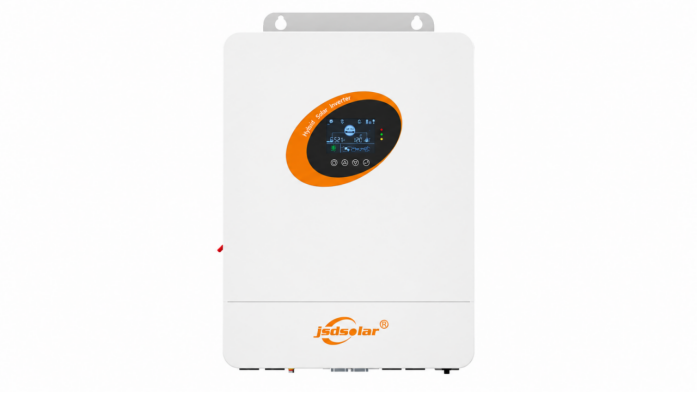
Check the surge duration and ordering compatibility of the battery against the inverter. The IP21 enclosure requires a protected location of installation.
What Should Buyers Submit Before Ordering?
An accurate load schedule, motor starting data, backup hours, and the configuration of the utility and the location of the installation, are required for selection of a Custom Solar Panel System.
At JSDSolar, we can cross check the requirements against available batteries, PVs and inverters. Prior to finalizing the order, the buyer can request a bill of materials, and electrical and technical specifications, and other model-specific documentation.
FAQs
Q1. Can JSDSolar customize a solar panel system for 120V and 240V loads?
Yes. JSDSolar offers split-phase inverter and solar system configurations. System selection depends on load requirements, battery capacity, and inverter output ratings.
Q2. What does JSDSolar's 10kW hybrid solar system include?
The listed configuration includes a 120/240V split-phase inverter, twelve 580W solar panels (6.96kWp), a 48V 200Ah lithium battery, and installation accessories.
Q3. Does the JSDSolar JB12KLP inverter support 120/240V output?
Yes. The JB12KLP lists 120/240VAC output and 48V battery input. Buyers should confirm its operating-mode ratings and individual output-leg limits.
Q4. Can a JSDSolar Custom Solar Panel System operate 240V water pumps?
It may support compatible pumps when continuous power, motor-starting current, surge duration, and battery discharge capability meet the pump's requirements.
Q5. How does JSDSolar determine the required inverter capacity?
Sizing should consider simultaneous AC loads, L1/L2 current distribution, motor starting requirements, and the inverter's continuous and surge ratings.


In This Article
- 1 How Does a 120/240V Split-Phase Solar System Work?
- 2 Which Split-Phase Inverter Configuration Is Suitable?
- 3 Sizing the Inverter, Battery, and Solar Array
- 4 Match Battery Discharge Capability to Inverter Output
- 5 Installation and Electrical Protection
- 6 JSDSolar Custom Solar Panel System Configurations
