


Off Grid Solar System Manufacturer: OEM and ODM Solar System Customization Guide
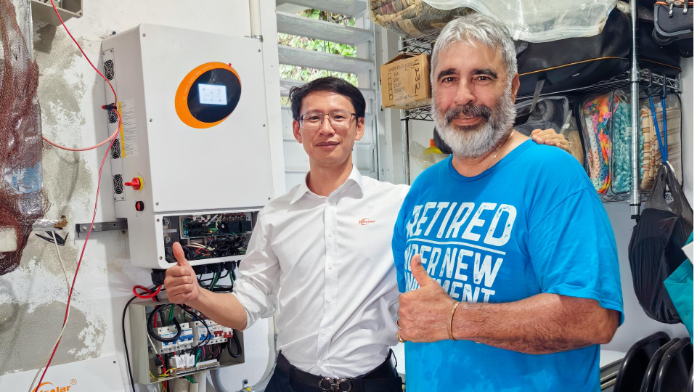
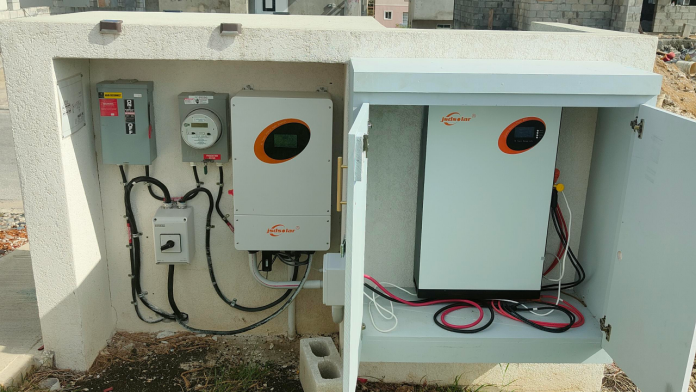
A solar kit can meet its advertised power rating yet fail to start a borehole pump, recharge its battery before sunset, or comply with the destination market's electrical requirements. For a distributor, these are specification failures—not branding problems.
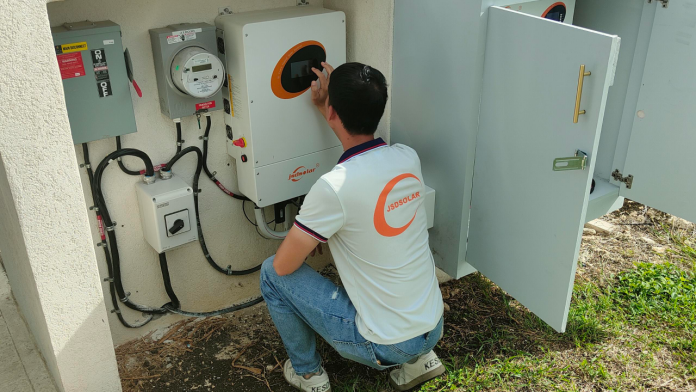
At JSDSolar, we start OEM/ODM discussions with load data, operating conditions, and the limits of each inverter–battery combination.
Define the Operating Problem Before Customizing the Product
A typical Request for Quotation (RFQ) for an Off-Grid Solar System Manufacturer should contain:
•Load profile: consumption (kWh), peak demand (kW), starting current (kA), critical loads
•Electrical system: 120/240V split phase, 230V Single phase, Three phase; 50/60Hz; grounding
•Solar Resource: location, roof orientation, shading; peak sun hours (season); Design conditions
•Backup strategy: Days of Autonomy; Generator availability; Utility connected operation
•Constraints: Ambient Conditions; Dust/Moisture exposure; Space; Expansion plans; Local approvals
Without the above information, the quote will be for an ordinary, private label order.
Verify PV, Inverter, and Battery Limits as One System
PV Strings: Voltage and Current Matter as Much as Watts
A PV array must remain below the inverter's maximum DC voltage at the site's minimum expected cell temperature. Its hot-weather operating voltage must also remain within the usable MPPT range. Check each tracker's input-current and short-circuit-current limits before assigning parallel strings.
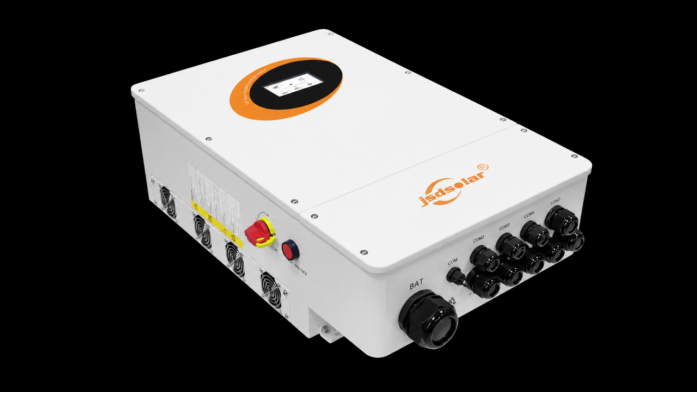
The JSDSolar J6KHB 48V 6kW Off-Grid Hybrid Inverter, for example, specifies:
•7,800W maximum recommended PV power
•500V maximum DC input
•Two independent MPPT trackers
•18A maximum operating input current per tracker
These figures define design limits; they do not authorize any 7.8kW panel arrangement.
Battery Runtime: Usable Energy Is Not Nominal Energy
As a first estimate:
Required battery capacity (kWh) ≈ AC load (kWh) ÷ [allowable DoD × discharge-to-AC efficiency].
For 8kWh of overnight demand, 80% DoD and 90% assumed efficiency give 11.1kWh nominal before temperature, aging, and reserve margins.
Separately, verify the BMS continuous/peak discharge limits against inverter demand and motor inrush. CAN/RS485 hardware does not guarantee protocol compatibility: charge limits, SOC reporting, alarms, and firmware must be tested together.
Select the Right OEM/ODM Solar System Architecture
An Off Grid Solar System Manufacturer should separate branding changes from modifications that affect product safety or engineering validation.
| Decision | Options | What Determines the Choice |
| Customization depth | White-label / OEM configuration / ODM redesign | Branding vs approved settings vs new hardware, firmware, or enclosure |
| System layout | All-in-one / Modular | Installation simplicity vs service access and replacement |
| Battery platform | 48V–51.2V / High-voltage | DC current, inverter compatibility, protection |
| Power source | Pure off-grid / Hybrid | Generator or utility input, transfer logic, local permissions |
| PV integration | DC-coupled / AC-coupled | New-build conversion path vs retrofit constraints |
A high-voltage storage system is not created simply by series-connecting standard 48V battery packs. Approved BMS topology, contactors, protection, and a compatible inverter are essential.
Similarly, new enclosure designs or firmware functions may require additional thermal, EMC, or safety evaluation.
Translate Load Calculations Into JSDSolar Product Configurations
Our 6kW Solar Package for Residence lists eight 580W modules (4.64kWp), a 48V/51.2V 200Ah LiFePO4 battery, inverter equipment, PV cabling, and a distribution box.
Its 6kW designation relates to the system's load rating; the listed PV array is 4.64kWp, not 6kWp.
Our 10kW Solar System with 48V 200Ah Storage Battery lists twelve 580W modules (6.96kWp), a 120/240V split-phase inverter, and storage.
Its specifications include:
•10kW nominal AC output
•15kW maximum PV input
•51.2V specified battery input
•IP21 protection rating
At 51.2V × 200Ah, nominal storage is approximately 10.24kWh—not 10kW of energy.
The two kits should not be treated as interchangeable without comparing inverter variants, phases, MPPT limits, battery current, and expansion capability.
Adding panels or batteries also requires an updated single-line diagram, protective-device review, and confirmation of inverter/firmware parallel-operation support.
Design for Installation, Fault Diagnosis, and Maintenance
The installer's specification must touch on the following areas:
•Electrical Protection: DC Isolators, fuses/breakers, surge protection, and protective earthing.
•Grounding: Type of neutral-earth bonding and transfer switching.
•Environmental Protection: Battery placement, Derating, and ventilation.
•Serviceability: Fault logs, and replacement parts.
An example is the J6KHB inverter, which is listed as IP65. However, the 10kW kit referenced in this document, specifies IP21.
Check Compliance Scope and Test the Actual Build
Prior to large scale manufacturing, a Off-Grid Solar Systems Manufacturer, should check documentation against the actual manufactured product.
Some relevant standards:
•IEC 61215 / IEC 61730: PV module qualification and safety.
•IEC 62109: Photovoltaic converter safety.
• IEC 62619 / IEC 63056: Lithium battery safety.
•UN 38.3: Lithium battery transportation testing.
UL 1741 / UL 1973 / UL 9540: Inverters and Energy Storage requirements for North America.
UL 9540A is a thermal-runaway propagation test method, not a product certification. Applicability depends on the market and system design.
Factory Acceptance Testing
An approved sample should undergo:
•AC rated-load, overload, and motor-starting tests.
•PV operating-range and battery charging-limit checks.
•BMS communication-loss and fault-protection tests.
•Temperature-rise and electrical insulation tests.
•BOM, firmware, labels, and packaging verification.
Certificates covering a component or earlier model do not automatically certify a modified complete system.
Turn Engineering Requirements Into a Purchase Specification
Before releasing an OEM/ODM order, agree on MOQ, NRE/tooling costs, certification responsibilities, sample acceptance criteria, change-control rules, warranty, spare-parts supply, and delivery terms.
Freeze the approved BOM and firmware revision. Require defined factory acceptance results for each production batch.
As an Off Grid Solar System Manufacturer, JSDSolar supports configuration and battery match as well as some OEM changes such as branding and packaging, voltage and communication settings.
Distributors and project integrators can share their load schedules, destination standards and proposed order scope with JSDSolar to develop a technically reviewable OEM/ODM proposal.
FAQs
Q1. Does JSDSolar offer OEM and ODM off-grid solar systems?
Yes. JSDSolar supports selected OEM customization, including branding, packaging, enclosure design, voltage configuration, and communication settings. ODM requirements are evaluated according to engineering feasibility and certification needs.
Q2. What information does JSDSolar need for a customized solar system?
Buyers should provide the destination country, voltage and frequency, daily energy demand, peak load, battery backup requirements, installation environment, and estimated order quantity.
Q3. Can JSDSolar customize solar systems for different voltage standards?
JSDSolar offers inverter configurations for different electrical requirements. Buyers should confirm the required output voltage, phase arrangement, frequency, and applicable model before ordering.
Q4. What components are included in JSDSolar's 6kW solar package?
The listed package includes eight 580W solar panels, a 48V/51.2V 200Ah LiFePO4 battery, inverter equipment, PV cables, and a distribution box. The installed PV capacity is 4.64kWp.
Q5. What are the main specifications of JSDSolar's 10kW solar system?
The listed configuration includes twelve 580W panels (6.96kWp), a 10kW split-phase inverter, and a 48V-class 200Ah lithium battery. The specified inverter output is 120/240V split-phase.


In This Article
- 1 Define the Operating Problem Before Customizing the Product
- 2 Verify PV, Inverter, and Battery Limits as One System
- 3 Select the Right OEM/ODM Solar System Architecture
- 4 Translate Load Calculations Into JSDSolar Product Configurations
- 5 Design for Installation, Fault Diagnosis, and Maintenance
- 6 Check Compliance Scope and Test the Actual Build
- 7 Factory Acceptance Testing
