


5kW Solar Panel System with Hybrid Inverter: Sizing and Compatibility Guide

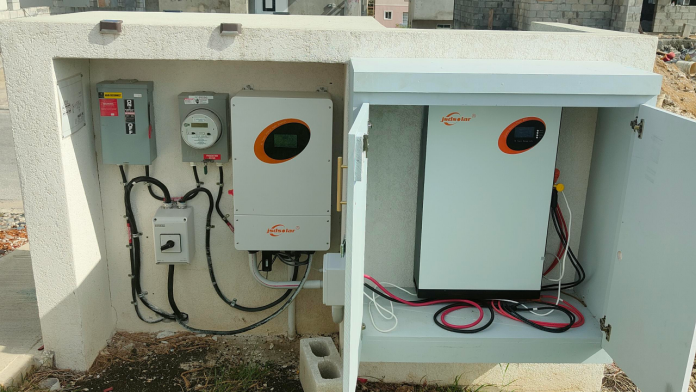
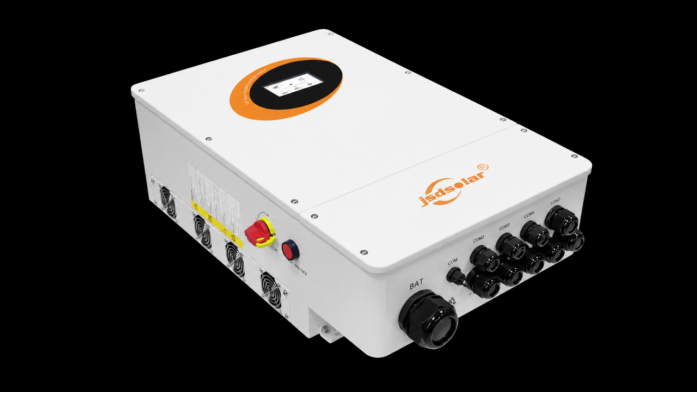
A 5kW Solar Panel System may have enough rated panel wattage yet fail to charge properly, start a water pump, or maintain backup power. The cause is often a mismatch between PV string voltage, inverter limits, and battery discharge capability—not a shortage of solar panels.
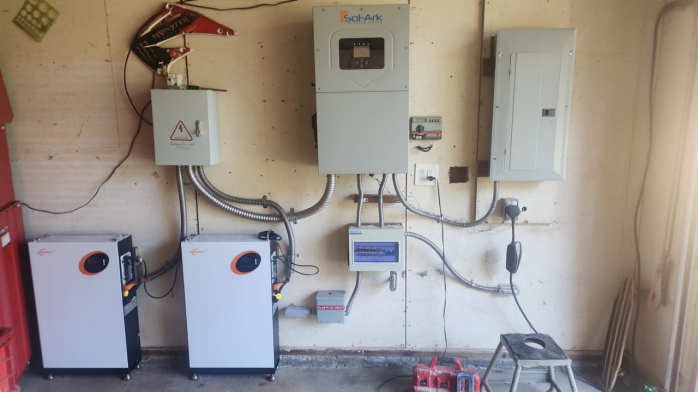
At JSDSolar, we evaluate these limits together before recommending a system configuration.
Why 5kWp of Panels Does Not Guarantee 5kW of Usable Power
"5kW" often describes the array's 5 kWp DC rating under STC. Daily energy production and the output available at any moment are other considerations.
• Energy demand: Calculate daily consumption in kWh, including use during the night.
• Power demand: Add the load of appliances running simultaneously; check the start-up surge of motors separately.
• System losses: Allow for temperature differences, shading, wiring losses, conversion losses, and charging limitations of the batteries.
A house using 15 kWh daily is not necessarily fit to have a 5 kW Solar PV system. There are many other factors such as local peak-sun hours, seasonal changes in system production, and nighttime energy demand.
What a Hybrid Inverter Must Coordinate
A Hybrid Inverter tracks the power of each solar panel through MPPT, inverts from DC to AC, and charges the battery. The settings of the inverter will control if the solar system will charge the battery, supplies a load, or draws from an AC source.
During an outage, only equipment configured with suitable backup output and safe grid isolation can energize selected circuits. "Hybrid" does not necessarily mean certified grid export. Check backup transfer characteristics and any grid-interconnection approval independently.
Compare the Configuration Before Choosing Equipment
| Choice | Suitable Situation | Critical Check |
| 5kW vs. 5.5kW inverter | Different simultaneous load demands | Continuous AC rating, surge capacity, DC/AC ratio |
| 5kWh vs. 10kWh battery | Shorter vs. longer backup requirements | Usable kWh and BMS discharge current |
| DC- vs. AC-coupled storage | New installation vs. PV retrofit | Conversion topology and control compatibility |
| Single vs. dual MPPT | Uniform roof vs. differing orientations | Independent string voltage/current limits |
| Off-grid vs. grid-interactive hybrid | Standalone backup vs. permitted grid export | Transfer arrangements and local certification |
A higher inverter rating does not resolve undersized batteries or out-of-range PV strings.
Size the PV Strings Against Real MPPT Limits
A 4.95kWp Example Using JSDSolar J5500HPC
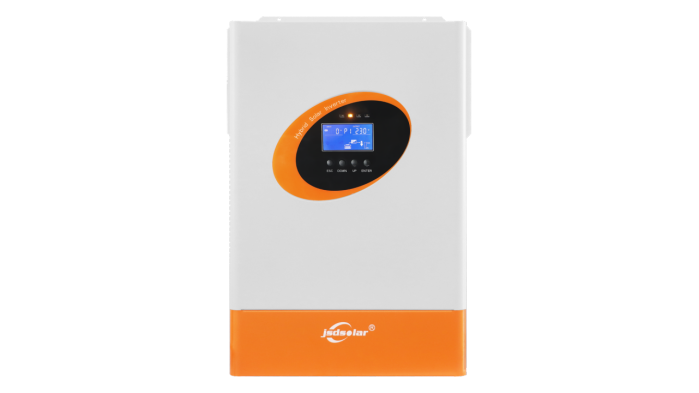
Our J5500HPC 48V 5.5kW Hybrid Solar Inverter lists:
•PV array limit: 5,500W; MPPT range: 120–450V DC.
•Maximum PV open-circuit voltage: 500V; maximum solar input current: 18A.
•AC output: 5.5kW at 220/230V; surge rating: 10,000VA.
• Maximum solar charging current: 80A; battery interface: 48V DC.
An array designed with nine 550W modules has a DC to AC ratio of 0.90 and a total power (kWp) of 4.95kW. If the voltage of the modules are Voc 49V and Vmp 41V, then a nine-module string will have 441Voc and 369Vmp.
At a module temperature of −10°C and an assumed Voc coefficient of −0.29%/°C, string Voc increases to about 486V—below the 500V maximum, but with little margin. High-temperature Vmp must also stay within the effective MPPT range. Two parallel strings rated 13.4A Imp each would exceed the 18A operating input limit.
These are illustrative panel values, not an approved wiring design. Confirm actual module datasheets, design temperatures, MPPT channel count, input Isc limits, and local string-protection requirements.
Match Battery Current, Not Just Battery Capacity
For a 5kW Solar Panel System, battery power and stored energy are different requirements.
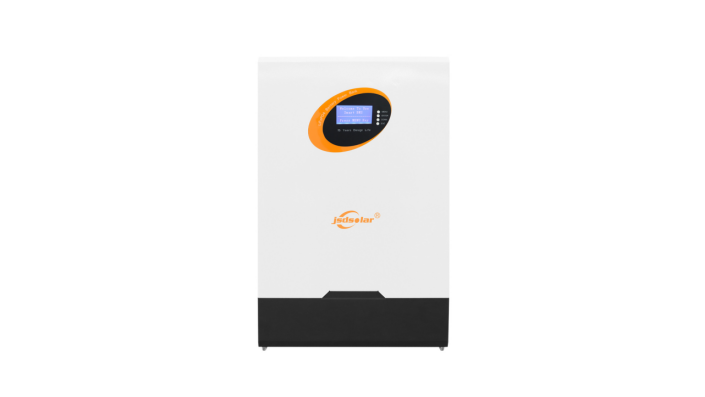
• BG48100 LiFePO4 Battery: 51.2V, 100Ah (5.12kWh nominal); the maximum charge/discharge current 100A.
• LFP48200 LiFePO4 Battery: 51.2V, 200Ah (10.24kWh nominal); the maximum charge/discharge current 200A.
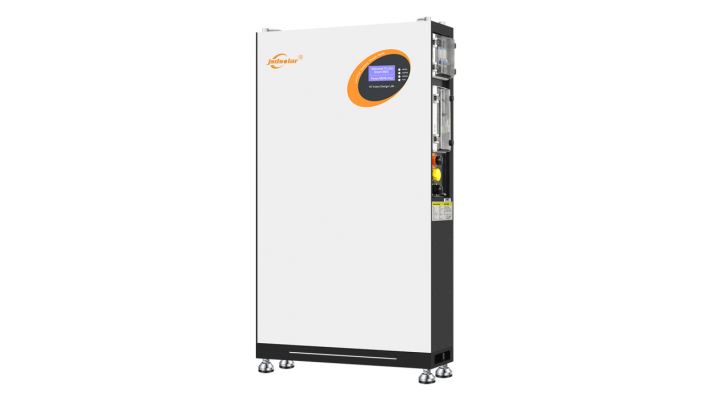
At 93% estimated battery-to-AC efficiency and a 5 kW output, the required battery current is roughly 105A at 51.2V. This exceeds the BG48100's maximum 100A rating. The LFP48200 is rated higher, but continuous operation of either battery still requires confirmation of the continuous rating of the BMS and inverter.
For back up time, the equation is usable kWh x conversion efficiency ÷ average load (kW). This should be validated with depth-of-discharge and reserve settings. Also verify the inverter's battery voltage window and rating, and charger current limit as well as the communication protocol (Can/RS485) and settings. Just having the same connectors doesn't mean the devices are interchangeable.
Installation and Commissioning: Verify the Complete Power Path
For 5kW Solar Systems: Qualified Installers should:
• Confirm array polarity, open circuit voltage and string current and verify the operation of the MPPT.
• Select appropriate DC and AC breakers and disconnects, surge protection devices and earthing, and verify cable sizes.
• Check battery overcurrent protection and terminations and spacing and verify cooling and temperature limits.
• Test expected maximum load and starting current of the motor as well as BMS alarms and charger settings.
• Set and record baseline voltages, currents and software versions.
• Configure protection systems in accordance to expected usage.
• Do not equate a stated millisecond transfer time with guaranteed uninterrupted operation for sensitive electronics.
Check the Documents That Apply in Your Market
Request model-specific evidence rather than relying on broad "certified" descriptions. Depending on jurisdiction and system type, relevant references include IEC 61215/61730 for modules, IEC 62109 for inverter safety, IEC 62619 for applicable batteries, and IEC 62446-1 for PV inspection and documentation.
US projects may additionally involve UL 1741/IEEE 1547 for interconnection and UL 1973/UL 9540 for battery/energy-storage safety.
Product certification does not automatically certify the assembled system or grant grid-export permission.
What to Send JSDSolar Before Ordering
A quotation should provide model numbers of the string inverters and batteries, maximum AC and surge loads, usable backup capacity, protection devices, communications settings, certificates, warranty terms, commissioning responsibility, and panel and string layout.
To complement the matching of a 5kW Solar Panel System, kindly share JSDSolar your module data sheet, site temperature range, AC supply specification, load schedule and target backup duration. Based on your project requirements, we can evaluate appropriate inverters and LiFePO4 storage units.
FAQs
Q1. Does JSDSolar offer a hybrid inverter for a 5kW Solar Panel System?
Yes. JSDSolar offers the J5500HPC 48V 5.5kW hybrid inverter, with a published maximum PV array capacity of 5,500W. Final compatibility depends on the selected solar panels.
Q2. What MPPT voltage range does the JSDSolar J5500HPC support?
The J5500HPC specifies a 120–450V DC MPPT range and 500V maximum PV open-circuit voltage. String design must account for temperature-adjusted Voc and Vmp.
Q3. Can JSDSolar's 5.5kW inverter work with 550W solar panels?
Potentially. Nine 550W panels provide 4.95kWp, but installers must verify string voltage, input current, temperature conditions, and MPPT limits before installation.
Q4. Which JSDSolar batteries are suitable for evaluation with a 5kW Solar Panel System?
JSDSolar offers the BG48100 5.12kWh and LFP48200 10.24kWh LiFePO4 batteries. Selection depends on backup duration, discharge current, and confirmed inverter compatibility.
Q5. Can the JSDSolar BG48100 battery continuously supply 5kW AC power?
Its published maximum discharge current is 100A. A 5kW AC load may require more than 100A at 51.2V after conversion losses, so full-load operation cannot be assumed.


In This Article
- 1 Why 5kWp of Panels Does Not Guarantee 5kW of Usable Power
- 2 What a Hybrid Inverter Must Coordinate
- 3 Compare the Configuration Before Choosing Equipment
- 4 Size the PV Strings Against Real MPPT Limits
- 5 Match Battery Current, Not Just Battery Capacity
- 6 Installation and Commissioning: Verify the Complete Power Path
- 7 Check the Documents That Apply in Your Market
