


All-in-One vs Modular Home Off Grid Solar System: Which Design Offers Better Flexibility?

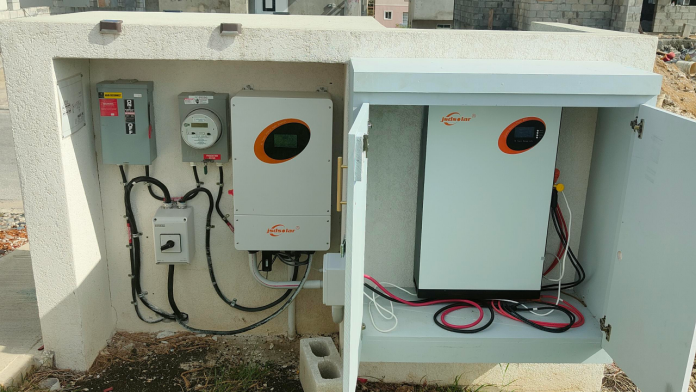
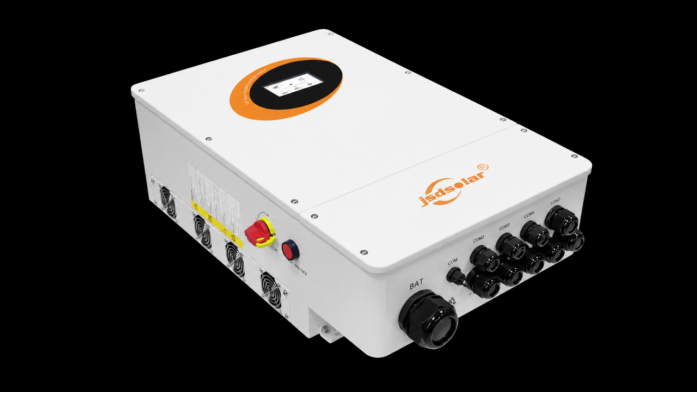
A 5kW solar array may meet a rural household's present demand, yet adding a water pump, air conditioner, or another day of battery backup can expose an inflexible design. For a Home Off Grid Solar System, flexibility means more than adding hardware: the inverter, MPPT inputs, battery BMS, wiring, and protection must accommodate the upgrade.
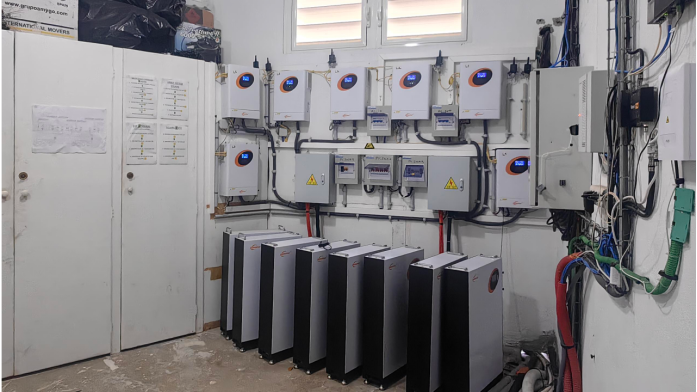
At JSDSolar, we first analyze the load profile and expansion plan to identify the best type of equipment to use, modular or integrated.
Where a 5kW Home Off Grid Solar System Reaches Its Limits
There are three situations that drive a redesign:
•Adding more appliances: When more appliances are added that are used simultaneously, causing an inverter surge that exceeds the inverter's capacity.
•Increasing autonomy: When battery storage can't meet the load during the night or on overcast days.
•Failure of components: Repair of a single embedded component requires taking the entire unit offline.
These are different problems. Additional panels cannot correct an inverter overload; more batteries do not increase continuous AC output.
What Does "All-in-One" Actually Include?
An all-in-one energy storage system may combine the inverter, MPPT charger, battery, and BMS in one enclosure. Some products integrate the inverter and charger but still require external batteries. A modular Home Off Grid Solar System separates replaceable power-conversion and storage components.
Neither architecture guarantees interoperability. A battery's nominal voltage may fit while its BMS protocol or charge-current limit does not. Check the manufacturer's approved combinations rather than relying on "CAN/RS485 supported" labels.
All-in-One vs Modular: Four Technical Trade-Offs
| Decision | Integrated Approach | Modular Approach |
| PV Control | Built-in MPPT; simpler wiring | Independent MPPT channels/controllers can serve differently oriented strings |
| Battery Growth | Expansion restricted to approved modules | Additional battery units possible within BMS and busbar limits |
| Output Growth | Depends on inverter parallel support | Separate parallel-ready inverters can preserve existing equipment |
| Serviceability | Compact, but repair depends on internal replaceable parts | Easier isolation, with more external connections to maintain |
For an existing PV installation, also compare DC-coupled storage, which shares a DC-side conversion path, with AC-coupled storage, which can preserve a compatible existing PV inverter but adds conversion and control requirements.
A modular Home Off Grid Solar System generally offers more independent upgrade options; an integrated design may require less site assembly. Neither is inherently cheaper over ten years.
Size Panels, Inverter, and Battery Separately
PV Energy Is Not Inverter Power
A nominal 5kWp solar array producing under four peak-sun-hours with a 0.75 performance ratio yields approximately 15kWh/day (5 × 4 × 0.75). This is an illustrative estimate, not guaranteed production.
Before adding panels, check:
•Cold-temperature string Voc against maximum DC input voltage.
•Hot-temperature Vmp against the MPPT operating window.
•String Isc and operating current against input limits.
•Whether different roof orientations require separate trackers.
A 5kWp array need not use a 5kW inverter. Continuous household demand, motor starting VA, output voltage/frequency, and permitted PV input determine the selection.
Battery Autonomy Depends on Usable Energy
For 8kWh of daily loads, one sunless day, 80% depth of discharge and 90% discharge-path efficiency, required nominal storage is approximately 11.1kWh:
8 ÷ (0.8 × 0.9) ≈ 11.1kWh
At 5kW AC load, a 51.2V battery supplying a 92%-efficient inverter must deliver roughly 106A. Battery BMS current limits, cable sizing, fuse ratings, and surge demand are therefore as important as the kWh label. Battery capacity also needs to cover seasonal production deficits and charging losses.
Analysis of JSDSolar Configurations
The following analyzes several JSDSolar configurations and considers tradeoffs with regard to price and system performance.
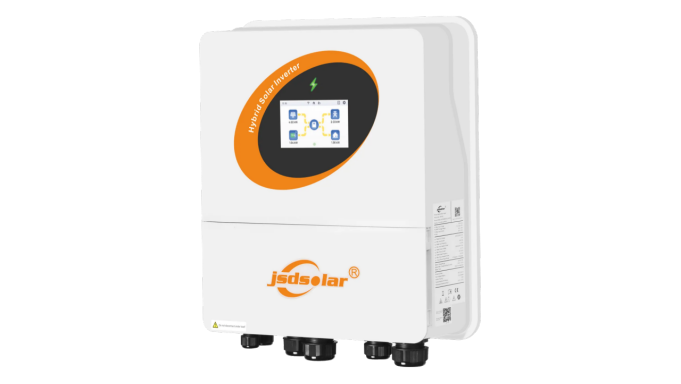
• J5500HPC 5.5kW Hybrid Inverter: Can be used with PV arrays up to 5.5 kW and provides single-phase output of 220/230 V. The MPPT for this inverter is from 120-450V and it can work in parallel with up to 9 units.
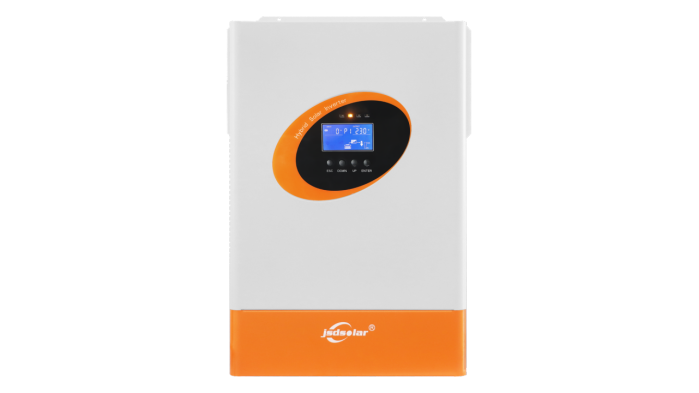
• J6KHB 6kW Off-Grid Hybrid Inverter: This inverter has two MPPTs and a DC limit of 7.8 kW. Each MPPT can track up to 18 A. This inverter has PV inputs to allow for different roof plane arrays, as long as string limits are observed. The inverter has CAN/RS485 communication.
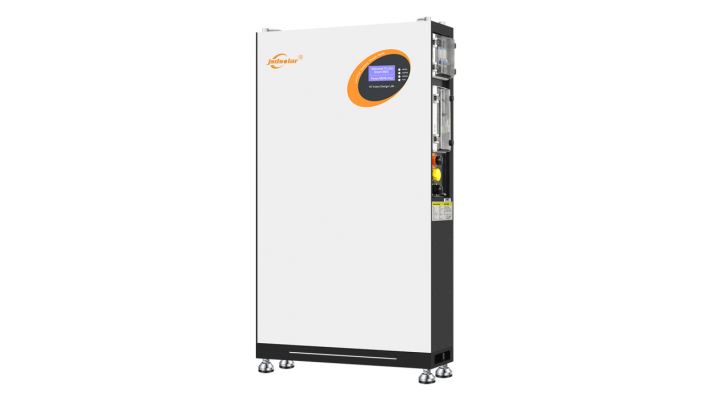
• LFP48200 LiFePO4 Powerwall: This battery has a built-in BMS and can be expanded in parallel, based on the manufacturer's information. Others trade-offs must be considered before expansion.
Our 6kW solar kit (PV nameplate capacity) consisted of 8 x 580W modules, totaling 4.64kWp. This shows the importance of analyzing a "6kW kit" thoroughly, as well as the inverter and battery energy system.
Installation and Maintenance: Plan for Failure, Not Just Fit
For either Home Off Grid Solar System design, verify DC isolation, overcurrent protection, grounding, cable voltage drop, ventilation, enclosure rating, and service clearances. High temperatures can reduce inverter output and restrict lithium battery charging.
Request a fault-recovery plan: Can the battery be isolated? Can a failed inverter be swapped without rewiring the PV array? Are spare boards or matching battery modules available? For remote sites, shipping time and downtime can outweigh savings on installation labor.
Verify Standards Before Placing an Order
Request model-specific reports where applicable: IEC 61215/61730 for PV modules, IEC 62109 for power-conversion safety, and IEC 62619 for stationary lithium batteries. North American projects may require UL 1973 batteries and UL 9540 listed storage-system combinations. UL 9540A is a thermal-runaway test method, not a stand-alone system certificate.
Check local electrical and fire codes, output voltage, and precisely which inverter–battery combination the certification covers.
Which Home Off Grid Solar System Should You Buy?
Choose an all-in-one unit for stable loads and limited space when the documented battery-expansion and repair options are sufficient. Choose modular equipment when future load increases, independent replacements, or site-specific MPPT layouts are likely. An integrated hybrid inverter paired with external modular batteries often provides a useful middle path.
In the supplier quotation, compare the initial bill of materials with future battery additions, parallel hardware, installation labor, replacement parts, warranty exclusions, and expected downtime.
Offer your load schedule, backup target, regional AC requirements and upgrade plan for a home off grid solar system configuration with JSD Solar. All components must be tested to work with each other.
FAQs
Q1: What is the difference between an all-in-one and modular Home Off Grid Solar System?
An all-in-one system integrates major power conversion and storage functions. A modular system uses independently configurable components. JSDSolar offers hybrid inverters and LiFePO4 batteries for flexible system configurations.
Q2: Which JSDSolar inverter is suitable for a 5kW Solar Panel System?
The JSDSolar J5500HPC is a 48V, 5.5kW hybrid inverter with MPPT charging. Final compatibility depends on solar string voltage, input current, AC loads, and battery specifications.
Q3: Does JSDSolar offer dual-MPPT inverters for different roof orientations?
Yes. The JSDSolar J6KHB 6kW hybrid inverter has two MPPT trackers, allowing compatible solar strings to operate under different conditions.
Q4: Can JSDSolar hybrid inverters be connected in parallel?
Selected models support parallel operation. The J5500HPC specifies support for up to nine units, subject to manufacturer-approved configurations, compatible equipment, and electrical protection requirements.
Q5: What battery does JSDSolar recommend for residential off-grid storage?
JSDSolar offers the LFP48200 LiFePO4 battery with 51.2V nominal voltage, 200Ah capacity, and approximately 10.24kWh nominal energy. Battery selection depends on household consumption and backup requirements.


In This Article
- 1 Where a 5kW Home Off Grid Solar System Reaches Its Limits
- 2 What Does "All-in-One" Actually Include?
- 3 All-in-One vs Modular: Four Technical Trade-Offs
- 4 Size Panels, Inverter, and Battery Separately
- 5 Analysis of JSDSolar Configurations
- 6 Installation and Maintenance: Plan for Failure, Not Just Fit
- 7 Verify Standards Before Placing an Order
