


Off Grid Solar System for Remote Telecom Sites: 24/7 Power Design Guide
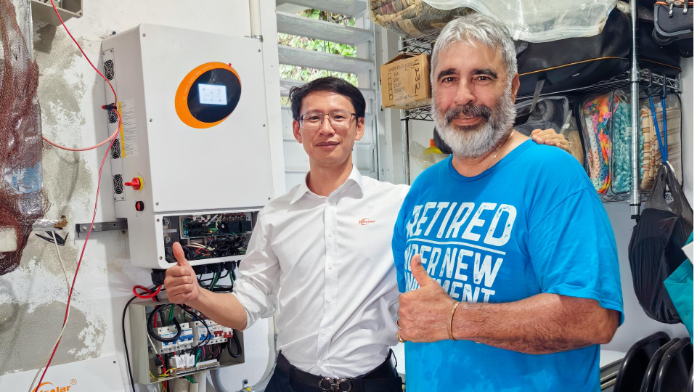
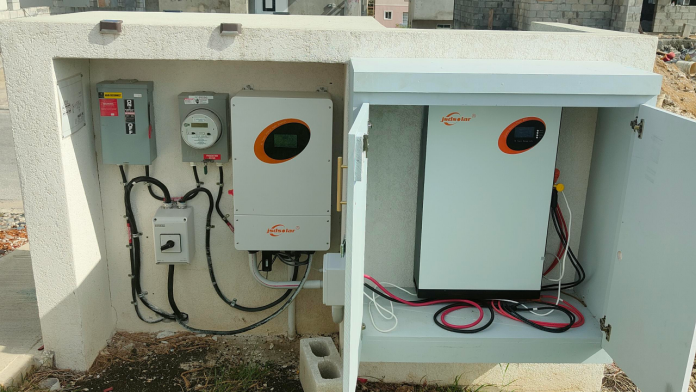
A remote telecom site can lose connectivity even if its solar array seems adequately sized. Continuous radio loads, prolonged periods of cloud cover, battery degradation and DC bus faults can all contribute to unexpected site losses.
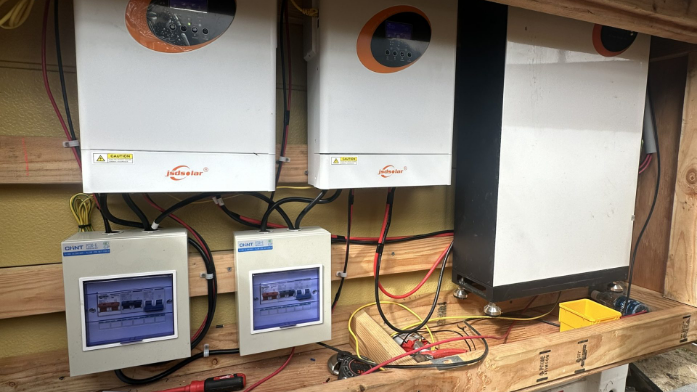
An Off Grid Solar System for telecom infrastructure has three requirements: provide enough energy, provide stable power and allow for recoverable fault conditions.
At JSDSolar, we suggest evaluating the complete power architecture before sizing solar panels, batteries and inverters.
1. Why Remote Telecom Sites Require Dedicated Power Design
Continuous Loads and Battery Autonomy
Telecom base stations operate around the clock and have a number of continuous loads including radio and transmission equipment, and network controllers and routers. Cabinet cooling and monitoring and security equipment may also be continuous or intermittent loads.
For an Off Grid Solar System, the daily energy consumption is determined by averaging the peak loads for the day.
Daily Energy (kWh) = Average Load (kW) × 24 Hours
A site averaging 500W consumes about 12 kWh of energy per day.
Night time operation is not the only sizing constraint. Consecutive cloudy days, battery aging and seasonal changes also must be considered.
2. How an Off Grid Solar System Supports −48V Telecom Equipment
DC Power Distribution and Voltage Compatibility
Nominal −48V DC distribution is common in many telecom installations.
A standard Off Grid Solar System comprises:
•PV array for daytime electric generation.
•MPPT Controller for regulation of photovoltaic array operating voltage.
•LiFePO4 battery bank for storing energy for nighttime and low-irradiation operations.
•DC/DC converter for providing regulated telecom compatible power.
•Energy management controller for power charging, load and backup operations.
As per ETSI EN 300 132-2, the normal −48V telecom interface range is from −40.5V to −57V with positive-earthed distribution.
A standard 51.2V LiFePO4 battery cannot be directly connected to this interface.
Some of the considerations for the interface would be:
•DC output regulation and transients.
•Grounding polarity and DC return path.
•Cable voltage drops, inrush current and fault protection.
•BMS low voltage disconnect, communication and behavior.
For predominantly DC telecom loads, it is advisable to avoid un-necessary DC-AC-DC conversion to reduce energy losses.
3. Which Telecom Solar Power Architecture is Suitable?
Different architectures address different operating risks.
| Technical Comparison | Option A | Option B | Selection Priority |
| Power distribution | DC-coupled | AC-coupled | DC load compatibility and conversion losses |
| Backup strategy | Solar + battery | Solar + battery + diesel | Low-solar duration and fuel logistics |
| Battery technology | LiFePO4 | Lead-acid | Usable DoD, temperature, lifetime cost |
Power redundancy]Single DC path]N+1 redundant modules]Fault tolerance and repair access
Battery Technology and Redundant Power Paths
In general, LiFePO4 batteries can safely and frequently be cycled, though their operating limits are impacted by a variety of factors including discharge current, temperature, and the BMS protection.
Lead acid batteries tend to have lower up-front costs, but there are discharge depth considerations, the cost of maintenance and the eventual battery replacement that also need to be taken into account.
For important sites, redundant DC-to-DC converters and separately protected feeders, in combination with load isolation, are perhaps more valuable than the simple use of a larger inverter.
A truly Off Grid Solar System must be designed to be electrically available and provide energy autonomy.
4. Sizing an Off Grid Solar System for Multi-Day Operation
Battery Capacity: Calculate Usable Energy Not Nameplate Capacity
For example, let's consider a telecom site that needs 3 days of battery only autonomy.
| Design Parameter | Illustrative Value |
| Average continuous load | 500W |
| Daily consumption | 12kWh |
| Required autonomy | 72 hours |
| Total load energy | 36kWh |
| Planned usable DoD | 80% |
| Assumed discharge-path efficiency | 90% |
| Initial nominal battery capacity | 50kWh |
Battery Capacity = Required Load Energy ÷ (Usable DoD × Discharge Efficiency)
The 50kWh result is a preliminary estimate. Final capacity must include end-of-life degradation, temperature derating, reserve SOC, and future load growth.
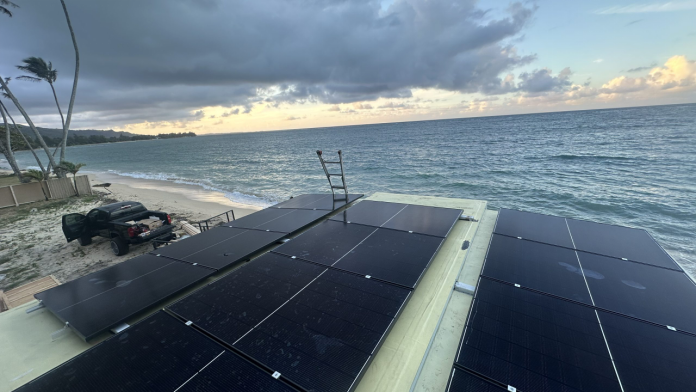
Input: PV Sizing: Design Around the Lowest Solar Production
When sizing an Off Grid Solar System, the concern is with the worst case scenario, or the worst operating season.
PV Capacity (kWp) = Daily Energy/ (Design Peak Sun Hours x Net System Efficiency)
If the daily energy consumption is 12kWh with 3 peak sun hours, and an assumed 75% net system efficiency, the estimate for the size of the PV array would be 5.33kWp.
This size of array only accounts for the daily consumption. In design it needs to be examined if there is sufficient size to also recharge the depleted batteries.
Some considerations for design are:
•Frequent consecutive low-solar days.
•PV temperature losses and shading.
•MPPT voltage and current limits.
•Battery charging limits.
•Probability of unmet load during adverse weather condition.
5. Matching JSDSolar Equipment to Telecom Applications
At JSDSolar, we provide solar inverters, LiFePO4 batteries, and configurable off-grid energy systems.
Two products illustrate important selection considerations.
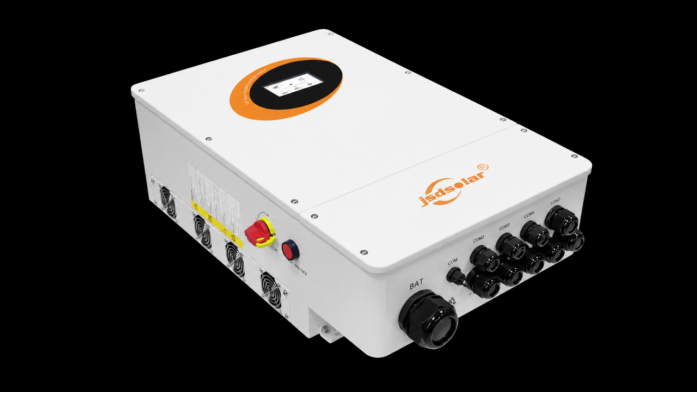
J6KHB 48V 6kW Off-Grid Hybrid Inverter
The JSDSolar J6KHB offers:
•6,000VA nominal AC output.
•Dual MPPT solar input tracking.
•48V-class battery integration.
•CAN/RS485 communication interfaces.
•Pure sine wave output with less than 2% THD.
•EPS switching time below 20ms.
It can be considered for compatible AC auxiliary loads within a telecom Off Grid Solar System.
However, its AC output is not a substitute for regulated −48V DC telecom power. EPS transfer time must also be assessed against equipment interruption tolerance.
LD48200 10.24kWh LiFePO4 Battery
The JSDSolar LD48200 is rated at:
•51.2V nominal, 200Ah, and 10.24 kWh of energy storage.
•A built-in BMS with RS232, RS485, and CAN interfaces.
•Allows parallel expansion of battery modules.
•Has an IP21 protective enclosure.
•Has a charging temperature from 0°C to 55°C.
The LD48200 is a good reference when planning modular energy storage systems. Outdoor telecommunications equipment requires a protective enclosure, and verifying electrical compatibility of the enclosed equipment.
6. Installation, Remote Monitoring and Maintenance
An Off Grid Solar System at an unmanned telecom site must remain serviceable under difficult environmental conditions.
Environmental Protection and Fault Management
•Thermal Management: Check equipment is derated, and the enclosure temperature and ventilation.
•Electrical Protection: Check and coordinate DC breakers, fuses and grounding, as well as surge protection.
•Remote Monitoring: Keep a log of various equipment alarms, battery temperature, and state of charge and state of health (SOH/SOC).
•Fault Management: Check that the system is designed to automatically restart, and loads are shed.
•Preventive Maintenance: Check battery records and inspect terminals and protective devices.
A failure of the remote communication system should not prevent the local control of the system.
7. Standards Verification and Procurement Checklist
Component-specific requirements must be verified before approving an Off Grid Solar System.
| Standard | Verification Focus |
| ETSI EN 300 132-2 | Telecom DC interface compatibility |
| IEC 61215 / IEC 61730 | PV qualification and safety |
| IEC 62619 | Industrial lithium battery safety |
| IEC 62109 | Applicable power converter safety |
Request model-specific certification evidence rather than assuming certification from product descriptions.
Factory and site acceptance tests should cover DC voltage stability, battery protection, converter failover, monitoring alarms, and recovery after low-SOC shutdown.
Procurement comparisons should also include equipment cost, installation, fuel consumption where applicable, battery replacement, maintenance visits, and outage exposure.
Get in Touch With JSDSolar About Your Telecom Power Needs
Off Grid Solar System Quotations JSDSolar requires load profile, location, required autonomy, DC interface specs, environmental conditions
To assist JSDSolar with sizing solar array, selecting LiFePO4 batteries and inverters, and integrating the system, Contact JSDSolar once your equipment configuration is finalized.
FAQs
Q1. Can JSDSolar provide an Off Grid Solar System for remote telecom sites?
JSDSolar supplies solar inverters, LiFePO4 batteries, and configurable off-grid energy equipment. Telecom applications require project-specific verification of load demand, DC voltage compatibility, and backup requirements.
Q2. How should I size a JSDSolar Off Grid Solar System for 24/7 operation?
Start with average and peak loads, daily kWh consumption, local solar irradiation, and required battery autonomy. Include conversion losses, seasonal variations, and battery aging margins.
Q3. Which JSDSolar battery is suitable for extended telecom backup?
The JSDSolar LD48200 LiFePO4 battery provides 51.2V, 200Ah, and 10.24kWh nominal capacity. Multiple compatible units may support larger storage requirements, subject to system design and BMS limitations.
Q4. Can JSDSolar's 48V lithium batteries directly power −48V telecom equipment?
Not without compatibility verification. Telecom systems may require regulated DC/DC conversion, appropriate grounding, voltage protection, and communication interface matching.
Q5. What inverter does JSDSolar offer for remote solar installations?
The JSDSolar J6KHB is a 48V-class, 6kW off-grid hybrid inverter with dual MPPT tracking, CAN/RS485 interfaces, and EPS backup output. It is suitable for compatible AC loads, not as a direct replacement for a −48V telecom power supply.


In This Article
- 1 1. Why Remote Telecom Sites Require Dedicated Power Design
- 2 2. How an Off Grid Solar System Supports −48V Telecom Equipment
- 3 3. Which Telecom Solar Power Architecture is Suitable?
- 4 4. Sizing an Off Grid Solar System for Multi-Day Operation
- 5 5. Matching JSDSolar Equipment to Telecom Applications
- 6 6. Installation, Remote Monitoring and Maintenance
- 7 7. Standards Verification and Procurement Checklist
