


Home Off Grid Solar System with LiFePO4 Batteries: Sizing and Safety Guide
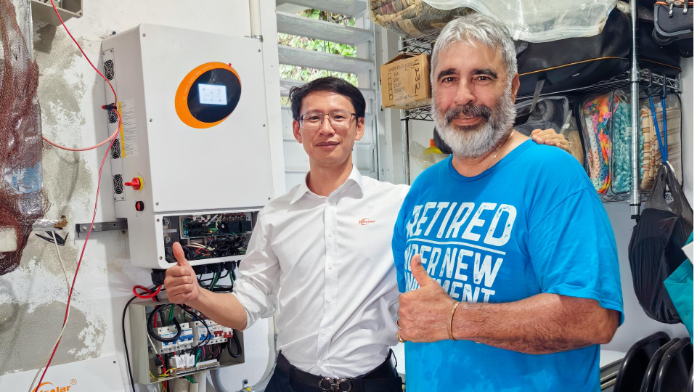
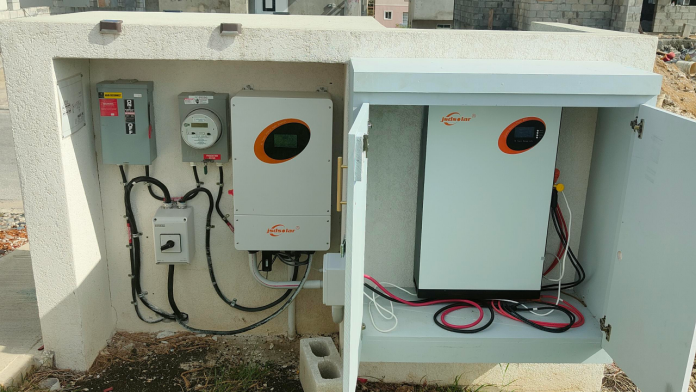
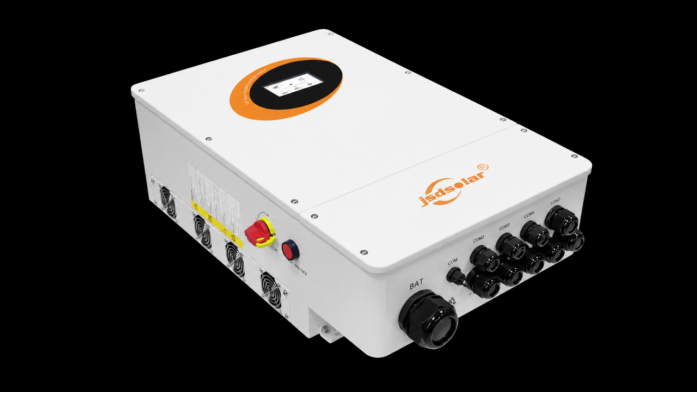
A 10kW inverter does not translate to 10kW of continuous battery-powered output. In a Home Off-Grid Solar System, the battery discharge current, usable storage capacity, and photovoltaic (solar) generation have to be able to cover the same household load profile.
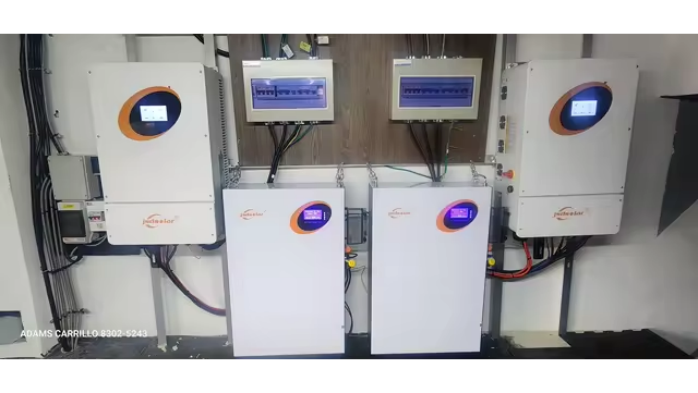
JSDSolar assesses the compatibility of solar inverters and solar panels along with the specs of LiFePO4 batteries to size the system correctly. Common oversizing problems include inadequate storage for overnight use, inverter overload, and slow recovery of the battery after cloudy conditions.
Estimate Your Household Energy Demand Before Selecting a Battery
An Off-Grid Solar Home system has two related calculations. The first is total daily energy consumption (kWh). The second is the maximum (demand) electrical consumption (kW).
| Household Load | Daily Energy (Example) |
| Refrigerator | 1.5 kWh |
| Lighting and Networking | 0.7 kWh |
| Air Conditioning | 4.0 kWh |
| Water Pump | 0.8 kWh |
| Total | 7.0 kWh |
Examples of household consumption are approximate. Actual consumption is determined by the efficiency of the appliance, and the duration and frequency of use.
When estimating the size of LiFePO4 storage take into account:
• Demand overnight: Energy consumed when the sun is not producing solar energy.
• * Peak Load: Maximum power used by appliances at the same time.
• Motor Starting Surge: The power demand required to start a compressor or pump. This is a short term demand.
• Autonomy: Duration of backup power supply required.
The 7.0 kWh load of the example does not mean 7 kWh of LiFePO4 storage is required.
Size LiFePO4 Storage Using Usable Battery Capacity
Battery nameplate energy is not equal to the usable AC energy due to discharge limits and conversion efficiency.
Our JSDSolar LD48200 Battery has the following characteristics:
• Nominal voltage: 51.2 V
• Rated capacity: 200 Ah
• Nominal energy: 10.24 kWh
• Nominal charge / discharge current: 100 A
• Communication: RS232, RS485, CAN
Cycle life: 6,000 cycles at 80% DoD, 25 °C, 0.5 °C, and 60% end-of-life capacity
Calculate Available Energy
Usable AC Energy = Nominal Capacity x DoD x Inverter Efficiency
Assuming 80% DoD and 92% inverter efficiency, the available energy is:
10.24 x 0.80 x 0.92 = 7.54 kWh
Therefore, under these assumptions, LD48200 battery provides approximately 7.54 kWh of usable AC energy. Other loss factors, including but not limited to, battery standby and temperature derating, are not taken into account.
Allow for Cloudy Days
A household that consumes 12 kWh per day and requires 2 days of backup power, requires:
Storage = (12 x 2) ÷ (0.80 x 0.92) = 32.61 kWh
Four of the 10.24 kWh batteries provide 40.96 kWh of storage. This is a preliminary calculation and the actual configuration, including parallel discharge and approved limits, must also be confirmed.
Compare LiFePO4 Battery Configurations
Battery selection affects installation cost, operating reliability, and service life.
| Configuration | Technical Consideration | Suitable Application |
| LiFePO4 vs Lead-Acid | Usable DoD, cycle life, maintenance, lifetime cost | Frequently cycled storage |
| 5kWh vs 10kWh vs 20kWh | Nighttime demand and autonomy | Different household energy profiles |
| Single vs Parallel Batteries | Current sharing, BMS coordination, protection | Expandable residential storage |
| 48V-Class vs High-Voltage | Operating current, cable requirements, equipment compatibility | Different power architectures |
| Off-Grid vs Hybrid Inverter | Standalone operation, black start, grid and generator interfaces | Remote or grid-connected homes |
LiFePO4 batteries typically offer greater usable cycling capability than conventional lead-acid batteries. However, a purchasing comparison should use lifetime delivered energy cost, not initial battery price alone.
Solar Inverter Solar Panel Matching: Voltage, Power and MPPT
Correct Solar Inverter Solar Panel matching requires more than comparing total wattage.
Three electrical conditions must be verified:
• PV String Voltage: Cold weather open-circuit voltage must be below the inverter's maximum PV input rating.
• MPPT Operating Range: String voltage must be within the tracking range at expected operating temperatures.
• Input Current: The string current of the module must be within the limits of each MPPT input.
The JSDSolar 10kW Off-Grid Solar Kit, for example, includes:
• 18 x 580W TOPCon Solar Panels (10.44kWp)
• JB10KLP 10kW Split-Phase Inverter (120/240V AC Output)
• 1 x LD48200 LiFePO4 Battery (10.24kWh)
• PV Mounting Structure, Cables & Accessories
Battery Discharge Power Can Limit Inverter Output
The LD48200 has a nominal discharge current of 100A.
51.2V x 100A = 5.12kW DC
Therefore, it cannot be assumed that one battery in the kit can support the full 10kW AC output of the inverter without support from other power sources.
Although the battery datasheet lists a 200A maximum current, its allowable duration and operating conditions must be confirmed before using that figure for surge-load calculations.
Check Solar Charging Recovery
Estimate daily photovoltaic production using:
PV Energy = Array Capacity × Peak Sun Hours × Performance Ratio
At four peak-sun hours and an assumed 75% performance ratio:
10.44 × 4 × 0.75 = 31.32kWh/day
This is an estimate of PV energy. This is not the energy for battery charging. The energy available for battery storage is less than the energy consumed by the household throughout the day and charging losses.
A complete Solar Inverter Solar Panel design must also check battery charging-current limits, inverter voltage compatibility, and supported BMS communication protocols.
Install and Maintain LiFePO4 Batteries Safely
LiFePO4 chemistry has favorable thermal stability characteristics, but electrical faults, inappropriate charging, and installation errors remain significant risks.
Temperature and Environmental Protection
The JSDSolar LD48200 specifies:
• Charging temperature: 0°C to 55°C
• Discharging temperature: −20°C to 60°C
• Enclosure rating: IP21
An IP21 battery should not be treated as outdoor weatherproof equipment without suitable additional protection.
BMS and Electrical Protection
A residential installation should address:
• Protection from overvoltage, undervoltage, overcurrent, and temperature.
• Correctly rated DC disconnects, overcurrent protection, and cables, and grounding.
• BMS communication loss and behavior during emergency shutdown.
SOC, SOH, cell balance, and fault history.
Coordination of installation and protection, should be in accordance with the manufacturer's instructions and applicable local electrical codes.
Verify both Battery and System Safety Certification
Prior to purchasing a Home Off Grid Solar System, you should distinguish component certification from system approval.
• IEC 62619: Safety requirements for industrial and stationary lithium batteries.
• UL 1973: Battery safety for stationary applications.
• UL 9540: Complete energy storage system safety.
• UL 9540A: Thermal-runaway fire-propagation testing methodology.
• NFPA 855 / NEC: Relevant US installation and electrical requirements.
• UN 38.3: Lithium battery transportation testing.
Request certificates covering the exact supplied models. Battery-level approval does not automatically certify a particular inverter–battery combination.
Choose a Home Off Grid Solar System Based on Verified Specifications
Before ordering, confirm the household load schedule, minimum solar resource, autonomy requirement, inverter surge rating, battery discharge limit, and Solar Inverter Solar Panel electrical compatibility.
Residential customers can purchase solar kits, LiFePO4 batteries, and inverters from us. If you provide us with your daily energy demands and the location of your solar installation as well as your requirements for a backup power source, we can design a Home Off Grid Solar System for you.
FAQs
Q1. How do I size a Home Off Grid Solar System with JSDSolar LiFePO4 batteries?
Calculate daily electricity consumption, overnight demand, peak load, and required backup days. JSDSolar battery sizing should also account for depth of discharge (DoD), inverter losses, and battery discharge-current limits.
Q2. How much usable energy does the JSDSolar LD48200 battery provide?
The JSDSolar LD48200 has 10.24kWh nominal capacity (51.2V, 200Ah). At an assumed 80% DoD and 92% inverter efficiency, estimated usable AC energy is approximately 7.54kWh, before additional losses.
Q3. Can one JSDSolar 10.24kWh battery support a 10kW inverter?
Not at the inverter's full continuous output from the battery alone. The LD48200 has a nominal 100A discharge current, equivalent to approximately 5.12kW DC at nominal voltage. Additional compatible batteries or available PV power may be needed.
Q4. Does JSDSolar offer complete Home Off Grid Solar System kits?
Yes. JSDSolar lists a 10kW off-grid solar configuration with 18 × 580W panels, a 120/240V split-phase inverter, and a 10.24kWh LiFePO4 battery. Final specifications should be confirmed before ordering.
Q5. What is the difference between a 48V and 51.2V LiFePO4 battery?
A 51.2V LiFePO4 battery is commonly classified as a 48V-class battery. JSDSolar's LD48200 uses a 51.2V nominal configuration. Compatibility depends on the inverter's supported battery voltage range and charging parameters.


In This Article
- 1 Estimate Your Household Energy Demand Before Selecting a Battery
- 2 Size LiFePO4 Storage Using Usable Battery Capacity
- 3 Compare LiFePO4 Battery Configurations
- 4 Solar Inverter Solar Panel Matching: Voltage, Power and MPPT
- 5 Battery Discharge Power Can Limit Inverter Output
- 6 Install and Maintain LiFePO4 Batteries Safely
- 7 Verify both Battery and System Safety Certification
