


Inverter Solar Inverter for Home Backup: EPS vs UPS Performance

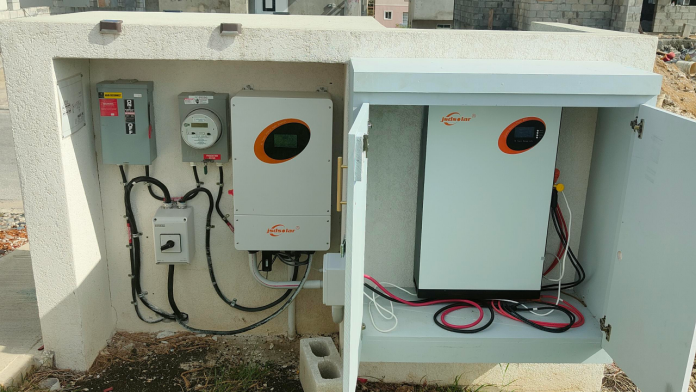
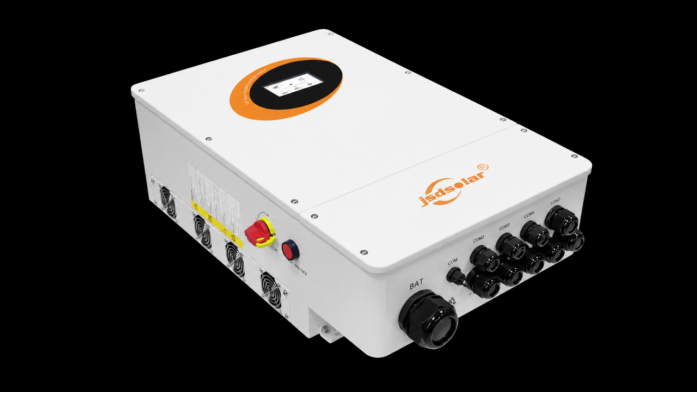
A hybrid inverter solar inverter can restore power to your home in as little as 20 milliseconds after a grid outage. Even with power restoration, a computer can restart, a network switch can lose connectivity, or the compressor in a refrigerator can trip during power restoration.
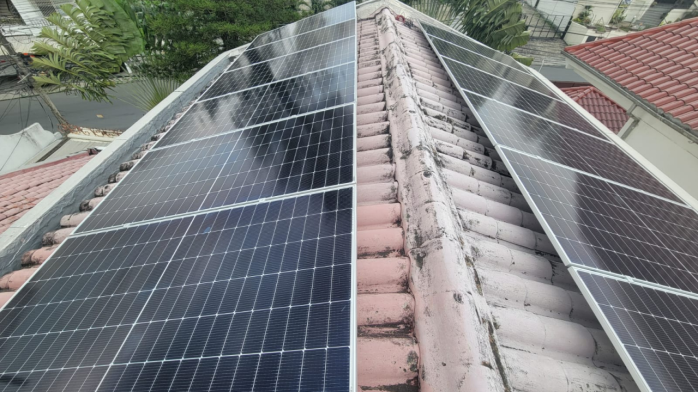
There are some differences between an Emergency Power Supply (EPS) and an Uninterruptible Power Supply (UPS). These differences include transfer behavior, voltage continuity, and load tolerance. Other factors including the output capacity of the inverter and the performance of the batteries used to power the EPS/UPS need to be taken into account for residential backup systems.
Why Home Electronics Restart During EPS Switching
During a utility power outage, the inverter solar inverter must detect the disturbance, isolate its backup circuit from the power grid, and provide EPS power. The time it takes for the inverter to perform these functions can be longer than the ride-through capability of connected equipment.
Common connected equipment issues include:
• Computers and NAS: Power supplies do not have sufficient hold-up time to bridge the gap.
• Routers and security systems: Controllers can reset due to a brief power interruption.
• Refrigerators and pumps: The equipment can be re-started during the power interruption and lost the available surge power.
• LED lights: Voltage interruption can be detected by the eye.
Transferring from a grid to EPS power in 20ms doesn't always ensure seamless and uninterrupted operation. How equipment behaves during the power interruption and the testing conditions need to be taken into consideration.
How EPS and UPS Differ in Power Continuity
Transfer Time Is Not the Only Measure of Performance
An EPS-enabled inverter solar inverter, following grid failure, transfers critical loads to a battery-supported inverter.
An online double-conversion UPS, during normal operation, transfers its load through an inverter avoiding the gap during grid loss.
The three electrical parameters are:
• Transfer time: The length of time the supply is interrupted during source switching.
• Voltage regulation: The ability to control the output voltage to an acceptable level during a change in load.
• THDv: The magnitude of voltage harmonic distortion of the output under defined operating conditions.
• Low THDv implies more steady state and cleaner output voltage, however this does not indicate continuity of supply.
EPS vs UPS: Technical Comparison
| Technology | Power Continuity | Suitable Applications |
| Solar Inverter EPS | Model-dependent transfer interruption | Lighting, general appliances |
| Standby UPS (VFD) | Transfers when input power fails | Basic computing |
| Line-Interactive UPS (VI) | Voltage regulation with backup transfer | Networks, office equipment |
| Online UPS (VFI) | No conventional grid-loss transfer gap in double-conversion mode | Sensitive electronic loads |
VFD, VI, and VFI describe UPS input-dependency characteristics under IEC 62040-3, not universal switching-time ratings.
For critical electronics, a dedicated UPS downstream of the EPS circuit may be appropriate. Its input tolerance, bypass behavior, and battery charging compatibility must be verified.
Matching EPS Output With Battery Discharge Capacity
JSDSolar J6KHB: A 48V Backup Inverter Example
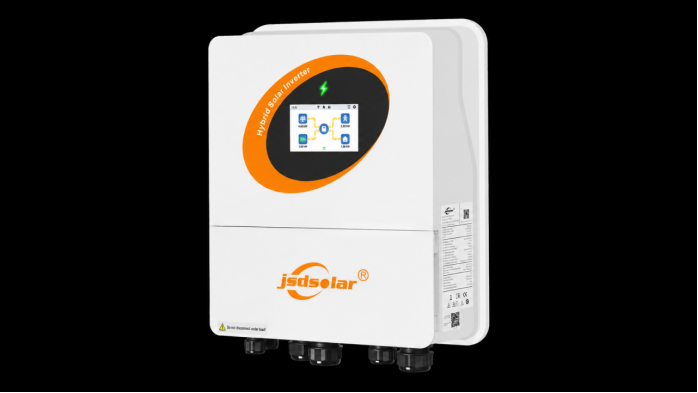
The JSDSolar J6KHB 6kW Off-Grid Hybrid Inverter integrates photovoltaic input, battery storage, and EPS backup within one platform.
Its technical table provides the following specifications:
| Technical Parameter | J6KHB Specification |
| Rated EPS output | 6000VA |
| EPS switching time | Less than 20ms |
| EPS voltage / frequency | 230V AC, 50/60Hz |
| EPS THDv | Less than 2% |
| Battery voltage range | 40–58V |
| Recommended battery voltage | 48V |
| Maximum discharge current | 110A |
| Communication | CAN / RS485 / Wi-Fi / LAN / DRM |
The J6KHB supports lithium and lead-acid batteries, dual MPPT tracking, and parallel operation. Its EPS specifications provide a basis for residential backup planning, but do not establish UPS-certified continuity.
Why 6000VA Does Not Guarantee 6000W Battery Output
Inverter apparent power and battery discharge power represent different limits.
At a nominal 48V battery voltage and the listed 110A discharge current:
DC input power ≈ 48V × 110A = 5.28kW
When running on battery power only, AC output will be reduced due to conversion losses. The actual capacity also depends on the battery voltage, the current limits of the BMS, temperature, and the available PV contribution.
Motor starting current and the inverter's documented overload curve must be checked separately.
Sizing Backup Runtime and Essential Loads
Battery energy determines duration; discharge current determines instantaneous power capability.
A 5kWh battery with usable energy of 80% and a discharge path efficiency of 90% yields approximately 3.6kWh of AC energy, providing about 3.6 hours of energy at 1kW of constant power.
For an Inverter Solar Inverter installation, consider the following in the given order:
• Essential lighting and refrigeration, along with communication circuits.
• Running and apparent power demands, as well as motor starting demands.
• Duration of backup, along with battery State of Charge (SOC).
• Capacities and low-temperature discharge behavior of batteries.
• Whether the model allows solar backup has to be confirmed.
Designing and Maintaining the EPS Backup Circuit
The EPS should provide essential-load circuits, not assume that all household circuits should be backed up.
It must be confirmed that:
• Isolation of the grid: The inverter does not energize the utility grid during a grid outage.
• Neutral and grounding: These are as designed by the inverter and as required by local electrical codes.
• DC cabling: Check for voltage drop and protection and terminal connections.
• Battery communication: Verify BMS communication and State of Charge (SOC) reporting.
• Grid synchronization: The inverter injects power into the utility grid.
Cooling and integrity of connections, along with battery alarms and simulated outage tests, should be checked routinely.
Verifying EPS Performance Before Procurement
An EPS should be designed to back up essential circuits, and its performance should be verified, not software events logged, before purchase.
Recommended acceptance tests include:
• Simulate loss of the utility grid at different loads, and capture the output voltage and current of the EPS using a waveform recorder.
• Measures the duration, the level of sag, and the recovery of the utility grid.
• Perform tests at a low State of Charge (SOC) of the battery, and measure motor starting performance of electronic loads and other connected loads.
Performance testing and classification of UPS systems is governed by IEC 62040-3. Safety of photovoltaic power conversion equipment is governed by IEC 62109. Compliance with regional requirements including UL 1741 and IEEE 1547 are often mandated for grid connected installations.
Check certificates, test reports and other applicable documents against the Inverter model number and the market where it is to be installed.
Select JSDSolar Inverter for Residential Backup
Prior to purchasing a Solar Inverter buyers should ensure compliance with battery discharge limits, evaluate EPS switching behavior, assess continuous and surge outputs and familiarize with local regulatory requirements.
We at JSDSolar, provide solutions for hybrid inverters, lithium battery storage, and help with PV system designs and integration with batteries.
For evaluation of a complete inverter + storage solution based on a critical load profile of the end user, it is suggested that the end users distributor / installer should contact our sales to work out the best possible solution.
FAQs
Q1. What is the difference between EPS and UPS in a solar inverter?
EPS provides backup electricity after grid failure, usually with a model-dependent transfer interval. An online UPS can maintain inverter-fed output without a conventional transfer gap. JSDSolar's J6KHB provides EPS backup, not a verified online UPS function.
Q2. What is the EPS switching time of the JSDSolar J6KHB inverter?
The JSDSolar J6KHB 6kW hybrid inverter specifies an EPS switching time of less than 20ms. Actual load continuity depends on equipment tolerance and switching conditions.
Q3. Can a JSDSolar inverter prevent computers from restarting during outages?
Not necessarily. The J6KHB's EPS function restores backup power, but sensitive computers may still restart. A compatible dedicated UPS is recommended where uninterrupted operation is essential.
Q4. What is the rated EPS output of the JSDSolar J6KHB?
The J6KHB provides 6000VA rated EPS output at 230V AC, 50/60Hz, with specified voltage THD below 2%. Actual usable power also depends on battery and operating limits.
Q5. Which batteries are compatible with the JSDSolar 6kW hybrid inverter?
The J6KHB supports lithium and lead-acid batteries. Its technical table specifies a 40–58V battery operating range and recommends a nominal 48V battery system.


