


Residential Solar vs Commercial Solar: Key Differences
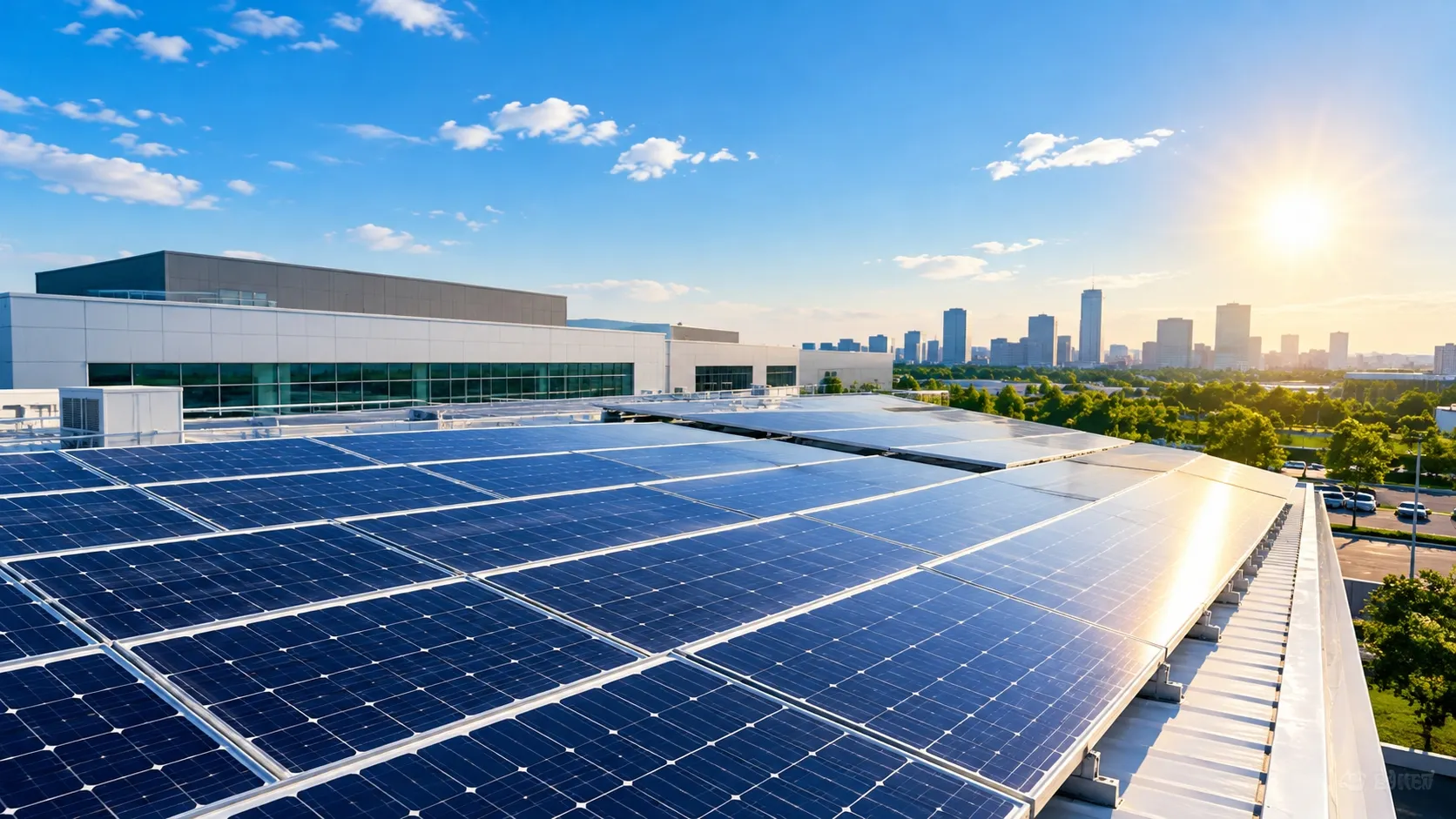
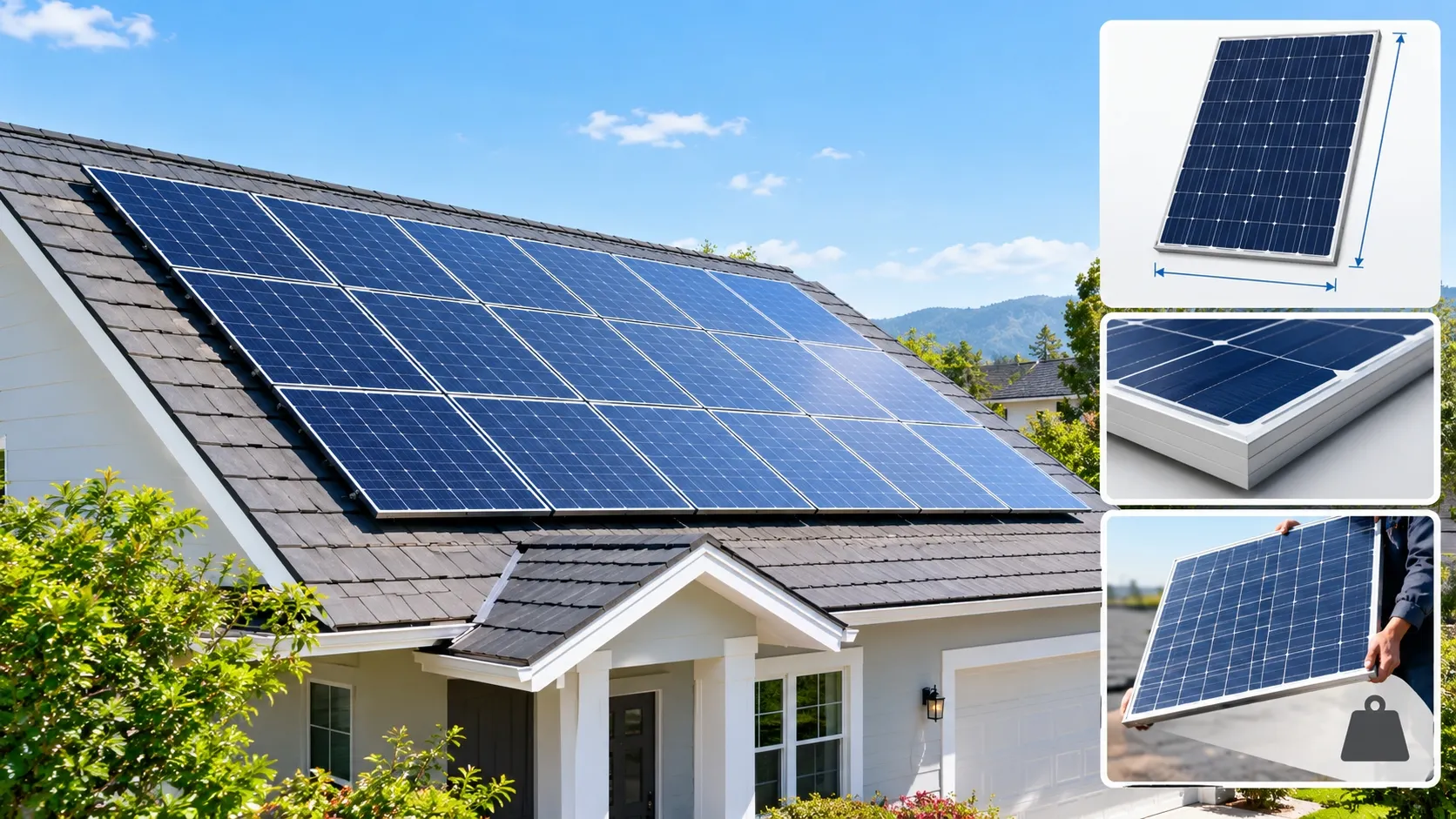
Energy savings, energy independence and a cleaner energy future are becoming increasingly important concerns for solar energy. Not every solar power system is designed to accomplish the same thing, however. The differences between residential solar and commercial solar are quite significant in terms of system size, installation, financing, energy consumption and return on investment.
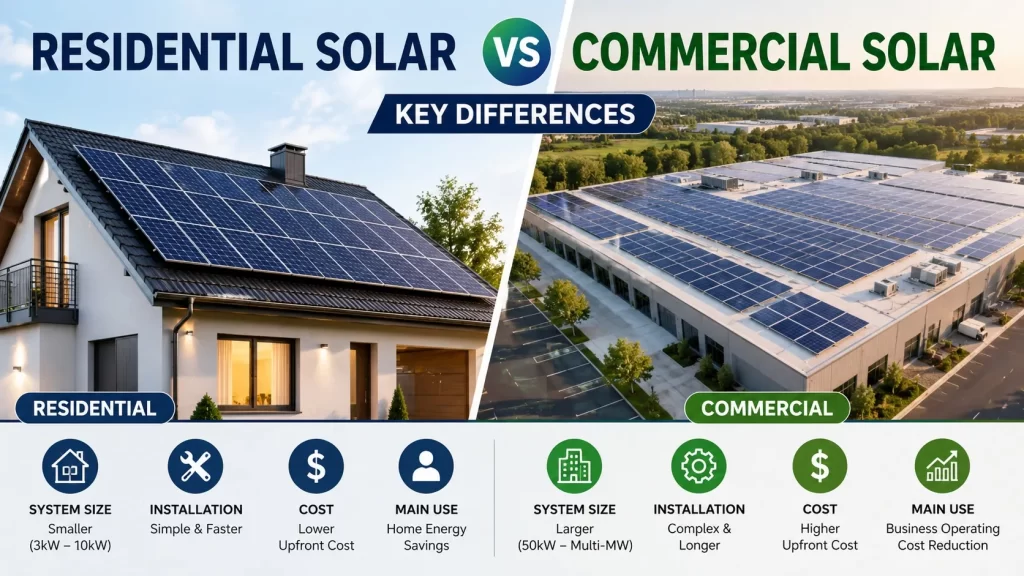
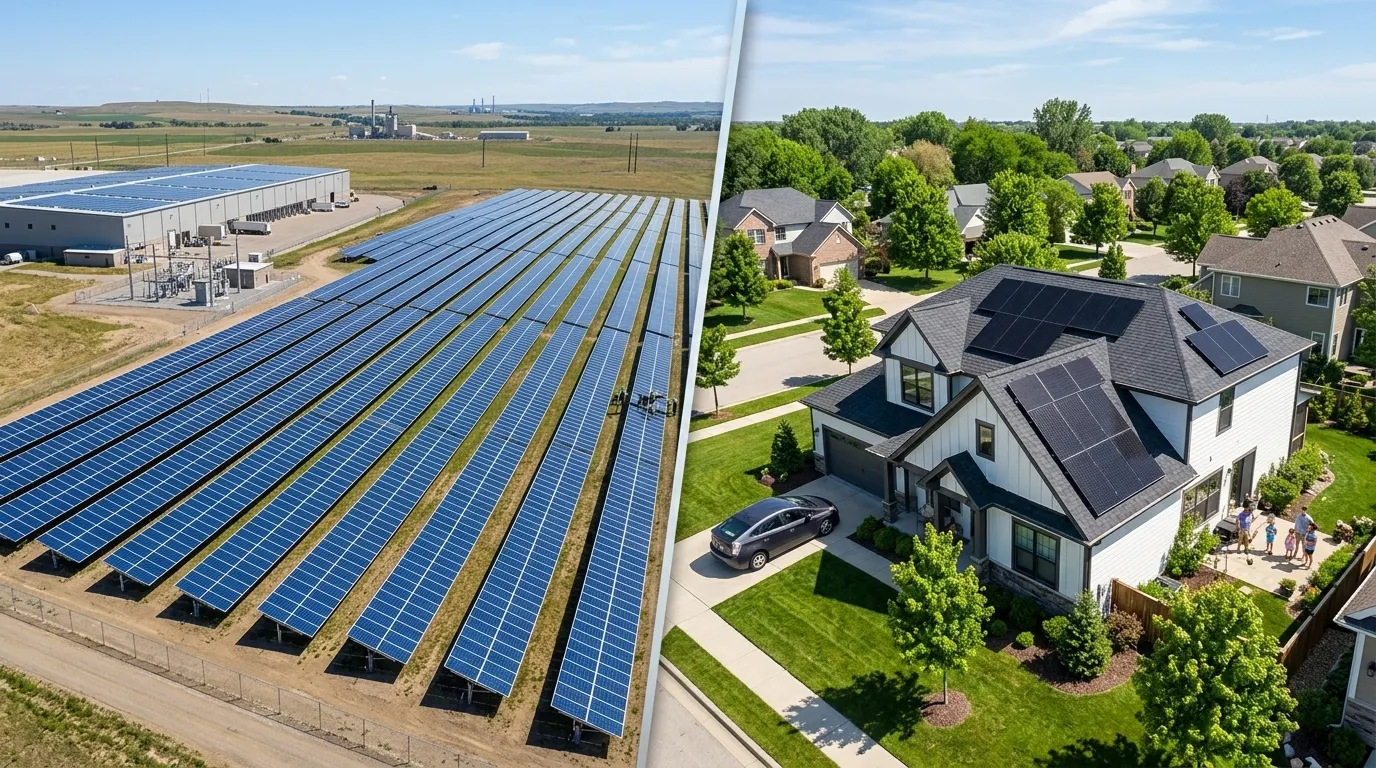
So, what is the difference between residential and commercial solar? In general, residential solar is geared towards the electrical consumption of residential buildings, whereas commercial solar is geared towards the electricity usage of commercial buildings, industrial facilities, offices, warehouses etc.
Understand the difference between residential solar and commercial solar and when and why one is the better choice for a property owner's needs.
What Is Residential Solar?
Residential Solar: Solar Power generated by PV panels on a home or other buildings intended for residential use. These systems harness sunlight and turn it into electricity which can be utilized for lighting, heating and cooling systems, household appliances and other electrical applications.
The size of a typical residential solar system can vary significantly, ranging from a few kilowatts (kW) up to a capacity of over 10 kW, depending on the size of your roof, the amount of electricity your home consumes, the sunlight your home receives and your energy goals.
They are often mounted on rooftops but in cases where there would be ample ground space, they can be set up on the ground.
Key Benefits of Residential Solar
Homeowners choose solar energy for several reasons:
- Lower monthly electricity bills
- Greater energy independence
- Protection against rising electricity prices
- Reduced household carbon emissions
- Potential increase in property value
- Compatibility with home battery storage
- Access to available solar incentives and tax benefits
For homeowners who want to reduce their reliance on the utility grid, a residential solar system can be an effective long-term investment.
What Is Commercial Solar?
Commercial solar – Solar PV systems for business and larger properties. These systems can be used in offices, factories, warehouses, retail stores, schools, hotels, agricultural buildings and other commercial sites.
Most commercial solar systems are larger than home solar systems, as businesses have a much higher electricity usage, due to their size.
A commercial solar installation can be from tens of kilowatts to several megawatts depending on the facility's energy needs and available installation space.
There are several places where such commercial systems can be installed:
- Large commercial rooftops
- Warehouse roofs
- Factory buildings
- Parking structures
- Open land
- Carports
- Industrial facilities
The main objective is usually to reduce operating expenses by generating electricity onsite and reducing the amount of power purchased from the grid.
Residential Solar vs Commercial Solar: Key Differences
Although both systems use photovoltaic technology to generate clean electricity, there are several important differences between residential and commercial solar.
1. System Size
The most evident difference is the system capacity.
Residential solar systems are generally smaller as household electricity usage is relatively limited. Commercial solar installations may be significantly larger, as businesses may be running machines, HVAC equipment, lighting, computers, refrigeration, and other high power equipment.
For instance, a house may have a 5-15 kW solar installation, a business building might need a solar installation of 50 kW, 500 kW or even several megawatts.
What is actually needed should always be calculated by an energy consumption study, not on the basis of the size of the system available.
2. Installation Location
Typically, residential solar panels are mounted on a pitched or flat roof of a home. Roof surface area, roof direction, shading and structural condition can have a significant impact on system design.
The installation surface of commercial properties are generally much higher. Solar panels can be installed on flat warehouse and factory roofs.These can be flat warehouse and factory roofs which offer a significant amount of space for solar panels. Commercial solar can be mounted on carports or ground mounted.
Commercial buildings tend to have more solar capacity on their roofs since they are larger.
3. Electricity Consumption
The electricity consumption of residential and commercial customers is typically different.
There is greater power use, typically in the morning and evening, although this varies with the house's occupants and the appliances in use.
The biggest usage of electricity may be during business hours, where solar generation is also highest.
This is especially appealing for companies that have significant electrical usage during the day as solar power can be utilized on site.
4. Solar Equipment
The fundamental technologies used in residential and commercial solar installations are similar, such as solar panels, inverters, mounting structures, monitoring systems, and possibly battery storage units.
In commercial projects, however, more powerful equipment and complex system designs are sometimes needed.
For commercial solar installations, the inverters can be larger, the monitoring system more sophisticated, the electrical equipment more powerful, and the mounting structure more complex.
Assessment of solar equipment selection depends on system size, grid requirements, building attributes, and local regulations.
5. Installation Complexity
The installation of solar at homes is typically simpler and quicker.
Much more engineering and planning may be necessary for commercial projects. Structural analysis, electrical design, utility interconnection, fire safety considerations, permitting, transformer capacity, and larger-scale construction are some of the factors.
Professional engineering and project management are particularly significant for large, commercial solar projects.
6. Cost and Return on Investment
The cost of a solar system is dependent on size, equipment, installation conditions, labor, permitting, and other project requirements.
Commercial solar projects typically have larger sizes and thus higher initial costs. There are, however, other opportunities for businesses to save a lot of electricity due to their greater energy needs.
The return on investment (ROI) varies greatly depending on electricity costs, solar energy generation, system cost, incentives, financing terms, and self-consumption.
Commercial solar may be economically viable for many businesses, as a significant savings in electricity costs over a business's lifetime.
7. Financing Options
Residential and commercial solar customers may have different financing options.
Home owners can buy a solar system outright or take out a solar loan or they can explore other solar financing options for their homes.
Commercial solar loans, leases, power purchase agreements (PPAs), and more financing options may be available to businesses.
Commercial projects should be considered both from an energy-saving perspective and in terms of the company's financial goals.
Residential Solar vs Commercial Solar: Comparison Table
| Feature | Residential Solar | Commercial Solar |
|---|---|---|
| Main users | Homeowners | Businesses and organizations |
| Typical size | Several kW to 10+ kW | Tens of kW to multiple MW |
| Common location | Home rooftops | Factories, warehouses, offices, carports |
| Energy demand | Household consumption | Higher commercial/industrial consumption |
| Installation | Relatively simple | More complex |
| Equipment | Residential-grade equipment | Commercial/high-capacity equipment |
| Project cost | Generally lower | Generally higher |
| ROI | Long-term household savings | Significant business energy savings |
| Financing | Loans, purchases, other options | Loans, PPAs, leases, purchases |
Which Is Better: Residential or Commercial Solar?
Neither type is universally better. The right choice depends on the property's electricity consumption, available installation space, budget, and energy goals.
Residential solar is best suited for homeowners who want to reduce electricity bills, increase energy independence, and generate clean energy at home.
Commercial solar is better suited for businesses with high electricity consumption and sufficient roof, parking, or ground space for solar panels.
Businesses with high daytime electricity demand can potentially benefit significantly because solar generation can offset electricity consumption during operating hours.
Can Residential and Commercial Solar Use Battery Storage?
Yes. Solar systems can be installed for both residential and commercial properties, and can be coupled with battery energy storage.
Depending on system configuration, a residential battery can store excess solar energy during the day and provide it to the grid at night or during a power outage.
Commercial battery storage can be used for more massive and complicated applications. Batteries can be utilized by businesses for backup power, peak demand management, energy shifting, and increased onsite solar use.
The selection of the proper battery capacity is dependent on the amount of electricity consumed, load profiles, backup needs, and utility regulations.
How to Choose the Right Solar System
Before investing in solar, property owners should evaluate several factors:
- Analyze electricity consumption: Review at least 12 months of electricity bills when possible.
- Evaluate available space: Consider roof size, orientation, shading, and structural conditions.
- Estimate solar production: Local sunlight and weather conditions affect annual energy generation.
- Compare system costs: Consider equipment, installation, maintenance, and financing.
- Review incentives: Check applicable federal, state, local, and utility programs.
- Consider energy storage: Determine whether battery storage can improve energy savings or backup capability.
- Work with qualified professionals: Proper system design and installation are critical for long-term performance.
Conclusion
Residential solar vs commercial solar is mainly distinguished by the scale and application of the solar system. The residential solar market is generally geared towards smaller, low energy consumption systems, and the commercial solar market is geared towards larger, high energy consumption properties.
Commercial solar will be a more complex, larger scale project and will have a higher initial cost, but it can provide significant energy savings over the long term. Solar on the other hand, solar homes, is making sense for homeowners seeking to reduce energy expenses and boost energy independence.
Depending on the energy usage in the home, warehouse, factory, office or commercial facility, the best solution will depend on the property, budget and long-term objectives.
In brief: residential solar is best suited for home energy, and commercial solar is best suited for larger-scale electricity generation and business energy savings. To choose the right solar solution it's crucial to know these differences.
Share on Social:


In This Article
- 1 What Is Residential Solar?
- 2 What Is Commercial Solar?
- 3 Residential Solar vs Commercial Solar: Key Differences
- 4 Residential Solar vs Commercial Solar: Comparison Table
- 5 Which Is Better: Residential or Commercial Solar?
- 6 Can Residential and Commercial Solar Use Battery Storage?
- 7 How to Choose the Right Solar System
- 8 Conclusion
