


Off-Grid Solar vs Hybrid Solar System
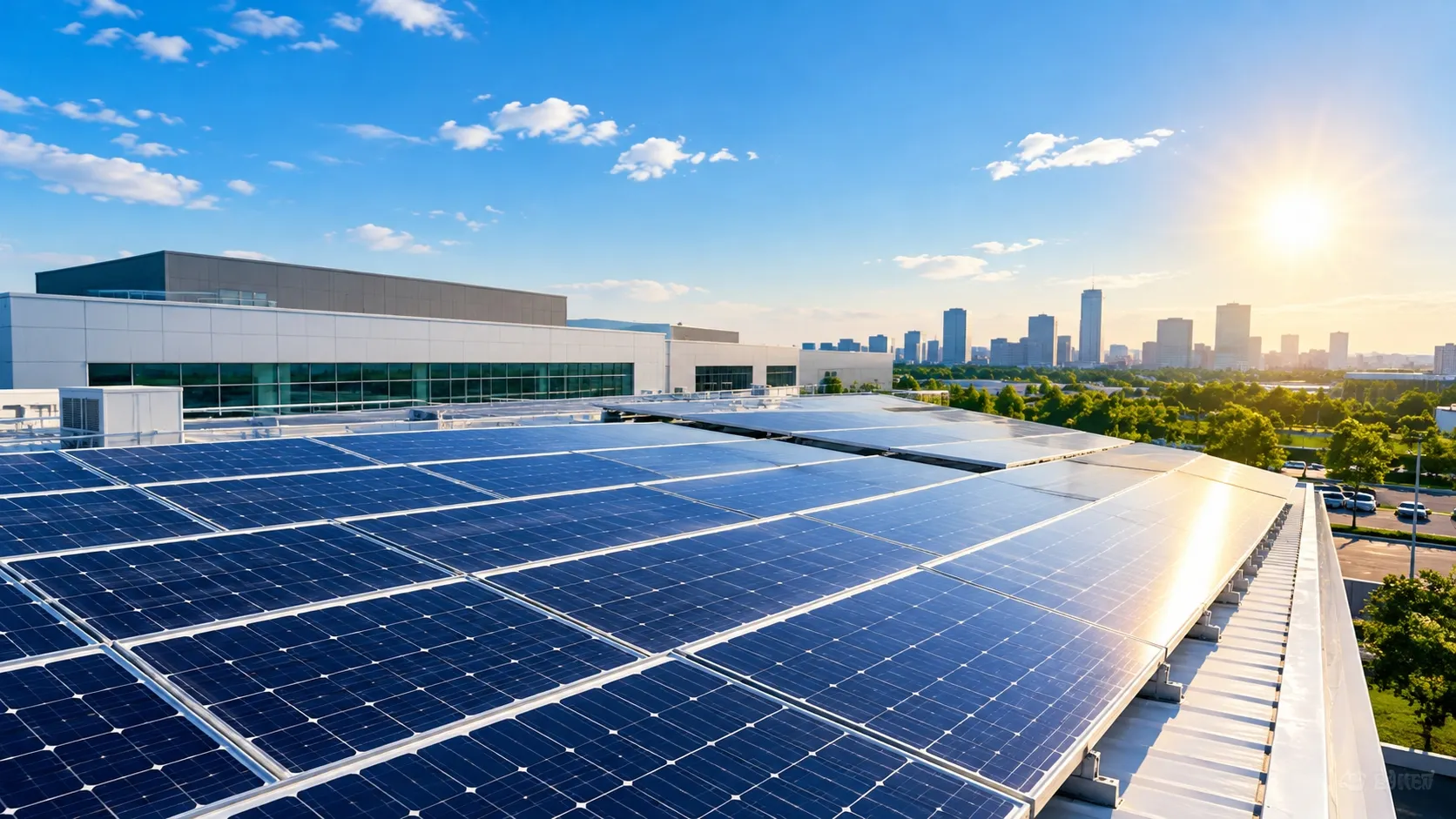
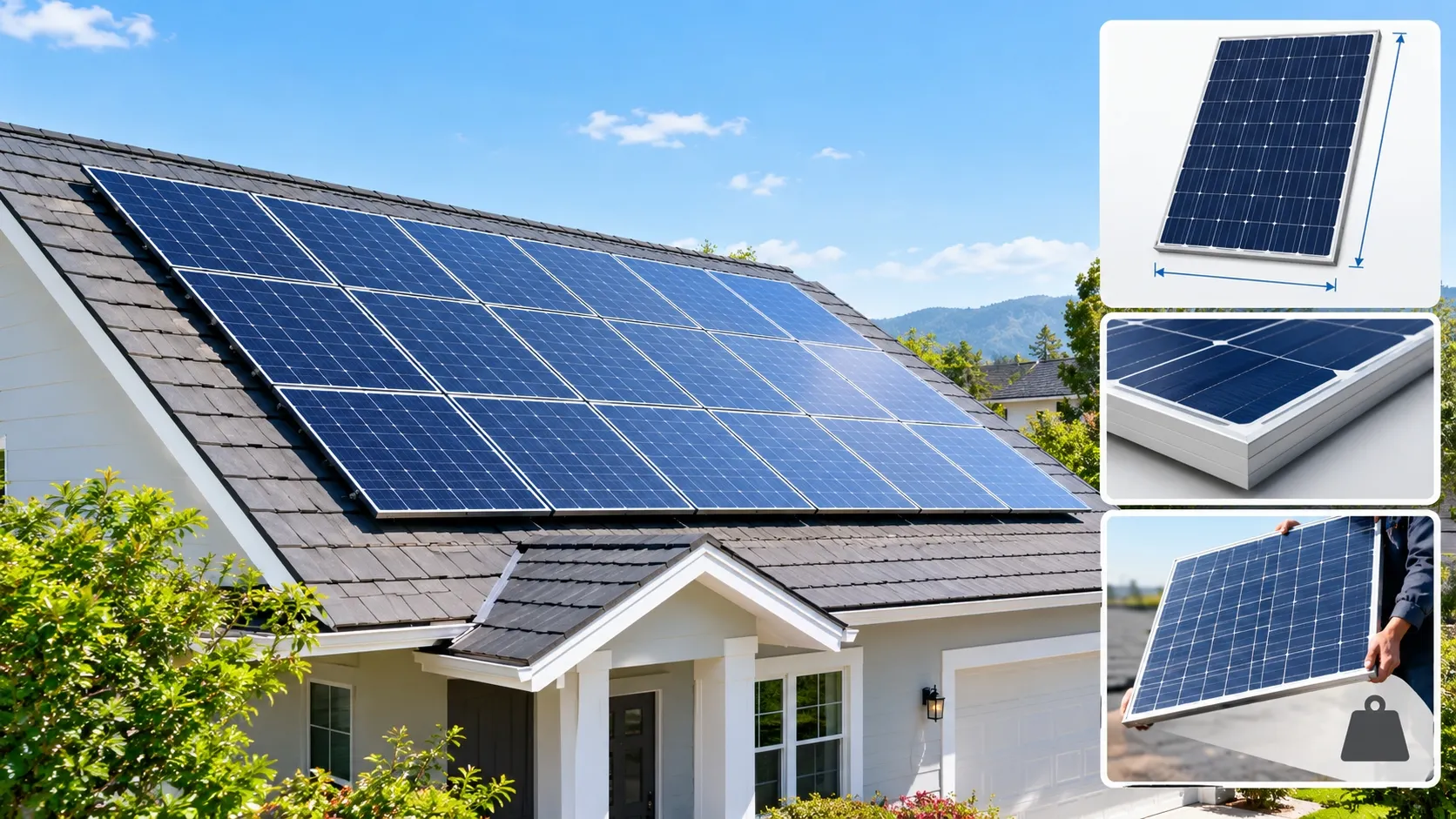
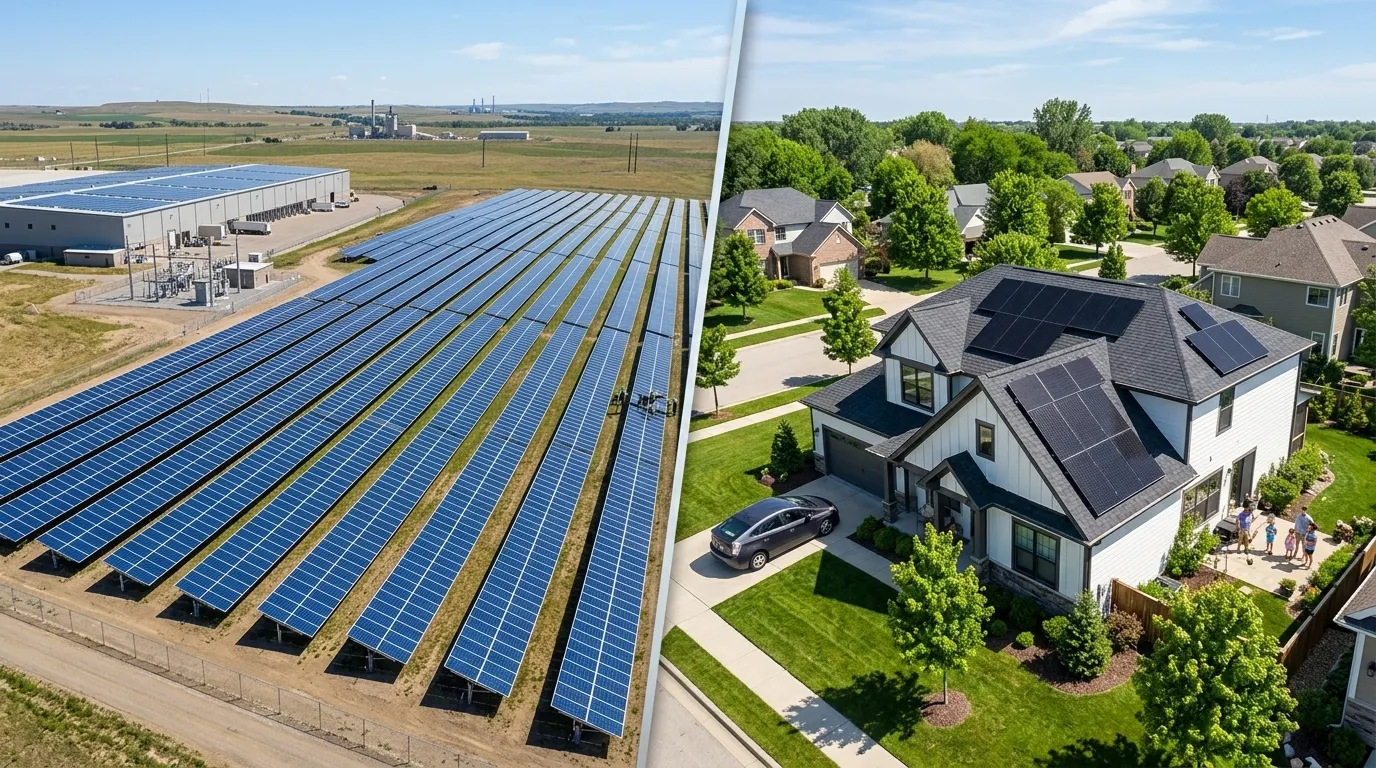
With increased access to solar power, homeowners and businesses can have more options than just installing a traditional grid connected solar system. Off-grid solar systems and hybrid solar systems are two popular options. Both offer increased energy independence, lower electricity bills, and the ability to meet renewable energy objectives, but in very distinct ways.
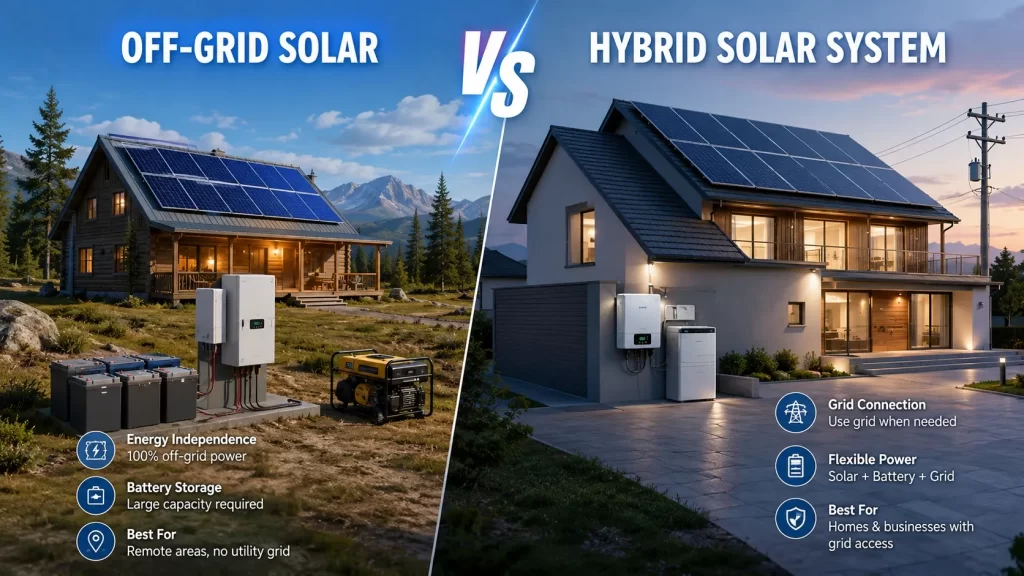
So, what does the difference between an off-grid solar system and a hybrid solar system is? An off-grid system provides energy without connection to the utility grid and a hybrid solar system connects solar panels, batteries, and grid power to provide flexibility in energy management.
Knowing the difference in price, dependability, battery storage and energy self-sufficiency can guide you in picking the right one for your home, commercial building, farm or remote project.
What Is an Off-Grid Solar System?
Off-grid solar system is a self-contained solar power system that operates independently of the grid. It produces electricity from solar panels and uses the energy stored in batteries when the sun isn't around.
Typical off-grid solar system consists of:
- Solar panels
- Solar charge controller
- Off-grid solar inverter
- Battery storage
- Mounting system
- Electrical protection equipment
- Backup generator, in some applications
Electricity is produced by solar panels during the day. The energy can be used directly by appliances and equipment, and any surplus energy will charge the battery. When the sun does not shine or in cloudy weather, the loads are supplied by stored battery energy.
Due to this isolation, it is important to design the system appropriately for daily usage and times of low solar generation.
Advantages of Off-Grid Solar
Energy independence is the greatest benefit. The user is able to produce their own power and utilize it without the involvement of a utility company.
Other benefits include:
- Complete independence from the grid
Off-grid systems are suitable for locations where utility electricity is unavailable or expensive to extend. - Reliable power for remote locations
Farms, cabins, telecom sites, construction areas, and rural properties can use solar power without a traditional electrical connection. - No monthly electricity bill
Once installed, solar energy can significantly reduce or eliminate dependence on utility electricity. - Energy autonomy
Properly designed battery storage allows users to maintain power after sunset and during short periods of poor weather.
Limitations of Off-Grid Solar
The biggest obstacle is consistent enough energy production throughout the year on an off-grid system. Long periods of cloudy conditions can diminish PV output and drain batteries.
Hence, off-grid systems are generally sizing sensitive and rely on bigger banks of batteries. A backup generator can also be needed for critical loads or places that experience prolonged periods of low sun.
What Is a Hybrid Solar System?
A hybrid solar system combines solar panels, battery storage, and the utility grid. A hybrid inverter manages the flow of electricity between these sources and the building's electrical loads.
A typical hybrid solar system includes:
- Solar panels
- Hybrid solar inverter
- Battery energy storage system
- Utility grid connection
- Mounting equipment
- Electrical protection devices
During the day, solar energy can power the building. Excess energy can charge the battery. When solar production is insufficient, the system can use stored battery energy or automatically draw electricity from the grid.
Depending on the system configuration, a hybrid system can also provide backup power during grid outages.
Off-Grid Solar vs Hybrid Solar: Key Differences
The biggest difference is the role of the utility grid.
| Feature | Off-Grid Solar | Hybrid Solar |
|---|---|---|
| Grid connection | No | Yes |
| Solar panels | Yes | Yes |
| Battery storage | Essential | Usually included |
| Energy independence | Very high | High |
| Grid backup | No | Yes |
| Backup during outages | Battery/generator | Battery |
| Battery size | Usually larger | Can be smaller |
| Suitable for remote areas | Excellent | Limited by grid availability |
| System flexibility | Moderate | High |
| Initial investment | Often higher | Moderate to high |
Energy Independence
If maximum energy independence is your priority, an off-grid solar system is the stronger choice. It is designed to operate without the utility grid.
A hybrid solar system still provides significant energy independence but maintains the grid as an additional energy source.
Battery Requirements
Battery storage is critical for off-grid solar because there is no utility network to provide electricity when solar generation is low.
Hybrid systems can often use smaller battery capacity because the grid is available when the battery reaches a low state of charge.
Backup Power
Both systems can offer back-up power, but in different ways.
Off grid system is based on battery storage and can incorporate a generator as a backup power source. A hybrid system will automatically use solar, battery and grid energy as needed based on the system configuration and available energy.
Which System Is More Cost-Effective?
The overall cost will vary as it will depend on the electricity consumption, battery capacity, solar resources, equipment quality, installation needs and local electricity prices.
The initial investment may be higher for off-grid solar systems due to the requirement for adequate battery storage and solar panel capacity to power the system without relying on the grid.
In some cases, hybrid systems can be lower in initial costs as they may be able to store less battery power. Users are however still on the grid and can still pay their electricity bills.
Where grid connections are already reliable, hybrid solar can frequently offer a viable compromise between energy savings and energy security.
Off-Grid Solar vs Hybrid Solar for Businesses
More than the installation cost should be considered when choosing a business solution. Also important are power reliability, peak electricity demand, risks of downtime and long-term operating costs.
Off-grid systems are useful in remote commercial facilities, agricultural applications, telecom facilities and areas that are difficult to reach.
For factories, warehouses, offices, retail buildings, and other buildings that have an existing grid connection, hybrid solar can be particularly appealing. Reducing energy usage during the day using solar energy and utilizing batteries to manage and provide backup energy will help to balance the grid.Solar energy can be used to reduce energy use during the day and batteries can be used to control and store energy and power the grid during times of energy shortage.
Prior to architecture, a professional energy evaluation is recommended for commercial projects.
Which Solar System Should You Choose?
Choose an off-grid solar system if:
- Your property has no utility connection.
- You want maximum energy independence.
- You operate in a remote location.
- Grid connection is unavailable or extremely expensive.
- You are prepared to invest in sufficient battery storage.
Choose a hybrid solar system if:
- Your property already has grid electricity.
- You want to reduce electricity consumption from the grid.
- You want battery backup during outages.
- You want greater flexibility in managing solar energy.
- You want to combine solar, batteries, and grid power.
In simple terms, off-grid solar is designed for energy independence, while hybrid solar is designed for flexibility and energy management.
How to Size an Off-Grid or Hybrid Solar System
Before purchasing equipment, calculate your electricity requirements.
Start by identifying:
- Daily electricity consumption in kWh.
- Maximum power demand in kW.
- Essential and non-essential loads.
- Average peak sun hours.
- Required battery backup duration.
- Seasonal changes in solar production.
- Available installation space.
- Local grid reliability and electricity prices.
If you are going off grid, consider upto 7 days of low solar production; one of the most significant factors. In case of a hybrid system, battery capacity can often be optimised based on the desired back-up needs and electricity consumption.
Final Thoughts
Off-grid solar systems vs hybrid solar systems mainly rely on your energy targets and the presence of a dependable utility grid.
Off Grid Solar is the most energy independent power system and can be used for off-grid properties and off-grid applications. Hybrid solar systems are a more versatile option that uses both solar panels, batteries, and grid power.
Where grid power is reliable, hybrid solar can offer a good mix of solar savings, battery storage, and back-up power that is appealing for most properties. Off-grid solar is one of the most viable renewable energy solutions for remote areas without access to the electricity grid.
Do a comparison of electricity use, solar resources, battery storage, budget and back-up requirements before investing. For long term reliability, the system has to be sized correctly and the components of the system have to be of a high quality.
Share on Social:


In This Article
- 1 What Is an Off-Grid Solar System?
- 2 What Is a Hybrid Solar System?
- 3 Off-Grid Solar vs Hybrid Solar: Key Differences
- 4 Which System Is More Cost-Effective?
- 5 Off-Grid Solar vs Hybrid Solar for Businesses
- 6 Which Solar System Should You Choose?
- 7 How to Size an Off-Grid or Hybrid Solar System
- 8 Final Thoughts
