


Grid-Tied Hybrid Inverter: Solar, Battery & Grid Guide 2026

Grid-Tied Hybrid Inverter: How it Works With Solar, Batteries and Grid
Solar energy is even more practical when an inverter can handle multiple energy sources. A grid-tied hybrid inverter can be used to have photovoltaic solar panels, battery storage, household loads, and the utility grid all coordinated into a single system.
- A hybrid design can handle stored energy in addition to solar generation, unlike a simple grid-tie inverter. It may utilize solar energy directly, store excess energy in a battery, and tap into the grid when needed. It is also capable of supplying backup power in case of an outage with the appropriate setup.
- This renders hybrid technology appealing in residential solar energy, commercial buildings, and projects that desire to have more control over energy usage.
What is a Grid-Tied Hybrid Inverter?
A grid tied hybrid inverter is a power conversion device that is intended to be used with a solar PV system and a connected electricity grid. It may also be used to support a battery energy storage system. The inverter can also divert excess solar electricity to the battery when battery storage is incorporated. Stored energy can be later converted into AC power to be used in the household or commercial loads.
A grid-connected hybrid inverter is thus a device that combines the functionality of a number of independent devices. Depending on the operating mode, it can:
• transform solar DC into useful AC electricity.
• Charge connected batteries
• Supply loads to discharge batteries.
• Take power from the utility grid.
• Export allowed surplus solar energy.
• Provide backup power to selected circuits
• Monitor energy production and consumption
How Does a Hybrid Grid-Tie Inverter Work?
The photovoltaic array supplies the DC power to the hybrid inverter of solar panels during sunny hours. Its MPPT system monitors the optimal operating point of the panels and assists in harvesting the available solar energy. The inverter then converts DC to AC to power electrical loads attached to it.
- In case the production of solar exceeds the demand at that time, the system can charge the battery. When the battery is fully charged to the desired limit, excess energy can be exported to the grid where local regulations and metering arrangements allow.
- In case of a drop in solar production, the battery can be discharged by the system. In case of a lack of stored energy, the inverter may tap into the utility grid.
This synchronized action facilitates increased self-consumption of solar and can minimize unwarranted grid imports.
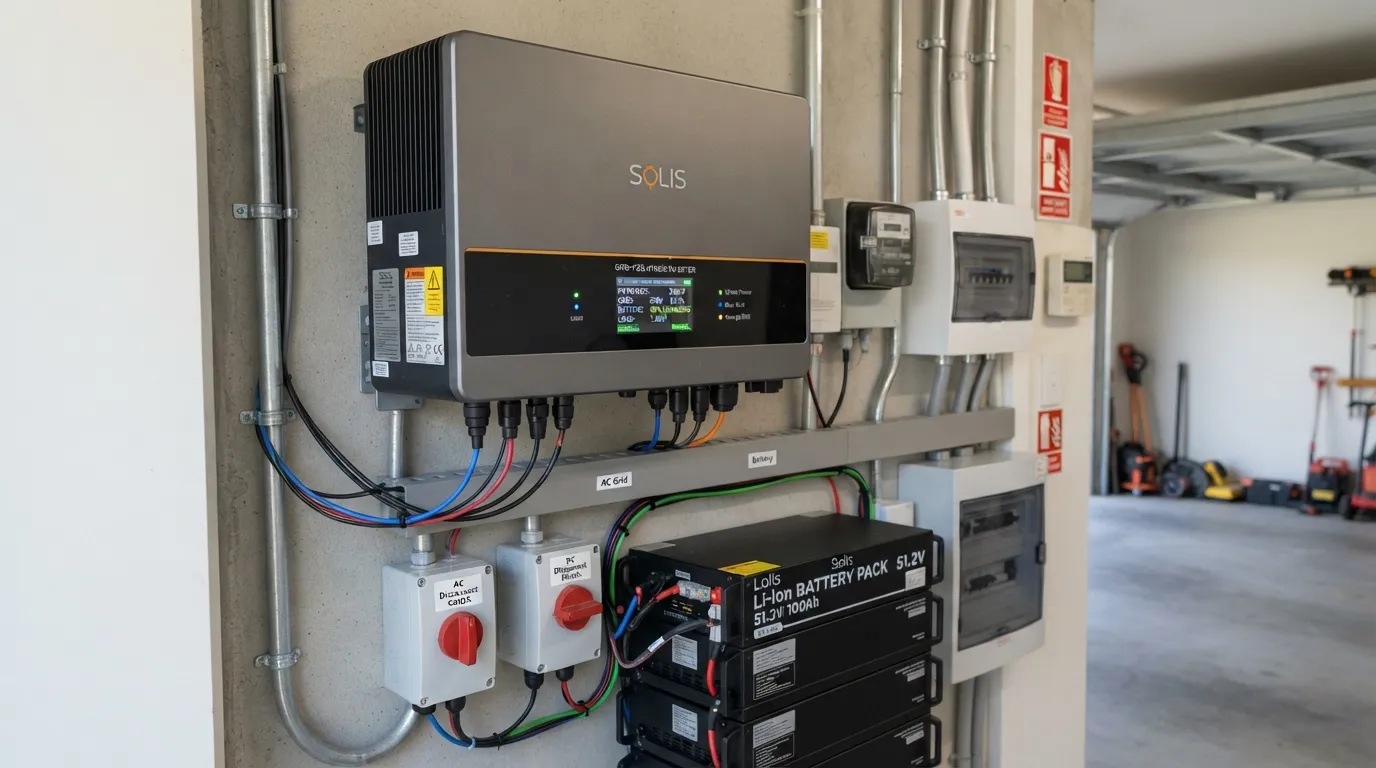
Why Include Battery Storage in a Solar System Connected to a Grid?
A traditional grid-connected solar inverter may be able to export surplus generation to the grid, although it may not offer energy storage. The addition of a battery alters the way the system can utilize solar power. To illustrate, consider a house that generates 8kWh of excess solar power in the afternoon. A matching battery system would be able to store some of that energy instead of exporting all of it. The stored electricity can be used to power household loads later in the evening when solar generation is low.
This helps increase:
• Solar self-consumption
• Energy independence
• Renewable electricity usage
• Backup capability
• Home energy storage
• Control over electricity consumption
A solar battery storage system can hence render daytime solar generation useful even after the sun has set.
JSD Solar's 10kW Hybrid Inverter
JSD Solar provides a 10kW hybrid inverter to be used with systems with a combination of solar generation, battery storage, high-demand AC loads, and grid connectivity. The product is registered as a 10kW Hybrid Solar Inverter with Split Phase Output, IP65, and Wi-Fi.
- The J10KLNA model offers 15kW of maximum DC input power and four MPPT trackers. Its MPPT voltage is 120 V-500 V, with a maximum DC voltage of 500 V and a maximum input current of 14A. This offers good flexibility in the layout of the solar array and the choice of the quantity of panels connected to each MPPT.
- The inverter also has a nominal battery voltage of 51.2V with a battery operating range of 40 V to 60 V. The maximum charging and discharging currents are 190A and 210 A, respectively. It is compatible with lithium-ion and lead-acid types of batteries and can automatically adjust to the battery management system, or BMS.
Dual-Voltage Output to Various Loads
The split-phase output of the JSD Solar inverter is one of the interesting features.
- The product is capable of 110 V/220 V split-phase output, and the specifications also include 230 V single-phase and 208 V/220 V three-phase support. The grid-connected nominal output power is 10kVA and the maximum apparent power output is 11kVA. Such architecture may be applicable in cases where there is mixed-voltage equipment in a property.
An example is a building might have standard household circuits and higher voltage equipment like pumps, compressors, refrigeration equipment, or workshop equipment.
Backup Power in a Grid Outage
The capability to serve backup loads when properly set up is one of the largest benefits of a hybrid inverter system. The simplest type of grid-tied solar inverter will automatically shut down when the grid is unavailable to prevent unwanted islanding. An appropriate hybrid system will be able to separate specific loads from the utility grid and power them with battery and solar energy to keep operating.
The model of JSD Solar offers a nominal off-grid apparent power output of 10kVA and a 120/240 V output at 60Hz in the specified off-grid setup. This can render a hybrid system helpful to critical loads like:
• Refrigerators
• Lighting
• Computers
• Communication equipment
• Security systems
• Pumps
• Selected workshop equipment
The duration of the backup is mainly determined by the battery size, the load connected, and the amount of solar energy available.
Conclusion
Solar panels produce good electricity, and it is the inverter that defines how well that energy can be converted, stored, managed, and delivered. An appropriately chosen grid-tied hybrid inverter can be used to couple solar generation to battery storage and grid electricity and provide the user with increased control over when and how energy is used. Learn about the solar inverter line of JSD Solar and read the specifications of the 10kW Hybrid Solar Inverter, battery compatibility, MPPT settings, protection, and communication.


