


Commercial Solar Power System: A Complete Business Guide
For many businesses in Australia, one of the biggest costs is their electricity consumption. Reliable power is vital to getting the job done at manufacturing facilities, in warehouses, retail stores, offices and agricultural operations. With the rise in energy costs and sustainability demands, a commercial solar power system is an increasingly appealing investment.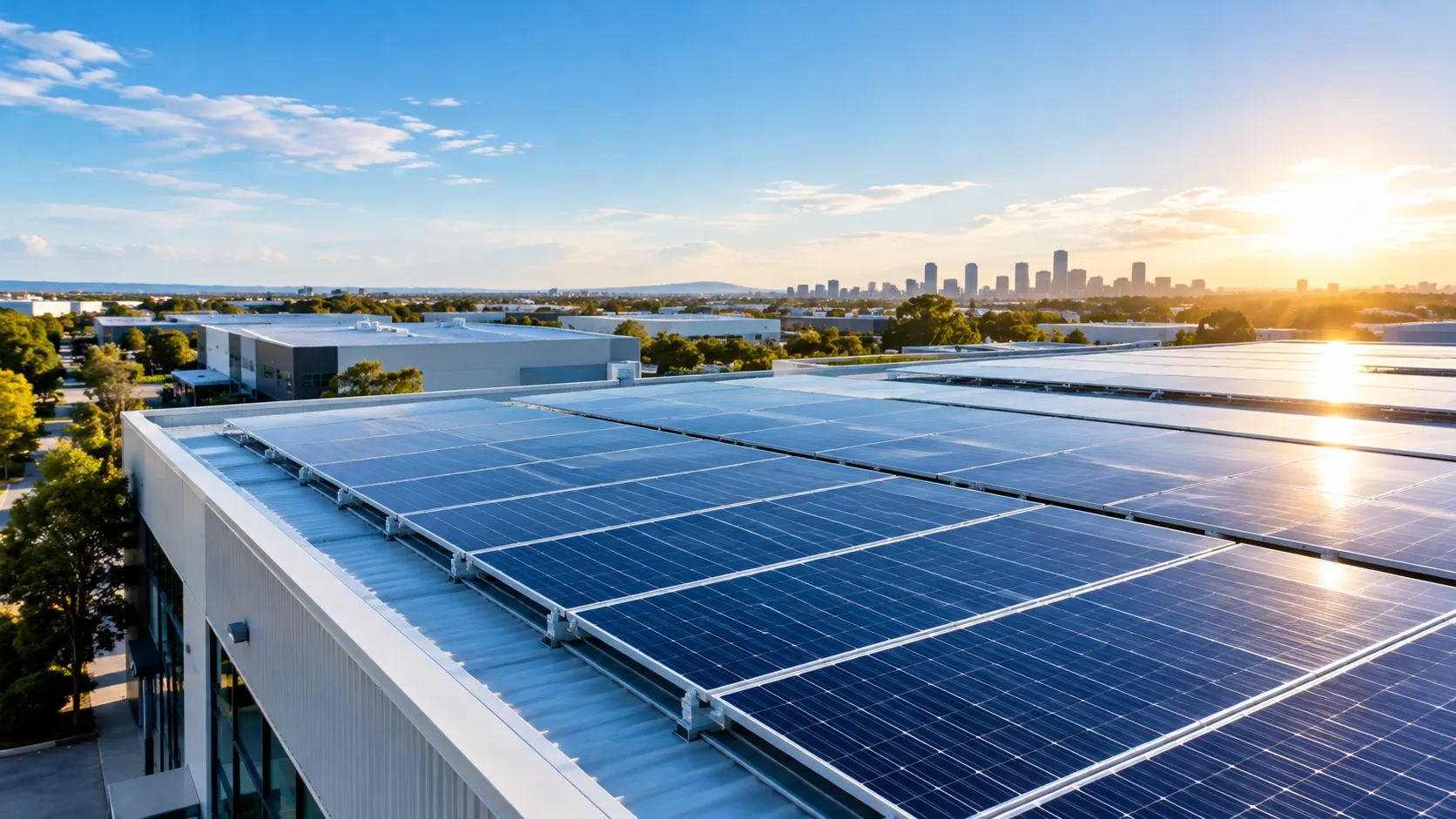
In a commercial solar system, the sun's energy is used to generate electricity that can be used for various purposes within the business such as operating equipment, lighting, air conditioning, refrigeration, electrical appliances, etc. On-site power generation helps companies to minimize their dependence on grid electricity, control their energy costs and decrease their operational carbon footprint.
This document outlines the operation and principle of commercial solar power systems, their key components, the different types of solar systems, the benefits that Australian businesses can access, factors that will need to be considered when installing, and the maintenance requirements of solar systems.
1. What Is a Commercial Solar Power System?
A solar power system used for commercial purposes is a system (PV) that produces power for business or industrial purposes. Commercial solar installations are typically larger and demand more advanced planning to accommodate for a greater amount of electricity use, more complicated electrical systems, and unique operating schedules than residential solar installations.
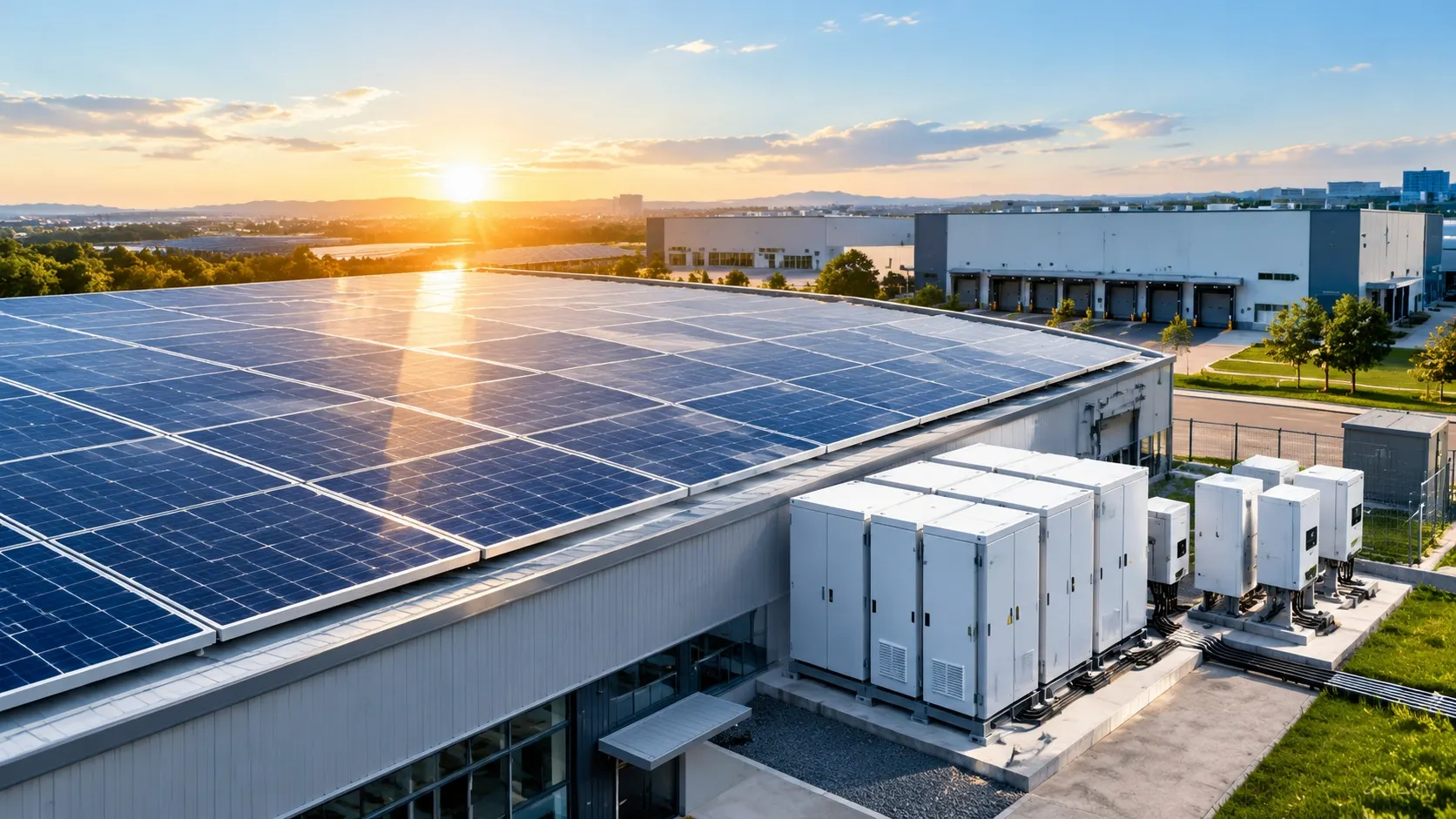
A commercial solar installation can be mounted on a building's roof, such as a warehouse, factory building, office complex, retail site or ground mounted location, depending on a company's energy needs.
Typical applications include:
-
Manufacturing plants and industrial facilities
-
Warehouses and distribution centres
-
Shopping centres and retail businesses
-
Hotels, restaurants, and hospitality venues
-
Schools, healthcare facilities, and office buildings
-
Farms and agricultural processing facilities
The appropriate system capacity depends on electricity consumption, available installation space, operating hours, budget, and local grid connection requirements.
2. How Does a Commercial Solar Power System Work?
A commercial solar power system uses photovoltaic technology to convert sunlight into usable electricity. Its operation involves several straightforward stages.
Step 1: Solar panels capture sunlight. Photovoltaic cells inside the panels generate direct current (DC) electricity when exposed to sunlight.
Step 2: The inverter converts electricity. A solar inverter converts DC electricity into alternating current (AC), which is used by most commercial equipment and electrical appliances.
Step 3: The business consumes solar electricity. The generated electricity supplies the building's electrical loads, reducing the amount of power that must be purchased from the grid.
Step 4: Excess electricity is managed. Depending on the system design and electricity agreement, surplus electricity may be exported to the grid. A battery can also store some of this energy for later use.
Step 5: Monitoring tracks performance. Monitoring software allows business owners and facility managers to review electricity generation, system performance, and potential faults.
For many Australian businesses, using solar electricity directly during daylight hours is an important factor in achieving attractive financial returns. The more closely solar generation matches on-site electricity demand, the greater the potential to reduce grid purchases.
3. Main Components of a Commercial Solar System
Understanding the main components helps businesses evaluate system quality and compare installation proposals.
Solar Panels
Solar panels are the primary electricity-generating components. Their output and efficiency influence the total capacity of the installation.
Monocrystalline photovoltaic panels are widely used in commercial projects because of their efficiency and ability to generate substantial power from limited roof space. Panel selection should consider product warranties, temperature performance, degradation rates, and manufacturer reliability.
Solar Inverter
The inverter converts the electricity generated by solar panels into usable AC power. Commercial installations commonly use string inverters or other configurations selected according to system capacity and site requirements.
Important considerations include conversion efficiency, monitoring capabilities, protection features, maintenance requirements, and compatibility with potential battery storage.
Mounting Structure
Mounting equipment secures the solar panels to a roof or ground-mounted structure. The design must suit the roof material, building structure, wind conditions, panel layout, and local engineering requirements.
For commercial rooftops, structural assessments and appropriate waterproofing measures are essential before installation.
Battery Energy Storage
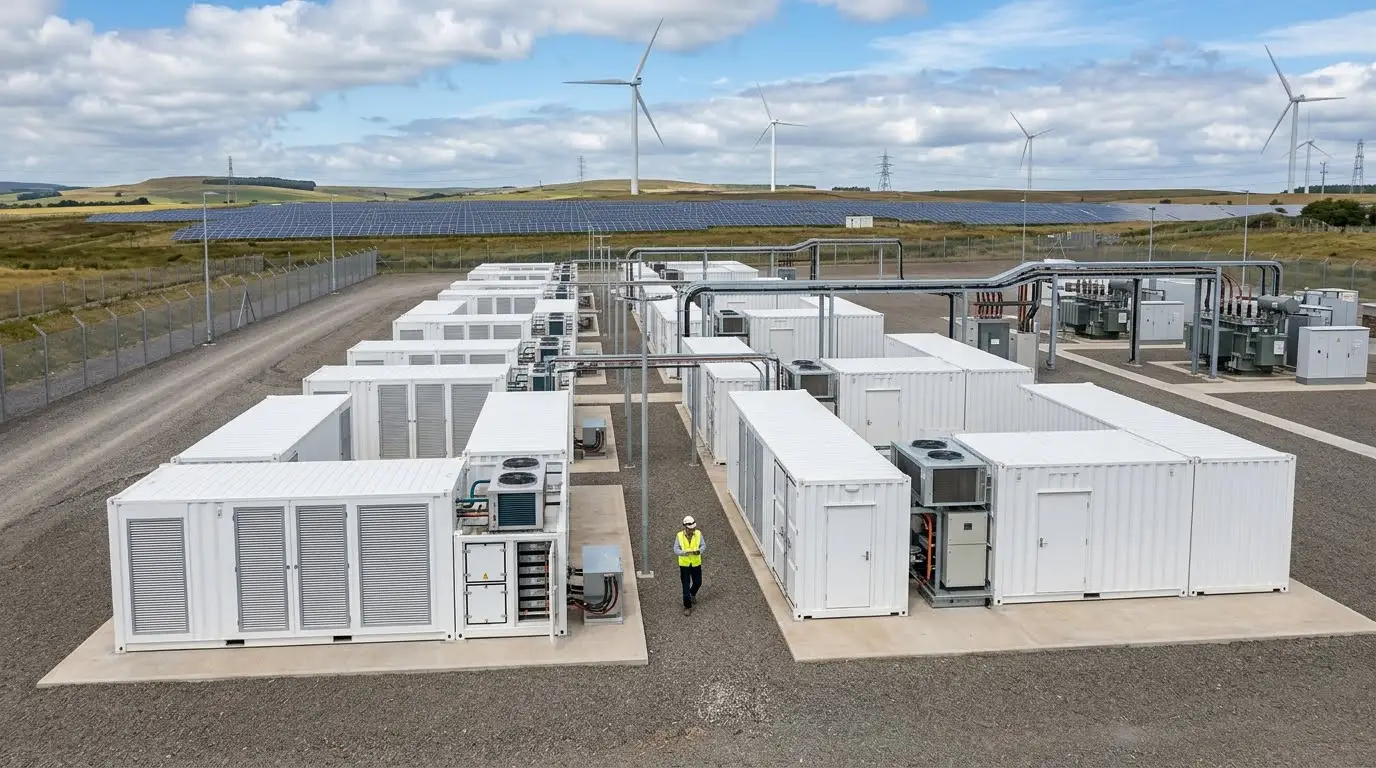
A battery stores surplus solar electricity for use when solar production is insufficient or electricity prices are higher. Batteries may be useful for businesses with evening operations, variable energy demand, or certain peak-demand charges.
However, battery storage adds upfront cost. Its financial value should be evaluated using the business's electricity tariff, consumption profile, and expected operating requirements.
Electrical Protection and Monitoring
Cables, connectors, switchboards, protective devices, metering equipment, and monitoring software help ensure safe and reliable operation. Correct component selection and professional installation are essential for long-term performance.
4. Types of Commercial Solar Power Systems
Businesses can choose from several system configurations depending on their location and electricity requirements.
Grid-Connected Solar Systems
Grid-connected systems operate alongside the existing electricity network. Solar power supplies the business during generation hours, while the grid provides additional electricity when required.
Excess electricity may be exported when permitted under the applicable network connection and electricity agreement. For many businesses already connected to the grid, this configuration offers a practical starting point.
Off-Grid Solar Systems
Off-grid systems operate independently of the electricity network and typically require battery storage, suitable inverter equipment, and careful energy planning.
They can be appropriate for remote agricultural properties, isolated industrial facilities, or locations where grid access is unavailable or prohibitively expensive. System sizing must account for overnight demand, cloudy periods, and backup requirements.
Hybrid Solar Systems
Hybrid systems combine solar generation with battery storage and, where applicable, a grid connection. They provide greater flexibility in managing when electricity is generated, stored, and consumed.
Depending on the equipment and design, some hybrid systems can provide backup power to designated loads during outages. Businesses should confirm backup functionality, supported loads, and required additional equipment before purchasing.
5. Key Benefits of Commercial Solar Power
Lower Electricity Expenses
One of the principal advantages of commercial solar is the potential to reduce electricity purchased from the grid. Businesses that consume substantial electricity during daylight hours may be particularly well suited to rooftop solar.
Actual savings depend on system size, solar generation, electricity tariffs, export payments, and the proportion of electricity consumed on-site.
Improved Energy Cost Management
Generating electricity on-site can reduce exposure to changes in grid electricity prices. Although solar does not eliminate every energy expense, it can provide businesses with greater control over a portion of their long-term electricity costs.
Reduced Carbon Emissions
Solar power generates electricity without direct fuel combustion during operation. By replacing some grid electricity with renewable generation, businesses can reduce operational greenhouse gas emissions.
This can support sustainability reporting, environmental objectives, and customer or supply-chain requirements.
Better Use of Existing Roof Space
Large commercial buildings often have substantial roof areas that can accommodate solar panels. Warehouses, factories, and distribution centres may therefore have opportunities to generate electricity without purchasing additional land.
Support for Business Sustainability
Investing in renewable energy can demonstrate a company's commitment to responsible resource use. Solar generation data can also help organisations measure progress toward internal energy and emissions targets.
6. What Should Businesses Consider Before Installation?
Choosing a commercial solar system requires more than comparing panel prices. Several factors influence system performance and financial returns.
Electricity consumption: Review electricity bills and interval-meter data to understand how much power the business uses throughout the day and across different seasons.
System capacity: Select a system based on electricity demand, usable roof area, budget, and export limitations rather than simply installing the maximum possible number of panels.
Roof condition: Assess structural capacity, roof age, shading, access, and potential maintenance work before installation.
Location and weather: Solar output varies with geographic location, seasonal sunlight, temperature, shading, and system orientation.
Grid connection: Confirm network approval requirements, export limits, switchboard capacity, and any necessary electrical upgrades.
Financial incentives: Eligible Australian installations may qualify for applicable incentives, including support under the Small-scale Renewable Energy Scheme, subject to current eligibility rules. Businesses should verify the latest requirements and consult a qualified accountant regarding tax treatment.
Installer experience: Compare equipment specifications, installation standards, warranties, monitoring services, and after-sales support rather than choosing solely on the lowest quotation.
The Australian Government's Solar for Businesses guide provides additional guidance on system sizing, costs, batteries, and installation planning.
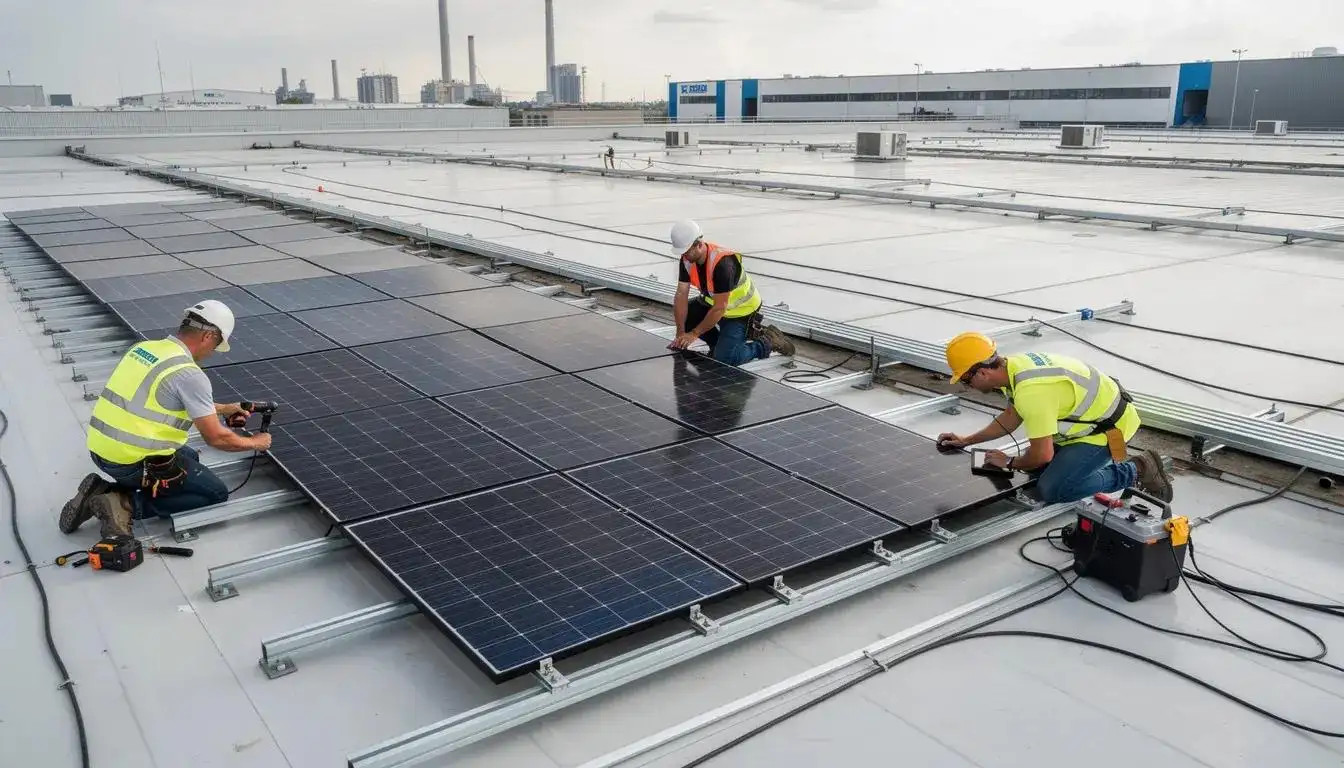
7. Commercial Solar Installation Process
A well-managed installation generally follows several stages.
-
Energy assessment: Review electricity bills, operating schedules, and load profiles.
-
Site inspection: Evaluate roof conditions, shading, electrical infrastructure, and available installation space.
-
System design: Determine suitable panel capacity, inverter configuration, mounting equipment, and optional battery storage.
-
Financial analysis: Estimate installation costs, electricity savings, export revenue, ongoing expenses, and payback period.
-
Approvals and installation: Obtain required approvals and complete installation through appropriately qualified professionals.
-
Testing and commissioning: Verify electrical safety, equipment operation, grid compliance, and monitoring functionality.
-
Performance review: Track generation and consumption to identify operational issues and opportunities for improvement.
Installation timelines vary according to project size, weather, equipment availability, and approval requirements.
8. Commercial Solar Maintenance and Long-Term Performance
Typically, commercial solar systems do not need as much regular maintenance as some traditional power-generating systems, but regular inspections are still necessary.
It is important for businesses to monitor energy production, check for obvious damage to equipment, clean panels regularly (where appropriate) of build up dirt, and schedule professional inspection of electrical connections and protective equipment.
Monitoring will be able to detect unusual production reductions due to shading, inverter failures, damaged panels or other system issues. The frequency of cleaning should be based on the conditions in the area, such as dust, pollen, bird droppings and industrial activity that may be nearby.
Other points to consider include checking warranties, keeping installation records and hiring qualified repairs. Implementing proactive maintenance is a way to ensure equipment performance and sustainable operation.
Frequently Asked Questions About Commercial Solar Power Systems
How much can a commercial solar system save?
Savings vary according to system capacity, daytime electricity consumption, local solar conditions, electricity prices, and installation costs. A site-specific assessment is necessary to estimate realistic savings.
Is battery storage necessary for commercial solar?
No. Many grid-connected businesses operate successfully without batteries by consuming solar electricity as it is generated. Batteries may be worthwhile when evening demand, peak tariffs, or backup-power requirements justify the additional investment.
How long does a commercial solar system last?
Solar panels are commonly designed for long operating lives, often around 25 years or longer, although performance gradually declines. Inverters and batteries may require replacement sooner, depending on their specifications and operating conditions.
Is commercial solar suitable for small businesses?
Yes. Small offices, workshops, retail stores, and other businesses can benefit if their electricity consumption, roof conditions, and financial circumstances support an appropriate system.
Conclusion
An onsite solar power system will help Australian businesses lower demand for electricity supplied from the grid, control electricity running costs and enhance environmental performance. The answer will vary from company to company based on their energy profile, building conditions, and system configuration, as well as their business goals and long-term objectives.
Commercial solar investment decisions can be made based on assessing energy needs, comparing energy quality equipment, understanding incentives, and using a professional installer.
Commercial solar is a viable option for organisations looking to become more energy efficient by utilising a roof space and sunlight as a long-term business asset.
Share on Social:


In This Article
- 1 1. What Is a Commercial Solar Power System?
- 2 2. How Does a Commercial Solar Power System Work?
- 3 3. Main Components of a Commercial Solar System
- 4 4. Types of Commercial Solar Power Systems
- 5 5. Key Benefits of Commercial Solar Power
- 6 6. What Should Businesses Consider Before Installation?
- 7 7. Commercial Solar Installation Process
- 8 8. Commercial Solar Maintenance and Long-Term Performance
- 9 Frequently Asked Questions About Commercial Solar Power Systems
- 10 Conclusion
