


Commercial Battery Energy Storage System: Benefits & Guide
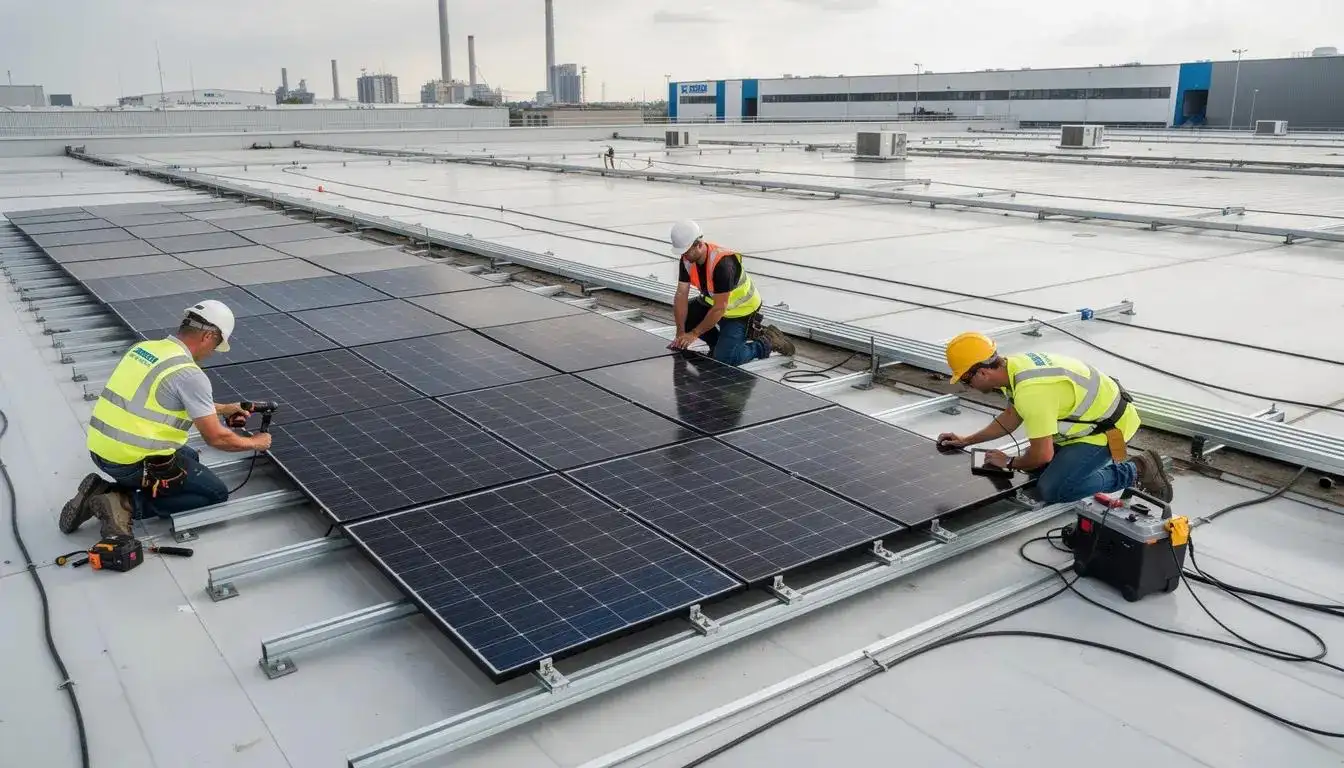
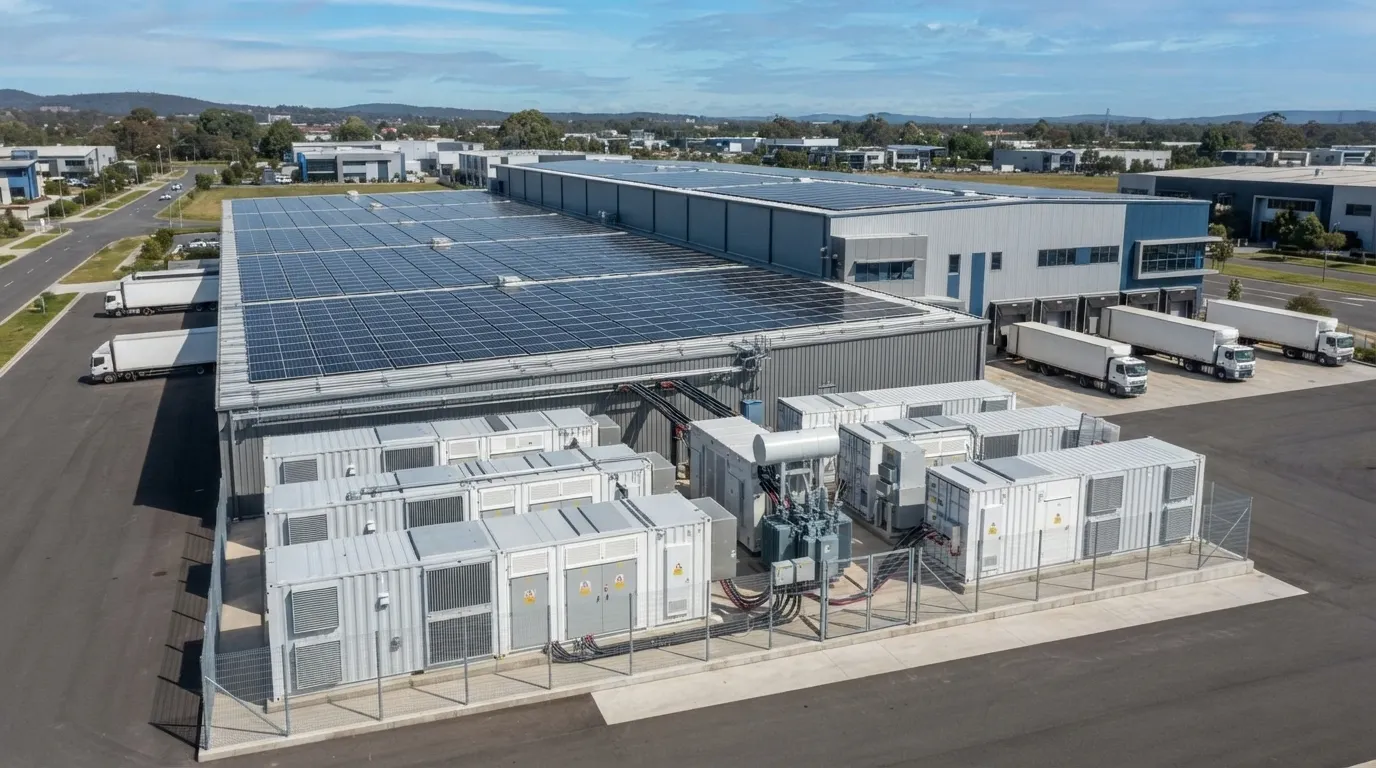
Businesses can benefit from a commercial battery energy storage system (BESS), which captures electricity for later consumption when needed, for a higher-electricity-price business, when the operation of the business relies on electricity usage at a certain time. With the growing integration of solar power, EV charging, and sophisticated energy management systems into commercial buildings, batteries are playing a significant role in today's energy infrastructure.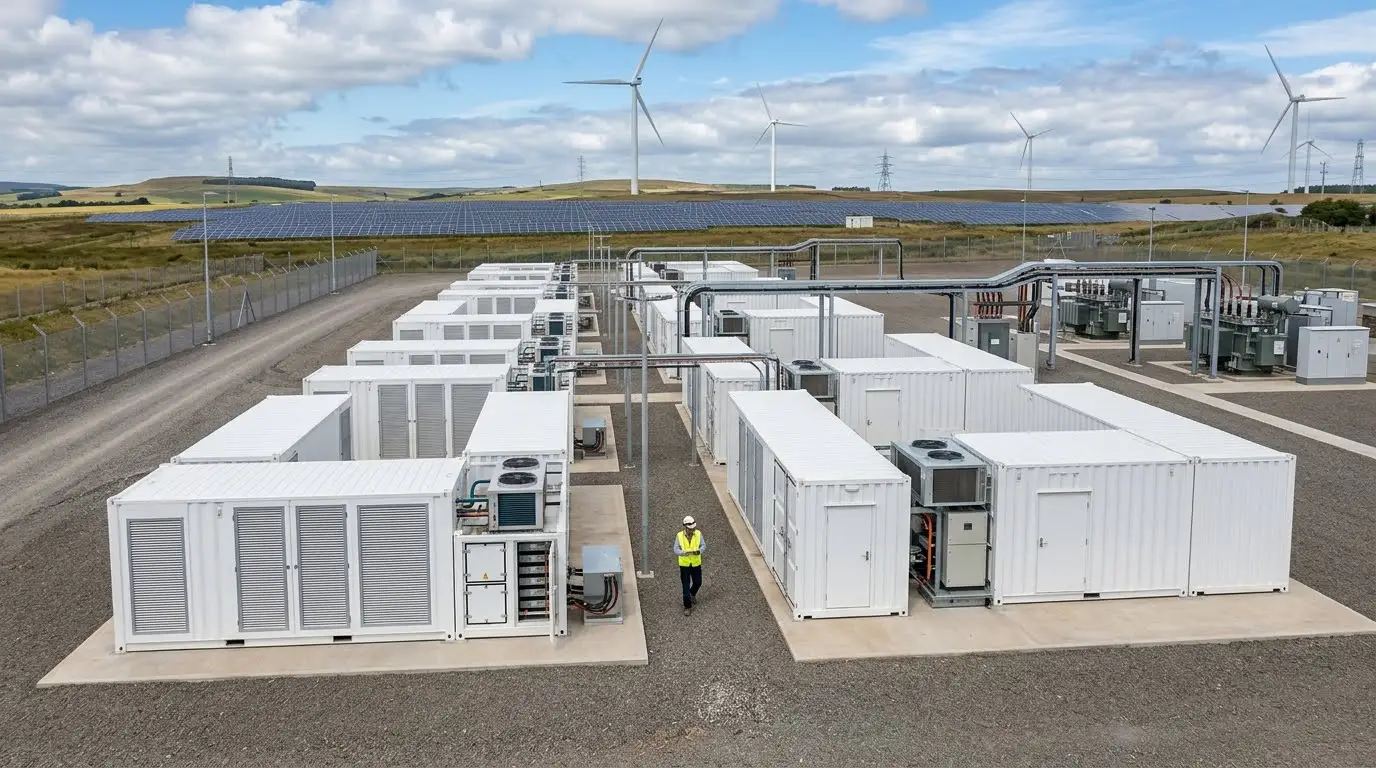
Commercial battery energy storage systems can lower electricity bills, enhance energy reliability and enable integration of renewable energy across all kinds of buildings, including manufacturing sites, warehouses, office buildings, shopping centres and data centres.
This guide provides an introduction to how energy storage works in commercial applications and the advantages it offers and outlines typical applications and considerations for businesses selecting energy storage.
What Is a Commercial Battery Energy Storage System?
A commercial battery energy storage system is a system of combining various technologies that allow energy storage in the form of rechargeable batteries and then release of energy when required. Commercial systems are engineered to provide power for larger electrical loads, higher power needs, and more complicated energy management solutions as opposed to residential battery systems.
There are a number of key components in a typical commercial BESS:
-
Battery modules: Store electrical energy, commonly using lithium-ion or lithium iron phosphate (LiFePO4) battery technology.
-
Battery Management System (BMS): Monitors cell voltage, temperature, current, and state of charge to help maintain safe operating conditions.
-
Power Conversion System (PCS): Converts electricity between AC and DC for charging and discharging.
-
Energy Management System (EMS): Coordinates battery operation based on electricity prices, energy demand, solar generation, and backup power requirements.
-
Thermal management system: Helps maintain suitable operating temperatures.
-
Safety and protection equipment: Includes electrical protection, monitoring, and other safety measures appropriate to the installation.
Together, these components enable businesses to store electricity, control energy usage, and improve the performance of their power infrastructure.
How Does a Commercial Battery Energy Storage System Work?
A commercial battery energy storage system operates through three basic stages: charging, storage, and discharging.
1. Charging the Battery
The battery charges using electricity from the utility grid, an on-site solar photovoltaic system, or another compatible power source. Businesses may charge batteries during periods of lower electricity prices or when solar generation exceeds immediate demand.
2. Storing Energy
The battery stores energy as chemical energy. The BMS monitors battery conditions, while the EMS manages charging limits and operating schedules according to the system design.
3. Discharging Stored Energy
When electricity demand rises, grid prices increase, or backup power is required, the system can discharge stored energy to supply connected loads or support the site's electrical infrastructure.
Depending on its configuration, a commercial BESS can operate as a grid-connected system, a solar-plus-storage solution, or part of a microgrid. Backup operation generally requires suitable transfer equipment, controls, and the ability to isolate from the grid safely.
Key Benefits of Commercial Battery Energy Storage Systems
1. Reduce Electricity Costs
One of the primary reasons businesses install battery storage is to manage electricity expenses.
In regions with time-of-use electricity tariffs, businesses can charge batteries during lower-cost periods and discharge them during more expensive periods. This strategy, known as energy arbitrage, can reduce the amount of electricity purchased during peak-price hours.
Battery storage can also support peak demand management. By supplying part of a facility's electricity demand during short periods of high consumption, a properly designed system may reduce demand charges.
Actual savings depend on local tariffs, battery efficiency, system sizing, operating schedules, and installation costs.
2. Improve Energy Reliability
Unexpected power interruptions can disrupt production, damage equipment, interrupt digital services, and create financial losses.
A commercial battery energy storage system configured for backup operation can provide temporary power to selected critical loads. These may include communication systems, control equipment, security systems, refrigeration, and essential production processes.
The available backup duration depends on usable battery capacity, connected load, inverter ratings, and system operating conditions. Batteries are not automatically a replacement for generators or an uninterrupted power supply system; the appropriate solution depends on the facility's requirements.
3. Maximize Solar Energy Utilization
Commercial solar installations often generate the most electricity during daylight hours, while many businesses continue consuming power in the evening or during periods of limited sunlight.
A battery storage system can capture surplus solar generation and release it later. This helps businesses increase on-site solar consumption and reduce dependence on grid electricity.
For factories, warehouses, commercial buildings, and logistics centers with substantial rooftop solar installations, solar-plus-storage can improve energy flexibility and support more effective use of renewable energy.
4. Support Grid Stability and Energy Flexibility
Commercial battery storage can respond to changing electricity demand and, where permitted, participate in grid-support programs.
Depending on the local market and system capabilities, batteries may support demand response, frequency regulation, or other grid services. Businesses may also use storage to manage the integration of electric vehicle charging and distributed renewable energy.
Participation in these programs depends on utility rules, market access, equipment capabilities, and applicable regulations.
Common Applications of Commercial Battery Energy Storage Systems
Commercial battery storage serves a wide range of industries.
Manufacturing facilities: Battery systems can help manage demand peaks, support critical production loads, and integrate on-site renewable energy.
Warehouses and logistics centers: Large roof areas can accommodate solar panels, while battery storage helps shift excess daytime generation to later operating periods.
Office buildings and shopping centers: Storage can support electricity cost management and provide backup power for selected essential systems.
Data centers and telecommunications facilities: Battery storage can support power continuity and energy management, although mission-critical facilities require carefully engineered redundancy and protection.
EV charging stations: Battery systems can help manage charging demand and reduce the immediate grid power requirement when multiple vehicles charge simultaneously.
Commercial and industrial solar projects: Batteries can store excess renewable generation for use when solar output falls or electricity demand increases.
How to Choose the Right Commercial Battery Energy Storage System
Selecting the right system requires more than comparing battery capacity or equipment prices. Businesses should evaluate their energy requirements, financial objectives, site conditions, and future expansion plans.
Assess Power and Energy Requirements
Two key specifications are power rating and energy capacity.
Power, measured in kilowatts (kW) or megawatts (MW), indicates how much electricity the system can deliver at a given time. Energy capacity, measured in kilowatt-hours (kWh) or megawatt-hours (MWh), indicates how much energy it can store.
For example, a system rated at 500 kW with 1,000 kWh of nominal capacity has a theoretical full-power duration of two hours before accounting for usable capacity limits, conversion losses, and operating reserves.
Businesses should analyze electricity bills, load profiles, peak demand, and backup requirements before determining system size.
Evaluate Battery Chemistry
Lithium iron phosphate (LiFePO4 or LFP) is widely used in commercial stationary storage because of its thermal stability, cycle-life characteristics, and suitability for frequent charging and discharging.
Other lithium-ion chemistries may be appropriate for specific performance requirements. The best choice depends on safety requirements, usable energy, expected operating conditions, service life, and total cost of ownership.
Check Safety and Certifications
Safety should be a priority when selecting a commercial battery energy storage system. Buyers should review applicable product certifications, system-level testing, installation requirements, fire protection measures, and local electrical and building codes.
Depending on the project location and configuration, relevant standards may include UL 9540 for energy storage systems and UL 9540A for evaluating thermal runaway fire propagation characteristics. NFPA 855 and local regulations may also apply.
Requirements vary by jurisdiction, so businesses should work with qualified engineers, installers, and authorities having jurisdiction.
Compare Total Cost of Ownership
The initial purchase price is only one part of the investment. Businesses should also consider installation, electrical upgrades, maintenance, energy losses, software, warranties, replacement costs, and expected battery degradation.
A financial assessment should estimate annual savings, usable battery capacity over time, payback period, and expected project returns under realistic electricity tariff assumptions.
Consider Integration and Scalability
A commercial BESS should integrate with the facility's existing electrical infrastructure, solar equipment, monitoring systems, and energy management platform.
Businesses planning to expand operations should also evaluate modular designs, additional battery capacity, communication protocols, and future power requirements.
What Is the Future of Commercial Battery Energy Storage?
The commercial energy storage sector is emerging as enterprises increasingly strive for energy flexibility, integration with renewable sources, and more robust electricity grids.
Advances in battery technology, control systems, power electronics, and system integration are opening new commercial and industrial applications.Enhancements in battery manufacturing, energy management software, power electronics, and system integration are providing new commercial and industrial applications. Meanwhile, project economics is being impacted by the electric rate, grid limitations, renewable energy policies and local incentives.
Incorporating battery storage into an energy strategy is becoming more common: companies look at battery energy storage as a whole, with the configuration including solar energy, EV charging, demand response, and intelligent building management.
Conclusion
Through a commercial battery energy storage system, companies can use it to manage electricity costs, optimize solar self-consumption, achieve improved energy flexibility and for backup power to critical equipment.
The optimal choice will depend on factors such as the facility's power needs, energy usage, electricity costs, battery technology, safety regulations, and investment objectives.
A business can determine a battery storage solution that's compatible with their needs and energy strategy by carefully considering these factors.
Frequently Asked Questions
1. What is a commercial battery energy storage system used for?
It is used to store electricity for later consumption, manage peak demand, shift energy usage, integrate solar power, and provide backup power when the system is appropriately configured.
2. How long can a commercial battery energy storage system provide power?
Backup duration depends on usable battery capacity and connected load. A 1,000 kWh usable battery supplying a constant 250 kW load would theoretically provide four hours of energy before accounting for losses and operating reserves.
3. Which battery chemistry is suitable for commercial energy storage?
LiFePO4 is a common choice for commercial stationary storage due to its thermal stability and cycle-life characteristics. The optimal chemistry depends on project requirements, cost, safety, and operating conditions.
4. Is commercial battery energy storage worth the investment?
It can be worthwhile when electricity tariff structures, peak demand charges, solar generation, or backup power needs create sufficient economic value. A site-specific financial analysis is essential before making an investment decision.
Share on Social:


- NEXT: Commercial Roof Mounted Solar Panels: Benefits & Costs
- NEXT: Null
In This Article
- 1 What Is a Commercial Battery Energy Storage System?
- 2 How Does a Commercial Battery Energy Storage System Work?
- 3 Key Benefits of Commercial Battery Energy Storage Systems
- 4 Common Applications of Commercial Battery Energy Storage Systems
- 5 How to Choose the Right Commercial Battery Energy Storage System
- 6 What Is the Future of Commercial Battery Energy Storage?
- 7 Conclusion
