


Commercial Solar Energy Storage: Benefits, Costs & Solutions
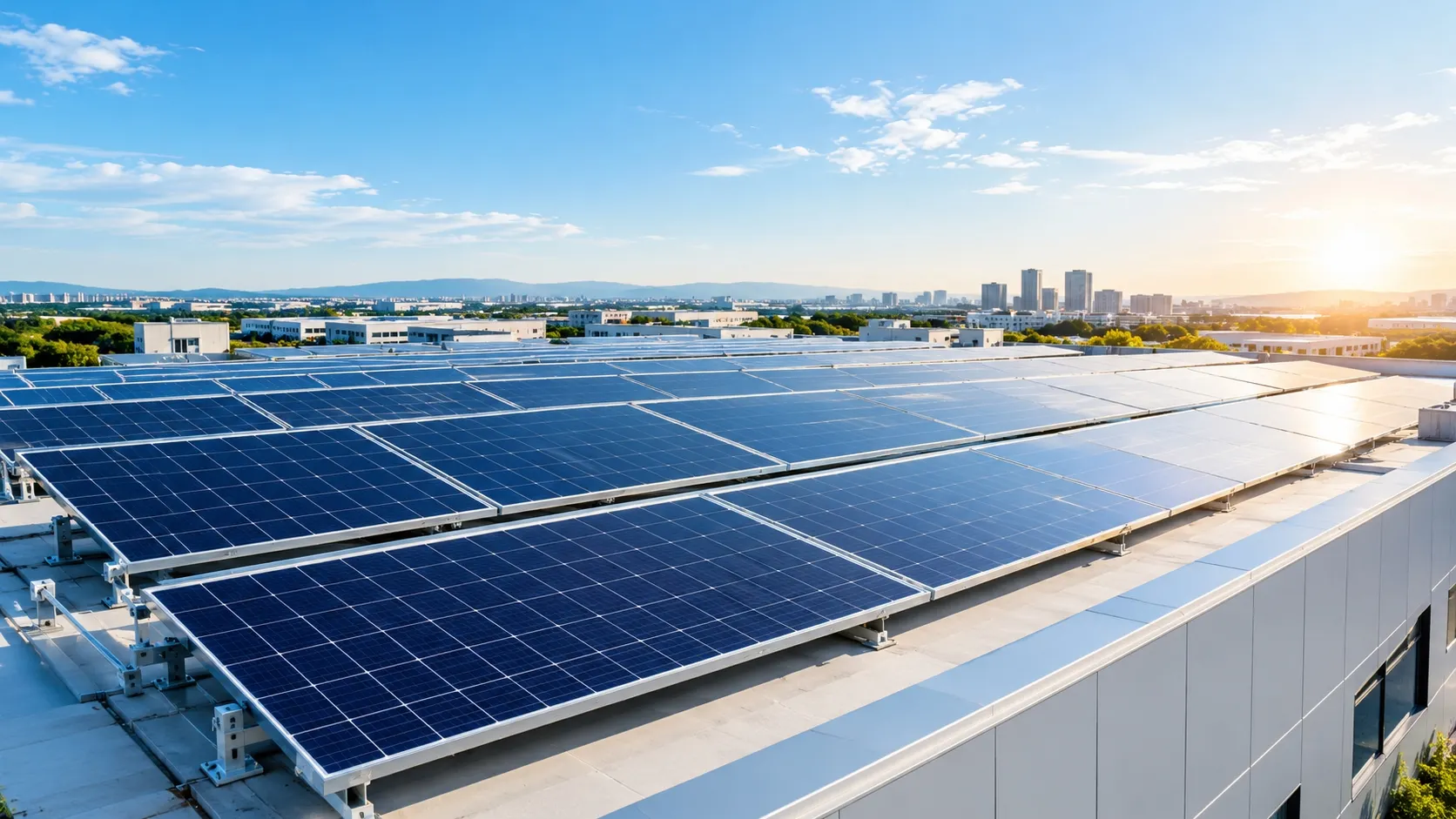
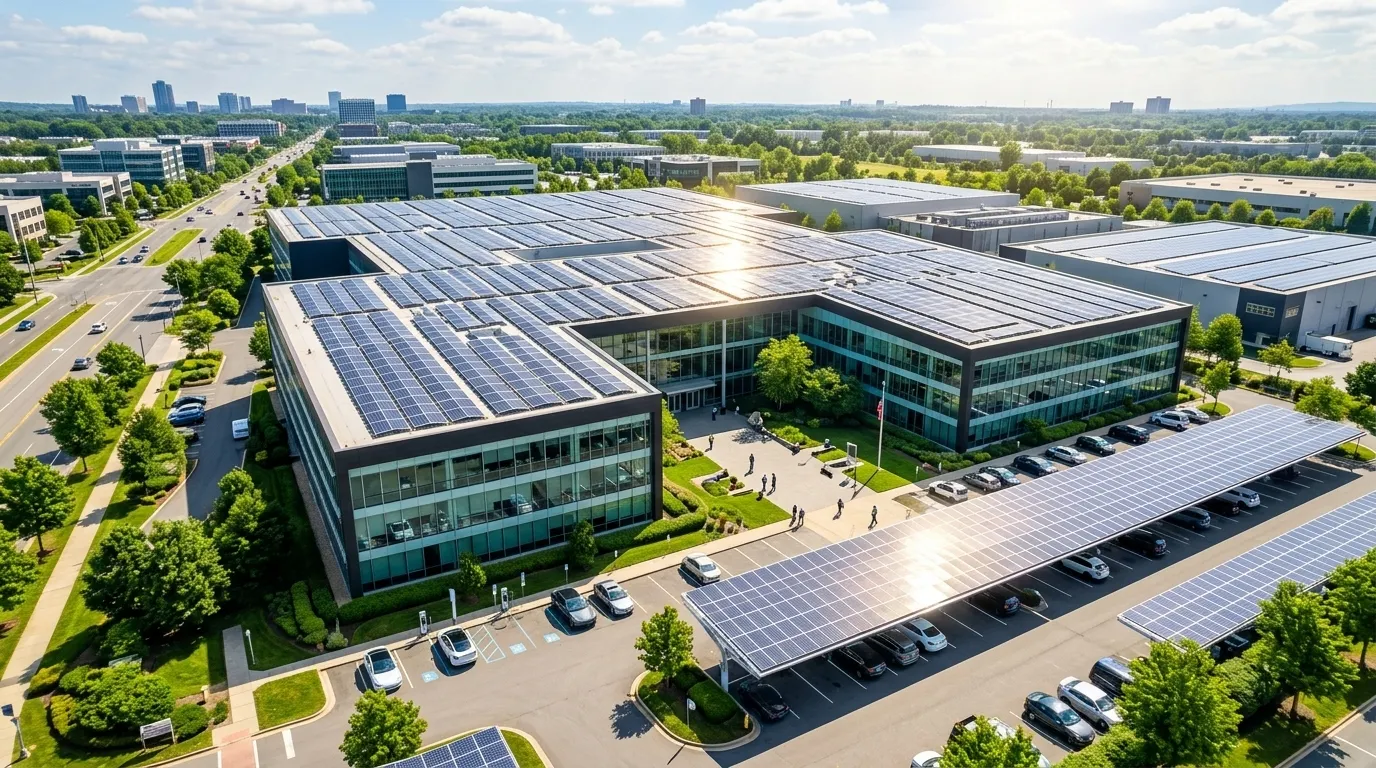
Energy storage is becoming a critical need for commercial customers aiming to lower electric costs, enhance energy reliability, and boost the value of solar energy systems. Commercial solar panels with battery energy storage enable businesses to store solar energy when it is available in excess of demand and draw it when demand outweighs supply or prices are higher.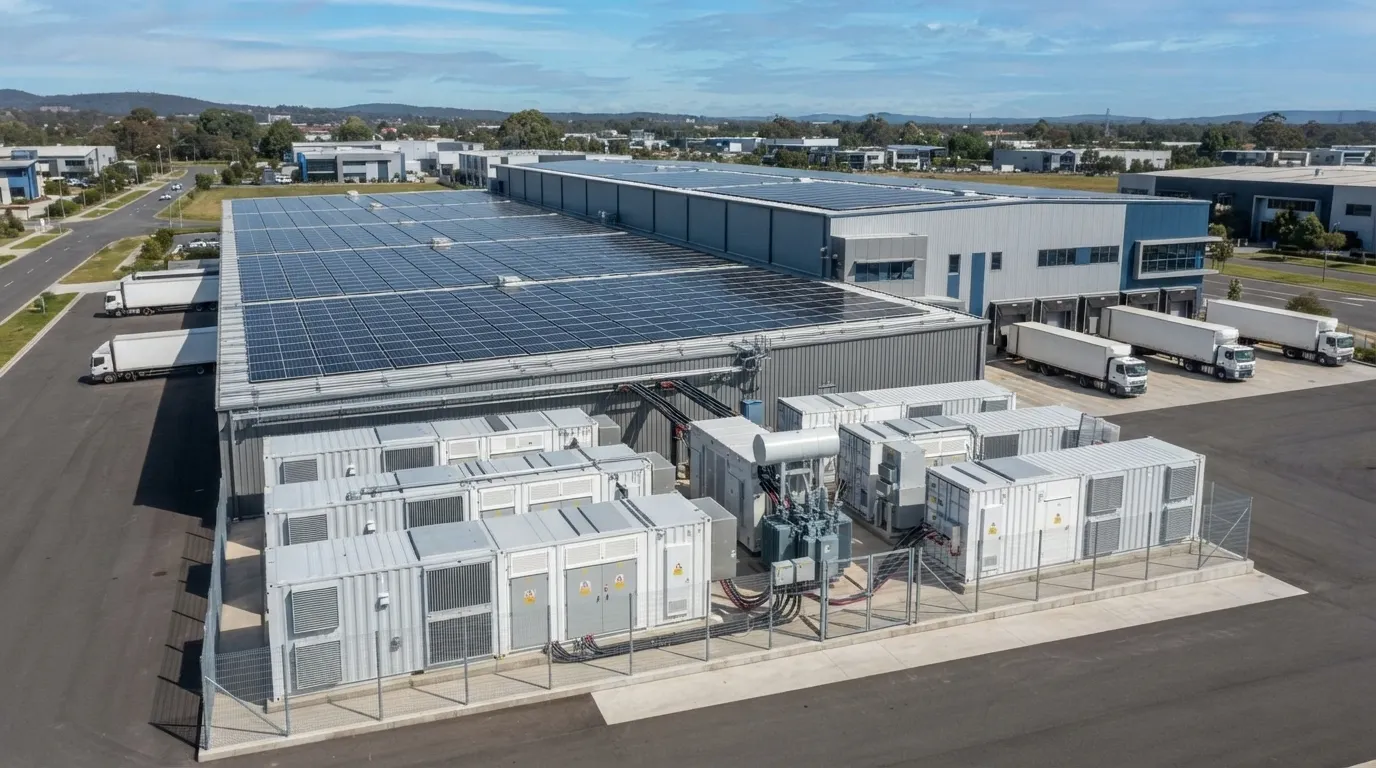
Commercial solar energy storage can be implemented in various locations, including manufacturing plants, warehouses, office buildings, shopping centres and agricultural properties. It enables businesses to better leverage renewable energy and become less reliant on the grid while also helping to prepare for power outages.
To make an informed investment decision, businesses need to understand how commercial solar battery storage works, what the benefits are, and how to choose the right commercial solar battery storage system.
What Is Commercial Solar Energy Storage?
Commercial solar energy storage is the storage system which collects and store electricity produced by commercial solar PV panels and use them later. These systems are usually made up of solar panels, energy storage battery, inverter, energy management software and electrical protection equipment.
If there is no storage, the excess solar power could be sold back to the grid or curtailed, depending on local policies and/or system configuration. Energy storage allows businesses to store electricity generated from solar sources and utilise it when the electricity demand is high or there is no solar generation.
The common commercial solar energy storage system consists of:
-
Solar panels: Convert sunlight into direct current (DC) electricity.
-
Battery energy storage system (BESS): Stores excess electricity for later use.
-
Inverters: Convert DC electricity into alternating current (AC) for commercial equipment and building systems.
-
Energy management system (EMS): Monitors energy generation, battery charging, consumption, and electricity prices.
-
Monitoring platform: Provides information about system performance, battery status, and energy savings.
System configurations vary according to the facility's electrical infrastructure, energy consumption, backup requirements, and utility connection.
How Does Commercial Solar Battery Storage Work?
Commercial solar battery storage generally follows a straightforward operating process.
1. Generate Solar Electricity
Solar panels generate electricity when exposed to sunlight. The electricity supplies the facility's active loads, including lighting, machinery, HVAC systems, computers, and other equipment.
2. Store Excess Energy
When solar production exceeds immediate electricity demand, the system can direct surplus energy into the battery. This reduces the amount of solar electricity that would otherwise be exported or wasted.
3. Use Stored Electricity During Peak Demand
When solar generation declines or electricity demand increases, the battery discharges to supply the facility. Businesses can use stored solar energy during evening operating hours or periods when grid electricity is more expensive.
4. Optimize Energy Consumption
An intelligent energy management system can coordinate solar generation, battery charging, and grid electricity purchases. Depending on the tariff and system configuration, it may prioritize self-consumption, peak-demand reduction, backup reserves, or time-of-use savings.
This approach helps businesses manage electricity more strategically rather than relying entirely on real-time solar production and utility supply.
Key Benefits of Commercial Solar Energy Storage
1. Reduce Electricity Costs
One of the main reasons businesses invest in commercial solar battery storage is to reduce energy expenses.
Solar panels can lower daytime electricity purchases, while batteries allow businesses to use stored energy during periods when grid electricity costs more. Under suitable utility tariffs, this strategy can reduce time-of-use charges and demand-related costs.
Actual savings depend on electricity prices, demand charges, solar production, battery efficiency, operating schedules, and local compensation rules for exported electricity.
2. Reduce Peak Demand Charges
Some commercial electricity tariffs include demand charges based on the highest power demand recorded during a billing period. Short periods of intensive electricity consumption can therefore increase monthly energy bills.
A properly designed battery system can discharge during these peaks, reducing the amount of electricity drawn from the grid. This strategy, known as peak shaving, can be particularly valuable for factories, commercial buildings, cold-storage facilities, and logistics centers.
3. Improve Energy Reliability
Power interruptions can disrupt production, damage sensitive processes, interrupt communications, and create unexpected operating expenses.
Commercial battery storage can provide backup electricity for selected loads when paired with compatible inverters, transfer equipment, controls, and suitable electrical protection. Critical systems may include emergency lighting, servers, security equipment, refrigeration, and essential production controls.
However, ordinary grid-connected solar and battery systems do not automatically provide backup power during an outage. Businesses must confirm that the system supports islanded operation and that its power capacity, energy capacity, and backup configuration meet their requirements.
4. Increase Solar Self-Consumption
Without storage, some businesses generate more solar electricity than they can consume during working hours. This is common in facilities with large rooftop solar arrays and relatively low daytime demand.
Battery storage shifts some of this electricity to later periods. Higher solar self-consumption can improve the overall value of an installation, especially where grid export compensation is relatively low.
5. Support Sustainability Goals
Commercial solar energy storage helps businesses increase their use of renewable electricity and reduce reliance on grid power generated from fossil fuels.
Manufacturers, retailers, logistics companies, and office operators can incorporate energy storage into broader sustainability programs. Depending on the electricity sources displaced, the system may reduce operational greenhouse gas emissions and support corporate environmental reporting.
Types of Commercial Solar Energy Storage Batteries
Choosing the right battery technology is important for long-term performance, safety, and cost-effectiveness.
Lithium Iron Phosphate (LiFePO4)
Lithium iron phosphate batteries are widely used in commercial and industrial energy storage applications. They offer a combination of thermal stability, good cycle life, and efficient charging and discharging.
These characteristics make LiFePO4 suitable for facilities requiring regular daily cycling, peak shaving, solar self-consumption, and backup power.
When evaluating a LiFePO4 system, businesses should consider usable capacity, round-trip efficiency, operating temperature, warranty terms, battery management, and applicable safety certifications.
Other Lithium-Ion Batteries
Other lithium-ion chemistries can also serve commercial energy storage applications. Their performance characteristics vary in terms of energy density, cost, thermal behavior, and cycle life.
The best choice depends on the project's operating conditions and technical requirements rather than battery chemistry alone.
Flow Batteries
Flow batteries store energy in liquid electrolytes held in external tanks. They may be appropriate for certain stationary storage projects requiring long-duration discharge and frequent cycling.
However, their footprint, system complexity, efficiency, and installation costs must be evaluated against the intended application.
For many commercial solar projects, lithium iron phosphate remains a practical option because of its established use in stationary battery systems.
How to Choose the Right Commercial Solar Energy Storage System
Selecting a suitable system requires more than comparing battery prices. Businesses should evaluate several technical and financial factors.
1. Analyze Electricity Consumption
Review at least 12 months of electricity bills, interval meter data where available, operating schedules, and seasonal demand patterns.
Identify when electricity consumption is highest, how much solar electricity can be generated, and whether demand charges or time-of-use rates create opportunities for storage.
2. Determine Battery Capacity
Battery energy capacity is measured in kilowatt-hours (kWh), while power output is measured in kilowatts (kW).
A battery with greater energy capacity can supply a load for longer, while higher power output allows it to serve larger simultaneous loads.
For example, a battery with 200 kWh of usable capacity could theoretically supply a constant 50 kW load for four hours. In practice, conversion losses, reserve settings, and operating limits affect the available duration.
3. Check Inverter Compatibility
The solar inverter, battery inverter, and energy management system must operate together correctly. Businesses should determine whether an AC-coupled or DC-coupled configuration better suits their existing solar installation or new project.
Compatibility is especially important when adding batteries to an established commercial solar system.
4. Evaluate Safety and Installation Requirements
It is important for commercial battery installations to have proper electrical protection, ventilation or thermal management, fire safety planning, and adherence to applicable building and electrical codes.
Companies should check out relevant product certifications, installation requirements, warranty conditions, and local permitting requirements. The site should be assessed by qualified professionals prior to installation.
5. Calculate the Return on Investment
Batteries, Inverters, Controls, Electrical Upgrades, Installations, Engineering, Permits, and maintenance can all be included in the total project cost.
Calculate potential savings on electricity bills, demand charges, cost of outages (where measurable) and incentives as applicable. Factor in battery life loss, down conversion, financial costs, and future replacement costs.
Using a generalized savings claim is not as realistic as using the facility's actual electricity tariff and expected electricity operating profile.
Commercial Solar Energy Storage Applications
Commercial battery storage can support a wide range of industries.
-
Manufacturing facilities: Reduce peak demand and support selected critical production equipment.
-
Warehouses and logistics centers: Store daytime solar generation for evening operations and material-handling equipment.
-
Office buildings: Improve solar self-consumption and manage HVAC-related demand.
-
Retail stores and shopping centers: Help manage electricity costs and maintain selected essential services during outages.
-
Agricultural facilities: Support irrigation, refrigeration, processing, and other energy-intensive operations.
-
Data centers and telecommunications sites: Complement other power protection systems, subject to stringent reliability and engineering requirements.
A system specific to the facility's load profile, the required back-up time, and operational priorities is required for each application.
Commercial Solar Energy Storage Trends
As battery technology, energy management software, and the uptake of renewable energy systems continues to progress, the commercial energy storage industry is still in a state of flux.
Energy management systems are becoming smarter, with real-time monitoring and forecasting to ensure optimal integration with solar generation, battery dispatch and electricity procurement. Some systems can automatically adjust to time of use prices, demand limits and utility signals.
Modular battery design also enables companies to scale up their storage over time as their electricity usage increases. Furthermore, pairing solar power with storage and EV charging can enable facilities to better manage additional electricity demand.
The advancements added new relevance to commercial solar energy storage solutions for businesses that are looking to reduce energy costs and improve energy resilience.
Conclusion
Businesses can maximise the value of solar energy, control electricity costs, manage peak demand and enhance energy resilience by using commercial solar energy storage solutions. Using a combination of solar panels, batteries, inverters and energy management controls, companies can match the generation of renewable energy with their real energy consumption.
The best way to start is by conducting a detailed energy audit of the energy use, utility rates, site requirements, back-up needs, and project economics. When choosing a supplier, businesses need to take battery capacity, power output, safety features, warranties and long-term operating costs into consideration.
Throughout the evolution of commercial energy needs, solar battery storage can be a valuable component of an overall energy efficiency, sustainability and operational reliability strategy.
Frequently Asked Questions (FAQs)
1. What is commercial solar energy storage?
Commercial solar energy storage uses batteries to store electricity generated by solar panels so businesses can use it later, reduce grid electricity purchases, and manage peak demand.
2. Which battery is best for commercial solar energy storage?
Lithium iron phosphate (LiFePO4) batteries are a popular choice because they offer good thermal stability, efficiency, and cycle life. The ideal technology depends on project requirements, budget, and operating conditions.
3. Can commercial solar batteries provide backup power during an outage?
Yes, if the system includes compatible backup-capable inverters, isolation equipment, and appropriate controls. Not every grid-connected solar battery system can operate during a power outage.
4. How much does commercial solar energy storage cost?
Costs vary with battery capacity, power rating, installation complexity, safety equipment, and electrical upgrades. A site-specific quotation is necessary for an accurate estimate.
5. Is commercial solar energy storage worth the investment?
It can be worthwhile when electricity tariffs, peak demand charges, solar production, and operating schedules create sufficient savings. A financial analysis using actual site data is the best way to determine the expected return.
Share on Social:


- NEXT: How to Choose the Best Solar Panels for Commercial Use
- NEXT: Null
In This Article
- 1 What Is Commercial Solar Energy Storage?
- 2 How Does Commercial Solar Battery Storage Work?
- 3 Key Benefits of Commercial Solar Energy Storage
- 4 Types of Commercial Solar Energy Storage Batteries
- 5 How to Choose the Right Commercial Solar Energy Storage System
- 6 Commercial Solar Energy Storage Applications
- 7 Commercial Solar Energy Storage Trends
- 8 Conclusion
