


Benefits of Solar Panels for Commercial Buildings: Cost Savings & ROI
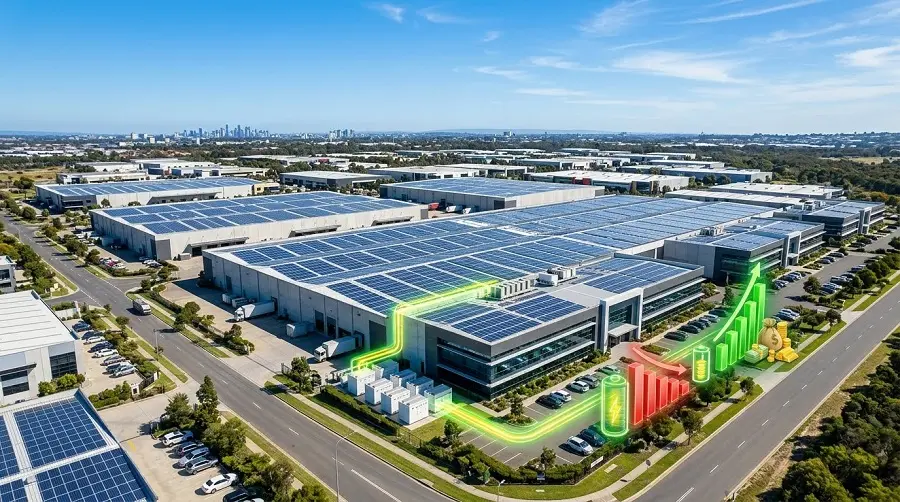
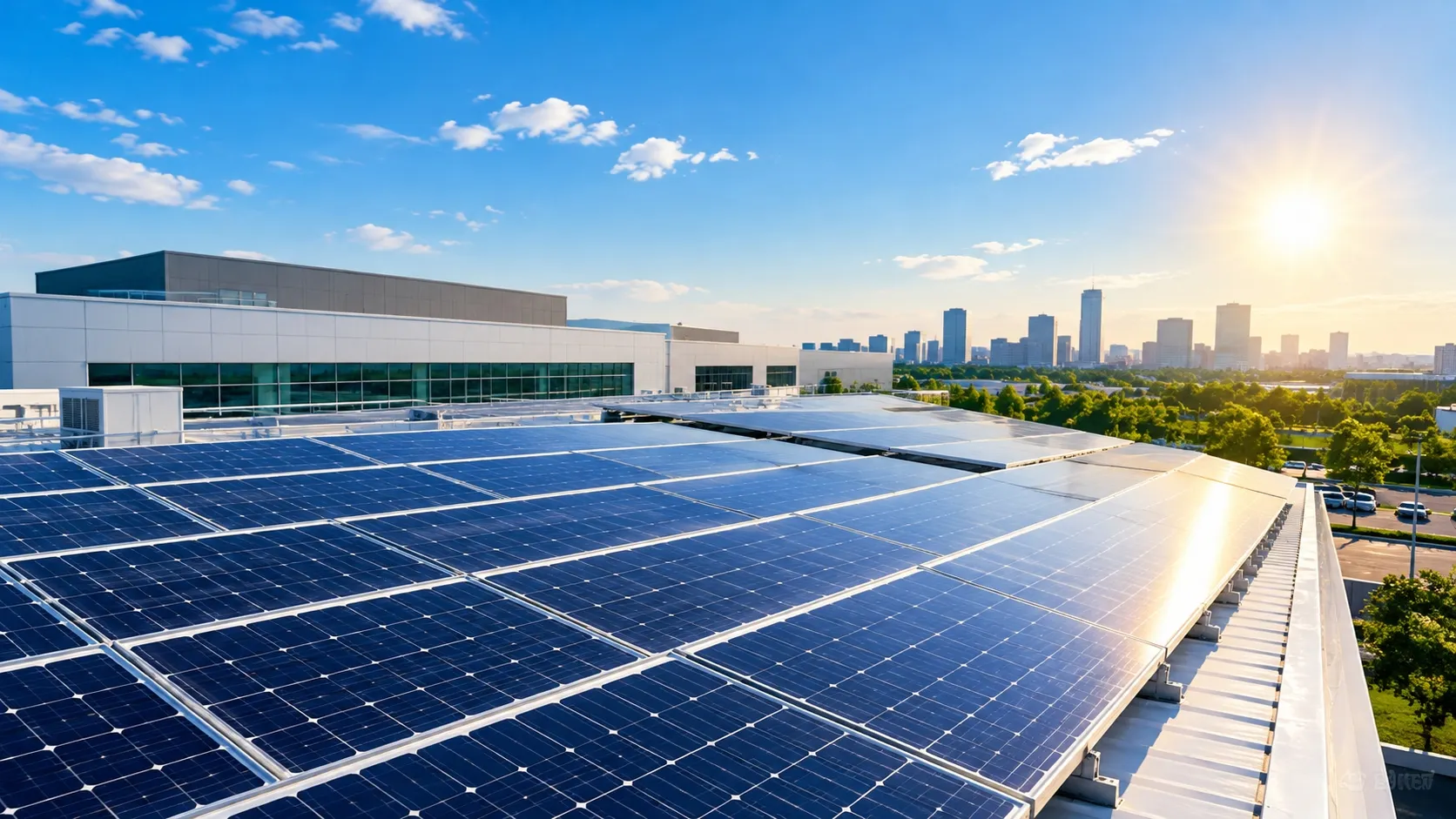
Commercial buildings use a lot of electrical power in lighting, heating, air conditioning, manufacturing equipment, refrigeration, and in their daily operations. With energy costs still playing a role in how profitable businesses are, a number of companies are considering the use of solar panels as a viable solution to lower their operating costs and enhance their energy efficiency.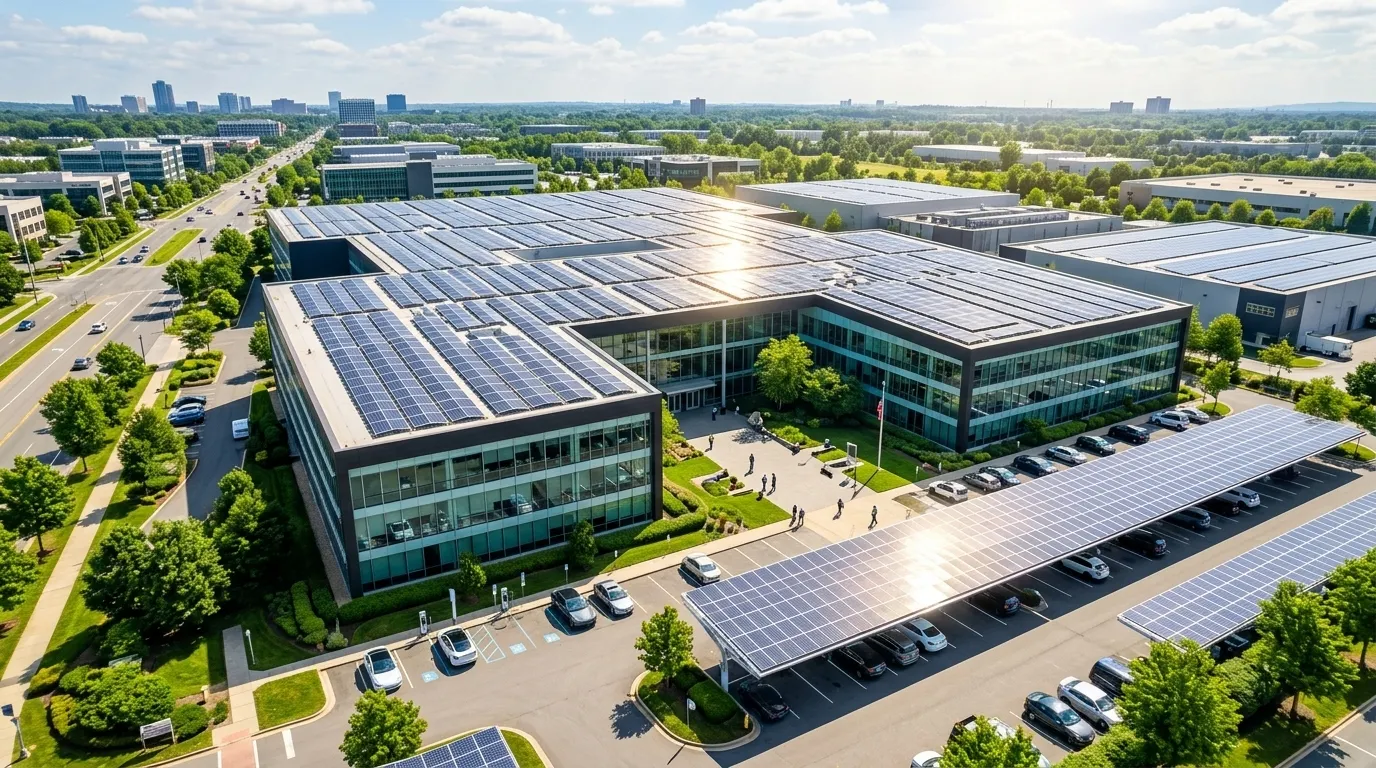
Businesses can benefit from solar panels on their roofs by producing electricity from sunlight, reducing reliance on electricity suppliers, and promoting sustainability. Commercial solar power systems can provide both financial and environmental benefits in a wide variety of settings, such as warehouses, office buildings, retail stores, and manufacturing plants.
Here, we delve deeper into the primary advantages of commercial solar panels, their possible return on investment, financing alternatives and the key considerations that enterprises should take into account before installment.
1. Reduce Electricity Bills and Operating Expenses
A key advantage of solar panels for businesses is the ability to reduce their electricity bills.
Solar panels can produce a lot of power during daylight hours, and businesses may be running during those times. Commercial solar systems can generate power to light buildings, run computers, power HVAC systems, drive production machinery and more.If a building is using the electricity it produces it buys less from the utility. Savings will vary based on the size of the system, local power costs, solar generation and the energy use profile of the business.
For instance, a warehouse may have space for a large roof-mounted solar panel on their unshaded rooftop. Solar generation can help cover a significant amount of the facility's utility costs if it is an electricity-intensive facility during the day.
The cumulative effect of these savings can help businesses manage their overhead costs and boost their cash flow over time.
2. Improve Long-Term Energy Cost Predictability
Electricity costs can vary over time, due to rate increases, demand charges, and energy market dynamics in the region. Such volatility can lead to greater complexity when predicting financial outcomes, especially for energy-intensive companies.
Businesses using commercial solar energy systems can mitigate some of this risk by creating their own electricity supply.
While solar panels won't cover all energy costs, they will help give visibility into long-term operating costs. Businesses can rough out their budgets to reflect what they anticipate the solar production will be and compare the previous electricity bills to see the difference.
This is especially helpful for industrial buildings, distribution centers, cold storage warehouses, and other buildings that require energy at regular intervals throughout the day.
The true extent of cost stability will be affected by the tariff for electricity, the financial arrangements, the design of the system, and the amount of electricity still imported from the grid.
3. Strengthen Sustainability and Reduce Carbon Emissions
Sustainability is a critical issue for companies, investors, workers and consumers. Companies have come to consider how to achieve environmental goals while also optimizing their operations.
When the solar panels are operating, they do not directly burn fossil fuels. Commercial buildings can use solar energy to offset some grid electricity and therefore reduce the amount of greenhouse gas that is emitted.
It can help with sustainability programs, reporting environmental data and general carbon reduction programs.
Sustainability reports, company websites and customer communications are other ways that businesses can share their investments in renewable energy. All environmental claims, however, should be made on the basis of the actual performance of their system and the right emission calculations.
Commercial solar installations can be an effective part of an energy management program for organizations seeking to achieve measurable environmental results.
4. Make Better Use of Available Roof Space
A lot of commercial buildings have huge rooftops, which offer only a small amount of direct business value, in addition to the protection that they offer the building itself. Roofs at warehouses, factories, shopping centres and distribution centres may have the space required for solar installations, and can be large.
Rooftop Solar panels can transform this wasted space and turn it into an electricity-producing asset, while not necessarily taking up extra land.
Prior to installation, however, property owners need to consider roof orientation, roof shading, structural capacity, roof waterproofing, and roof life remaining.
Maintenance issues in the future may be minimized by doing major repairs or replacement work on the roof before solar panels are installed.
For those who cannot install solar panels on their roofs, solar carports, ground-mounted solar panels, or other site-specific layouts can be considered.
5. Potentially Increase Commercial Property Appeal
Energy efficiency may have a bearing on the consideration of commercial real estate by tenants, buyers and investors.
An energy-efficient solar building can also provide reduced electricity costs, better sustainability ratings and enhanced operating cost profile.
These qualities might be attractive to companies that want to acquire a space for use as a working office, industrial building, or distribution center.
But solar panels aren't necessarily worth adding to the value of any property. The costs vary depending on the system ownership, system life, electricity reduction, maintenance requirements, and the property market.
Before installation, the property owner should also check any lease agreements and financing agreements. If the solar equipment is not owned by the building owner, then the owner may not be able to realize all the financial benefits of system ownership.
6. Explore Flexible Commercial Solar Financing
The initial investment in a commercial solar installation can be substantial. Fortunately, businesses may have several financing options depending on their financial position, energy needs, and ownership preferences.
Purchasing a Solar System Outright
Buying a commercial solar system gives the business direct ownership of the equipment and the electricity it generates.
Although this approach requires more upfront capital, the company may retain a greater share of long-term energy savings. Eligible businesses may also benefit from applicable tax provisions, subject to current law and their individual circumstances.
Commercial Solar Loans
Solar loans allow businesses to finance installation costs over time instead of paying the entire amount upfront.
This approach can preserve working capital while allowing the company to own the system. Businesses should compare interest rates, repayment periods, fees, and projected electricity savings before selecting a loan.
Solar Leases and Power Purchase Agreements
Under a solar lease, a third party typically owns the equipment while the business makes payments for its use.
A power purchase agreement (PPA) generally allows a business to purchase the electricity generated by a third-party-owned solar system at an agreed rate.
These arrangements can reduce initial capital requirements, but their financial benefits depend on contract terms, electricity pricing, escalation clauses, and maintenance responsibilities.
Businesses should compare the total expected costs and benefits of each option before committing to a long-term agreement.
7. Understand Solar Return on Investment and Payback Period
Before installing commercial solar panels, decision-makers should evaluate the expected return on investment (ROI) and payback period.
The payback period estimates how long it takes for accumulated financial benefits to recover the initial project cost.
A simplified calculation is:
Payback Period = Net Initial Investment ÷ Annual Net Savings
Net initial investment should account for applicable upfront incentives or other eligible reductions. Annual net savings should consider electricity bill reductions, ongoing maintenance, financing costs where relevant, and other operating expenses.
For example, suppose a commercial solar project costs $200,000 after applicable upfront incentives and generates $30,000 in annual net savings.
The simple payback period would be approximately 6.7 years.
This is an illustrative example rather than a guaranteed outcome. Actual results depend on solar production, electricity prices, system degradation, maintenance, utility compensation rules, and financing terms.
Businesses should also review current federal, state, local, and utility incentives. Because eligibility rules and deadlines can change, tax benefits should be confirmed with qualified tax professionals before being included in financial projections.
8. Consider Energy Storage for Greater Energy Flexibility
Solar panels can produce electricity during daylight hours, but there are also times of the day or year when businesses might need electricity when the sun isn't shining.
This mismatch can be overcome with commercial battery storage, which is able to store electricity generated from the sun when it is not being used.
The batteries can support business to manage peak demand, to increase solar self-consumption or to offer backup power for certain loads, depending on the system design and utility tariff.
But battery storage comes with equipment, installation and maintenance expenses. It's worth of money is dependent upon local demand charges, time-of-use electric rates, battery efficiency and business operational hours.
SolarPV and solar-plus-storage should be compared to see if the extra cost is worth the investment in terms of financial and operational viability.
9. Evaluate Installation Challenges and Maintenance Requirements
Despite its advantages, commercial solar is not suitable for every building without careful assessment.
Common challenges include high upfront costs, roof limitations, shading, permitting requirements, utility interconnection delays, and variable solar production.
A professional feasibility assessment should evaluate:
-
Energy consumption: Review historical electricity bills and interval usage data.
-
Roof condition: Confirm structural suitability and remaining roof life.
-
Solar potential: Assess sunlight exposure, shading, orientation, and system capacity.
-
Electrical infrastructure: Evaluate equipment compatibility and interconnection requirements.
-
Financial performance: Compare installation costs, expected savings, and financing options.
-
Maintenance: Establish monitoring, inspection, cleaning, and equipment replacement plans.
Solar panels commonly have an expected service life of approximately 25 to 30 years, although performance, warranties, and actual longevity vary by product and operating conditions. Inverters and other system components may require replacement sooner.
Regular monitoring and preventive maintenance can help identify performance issues early and protect the investment over time.
Conclusion: Is Solar Power Worth It for Commercial Buildings?
Solar panels can provide commercial buildings with several long-term advantages, including lower electricity expenses, improved energy cost predictability, reduced operational emissions, and more productive use of available roof space.
The strongest projects typically combine suitable site conditions, substantial daytime electricity consumption, effective system design, and a financing structure aligned with the company's financial objectives.
Before investing, businesses should conduct a detailed energy assessment, review local utility policies, compare financing options, and calculate expected lifecycle costs rather than relying on headline savings estimates.
With careful planning and professional installation, commercial solar energy systems can become a valuable part of a business's long-term energy and sustainability strategy.
Frequently Asked Questions About Commercial Solar Panels
How much do commercial solar panels cost?
Commercial solar installation costs vary according to system size, equipment, location, labor, permitting, and electrical upgrades. Businesses should request a site-specific quotation rather than rely on a single national average.
How long does it take for commercial solar panels to pay for themselves?
The payback period depends on the initial investment, electricity prices, solar production, incentives, and maintenance expenses. A project-specific financial analysis provides a more reliable estimate than a general industry benchmark.
How long do solar panels last on commercial buildings?
Many commercial solar panels are designed to operate for approximately 25 to 30 years or longer. Actual lifespan and energy output depend on equipment quality, environmental conditions, installation, and maintenance.
Can solar panels power an entire commercial building?
Yes, some buildings can generate enough solar electricity to cover much or all of their annual electricity consumption. However, actual energy independence depends on roof space, energy demand, seasonal production, storage, and grid connection arrangements.
Are commercial solar panels eligible for tax incentives?
Potential incentives depend on current federal law, state programs, utility policies, project ownership, and eligibility requirements. Businesses should verify current rules with qualified tax professionals and relevant government agencies before making investment decisions.
Share on Social:


- NEXT: Commercial Solar ROI: Costs, Savings & Payback
- NEXT: Null
In This Article
- 1 1. Reduce Electricity Bills and Operating Expenses
- 2 2. Improve Long-Term Energy Cost Predictability
- 3 3. Strengthen Sustainability and Reduce Carbon Emissions
- 4 4. Make Better Use of Available Roof Space
- 5 5. Potentially Increase Commercial Property Appeal
- 6 6. Explore Flexible Commercial Solar Financing
- 7 7. Understand Solar Return on Investment and Payback Period
- 8 8. Consider Energy Storage for Greater Energy Flexibility
- 9 9. Evaluate Installation Challenges and Maintenance Requirements
- 10 Conclusion: Is Solar Power Worth It for Commercial Buildings?
-
11
Frequently Asked Questions About Commercial Solar Panels
- 11.1 How much do commercial solar panels cost?
- 11.2 How long does it take for commercial solar panels to pay for themselves?
- 11.3 How long do solar panels last on commercial buildings?
- 11.4 Can solar panels power an entire commercial building?
- 11.5 Are commercial solar panels eligible for tax incentives?
