


Commercial Solar ROI: Costs, Savings & Payback
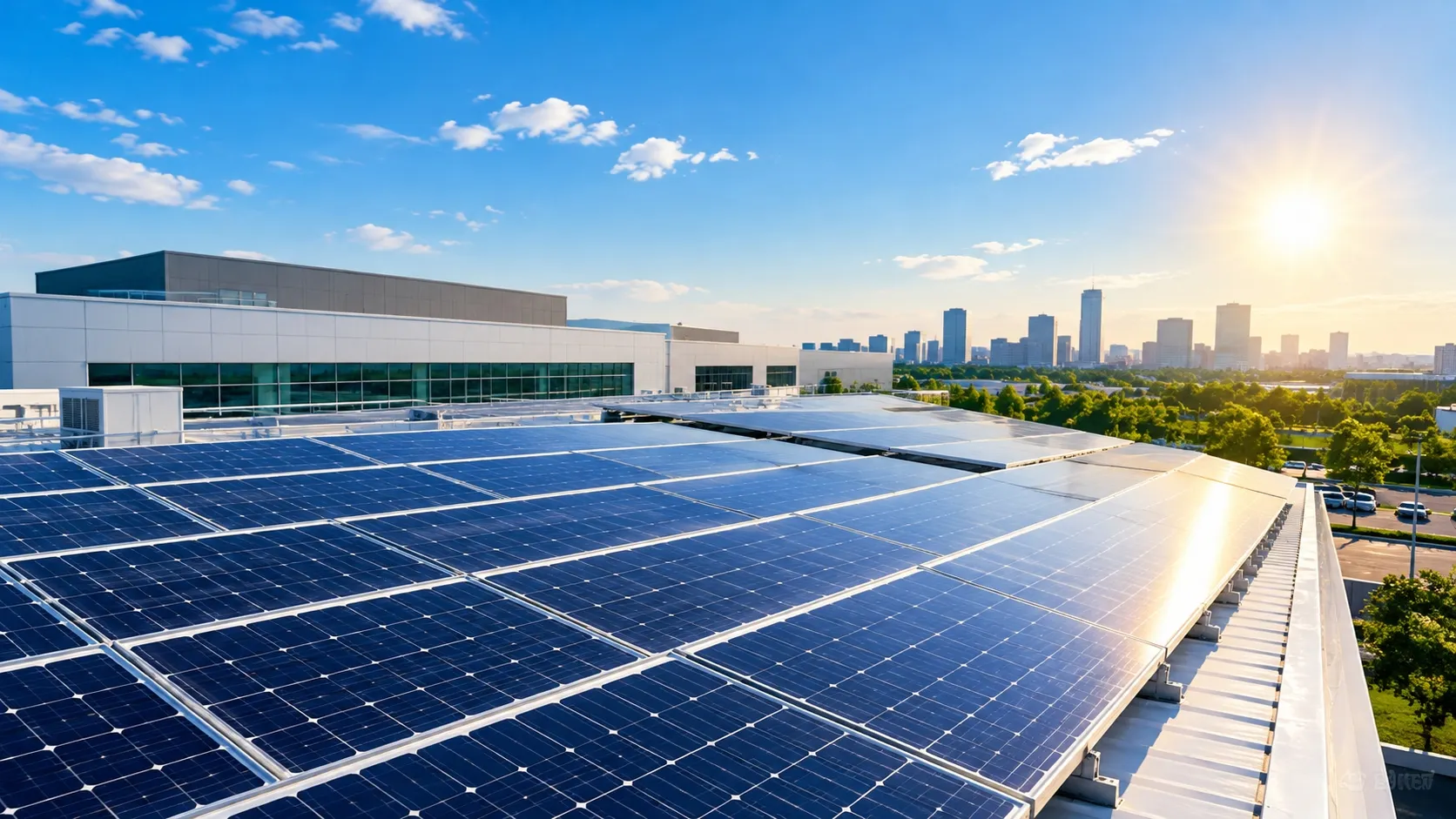

For companies with electric bills as a significant portion of their expenditures, the investment in commercial solar energy is increasingly appealing because of its ability to lower operating costs, manage electricity expenses and enhance environmental performance. Whether it's for manufacturing facilities, warehouses, office buildings, hotels, or retail centres, solar power can be used to produce electricity closer to where it's needed and lower dependence on utility providers.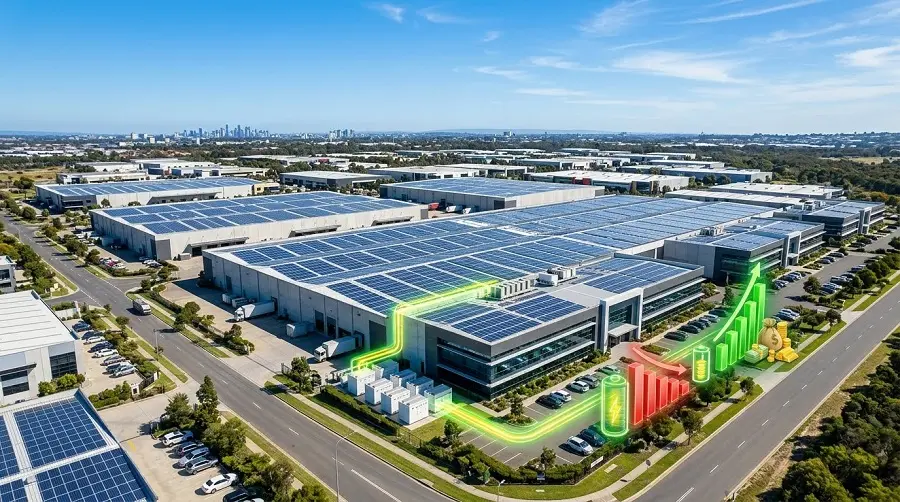
But for the installation of commercial solar panels, there is a cost involved initially. Yet, before deciding on an investment, business owners should know the expected return on investment (ROI), the length of time for the investment to pay off, incentives and long-term financial value.
Commercial solar ROI is the financial benefit a business can gain from their solar investment as compared to the total cost of their solar system installation and operation, including taking into account electricity savings, maintenance costs, financing costs and applicable incentives.
1. What Is Commercial Solar ROI?
Commercial solar ROI considers the money making capability of a solar energy system over the course of its useful life. A full cost/benefit analysis takes into account both short term savings and future benefits, whereas a cost/ electricity cost comparison takes only first cost and immediate electricity bill savings into account.
The major considerations in commercial solar ROI are:
-
Initial solar panel equipment and installation costs
-
Annual electricity consumption and utility rates
-
Solar energy production and on-site electricity usage
-
Utility demand charges and electricity rate structures
-
Available tax credits, rebates, and other incentives
-
Financing expenses, maintenance, and equipment replacement
-
Changes in electricity prices over time
The commercial solar panels can produce electricity for at least 25 to 30 years and even more depending on equipment quality, operating conditions and maintenance. This longer lifespan provides businesses a chance to pay back their initial investment and continue enjoying the savings on energy costs.
The commercial solar system should, therefore, be considered as a long-term infrastructure investment instead of just equipment.
2. How to Calculate Commercial Solar ROI
There are several financial metrics businesses can use to assess a commercial solar project. The most useful include simple payback period, return on investment, net present value, and internal rate of return.
Commercial Solar ROI Formula
A basic ROI calculation compares the total financial benefits with the net investment cost.
ROI = (Total Net Benefits ÷ Net Initial Investment) × 100%
For a more detailed lifetime calculation:
Lifetime ROI = [(Lifetime Financial Benefits − Net System Cost) ÷ Net System Cost] × 100%
The net system cost should account for applicable incentives and rebates. Lifetime financial benefits may include electricity bill savings, eligible export credits, and other measurable financial benefits, while operating expenses and financing costs should be included consistently in the calculation.
Example of Commercial Solar ROI
Consider a business that invests $100,000 in a commercial solar installation after accounting for applicable incentives. Over the system's evaluated lifetime, the project generates $250,000 in electricity savings and other qualifying financial benefits, with $30,000 in maintenance and operating expenses.
The net financial benefit is:
$250,000 − $30,000 − $100,000 = $120,000
The resulting lifetime ROI is:
($120,000 ÷ $100,000) × 100% = 120%
This simplified example illustrates how a commercial solar project can generate a positive return over time. Actual results depend on electricity prices, system performance, financing, incentives, and operating costs.
3. Understanding the Commercial Solar Payback Period
The payback period measures how long it takes for accumulated financial savings to recover the initial investment. It is one of the most important indicators for businesses evaluating commercial solar installation.
Simple Payback Period = Net Solar System Cost ÷ Annual Net Savings
For example, suppose a company spends $75,000 on a commercial solar system and saves $25,000 annually on electricity and other energy-related costs, after accounting for relevant recurring expenses.
$75,000 ÷ $25,000 = 3 years
Under these assumptions, the company recovers its initial investment in approximately three years.
After the payback point, the system may continue generating financial benefits for many years. However, this simple calculation does not account for the time value of money, financing costs, panel degradation, or changes in annual savings.
Actual payback periods vary considerably. Businesses with high electricity rates, strong daytime energy demand, and favorable installation conditions may achieve faster payback than facilities with low electricity costs or substantial unused solar generation.
4. Factors That Influence Commercial Solar Investment Returns
Electricity Rates and Energy Consumption
Electricity prices directly affect the financial value of solar power. Businesses paying high rates may achieve greater savings by generating their own electricity instead of purchasing the same amount from the utility.
Facilities with consistent daytime energy consumption, such as factories, distribution centers, and commercial offices, may be particularly well suited to rooftop solar because their electricity demand can align with solar production.
Businesses should review their electricity bills, time-of-use rates, and demand charges before choosing a system size.
Solar System Size and Performance
A commercial solar installation should be designed around the facility's energy profile, available roof or parking area, shading conditions, and electrical infrastructure.
A larger system does not automatically produce a better ROI. If the system generates more electricity than a business can use economically, the value of excess generation may be lower than the value of electricity consumed on-site.
Professional system design helps balance installation costs, expected energy production, and electricity demand.
Installation and Maintenance Costs
The total project cost may include solar panels, inverters, mounting structures, electrical equipment, engineering, permitting, interconnection, and installation labor.
Roof condition is another important consideration. If a commercial roof needs replacement soon, completing the necessary roof work before installing solar panels may reduce future disruption and additional expenses.
Routine inspections, cleaning when needed, inverter servicing, and timely repairs can help maintain system performance and protect long-term returns.
Financing Options
Businesses can purchase solar systems with cash, finance installations through loans, or explore third-party ownership arrangements such as power purchase agreements (PPAs), where available.
Cash purchases make project economics relatively straightforward. Loans spread the initial expense over time but introduce interest and repayment obligations. PPAs may reduce upfront investment requirements, although the financial benefits depend on contract pricing, escalation clauses, and agreement terms.
Companies should compare expected savings against total financing costs rather than focusing solely on the advertised monthly payment.
5. How Tax Incentives Affect Commercial Solar ROI
Tax incentives, rebates, and utility programs can improve the economics of commercial solar projects by reducing eligible costs or providing additional financial benefits.
Depending on the project's location, ownership structure, installation date, and applicable rules, businesses may be eligible for federal, state, local, or utility incentives.
However, incentive availability can change as legislation and program requirements evolve. Eligibility may also depend on project-specific conditions, deadlines, equipment requirements, and documentation.
Before including an incentive in an ROI forecast, businesses should verify:
-
Whether the project qualifies under current rules
-
Which equipment and expenses are eligible
-
Whether the benefit is a tax credit, deduction, rebate, or performance payment
-
Whether the business can use the benefit directly or needs an alternative arrangement
-
Applicable deadlines and documentation requirements
Consulting a qualified tax professional is essential when estimating the actual financial value of solar incentives. Businesses should avoid treating an unconfirmed incentive as guaranteed savings.
6. Net Present Value and Internal Rate of Return
Simple ROI and payback calculations are useful starting points, but larger commercial solar projects often require more advanced financial analysis.
Net Present Value (NPV)
Net present value measures the current value of future project cash flows after accounting for the time value of money.
An NPV calculation discounts future electricity savings and other cash flows to reflect the fact that money received today is generally worth more than money received years from now.
A positive NPV indicates that a project is expected to create value above the selected investment hurdle rate, based on the assumptions used.
Internal Rate of Return (IRR)
Internal rate of return estimates the annualized discount rate at which a project's NPV equals zero.
Businesses can use IRR to compare commercial solar investments with other capital projects, such as energy efficiency upgrades, equipment replacement, or facility expansion.
Both NPV and IRR provide a more complete financial picture than simple payback alone. Their accuracy depends on realistic assumptions about energy production, utility rates, system degradation, maintenance, financing, and project life.
7. Additional Benefits of Commercial Solar Energy
Financial savings are only one part of the business case for commercial solar.
More predictable energy expenses: Generating electricity on-site can reduce exposure to some utility price increases, although businesses will generally remain connected to the grid and may still pay fixed charges.
Potential property value benefits: Solar installations may improve a property's attractiveness to certain buyers, tenants, or investors, depending on ownership, system condition, and the remaining value of the energy agreement.
Improved sustainability performance: Solar power can reduce electricity-related emissions when it displaces higher-emission grid electricity. This may support corporate sustainability goals and customer expectations.
Energy resilience with battery storage: Pairing solar panels with appropriately designed battery storage can provide backup power for selected loads during outages. Solar panels alone typically do not provide usable backup power during a grid outage unless the system is specifically designed for that purpose.
These benefits can strengthen the investment case, but they should be assessed separately from direct financial savings to avoid overstating ROI.
8. How Businesses Can Maximize Commercial Solar ROI
To improve the financial performance of a solar project, businesses should take a structured approach:
-
Review at least 12 months of electricity bills and interval usage data.
-
Assess roof condition, shading, available installation space, and electrical infrastructure.
-
Compare proposals using consistent assumptions about system output and total project costs.
-
Evaluate on-site electricity consumption and compensation for excess generation.
-
Confirm eligible incentives with qualified professionals.
-
Compare cash purchases, loans, leases, and PPAs where appropriate.
-
Include maintenance, inverter replacement, financing, and performance degradation in long-term forecasts.
-
Request sensitivity analyses showing how different electricity rates and energy production levels affect returns.
A detailed commercial solar feasibility study can help identify the system configuration that best matches a company's energy needs and financial goals.
Frequently Asked Questions About Commercial Solar ROI
How long does it take for commercial solar panels to pay for themselves?
The payback period depends on installation costs, electricity prices, solar production, incentives, and financing. Some projects recover their costs relatively quickly, while others require a longer period. A site-specific financial analysis provides the most reliable estimate.
How long do commercial solar panels last?
Many commercial solar panels are designed to operate for approximately 25 to 30 years or longer. Actual performance depends on product specifications, environmental conditions, maintenance, and equipment degradation.
Does commercial solar increase business profitability?
It can improve profitability by reducing electricity expenses and potentially lowering exposure to future utility rate increases. The actual benefit depends on project economics and how the business finances and operates its system.
Is commercial solar worth the investment?
Commercial solar may be attractive for businesses with substantial electricity consumption, suitable installation space, and favorable utility rates. Comparing payback period, NPV, IRR, and lifetime savings helps determine whether a project meets the company's investment criteria.
Conclusion
The cost of solar panels is not the only factor that determines solar commercial ROI. To determine the real cost savings, how well the system will perform, installation cost, maintenance, financing cost, incentives and cash flow, businesses have to make assessments.
Realistic financial assumptions and the different performance metrics can help business owners make decisions regarding commercial solar installation. An engineer's design will help minimize operating costs, contribute to sustainability goals and provide long-term economic benefits.
The first step for businesses thinking about solar energy is to review their existing electricity use and request a tailored commercial solar proposal to estimate solar installation costs, potential annual energy savings, payback period and lifetime returns.
Share on Social:


- NEXT: Commercial Solar Energy for Businesses: Benefits & Costs
- NEXT: Null
In This Article
- 1 1. What Is Commercial Solar ROI?
- 2 2. How to Calculate Commercial Solar ROI
- 3 3. Understanding the Commercial Solar Payback Period
- 4 4. Factors That Influence Commercial Solar Investment Returns
- 5 5. How Tax Incentives Affect Commercial Solar ROI
- 6 6. Net Present Value and Internal Rate of Return
- 7 7. Additional Benefits of Commercial Solar Energy
- 8 8. How Businesses Can Maximize Commercial Solar ROI
- 9 Frequently Asked Questions About Commercial Solar ROI
- 10 Conclusion
