


Pure Sine Wave vs Modified Sine Wave Inverter

The type of AC Waveform provided by an inverter is one of the most crucial decisions when selecting an inverter for a solar power system, RV, backup power configuration, or off the grid application. There are two types of inverters that are commonly used: pure sine wave inverters and modified sine wave inverters.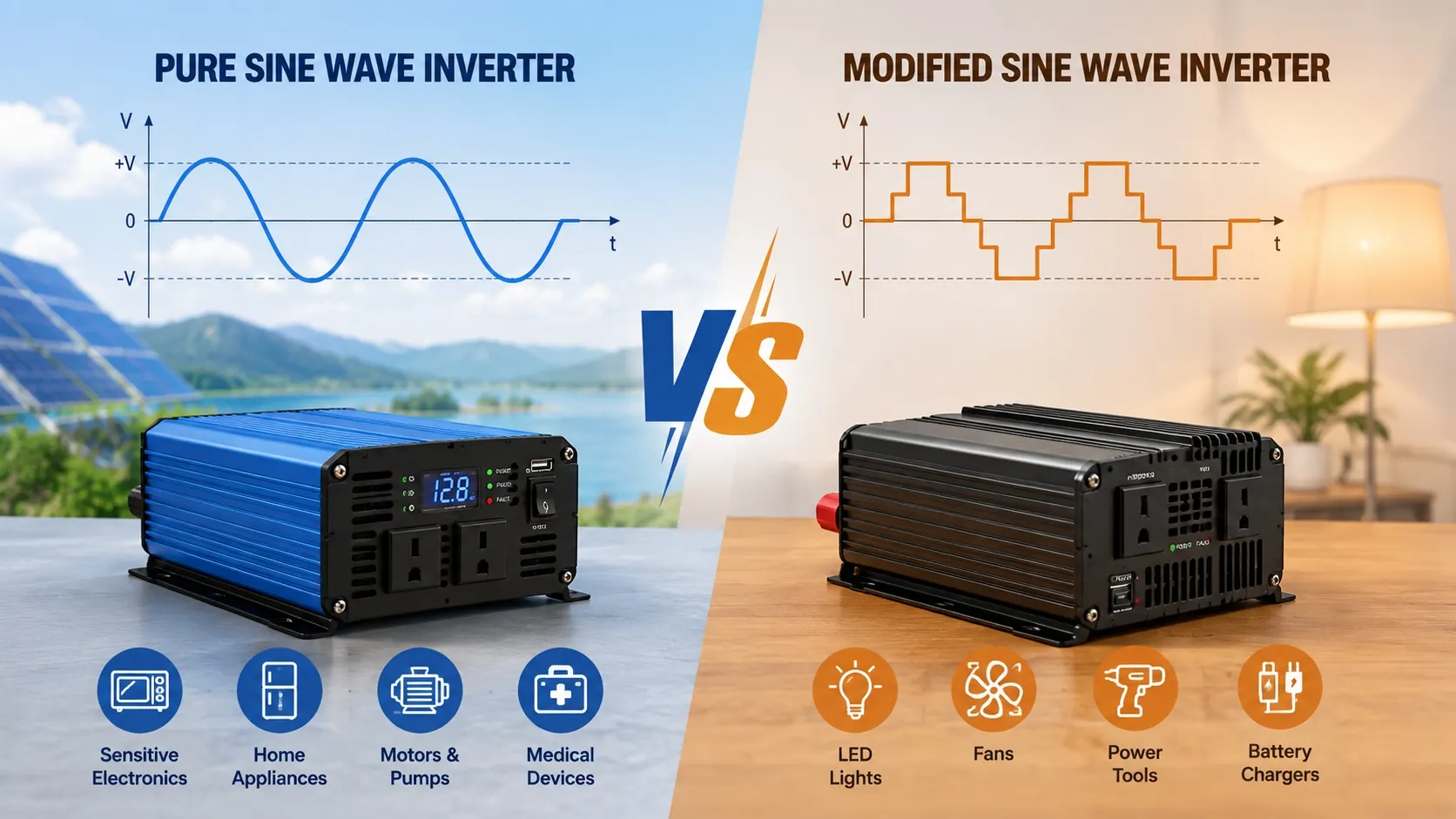
While both are used to convert DC power from batteries or solar systems to AC power, they both create different output waveforms, and they may behave quite differently in certain applications.
Therefore, what are the differences between pure sine wave and modified sine wave inverters? Which one is more suitable for home appliances, solar systems and sensitive electronics?
This guide will detail the critical differences, pros and cons, use and selection considerations of the two types of inverter to help you determine which is right for you.
What Is a Pure Sine Wave Inverter?
A pure sine wave inverter generates an AC output wave form that's very similar to the electricity provided by a standard power utility. The voltage fluctuates gradually from positive to negative and vice versa.
Due to this clean waveform, pure sine wave inverters can power nearly any type of electrical appliance or equipment, such as sensitive electronics, motors, medical devices, appliances, and communication devices.
The most common applications for pure sine wave inverters are:
- Residential solar power systems
- Off-grid solar systems
- RVs and camper vans
- Home backup power systems
- Telecom equipment
- Industrial applications
- Sensitive electronic equipment
The major benefit is compatibility. A pure sine wave inverter typically can power equipment without noise, overheating or performance issues that may be caused by lower quality waveforms.
What Is a Modified Sine Wave Inverter?
A modified sine wave inverter creates an AC voltage that is not a true sine wave, but uses chopped voltage steps to come close to a sine wave. The output is not a smooth waveform, but rather one in which there are several voltage steps.
The modified sine wave technology is easier to manufacture and generally cheaper. It can be used to meet the needs of basic electrical loads in a practical and economical way.
Some of the applications of Modified sine wave inverter are:
- Basic lighting
- Simple power tools
- Fans
- Some chargers
- Older appliances
- Low-cost backup power systems
However, compatibility can be more limited. Certain electronic devices, motors, audio equipment, and precision appliances may operate inefficiently or may not work properly with a modified sine wave output.
Pure Sine Wave vs Modified Sine Wave: Key Differences
The biggest difference is the quality of the AC waveform.
| Feature | Pure Sine Wave | Modified Sine Wave |
|---|---|---|
| Output waveform | Smooth sine wave | Stepped waveform |
| Appliance compatibility | Excellent | Limited for some devices |
| Sensitive electronics | Highly suitable | May cause issues |
| Motor performance | Smooth and efficient | May produce noise or heat |
| Power quality | High | Moderate |
| Efficiency | Generally higher with compatible loads | Can be lower with some loads |
| Cost | Higher | Lower |
| Solar applications | Excellent | Suitable for basic systems |
| Long-term versatility | Excellent | More limited |
Performance With Different Appliances
One of the most important considerations when comparing pure sine wave and modified sine wave inverters is the type of equipment you plan to power.
1. Electronics
Computers, televisions, networking equipment, modern chargers, and other electronic devices often use switching power supplies.
A pure sine wave inverter generally provides cleaner power for these devices. A modified sine wave inverter may cause buzzing, electrical noise, reduced performance, or compatibility problems with some equipment.
For expensive or sensitive electronics, pure sine wave is usually the safer choice.
2. Motors and Compressors
Refrigerators, pumps, fans, air conditioners, and other motor-driven appliances can be sensitive to waveform quality.
A modified sine wave may cause motors to run hotter or noisier and can reduce efficiency in certain applications. Some motors may also have difficulty starting because motors can require high startup current.
Pure sine wave output provides smoother power, making it generally better for motors and compressors.
3. Heating Loads
Simple resistive loads, such as traditional heaters, incandescent lamps, and some basic heating elements, are generally less sensitive to waveform shape.
For these applications, a modified sine wave inverter may work adequately if the inverter is properly sized.
However, the lower purchase price does not automatically mean lower total cost. The actual efficiency and compatibility of the connected equipment should also be considered.
Advantages of Pure Sine Wave Inverters
Pure sine wave inverters offer several important benefits.
Better appliance compatibility: They can power a wider range of AC equipment.
Cleaner electrical output: The smooth waveform more closely resembles utility-grid electricity.
Better motor performance: Motors and compressors can operate more smoothly.
Reduced electrical noise: Sensitive electronics and audio equipment are less likely to experience waveform-related interference.
Greater long-term flexibility: A pure sine wave inverter can support more types of equipment as your energy needs change.
For a residential solar system or whole-home backup solution, these advantages can make pure sine wave technology worth the additional investment.
Advantages of Modified Sine Wave Inverters
There's also a role for modified sine wave type inverters.
This is the lower cost benefit. They are simpler in design, and can be attractive to the users who just want to control simple electrical loads.
They can be a good option if the equipment they are powering is known to be compatible and the application not requiring high-quality AC power.
A simple off-grid system for only using for basic lighting or some resistive loads, for instance, may not require the extra expense of a pure sine wave inverter.
Is a Pure Sine Wave Inverter More Efficient?
The efficiency is dependent upon the design of the inverter, type of load, operating condition and the equipment to which it is connected.
Don't expect that all pure sine wave inverters will be more efficient than all modified sine wave inverters.
A pure sine wave output may be useful, however, with sensitive electronics and motor driven equipment, they can help the equipment run closer to the conditions for which it was designed. This can help eliminate any unwanted heat, noise or inefficiency.
Consider the conversion efficiency, standby consumption, rated power, surge power, thermal management, and protection of an inverter.Look at the conversion efficiency, standby consumption, rated power, surge power, thermal management, and protection of an inverter.
Which Inverter Is Better for Solar Power?
Most modern solar power systems will utilize a pure sine wave inverter.
A wide range of loads can be operated with solar power such as refrigerators, computers, TVs, pumps, kitchen appliances, and communication devices. Adopting a pure sine wave inverter gives you more compatibility and minimizes risks with regard to waveform issues.
The continuous power rating and surge capacity of the inverter is particularly significant for an off-grid solar system. If the large appliances are motor or compressor operated, they could need a lot more power to start up than to operate them normally.
Which One Should You Choose?
The best choice depends on your application and budget.
Choose a pure sine wave inverter if you:
- Need to power sensitive electronics
- Run refrigerators, pumps, or other motors
- Want maximum appliance compatibility
- Are building a residential solar system
- Need reliable backup power
- Want greater flexibility for future loads
A modified sine wave inverter may be suitable if you:
- Have a limited budget
- Only need to power basic loads
- Have confirmed that your appliances are compatible
- Do not need to operate sensitive electronics or demanding motor loads
Final Verdict: Pure Sine Wave vs Modified Sine Wave
Pure sine wave vs modified sine wave: The former can produce the better quality and more versatile AC output. Typically used in modern homes, solar energy systems, RVs, backup power, and applications with sensitive electronics or motor driven appliances.
For certain simple, cost-sensitive applications, the appliance compatibility has been verified, in which case the modified sine wave inverter may be useful.
To sum up: Pure sine wave is the best choice for most electrical loads, whereas modified sine wave may be a cost-effective solution for simple electrical loads.
Before buying an inverter, determine the total power consumption, locate the power consuming appliances that require a high start-up, evaluate the compatibility of voltage and frequency, and anticipate future power demands. Selecting the appropriate capacity and waveform of an inverter can contribute to a more reliable system, higher performance of your appliances and the overall value of your solar or backup power system.
Share on Social:


In This Article
- 1 What Is a Pure Sine Wave Inverter?
- 2 What Is a Modified Sine Wave Inverter?
- 3 Pure Sine Wave vs Modified Sine Wave: Key Differences
- 4 Performance With Different Appliances
- 5 Advantages of Pure Sine Wave Inverters
- 6 Advantages of Modified Sine Wave Inverters
- 7 Is a Pure Sine Wave Inverter More Efficient?
- 8 Which Inverter Is Better for Solar Power?
- 9 Which One Should You Choose?
- 10 Final Verdict: Pure Sine Wave vs Modified Sine Wave
