


Portable Power Station vs Gas Generator
The question that many homeowners, outdoor enthusiasts, businesses, and emergency-preparedness planners ask when selecting a reliable backup power solution is, "Portable Power Station vs Gas Generator: which is better?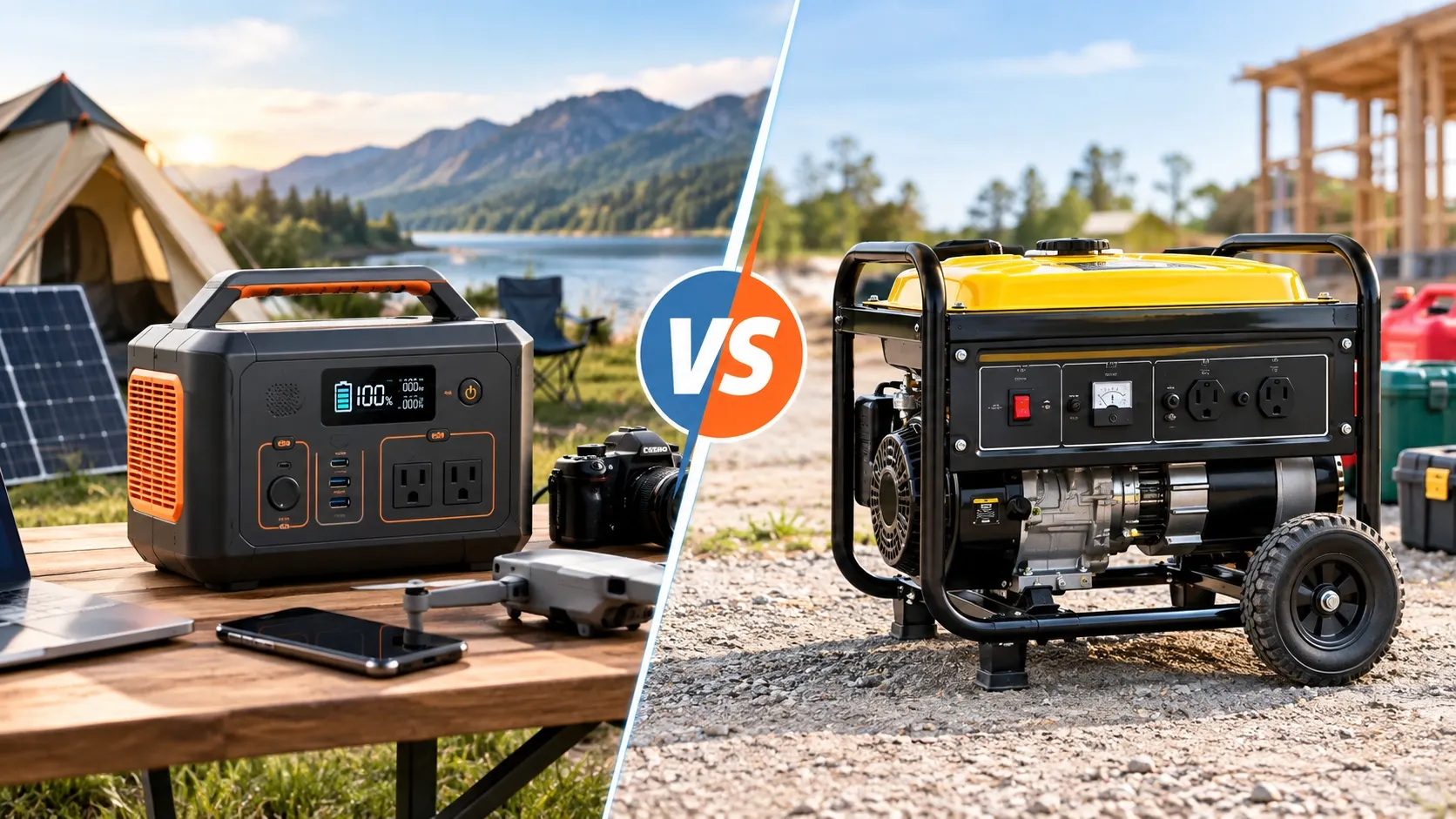
Both solutions can be used to produce electricity in the absence of the grid, albeit in very different ways. A gas generator is a machine that generates electricity by fueling the gasoline or propane that powers the generator; a portable power station stores electricity in a built-in battery and distributes the power also via AC outlets, USB ports and DC outlets.
What you need depends on your power needs, budget, location, noise considerations, and use. This guide provides a comparison of portable power stations and gas generators to help you understand their differences and which one you should use for your needs.
What Is a Portable Power Station?
A portable power station is a battery based power system that can be recharged and used to power electronic devices and appliances. Most current models have lithium-ion or LiFePO4 batteries and offer a variety of output choices.
A portable power station can include:
- AC outlets
- USB-A ports
- USB-C ports
- DC outputs
- Car charging ports
It can supply energy to smartphones, laptops, lights, routers, TVs, CPAPs, refrigerators, power tools, and other electrical devices based on the model.
Portable power stations can typically be powered from wall outlets, vehicle charging stations, or solar panels. They are particularly beneficial for camping, RV use, home backup power, and off-grid use.
What Is a Gas Generator?
A gas generator is the one which produces electricity by means of an internal combustion engine. Most portable generators use gasoline and some models can be propane or natural gas-powered.
Gas generators are typically used for:
- Emergency home backup
- Construction sites
- Outdoor events
- Remote job sites
- Farms
- Large appliances
- Long-duration power outages
Unlike a battery-powered portable power station, a generator can continue producing electricity as long as it has access to fuel.
Portable Power Station vs Gas Generator: Key Differences
The biggest differences between these two power solutions involve fuel, noise, maintenance, power capacity, and environmental impact.
| Feature | Portable Power Station | Gas Generator |
|---|---|---|
| Power Source | Rechargeable battery | Gasoline or other fuel |
| Noise | Very quiet | Usually noisy |
| Emissions | No direct emissions | Produces exhaust emissions |
| Indoor Use | Generally suitable with proper ventilation requirements | Never suitable indoors |
| Maintenance | Low maintenance | Requires regular maintenance |
| Refueling | Recharge with electricity or solar | Add fuel |
| Runtime | Limited by battery capacity | Can run while fuel is available |
| Solar Charging | Yes | Usually no |
| Portability | Compact models available | Often heavier and bulkier |
Understanding these differences is essential when selecting the right backup power system.
1. Noise Level
One of the major pros to a portable power station is the quietness of its functioning.
It is very quiet since it operates with batteries and not a combustion engine. This makes it a perfect choice for camping, apartments, RVs, bedrooms, offices, and other spaces where noise is an issue.
But gas generators can be much louder! All inverter generators make engine noise, even those that are quieter.
A portable power station is another option to consider if you need power overnight or in a quiet place.
Ideal for silent use: Portable Power Station
2. Power Output and Capacity
Gas generators generally have an advantage when extremely high power output is required.
A large generator can support heavy electrical loads such as:
- Central air conditioning systems
- Large refrigerators
- Water pumps
- Industrial equipment
- Construction tools
- Multiple household appliances
Portable power stations have improved significantly in recent years. High-capacity models can now provide substantial output and support essential home appliances.
However, battery capacity is limited. Once the battery is depleted, the power station must be recharged.
For high-power applications and extended heavy loads, a gas generator may be more practical.
Best choice for high continuous power: Gas Generator
3. Runtime During a Power Outage
One of most crucial considerations to make when comparing a portable power station vs a gas generator is the runtime.
A portable power station can be used until the battery energy is exhausted. The actual run time will vary by battery capacity and power usage of connected devices.
For instance, a mobile phone consumes less power than a refrigerator or an electric heater.
A gas generator can operate indefinitely until there is a fuel supply. Users can refuel the generator during a long power outage, and generate power while the generator is fueled.
Fuel supply may be an issue during emergencies, however.
A power station that can be carried along with solar panels is another option. During the daylight hours the battery can be charged by the sun, so that they can be operated for longer periods without needing to use fuel.
Best choice for unlimited operation, when fuel is available: Gas Generator
Ideal for charging off-grid or away from the power grid: Portable Power Station
4. Maintenance Requirements
Portable power stations require significantly less maintenance than gas generators.
A battery power station typically does not require:
- Oil changes
- Spark plug replacement
- Fuel system maintenance
- Engine servicing
Users mainly need to keep the battery properly charged and follow recommended storage guidelines.
Gas generators require more regular maintenance because they contain mechanical engines. Common maintenance tasks include checking oil, replacing filters, inspecting spark plugs, and managing fuel storage.
For users who want a simple and convenient backup power solution, portable power stations offer a major advantage.
Best choice for low maintenance: Portable Power Station
5. Environmental Impact
Portable power stations produce no direct exhaust emissions during operation.
When charged using solar panels or renewable electricity, they can provide a cleaner power solution for outdoor and emergency applications.
Gas generators burn fossil fuels and produce carbon dioxide and other exhaust emissions. They also require fuel transportation and storage.
For environmentally conscious users, battery-powered portable power stations are generally the more sustainable option.
Best choice for clean energy: Portable Power Station
6. Indoor Safety
Safety is another major difference.
Portable power stations do not produce carbon monoxide during normal operation, making them suitable for many indoor applications when used according to the manufacturer's instructions.
Gas generators produce dangerous exhaust gases, including carbon monoxide. They must always be operated outdoors and away from doors, windows, and ventilation openings.
Using a gas generator indoors, inside a garage, or in enclosed spaces can be extremely dangerous.
For indoor emergency power, a portable power station is usually the safer solution.
Best choice for indoor backup power: Portable Power Station
7. Solar Charging Capability
Solar charging is one of the strongest advantages of modern portable power stations.
By connecting compatible solar panels, users can generate electricity from sunlight and recharge the battery.
This makes portable power stations ideal for:
- Camping
- RV travel
- Remote cabins
- Off-grid homes
- Emergency preparedness
- Outdoor work
A solar-powered portable power station can reduce dependence on fuel and traditional electrical infrastructure.
Gas generators generally depend on fuel and cannot directly use solar energy.
Best choice for solar power: Portable Power Station
Portable Power Station vs Gas Generator: Which Is Better for Home Backup?
For short-term power outages and essential household devices, a portable power station can be an excellent choice.
It can power devices such as:
- Smartphones
- Wi-Fi routers
- Lights
- Laptops
- TVs
- Small appliances
- Medical equipment
- Refrigerators
For longer outages or whole-home backup applications, a gas generator may provide more continuous power, especially when large appliances must operate.
However, many homeowners are now choosing high-capacity battery systems combined with solar panels as a cleaner alternative.
The best solution depends on how much electricity your home requires.
Which Option Is Better for Camping and Outdoor Activities?
For camping, RV travel, and outdoor recreation, a portable power station is usually the better choice.
It offers quiet operation and can charge cameras, phones, laptops, lights, drones, and small appliances without disturbing the environment.
Gas generators may be useful for large RVs or high-power equipment, but their noise and emissions can be inconvenient in campsites.
Best choice for camping: Portable Power Station
Final Thoughts: Portable Power Station or Gas Generator?
The debate between Portable Power Station vs Gas Generator does not have one universal answer.
A portable power station is ideal for users who want quiet, clean, portable, and low-maintenance electricity. It is especially suitable for camping, RV travel, emergency backup, indoor power, and solar energy systems.
A gas generator is better for applications requiring high continuous power and long operation times where fuel is readily available.
Choose a Portable Power Station If You Need:
- Quiet operation
- Clean energy
- Indoor backup power
- Solar charging
- Low maintenance
- Camping or RV electricity
Choose a Gas Generator If You Need:
- High power output
- Long continuous runtime
- Heavy-duty equipment support
- Whole-home emergency power
- Construction-site electricity
The portable power station technology continues to advance, making them more powerful and convenient. Many contemporary consumers find a portable power station plus solar panels to be a versatile, eco-friendly, and trustworthy choice for their everyday power requirements and emergency readiness.
It is important to determine your total needed wattage, the total time you expect the unit to be used, and the devices you will use, before buying. The key to a reliable electricity system, whenever and wherever needed, is the right system.
Share on Social:


In This Article
- 1 What Is a Portable Power Station?
- 2 What Is a Gas Generator?
- 3 Portable Power Station vs Gas Generator: Key Differences
- 4 1. Noise Level
- 5 2. Power Output and Capacity
- 6 3. Runtime During a Power Outage
- 7 4. Maintenance Requirements
- 8 5. Environmental Impact
- 9 6. Indoor Safety
- 10 7. Solar Charging Capability
- 11 Portable Power Station vs Gas Generator: Which Is Better for Home Backup?
- 12 Which Option Is Better for Camping and Outdoor Activities?
- 13 Final Thoughts: Portable Power Station or Gas Generator?
