


Hybrid Solar Inverter vs Off-Grid Inverter
Solar energy is becoming critical in homes, businesses, farms, and remote facilities and selecting the right inverter is an important component of designing an efficient solar energy system. The hybrid solar inverter and the off-grid inverter are two popular choices.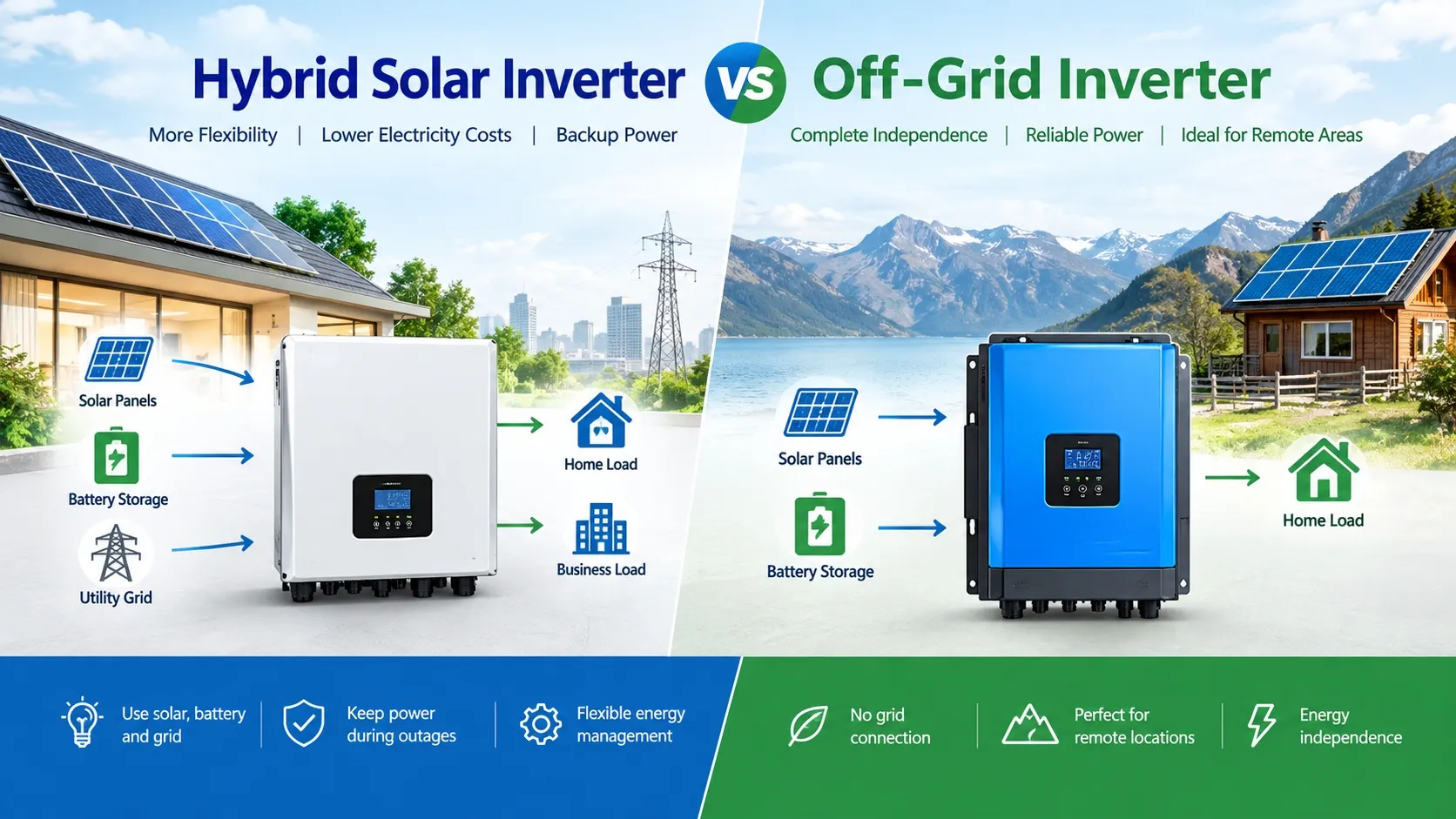
Both devices are designed to convert direct current (DC) electrical power from solar panels or batteries to alternating current (AC) electrical power that is usable, but the latter are intended for different levels of energy consumption and may be installed in different locations. The difference between a hybrid solar inverter and an off-grid inverter can assist homeowners, distributors, installers and commercial buyers pick the right one for their needs.
This guide covers the basics of hybrid and off-grid solar inverters, the differences between them, some benefits, the types of applications, and what to consider when choosing.
What Is a Hybrid Solar Inverter?
A hybrid solar inverter is a multifunctional inverter designed to manage electricity from multiple energy sources. Depending on the system configuration, it can work with:
- Solar panels
- Battery storage
- The utility grid
- Backup generators
A hybrid inverter's biggest benefit is its versatility. Intelligently control the sources and destinations of electricity.
For instance, solar panels can be used for electricity generation to directly power house appliances during the day. An over-excess amount of electricity generated by the sun can be stored in the battery. If the sun is not generating power, the system can consume the battery or power from the electrical grid.
This makes hybrid solar inverters an appealing option for potential consumers interested in lowering electrical bills and still having a safety backup in case of a power crisis.
Residential solar projects, commercial solar projects, energy storage projects, and areas with unreliable electrical grid power are popular applications of hybrid systems.
What Is an Off-Grid Inverter?
Off-grid inverter is designed for the solar power system that is not connected to the power grid.
An off-grid solar system is different from a grid-tied or hybrid system, as it usually uses its own energy sources such as:
- Solar panels
- Battery banks
- Backup generators when necessary
The inverter transforms the stored DC (battery) or generated AC (Solar) energy into AC power for appliances and equipment.
Off-grid inverters play a vital role in areas where there's no access to electricity from the grid, or where its electricity costs are too high, or it's not reliable. They are typically installed in remote homes, cabins, farms, islands, telecommunication sites and rural facilities.
The main use of an off-grid inverter is to provide energy independence. Users produce and store electricity, rather than relying on public power supply.
Hybrid Solar Inverter vs Off-Grid Inverter: Key Differences
Although both products are important components of modern solar energy systems, their operating principles and applications are different.
1. Grid Connection
The key difference between hybrid solar inverter and off-grid solar inverter is the power grid connection.
Generally, a hybrid inverter can use solar energy and electricity from the grid. It can use various energy supplies as solar production, battery storage, electricity demand and system settings allow.
The focus of an off grid inverter is to work on stand-alone mode. The solar panel and battery storage system should supply sufficient power to the loads.
Hybrid inverter: Will allow a mix of solar, batteries and utility power.
Off grid inverter: For off-grid solar power solutions.
2. Battery Management
Both inverter types can work with batteries, but battery storage plays different roles.
In a hybrid solar system, batteries are often used for:
- Storing excess solar energy
- Providing backup power
- Reducing grid electricity consumption
- Supporting electricity use during peak pricing periods
In an off-grid system, batteries are much more essential because they provide electricity when solar panels are not generating enough power.
For example, at night or during cloudy weather, an off-grid system may depend heavily on stored battery energy.
Therefore, battery capacity planning is usually more critical for an off-grid solar system.
3. Energy Independence
An off-grid inverter provides a higher level of energy independence because the system is designed to operate without the utility network.
However, complete independence also requires careful system design. Solar panel capacity, battery storage, inverter power, local weather conditions, and daily electricity consumption must all be considered.
A hybrid inverter provides flexibility rather than complete independence. Users can maximize solar self-consumption while still using the grid when necessary.
For many homeowners, this balance between solar energy and grid reliability makes hybrid systems highly practical.
4. Installation Applications
Hybrid solar inverters are commonly installed in locations where grid electricity already exists.
Typical applications include:
- Residential homes
- Commercial buildings
- Small businesses
- Energy storage systems
- Areas with frequent power outages
Off-grid inverters are more suitable for locations without reliable grid infrastructure.
Typical applications include:
- Remote houses
- Cabins
- Farms
- Rural communities
- Remote monitoring stations
- Telecommunications equipment
- Island power systems
Choosing between the two depends heavily on whether utility electricity is available at the installation location.
Advantages of a Hybrid Solar Inverter
A hybrid solar inverter offers several important advantages for modern solar energy users.
Flexible Energy Management
Hybrid systems can manage solar energy, battery storage, and grid electricity intelligently. This flexibility can improve overall energy efficiency.
Lower Electricity Costs
By using solar energy during the day and stored battery energy when electricity prices are high, users may reduce their dependence on grid electricity.
Backup Power Capability
When configured with battery storage and backup functionality, a hybrid solar inverter can provide electricity during grid outages.
This is especially valuable in areas where power interruptions are common.
Easier Future Expansion
A hybrid system can be a good choice for users who want to begin with solar panels and add more battery storage later.
This scalability makes hybrid solar systems attractive for growing energy needs.
Advantages of an Off-Grid Inverter
Off-grid solar inverters also provide unique benefits.
Complete Independence from the Grid
The main advantage is the ability to generate and use electricity in locations without utility infrastructure.
Suitable for Remote Areas
Installing power lines to remote locations can be expensive. An off-grid solar system can provide a more practical alternative.
Reliable Power for Specialized Applications
Off-grid systems can support farms, remote facilities, monitoring equipment, and other applications where grid electricity is unavailable.
Long-Term Energy Control
Users can produce and manage their own electricity instead of depending entirely on utility companies.
However, proper system sizing is essential to ensure reliable performance throughout the year.
Which Is Better: Hybrid Solar Inverter or Off-Grid Inverter?
There is no single answer because the best choice depends on your energy requirements.
A hybrid solar inverter may be the better option if:
- You already have access to the utility grid
- You want to reduce electricity bills
- You need battery backup power
- You want flexible energy management
- Your solar system may expand in the future
An off-grid inverter may be the better choice if:
- Your location does not have grid electricity
- You need complete energy independence
- You operate in a remote area
- Installing utility infrastructure is too expensive
- Your energy system must operate independently
Before purchasing an inverter, users should calculate their daily energy consumption and expected future electricity demand.
Important Factors When Choosing a Solar Inverter
Whether you choose a hybrid or off-grid inverter, several factors should be considered.
Power Rating
The inverter must provide enough power for the appliances and equipment operating simultaneously.
High-power applications may require larger inverter capacity.
Battery Compatibility
Different solar inverters support different battery technologies and voltage ranges.
Many modern systems are designed to work with lithium battery storage, while others may support additional battery types.
Solar Input Capacity
Check the inverter's maximum PV input voltage and power capacity to ensure compatibility with the solar panel system.
Efficiency
A high-efficiency inverter can reduce energy losses and improve overall solar system performance.
Monitoring Functions
Modern smart inverters may include Wi-Fi, mobile applications, cloud monitoring, and remote system management.
These features are particularly useful for installers, commercial users, and solar system operators.
Manufacturer and Technical Support
A reliable solar inverter manufacturer or supplier is also crucial for Distributors, EPC companies, Installers and project developers.
Pay attention to the appropriate certifications, technical documents, warranty support, and professional after-sales service of the products.
The Future of Hybrid and Off-Grid Solar Systems
With the ongoing advancement of battery technology, hybrid and off-grid solar systems are poised to become a more significant part of the energy transition worldwide.
Hybrid solar inverters are evolving to be smarter, with sophisticated energy management systems that enhance solar power generation and battery storage and grid usage.
In the meantime, off-grid solar energy systems are aiding in providing access to reliable power to remote villages and industrial sites worldwide.
Both options have been enhanced by the increasing use of lithium batteries, smart monitoring systems and high efficiency solar equipment, making them more powerful and available.
Conclusion
The biggest difference between a hybrid solar inverter and an off-grid inverter is the working of the system in relation to the utility grid.
A hybrid solar inverter allows for the use of a combination of solar power, battery storage and grid electricity to provide flexibility. It's a great energy-saving, back-up and an intelligent energy-management solution for homes and businesses looking to reduce energy costs.
An off grid inverter is designed to be used independently from the utility network. It's best suited for remote facilities, rural, farms, cabins and situations where a dependable electrical grid is not available.
This choice will depend on where you live, how much electricity you need, your budget, how many batteries you want to install, and what your overall energy goals are. These factors can be carefully considered, and with the help of a seasoned solar inverter manufacturer or supplier, you can create a solar powering system that can be considered a secure one that is able to satisfy your present and future energy demands.
The rise of renewable energy worldwide will keep hybrid solar inverters and off-grid inverters playing a crucial part in crafting cleaner, more flexible and more reliable power solutions.
Share on Social:


In This Article
- 1 What Is a Hybrid Solar Inverter?
- 2 What Is an Off-Grid Inverter?
- 3 Hybrid Solar Inverter vs Off-Grid Inverter: Key Differences
- 4 Advantages of a Hybrid Solar Inverter
- 5 Advantages of an Off-Grid Inverter
- 6 Which Is Better: Hybrid Solar Inverter or Off-Grid Inverter?
- 7 Important Factors When Choosing a Solar Inverter
- 8 The Future of Hybrid and Off-Grid Solar Systems
- 9 Conclusion
