


How to Choose the Right Home Solar System for Your Energy Needs
With power bills on the rise and renewable energy becoming increasingly viable, homeowners are turning to solar energy as a viable long-term energy solution. But selecting the best home solar system isn't just about installing as many solar panels as you can to your roof.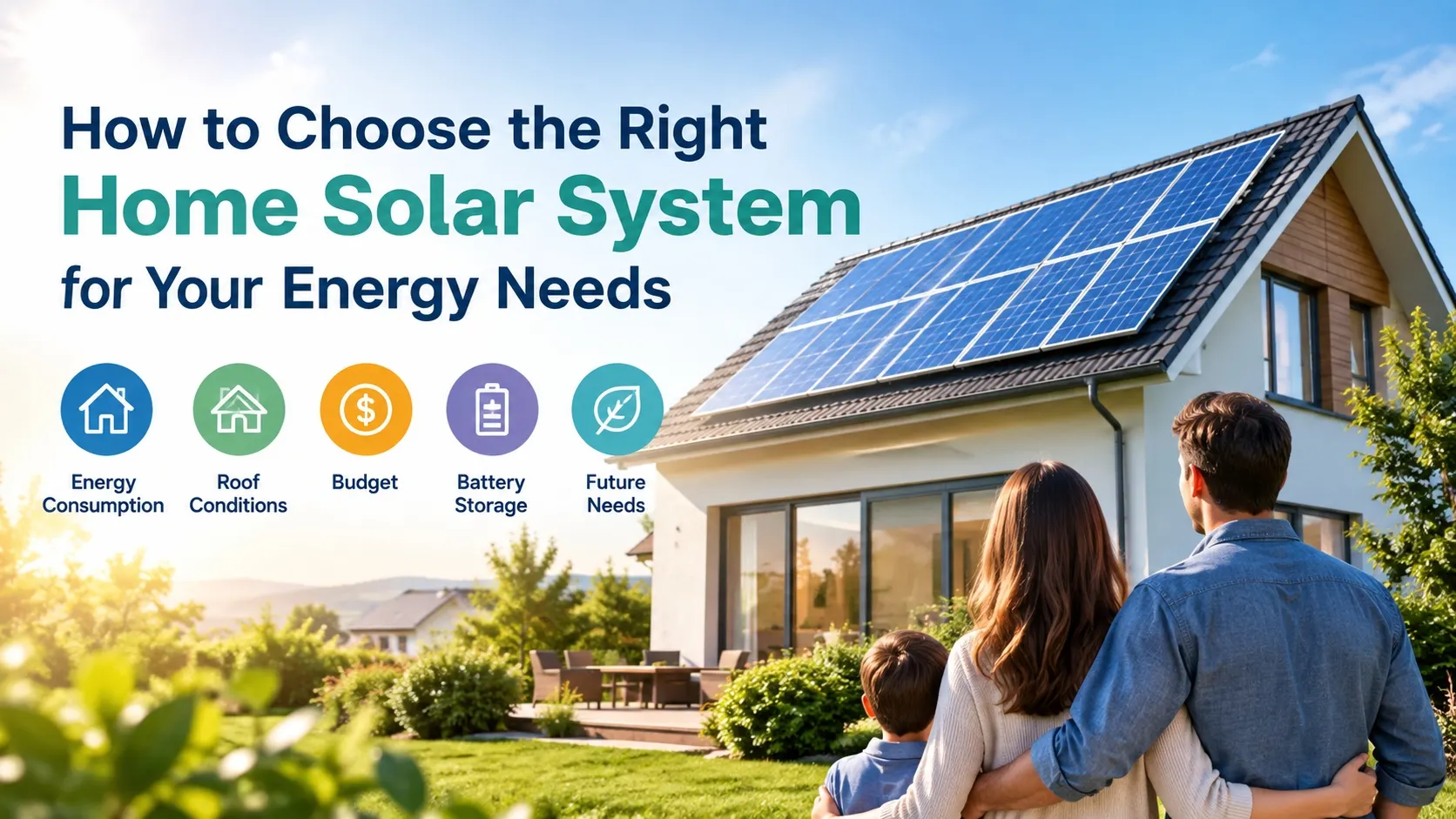
There are a number of key factors that need to be taken into account when choosing what solar system to install, such as your requirements for electricity, where you live, the roof characteristics, your budget, your energy requirements and if you need battery storage or back-up power.
This guide can help you decide which solar system is best suited to your energy needs, and can make you familiar with the main factors and choices you'll make when investing in solar.
1. Understand Your Home Energy Consumption
The key to selecting a solar power system for home is knowing how much power your home consumes.
Check your electricity bills for the last year and see how many kilowatt-hours (kWh) you used. Your energy consumption could vary from month to month due to the following:
- Air conditioning and heating
- Seasonal weather conditions
- Electric vehicles
- Swimming pools
- Home appliances
- Remote work
- Additional family members
A typical household with 900 kWh of electricity usage will need a larger solar system than a household with 400 kWh of usage.
The standard way to determine the right size solar system is in terms of the amount of electricity your home uses each year.
Key Question:
How many solar panels does my home need?
The answer depends on your electricity usage and the amount of sunlight available in your location. A professional solar system design should calculate your expected energy production rather than simply recommending a standard system size.
2. Choose the Right Solar System Type
There are three main types of residential solar systems:
On-Grid Solar Systems
An on-grid solar system is connected directly to the public electricity grid.
During the day, solar panels generate electricity for your home. Depending on local utility policies, excess electricity may be exported to the grid. When your solar production is insufficient, your home can continue receiving electricity from the utility.
Advantages include:
- Lower installation costs
- No battery required
- Efficient use of solar energy
- Suitable for homes with reliable grid access
An on-grid system is often a good choice for homeowners who want to reduce electricity bills without investing in battery storage.
Off-Grid Solar Systems
An off-grid solar system operates independently from the utility grid.
These systems usually include:
- Solar panels
- Solar charge controller
- Battery bank
- Off-grid inverter
Off-grid solar is commonly used in remote locations where grid electricity is unavailable or unreliable.
However, off-grid systems require careful energy planning because the battery system must store enough electricity to support the household during the night and during periods of low solar production.
Hybrid Solar Systems
A hybrid solar system combines solar panels, battery storage, and grid connectivity.
This system can provide greater flexibility because homeowners can use solar energy during the day, store excess electricity in batteries, and use the grid when necessary.
Hybrid solar systems are particularly attractive for homeowners who want:
- Lower electricity bills
- Energy storage
- Backup power
- Greater energy independence
For many modern households, a hybrid solar system offers a balance between reliability and energy independence.
3. Calculate the Right Solar System Size
Solar system size is usually measured in kilowatts (kW).
A properly sized residential solar system should be based on several factors:
- Daily electricity consumption
- Annual electricity usage
- Local solar radiation
- Roof orientation
- Panel efficiency
- Available installation space
- Desired energy offset
For example, homeowners may want their solar system to generate:
- 50% of their electricity needs
- 80% of their electricity needs
- Nearly 100% of their electricity needs
Installing a larger system does not always mean it is the best financial decision. Local electricity policies, available roof space, utility regulations, and system costs should all be considered.
A professional solar installer can perform a detailed energy assessment and estimate how much electricity the system will generate throughout the year.
4. Evaluate Your Roof and Installation Location
Your roof plays an important role in determining whether solar power is a good option for your home.
Important factors include:
Roof Orientation
In many locations, the direction your roof faces affects solar energy production. The ideal orientation depends on your geographic location and local sunlight patterns.
Roof Angle
The tilt angle of your solar panels can influence annual energy production. Installers may adjust panel angles depending on the roof design and local solar conditions.
Shading
Trees, nearby buildings, chimneys, and other structures can reduce solar panel performance.
Even partial shading can affect electricity production, especially if the system design does not use appropriate power optimization technology.
Before installation, conduct a shading analysis to identify potential obstacles.
Roof Condition
If your roof is old or requires repairs, it may be better to complete the necessary maintenance before installing solar panels.
Solar systems are designed to operate for many years, so installing panels on a structurally sound roof can help avoid future removal and reinstallation costs.
5. Select High-Quality Solar Panels
Solar panels are one of the most important components of a home solar system.
When comparing solar panels, consider:
- Power output
- Conversion efficiency
- Product warranty
- Performance warranty
- Temperature performance
- Manufacturer reputation
- Long-term reliability
High-efficiency solar panels can produce more electricity from limited roof space, making them particularly useful for smaller homes or roofs with restricted installation areas.
However, the highest-efficiency panel is not always necessary for every homeowner. The best option depends on your available space, energy requirements, and budget.
The goal should be to choose reliable panels that provide strong long-term value rather than focusing only on the lowest purchase price.
6. Choose the Right Solar Inverter
The solar inverter converts the direct current (DC) electricity generated by solar panels into alternating current (AC) electricity used by household appliances.
Common residential inverter options include:
String Inverters
String inverters are a popular and cost-effective solution for homes with simple roof designs and consistent sunlight exposure.
Microinverters
Microinverters are installed at individual solar panels. They can be useful for roofs with multiple orientations or partial shading.
Hybrid Inverters
Hybrid inverters are designed to work with both solar panels and battery storage.
They are commonly used in hybrid solar systems and provide flexibility for homeowners planning to add batteries.
When selecting an inverter, consider your current system requirements as well as future expansion plans.
7. Decide Whether You Need Solar Battery Storage
Solar batteries allow homeowners to store excess solar electricity for later use.
Battery storage can be useful for:
- Nighttime electricity consumption
- Power outages
- Reducing grid dependence
- Managing electricity during peak-rate periods
However, batteries also increase the total cost of a solar system.
If your main goal is reducing electricity bills and your local grid is reliable, an on-grid solar system without batteries may provide better initial value.
If backup power and energy independence are important priorities, a solar battery system may be worth the additional investment.
When choosing a battery, consider:
- Storage capacity
- Usable capacity
- Power output
- Battery lifespan
- Charging speed
- Warranty
- Expandability
8. Consider Your Future Energy Needs
A solar system should not only meet your current energy requirements. You should also consider how your electricity consumption may change in the future.
Future energy demands may include:
- Purchasing an electric vehicle
- Installing a heat pump
- Expanding your home
- Adding more appliances
- Building a home office
- Installing a swimming pool
If you expect your electricity usage to increase, consider choosing an expandable solar system.
For example, you may install a hybrid inverter that supports future battery storage or select a system design that allows additional solar panels to be added later.
Planning ahead can reduce the need for expensive system modifications.
9. Compare Cost, Quality, and Long-Term Value
When choosing a home solar system, the cheapest option is not always the best choice.
A solar system is a long-term investment, so homeowners should evaluate:
- Equipment quality
- Installation quality
- Warranty coverage
- Expected electricity production
- Maintenance requirements
- Future expansion options
- Total cost of ownership
A high-quality installation can provide reliable performance for decades.
It is also important to compare multiple solar proposals and make sure you understand what is included in each quote.
Ask whether the price includes:
- Solar panels
- Inverters
- Mounting systems
- Electrical equipment
- Installation
- System monitoring
- Permits
- Warranty support
10. Work With an Experienced Solar System Provider
Choosing the right solar equipment is important, but proper system design and installation are equally critical.
An experienced solar system provider can help analyze:
- Your electricity consumption
- Local sunlight conditions
- Roof characteristics
- System size
- Battery requirements
- Budget
- Future energy plans
The best solar solution should be customized for your household rather than based on a one-size-fits-all package.
Conclusion
The first step to selecting the right home solar system is to know how much power you require and what you want to achieve.
The perfect system will depend on your power needs, geographic location, roof, budget and battery storage/backup power. Before purchasing a solar system, the homeowner must carefully assess the pros and cons of on-grid, off-grid, and hybrid solar systems.
A good solar system for a residence can be able to decrease electricity bills, boost power self-sufficiency, and offer a cleaner power source for powering your residence.
Before investing, think about your energy consumption, installation, equipment and future energy requirements. Using a trusted solar system manufacturer or supplier can also guarantee that your solar system is correctly designed for long-term, efficient and reliable performance.
Finally, a home solar system doesn't always have to be the biggest and most expensive system; however, it should be the one that best meets your home's current energy requirements and that has room to expand as your energy needs change.
Share on Social:


In This Article
- 1 1. Understand Your Home Energy Consumption
- 2 2. Choose the Right Solar System Type
- 3 3. Calculate the Right Solar System Size
- 4 4. Evaluate Your Roof and Installation Location
- 5 5. Select High-Quality Solar Panels
- 6 6. Choose the Right Solar Inverter
- 7 7. Decide Whether You Need Solar Battery Storage
- 8 8. Consider Your Future Energy Needs
- 9 9. Compare Cost, Quality, and Long-Term Value
- 10 10. Work With an Experienced Solar System Provider
- 11 Conclusion
