


LiFePO4 Solar Battery: How Long Does It Last?
With the rise in the use of solar power for residential, commercial, RV and off-grid settings, energy storage has emerged as one of the most critical components of a dependable solar energy solution. The LiFePO4 solar battery, also referred to as lithium iron phosphate battery, has emerged as a popular choice among the various battery technologies available today, owing to its long lifespan, safety, efficiency and stable performance.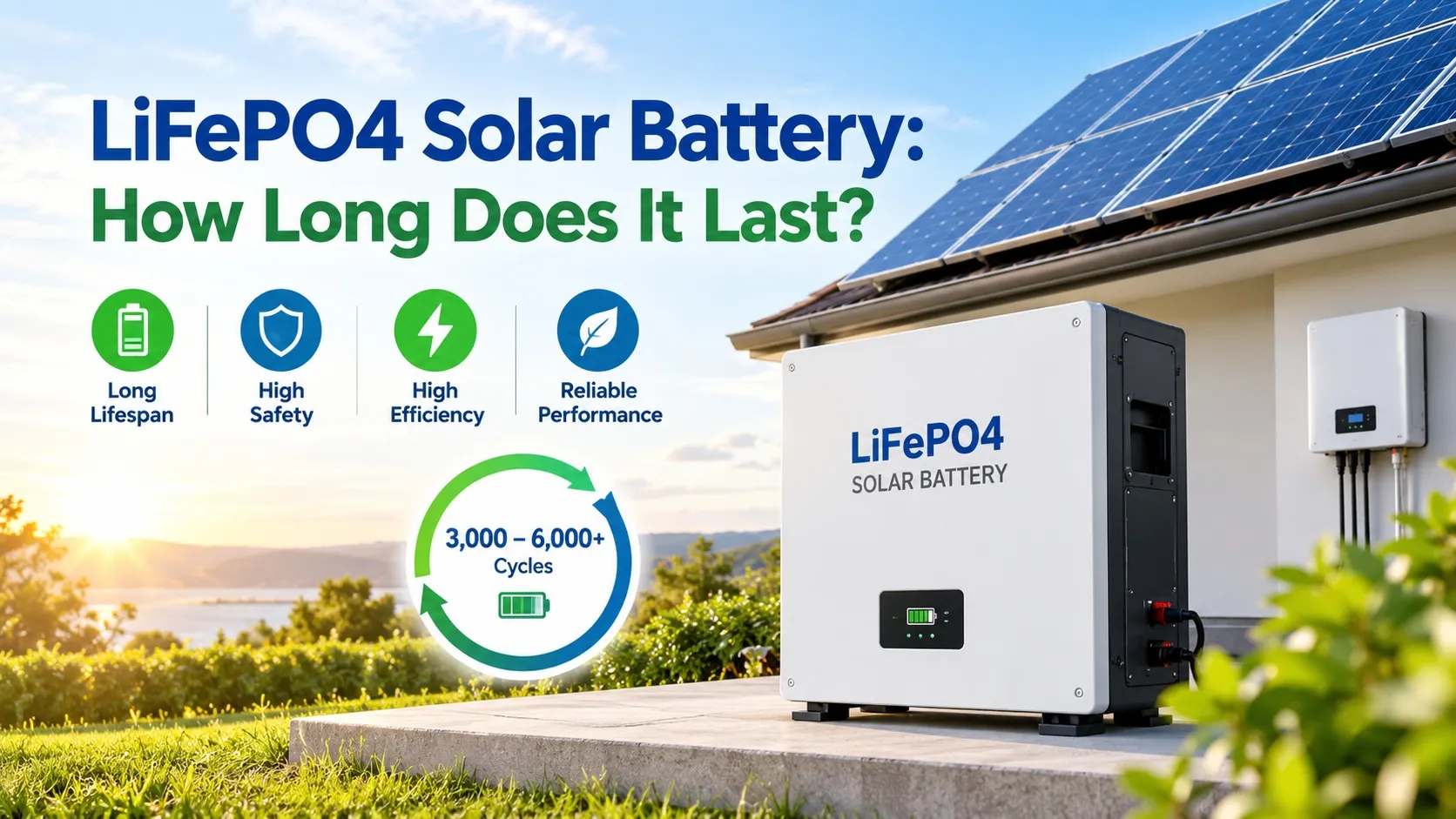
However, more than almost any other question is asked:
How long does a LiFePO4 solar battery last?
That depends on the quality of the batteries, how they are used and charged, environmental temperature, etc., and their system design. But, in general, LiFePO4 batteries are a much cheaper battery of the long-term.
Here you'll learn the typical lifespan of a LiFePO4 solar battery, the factors that can impact its lifespan, and how you can extend the life of your solar battery if you are a homeowner or a business.
How Long Does a LiFePO4 Solar Battery Last?
The lifespan of a high-quality LiFePO4 solar battery can range from 10 to 15 years, depending on its usage and maintenance.
When it comes to charge and discharge cycles, many LiFePO4 batteries offer around 3,000 and 6,000 cycles, and some top-notch battery systems will offer even more cycles under optimal operating conditions.
For instance, let's say the solar battery achieves about one full cycle every day, then a battery with 6000 cycles can last for over 16 years. However, in practical use, the battery life may be affected by their use and environmental conditions.
One of the largest upfits of LiFePO4 technology over that of conventional batteries.
Typical Battery Lifespan Comparison
| Battery Type | Typical Cycle Life | Typical Service Life |
|---|---|---|
| Lead-Acid Battery | 300–1,000 cycles | 3–7 years |
| AGM Battery | 500–1,200 cycles | 3–7 years |
| Gel Battery | 500–1,500 cycles | 4–8 years |
| LiFePO4 Battery | 3,000–6,000+ cycles | 10–15 years |
For solar energy storage systems designed for long-term use, the longer lifespan of LiFePO4 technology can make it an attractive investment.
What Does Battery Cycle Life Mean?
A cycle in battery refers to use of stored energy and recharging the battery.
For instance, a fully charged battery, discharged to 30% and then recharged is about 70% of a full discharge cycle. The number of cycles can vary depending on the manufacturer's definition of cycles.
What is key is that each battery will undergo chemical ageing through repeated charging and discharging.
This is the number of cycles that a LiFePO4 battery can endure without losing any useful capacity.
After thousands of cycles, the battery can still function. The total energy storage capacity, however, slowly decreases over time. After years of use, for instance, a battery with a 10kWh capacity might be reduced to 8kWh.
This progressive capacity loss is normal aging of battery.
Why Do LiFePO4 Solar Batteries Last So Long?
The long lifespan of LiFePO4 batteries comes from the stability of lithium iron phosphate chemistry.
Compared with some other lithium battery chemistries, LiFePO4 offers several important advantages:
- Long cycle life
- Excellent thermal stability
- High safety performance
- Stable voltage output
- High charging and discharging efficiency
- Low maintenance requirements
- Good performance in solar energy storage applications
These characteristics make LiFePO4 technology particularly suitable for applications where batteries are charged and discharged frequently.
Solar systems often cycle batteries every day, especially in off-grid homes and residential energy storage systems. A battery designed for frequent cycling can therefore provide significant long-term benefits.
What Factors Affect LiFePO4 Battery Lifespan?
Although LiFePO4 batteries are durable, several factors can affect how long they last.
1. Depth of Discharge
Depth of Discharge (DoD) refers to how much energy is removed from a battery before it is recharged.
For example:
- Using 20% of the battery capacity = 20% DoD
- Using 80% of the battery capacity = 80% DoD
- Completely using the battery capacity = 100% DoD
In general, shallower discharge cycles can help extend battery life.
Many solar battery systems are designed to avoid completely draining the battery. Battery management systems can automatically protect the cells by limiting excessive discharge.
For homeowners and businesses, choosing the correct battery capacity can reduce stress on the battery and improve long-term performance.
2. Operating Temperature
Temperature has a major impact on battery performance and lifespan.
LiFePO4 batteries generally perform best within their recommended operating temperature range. Extremely high temperatures can accelerate battery aging, while very low temperatures can reduce charging performance.
For example, charging a lithium battery in freezing conditions may require special protection systems.
Many modern LiFePO4 solar batteries include intelligent Battery Management Systems, or BMS technology, that monitors temperature and protects the battery from unsafe charging conditions.
Installing batteries in a clean, dry, and temperature-controlled environment can help maximize their service life.
3. Charging Quality
Using the correct charger and charging settings is essential for battery longevity.
A solar energy storage system usually includes components such as:
- Solar panels
- Solar charge controller
- Hybrid inverter or off-grid inverter
- Battery Management System
- LiFePO4 battery bank
These components must work together correctly.
Incorrect charging voltage, excessive charging current, or poor-quality equipment can reduce battery performance and potentially shorten its lifespan.
A properly designed solar system should use charging parameters recommended by the battery manufacturer.
4. Battery Management System
The Battery Management System (BMS) is one of the most important components inside a modern LiFePO4 battery.
The BMS monitors and controls battery operation by helping protect against:
- Overcharging
- Over-discharging
- Overcurrent
- Short circuits
- High temperatures
- Low-temperature charging
- Cell imbalance
Without effective battery management, individual battery cells could experience excessive stress.
A high-quality BMS helps maintain safe and balanced battery operation, which contributes directly to a longer battery lifespan.
5. Battery Quality and Manufacturing
Not all LiFePO4 solar batteries offer the same lifespan.
Battery performance can depend on:
- Cell quality
- Manufacturing standards
- BMS design
- Thermal management
- Battery enclosure quality
- Quality control procedures
- System compatibility
For this reason, buyers should consider more than just the battery price.
A cheaper battery may have a lower initial cost but could offer fewer cycles, lower capacity consistency, or weaker long-term reliability.
For solar installers, distributors, and energy storage buyers, working with an experienced LiFePO4 battery manufacturer or supplier can help ensure better product quality and system performance.
How Long Will a LiFePO4 Battery Last in a Solar System?
The actual lifespan depends on the application.
Residential Solar Energy Storage
In a home solar system, a LiFePO4 battery may cycle daily to store solar energy during the day and supply electricity at night.
With proper system design, the battery can potentially provide reliable service for 10 years or more.
Off-Grid Solar Systems
Off-grid systems often depend heavily on batteries because there is no utility grid available as a backup.
Battery cycling may be more frequent and deeper in these applications. Choosing sufficient battery capacity is important to avoid excessive daily discharge.
A properly sized LiFePO4 battery bank can provide many years of reliable off-grid power.
Commercial Solar Storage
Businesses may use batteries for:
- Peak shaving
- Backup power
- Load shifting
- Energy cost management
- Solar self-consumption
Commercial systems should be carefully designed according to daily energy demand and expected battery cycling.
For high-cycle applications, LiFePO4 technology can provide a strong balance between lifespan and performance.
RV and Mobile Solar Systems
LiFePO4 batteries are also widely used in RVs, camper vans, boats, and mobile power systems.
Their lightweight design, high usable capacity, and long cycle life make them an excellent alternative to traditional lead-acid batteries.
How Can You Make a LiFePO4 Solar Battery Last Longer?
There are several practical ways to maximize battery lifespan.
Choose the Right Battery Capacity
An undersized battery may need to discharge deeply every day.
Choosing sufficient capacity can reduce battery stress and improve long-term performance.
Avoid Extreme Temperatures
Install the battery in an environment that protects it from excessive heat and freezing conditions.
Use Compatible Solar Equipment
Make sure the inverter, charge controller, and charging settings are compatible with LiFePO4 battery technology.
Avoid Unnecessary Deep Discharge
Although LiFePO4 batteries can handle deep discharge better than many traditional batteries, avoiding extreme discharge on a regular basis may help extend service life.
Choose a Quality Battery Manufacturer
Reliable cells, intelligent BMS protection, and professional quality control are important for long-term battery performance.
Is a LiFePO4 Solar Battery Worth the Investment?
LiFePO4 batteries tend to be more expensive than traditional lead-acid batteries, depending on their initial purchase price.
The value can be much greater, however, in the long-term.
4.3. LiFePO4 batteries have the ability to:
- Longer lifespan
- More usable capacity
- Higher efficiency
- Faster charging
- Lower maintenance
- Better cycle performance
They may be needed less often during the life span of a solar energy system.
This can lower the TCO of solar energy for homeowners and businesses for all those years they use it.
Generally, a good Lithium Iron Phosphate battery could last for 10 or even more years in contrast to the typical lead acid battery that needs replacement every few years.
Conclusion
Well, then what is the lifespan of a LiFePO4 solar battery?
A properly used high quality LiFePO4 battery can typically last for around 10 to 15 years or even more, and cycle charge up to 3000 – 6000 or more cycles, depending on the operating conditions and the quality of the battery.
Its life may be affected by depth of discharge, temperature, charging parameters, battery management and/or system design.
LiFePO4 is an ideal choice for residential solar, commercial energy storage, RV power, and off the grid solutions due to its long life, safety, efficiency, and reliable performance.
The increasing adoption of solar energy storage across the globe is prompting the widespread use of LiFePO4 batteries for reliable and sustainable energy storage. With the proper capacity, compatible equipment and operating conditions, the solar system owner can maximize the return on the investment and have reliable, clean energy for many years.
Share on Social:


In This Article
- 1 How Long Does a LiFePO4 Solar Battery Last?
- 2 What Does Battery Cycle Life Mean?
- 3 Why Do LiFePO4 Solar Batteries Last So Long?
- 4 What Factors Affect LiFePO4 Battery Lifespan?
- 5 3. Charging Quality
- 6 4. Battery Management System
- 7 5. Battery Quality and Manufacturing
- 8 How Long Will a LiFePO4 Battery Last in a Solar System?
- 9 How Can You Make a LiFePO4 Solar Battery Last Longer?
- 10 Is a LiFePO4 Solar Battery Worth the Investment?
- 11 Conclusion
