


MPPT String Sizing for a 5kW Off Grid Solar System: Voltage, Current and Panel Configuration
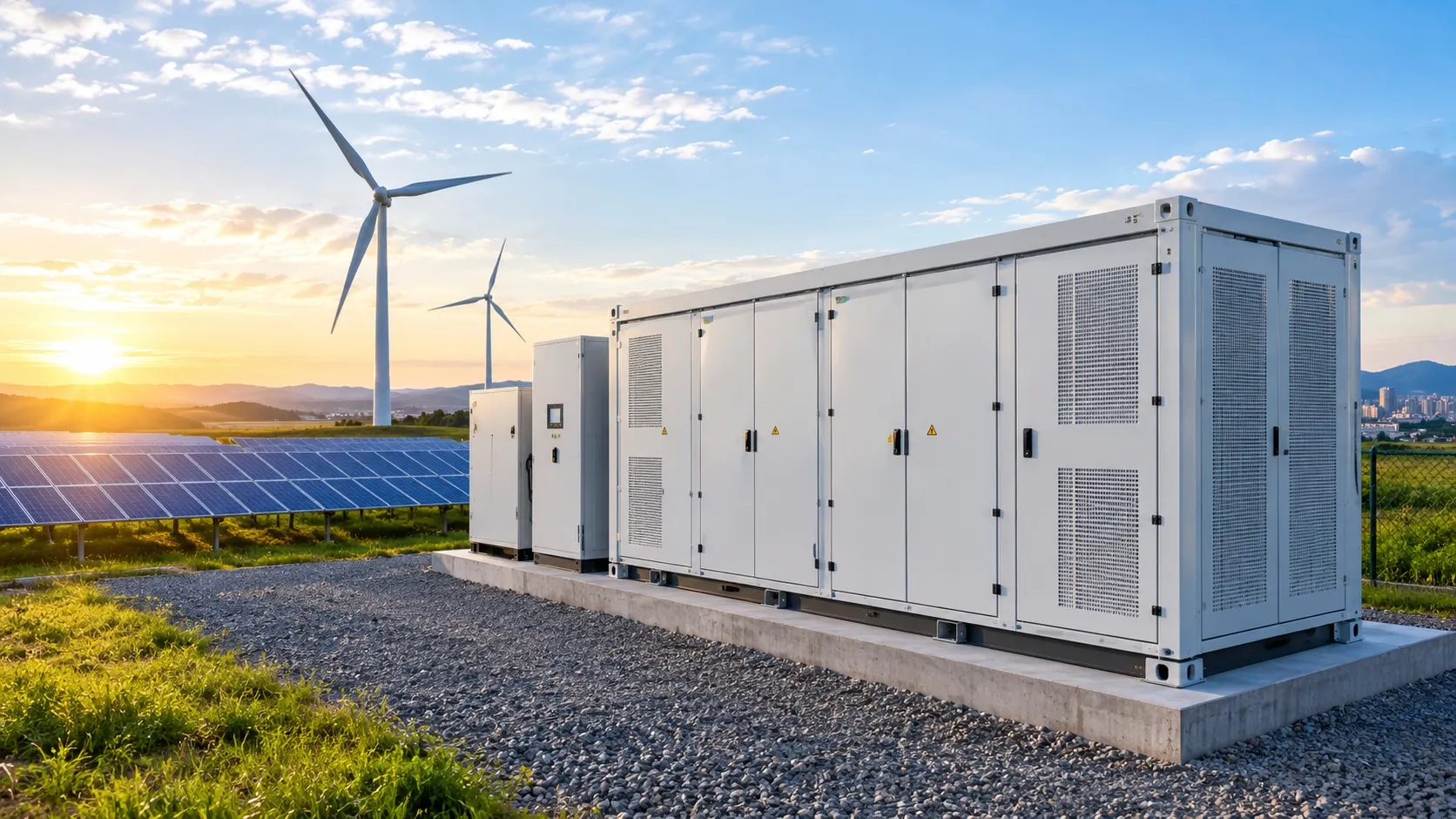


Correct MPPT string sizing for a 5kW Off Grid Solar System requires more than dividing 5,000 watts by one panel's rated output. The design must verify cold-weather open-circuit voltage, hot-weather operating voltage, input current, MPPT voltage range, startup voltage and the number of independent trackers.
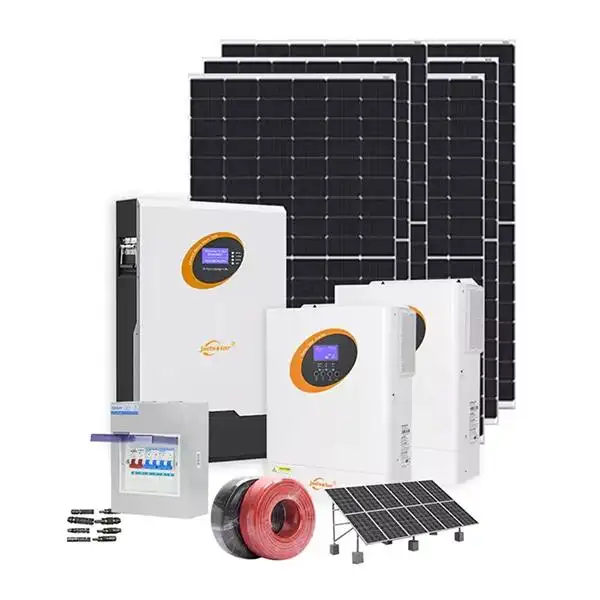
In practical terms:
• Series connections increase voltage.
• Parallel connections increase current.
• Array wattage alone does not confirm inverter compatibility.
• Every configuration must comply with both panel and inverter data sheets.
What MPPT String Sizing Determines
MPPT string sizing defines how many panels are connected in series and how many strings are connected in parallel before entering the inverter.
Maximum Power Point Tracking adjusts PV operating voltage as irradiance and module temperature change. In a 5kW Off Grid Solar System, poor string design can reduce solar harvesting and battery charging even when nominal array wattage appears sufficient.
The inverter's AC rating, array capacity and DC string voltage are separate design parameters.
Key Electrical Parameters
| Parameter | Function in String Design |
| Voc | Sets the cold-weather maximum number of panels in series |
| Vmp | Confirms that operating voltage remains inside the MPPT range |
| Isc | Used to verify maximum permissible short-circuit current |
| Imp | Determines normal operating current per string |
| Temperature coefficient | Corrects Voc and Vmp for actual cell temperature |
| Maximum PV voltage | Absolute DC input limit that must not be exceeded |
| MPPT voltage range | Voltage window in which effective tracking occurs |
| Maximum MPPT current | Controls the permitted number of parallel strings |
Maximum PV voltage is a hard ceiling; the MPPT range is the tracking window.
Series vs Parallel Connections
| Layout | Voltage | Current | Main Use |
| Panels in series | Adds | Nearly unchanged | Raising string voltage |
| Strings in parallel | Nearly unchanged | Adds | Increasing array current |
| Series-parallel | Depends on layout | Depends on layout | Multi-string residential systems |
Key risks include:
• Too many panels in series: Cold Voc may exceed the inverter limit.
• Too few panels in series: Hot Vmp may fall below the MPPT minimum.
• Too many parallel strings: Combined current may exceed the MPPT input limit.
• Different orientations: East-, west- or shaded arrays may require separate trackers.
• Mixed modules: Different electrical ratings can create voltage or current mismatch.
How to Calculate MPPT String Size
1. Set the PV Array Capacity
A 5kW Off Grid Solar System does not always need exactly 5.00kWp of panels. Common examples include:
• 9 × 550W = 4.95kWp
• 8 × 580W = 4.64kWp
• 10 × 550W = 5.50kWp
Final capacity depends on consumption, peak sun hours, seasonal irradiation, charging demand, losses and the permitted PV oversizing ratio. Oversizing never permits excessive voltage or current.
2. Calculate Cold-Weather Voc
Use the panel Voc and its temperature coefficient:
Voc at minimum temperature = Voc at STC × [1 + |Voc coefficient| × (25°C − minimum temperature)]
Then calculate the complete string voltage:
Cold string Voc = Corrected panel Voc × panels in series
The result must remain below the inverter's maximum PV input voltage, with an appropriate engineering margin.
Cold conditions raise panel voltage. Using annual average temperature rather than the project's design minimum temperature can therefore underestimate the highest possible string voltage.
3. Verify Hot-Weather Vmp
High cell temperature reduces module operating voltage:
Hot string Vmp = Corrected panel Vmp × panels in series
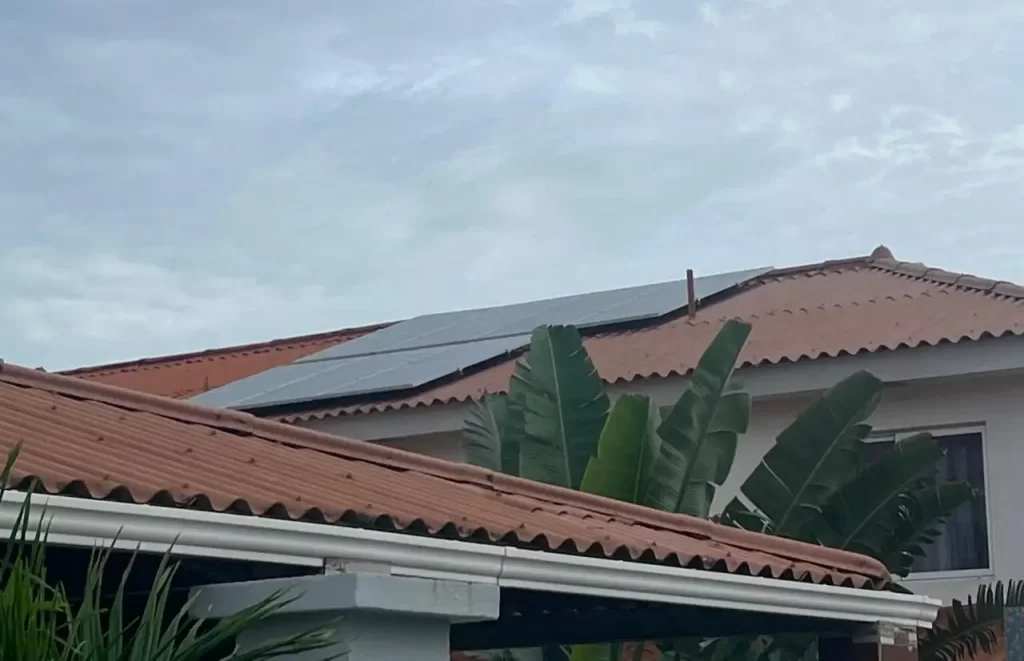
This value should remain above the inverter's minimum MPPT voltage. Roof-mounted modules can operate much hotter than ambient air.
A string can pass the cold Voc check but still perform poorly if its hot Vmp falls outside the MPPT range. Possible effects include:
• Delayed inverter startup
• Earlier shutdown in the afternoon
• Reduced charging time
• Operation outside the most effective tracking window
A reliable 5kW Off Grid Solar System must therefore pass both the cold-voltage and hot-voltage checks.
4. Check Parallel-String Current
For parallel strings:
Total operating current = String Imp × number of parallel strings
Total short-circuit current = String Isc × number of parallel strings
Both values must remain within the inverter's per-MPPT limits. Designers should also verify:
• PV cable ampacity
• Connector current rating
• DC isolator capacity
• Fuse or breaker sizing
• Required electrical safety factors
Parallel connections increase current rather than voltage. Adding another string may therefore create an overcurrent condition even when the total PV wattage appears acceptable.
5. Assign Strings to MPPT Channels
Separate trackers are useful for arrays with:
• East- and west-facing roof sections
• Different tilt angles
• Unequal shading patterns
• Separate roof or ground-mount areas
• Different periods of sunlight exposure
Strings connected to one MPPT should normally use the same module model, series count, orientation and shading conditions.
This allows each MPPT channel to track a more consistent electrical operating point.
Example: Eight 580W Panels
Eight 580W panels provide 4.64kWp, a practical array size for some 5kW Off Grid Solar System designs.
| Layout | Main Advantage | Critical Check |
| 8S1P | Higher voltage and lower array current | Cold Voc |
| 4S2P | Lower voltage and higher combined current | Hot Vmp and MPPT current |
| Two MPPT groups | Better separation of roof conditions | Limits of each tracker |
Neither 8S1P nor 4S2P is automatically correct.
An 8S1P configuration produces the voltage of eight modules in series while retaining approximately one module's current. A 4S2P arrangement produces the voltage of four modules but approximately doubles the array current.
The correct layout depends on:
• Panel Voc and Vmp
• Panel Isc and Imp
• Voltage temperature coefficients
• Site minimum and maximum temperatures
• Inverter startup voltage
• MPPT operating range
• Current limit of each tracker
The configuration cannot be selected from wattage alone.
Battery Voltage and PV String Voltage
A 48V or 51.2V battery does not require a PV string with the same voltage. The inverter's MPPT stage converts power from the higher-voltage PV side to the battery charging voltage.
Battery capacity affects backup duration, but it does not directly determine the number of panels in series. Array capacity must still be coordinated with:
• Maximum battery charging current
• Inverter charging power
• Battery-management-system limits
• Daytime household loads
• Available solar charging hours
LiFePO₄ storage is commonly used in a 5kW Off Grid Solar System, but correct BMS communication, charge settings, cable sizing and overcurrent protection remain essential.
Common MPPT Sizing Errors
| Error | Possible Result | Correct Practice |
| Sizing from wattage only | Voltage or current mismatch | Check Voc, Vmp, Isc and Imp |
| Ignoring temperature correction | Cold overvoltage or hot undervoltage | Calculate both temperature extremes |
| Excessive parallel strings | MPPT input overcurrent | Verify each tracker independently |
| Mixing roof orientations | Reduced energy harvesting | Use separate MPPT channels |
| Using different modules together | Electrical mismatch | Confirm compatibility first |
| Adding panels without recalculation | PV input limit violation | Redesign the complete string layout |
How JSDSolar Addresses String-Sizing Challenges
JSDSolar evaluates a 5kW Off Grid Solar System as a coordinated electrical package rather than selecting panels from nominal wattage alone.
The project review can include:
• Module Voc, Vmp, Isc and Imp
• Inverter MPPT voltage and current limits
• Local temperature range
• Roof orientation, tilt and shading
• PV cable length and voltage drop
• Household load profile
• Battery charging and backup requirements
Configurations can coordinate monocrystalline panels, 48V or 51.2V LiFePO4 storage, 110V/220V or 120V/240V output and future expansion.
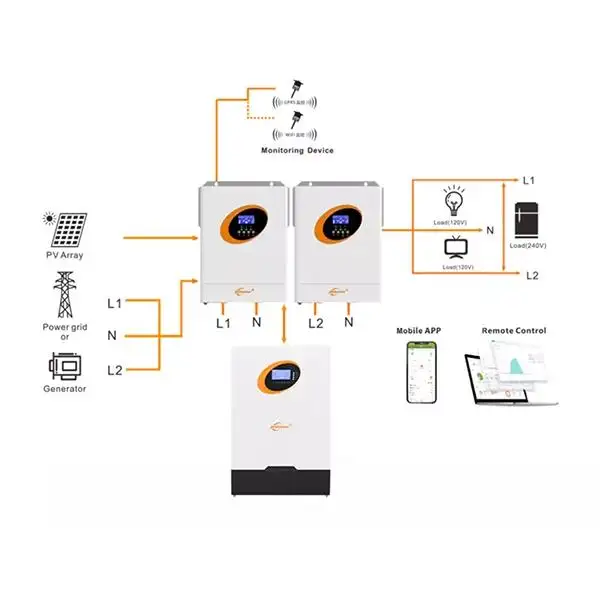
For split-phase and parallel-inverter installations, each MPPT channel must be checked independently. Battery busbars, DC protection, distribution equipment, PV cables and AC load allocation should also be reviewed to reduce component mismatch.
Conclusion
A dependable 5kW Off Grid Solar System must satisfy three essential MPPT conditions:
• Cold string Voc stays below the maximum PV input voltage.
• Hot string Vmp remains inside the MPPT operating range.
• Parallel-string current remains within each tracker's limit.
Correct string sizing should always be based on verified module data, inverter specifications, site temperature and actual energy demand.
Share your panel specifications, local temperature range, roof conditions and household load profile with JSDSolar for a better-matched 5kW Off Grid Solar System configuration.
FAQs
Q1. How does a Hybrid Solar Panel System select power?
A hybrid solar panel system accesses solar, battery, and grid power through a hybrid inverter. The inverter analyzes solar and grid availability, load demand, and battery status and selects which power source to use based on the chosen operating mode. Operating modes could be Solar First, Battery First, Grid Priority, or Time-Of-Use, etc.
Q2. Can solar with JSDSolar supply household loads before battery charging?
Yes. In Solar First operating mode, solar energy is used to supply household loads first. If any surplus solar energy is generated, it is used to charge the battery, and if there is any surplus after that, it is either exported or curtailed.
Q3. Does a JSDSolar Hybrid Solar Panel System support loads during a grid outage?
JSDSolar's hybrid solar panel system, in combination with a specified hybrid inverter, can support specific loads during a grid power outage if there is an adequate battery supply and a designed backup distribution circuit.
Q4. Can solar, battery and grid supply power simultaneously?
Yes. A Hybrid Solar Panel System is capable of using a combination of partial solar energy with battery discharge and/or grid power. The inverter determines how much solar energy is used and the difference of that compared to the load.
Q5. How does JSDSolar determine battery capacity?
JSDSolar analyzes many factors when determining battery capacity, including daily energy use, the demand for critical loads, the desired battery backup time, depth-of-discharge, and photovoltaic solar energy output. Battery capacity is calculated in kilowatt-hours, and not based on the inverter size.


