


Off-Grid Hybrid Inverter, 6kW Solar & Battery Storage Guide

Off-Grid Hybrid Inverter: Guide to Solar, Battery Storage and Backup Power
An off-grid hybrid inverter is not just a machine that transforms solar energy to usable electricity. It serves as the control point of an autonomous solar power system, which integrates photovoltaic solar panels, batteries, domestic loads, and backup sources. In houses, farms, outbuildings, workshops, and other places with limited grid connectivity, this arrangement can be used to supply consistent power without necessarily relying on the utility grid. An efficient system can also enhance solar self-consumption and better utilization of stored energy.
What is an Off-Grid Hybrid Inverter?
An off-grid hybrid inverter is a single system that converts solar power and manages the battery. It can be used off-grid in standalone mode, unlike a standard grid-tied inverter, which requires connection to the electricity grid. In case the solar production exceeds the current demand, the excess energy can be channeled to charge batteries. The inverter is able to access the battery and transform it into AC electricity when the sunlight is weak or unavailable. A contemporary off-grid solar inverter can thus be able to handle multiple energy sources and operating priorities simultaneously. Common functions include:
• Battery charging
• Battery discharge
• Load management
• Backup power delivery
• Solar energy monitoring
• Battery communication
• Integration of generators on compatible models.
This renders an isolated hybrid inverter especially handy for remote and self-sufficient solar systems.
What is the Operation of an Off-Grid Hybrid Solar System?
During daylight, photovoltaic solar panels produce DC electricity. The inverter tracks the maximum power point of the panels and gathers the accessible solar energy with the help of its MPPT controller.
The resulting electricity can then be used to power loads that are connected. In case of surplus production, the rest of the power can be used to charge the solar battery. The solar panels cease to generate electricity at night. The battery is then used as the main energy source. The inverter transforms stored DC energy into AC power for appliances, lighting, pumps, communication equipment, and other loads compatible with the inverter.
A simplified operating cycle is shown as follows:
1. Morning: Solar production starts and feeds active loads.
2. Midday: More solar production drives loads and fills batteries.
3. Evening: Battery storage supplies household electricity.
4. Night: Stored energy persists to supply critical loads.
5. The following day: The cycle repeats itself.
This method can be used to facilitate energy independence in areas where a stable utility connection is not available.
Importance of MPPT Technology
The output of the sun varies. The panel voltage and current are influenced by cloud cover, temperature, shading, and sunlight intensity. Maximum power point tracking is an MPPT solar inverter that varies the operating point of the solar array. This assists the system in harnessing a greater portion of the available solar energy compared to a simple fixed operating method. To design the system properly, several electrical values should be verified:
• Maximum PV voltage
• MPPT voltage range
• Maximum DC input current
• Maximum DC input power
• Solar array voltage
• PV string configuration
• Number of MPPT trackers
• Panel operating voltage
• Panel short-circuit current
The solar array must never exceed the electrical limits that are stipulated by the inverter, especially during low temperatures when PV voltage may increase.
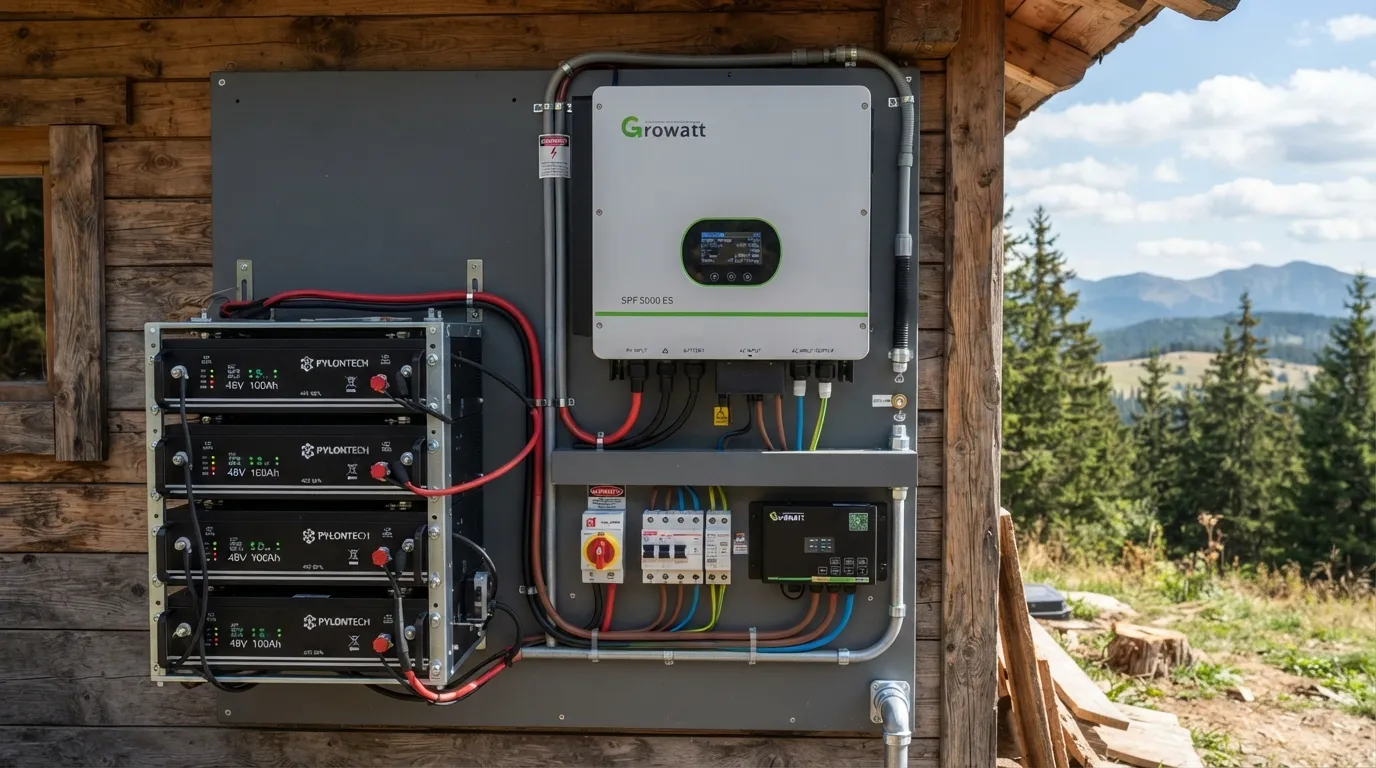
JSD Solar's 6kW off-Grid Hybrid Storage Inverter
- J6KHB is a low-voltage off-grid hybrid storage solar inverter, a 48 V 6kW inverter that is intended to be used in independent energy storage systems. The product page includes a 6000 VA nominal AC output, 220 V to 240 V-class output choices, IP65 protection, and CAN, RS485, Wi-Fi, LAN, and DRM communication interfaces.
- The inverter is compatible with lithium and lead-acid batteries. It has a claimed battery voltage of 40 V to 58 V, 48 V being recommended. The technical specification gives 95A and 110A as the maximum charging and discharging current, respectively.
- In the case of solar input, the J6KHB is recommended to have a maximum DC power of 7,800W, maximum DC voltage of 500 V, and two MPP trackers. It has a listed MPPT range of 70 V to 480 V and a full-load MPPT range of 220 V to 500 V. The maximum input current is 18A per tracker.
These requirements provide installers with a convenient range of options when planning a home or remote solar array.
6kW Inverter by JSD Solar: Flexible Solar Input
- The J6KHB is capable of supporting over the 6kW AC output of the inverter on the PV side. Its maximum recommended DC power is 7.8kW, which provides designers with more space to size PV arrays.
- This form of DC-to-AC ratio may be beneficial since solar panels do not often produce their nameplate output during the whole day.
- Nevertheless, the array should not exceed the outlined maximum PV voltage and input current values. Solar array sizing and correct inverter sizing must always be done together.
Intelligent Communication and Energy Control
When the inverter has the capability of communicating with batteries and external monitoring equipment, an independent solar installation is easier to monitor.
- The J6KHB has CAN, RS485, Wi-Fi, LAN, and DRM interfaces. It also has smart energy management capabilities in home applications, power dispatching, demand-side response management, and distributed virtual power station management.
- Such capabilities can facilitate a more interconnected energy management system, especially in situations where users desire to see solar generation, battery charging, discharge, and load consumption.
Conclusion
An off-grid hybrid inverter is best used when the entire system is configured as a unit. Solar panels, batteries, inverter capacity, cable size, protection equipment, and energy consumed per day must all be in concert. JSD Solar J6KHB is a 6kW AC power supply with a maximum of 7.8kW recommended PV input, two MPPT trackers, a 48 V battery, EPS backup, pure sine wave output, and various communication interfaces.


