


Low Voltage Hybrid Inverter Power Quality: THD, Pure Sine Wave and Sensitive Loads
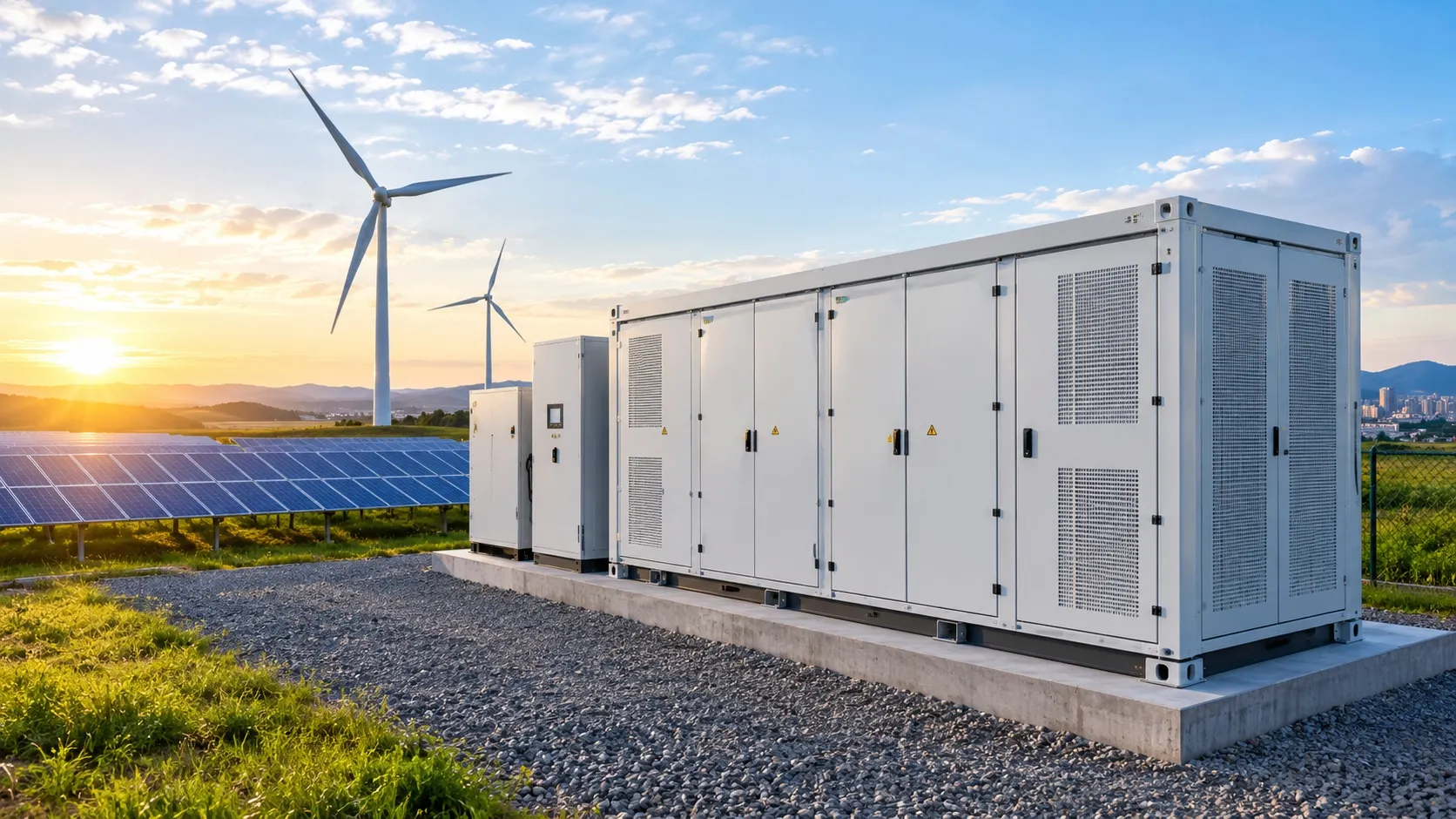
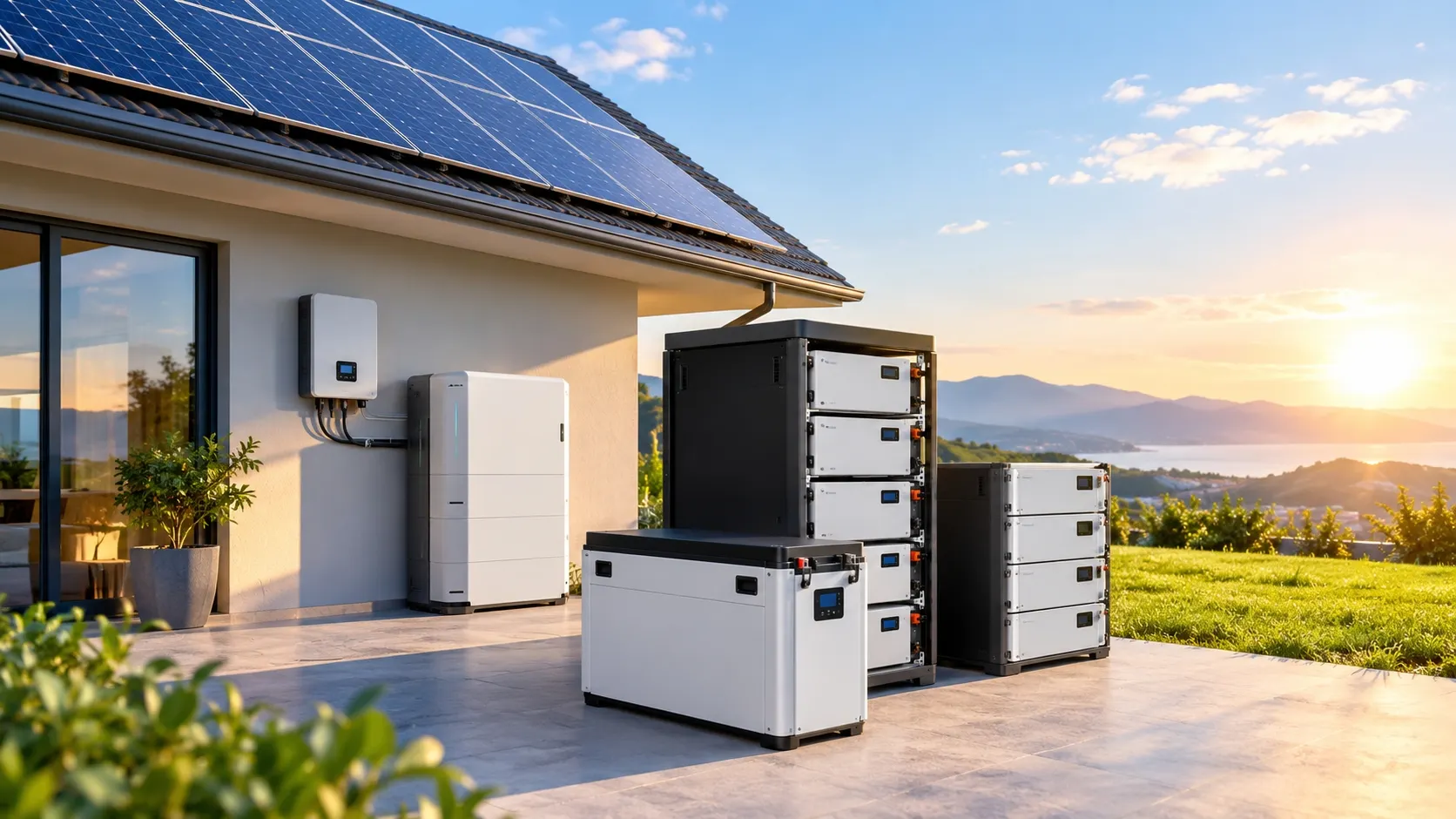

A Low Voltage Hybrid Inverter is often selected by rated power, battery voltage and PV input capacity. For projects involving computers, PLCs, telecom equipment, pumps, compressors or other sensitive loads, however, those parameters are only part of the engineering decision.
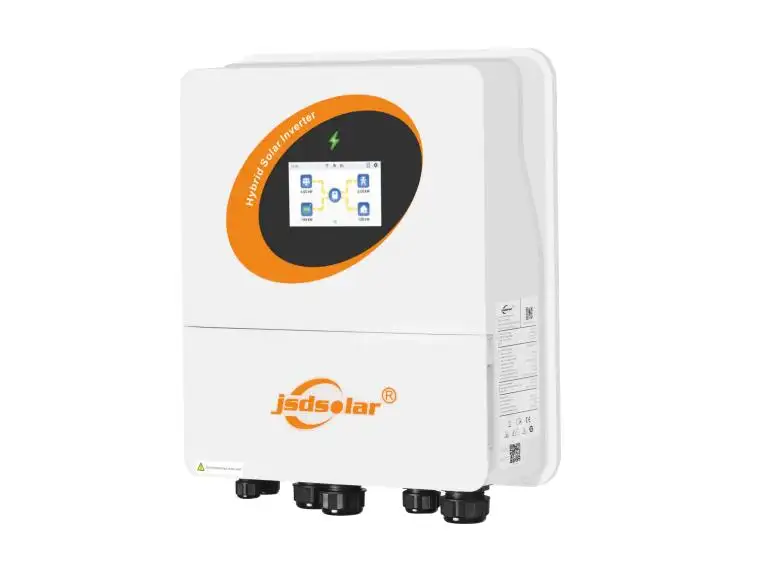
From JSDSolar's perspective, power quality should be evaluated as a complete chain:
Battery Stability → DC Bus → Inverter Control → AC Waveform → Transfer Behavior → Load Response
A 6kW Low Voltage Hybrid Inverter may operate well below its rated power and still experience load trips if the system has excessive voltage drop, poor transient response or insufficient battery discharge capability.
Why Rated Power Alone Does Not Define Load Compatibility
Different loads stress a Low Voltage Hybrid Inverter in different ways.
| Load | Main Electrical Risk | Parameters to Check |
| Server / PC | Short supply interruption | THDv, EPS transfer time |
| PLC / Controller | Voltage disturbance | Voltage regulation, THD |
| Refrigerator | Compressor startup | Surge current, voltage dip |
| Pump / Motor | Reactive and startup load | VA, PF, transient response |
| Heater | Continuous high power | Rated W, current |
| Telecom Equipment | Sensitive power supply | THD, switching behavior |
For this reason, system sizing should not simply add appliance wattages.
A more reliable process separates:
• Continuous active power;
• Apparent power in VA;
• Motor startup current;
• Nonlinear electronic loads;
• Critical loads requiring uninterrupted operation.
THD Is One Measure of Low Voltage Hybrid Inverter Power Quality
Total Harmonic Distortion indicates how much an AC waveform differs from an ideal sine wave.
Two parameters must be distinguished:
• THDv: Voltage harmonic distortion;
• THDi: Current harmonic distortion.
For sensitive loads, THDv is especially important because it describes the quality of the voltage supplied by the inverter.
The JSDSolar J6KHB Low Voltage Hybrid Inverter specifies:
• Pure sine wave output;
• AC THD below 2%;
• EPS THDv below 2%;
• 220/230/240V nominal AC output;
• 50/60Hz operation.
A THD figure below 2% indicates relatively low steady-state waveform distortion, but it should not be treated as proof that every sensitive load will operate without interruption.
THD does not directly describe:
• Load-step voltage dip;
• Motor-start response;
• Transfer interruption;
• Short-term overload capability;
• Battery voltage collapse.
These are separate engineering considerations.
Pure Sine Wave, EPS and UPS Should Not Be Confused
Pure Sine Wave Improves Load Compatibility
Compared with modified sine wave output, pure sine wave operation is generally better suited to:
• Switch-mode power supplies;
• Motors and compressors;
• Audio and communication equipment;
• Variable-speed electronics;
• Automation and control equipment.
However, "pure sine wave" is still a descriptive term. Professional evaluation should also look at quantified THD and actual test conditions.
EPS Backup Is Not the Same as an Online UPS
The JSDSolar 6kW Low Voltage Hybrid Inverter specifies an EPS switching time of less than 20ms.
That is useful for many residential and small commercial loads, but <20ms is not zero transfer time.
Whether a computer or controller remains online depends partly on the hold-up time of its internal power supply.
For mission-critical servers, medical equipment or process-control systems requiring near-zero interruption, an online UPS may still be necessary downstream of the hybrid inverter.
Read 6000VA, 6600VA, 26A and Power Factor Together
The J6KHB provides:
• Nominal AC output: 6000VA;
• Maximum apparent power: 6600VA;
• Nominal AC current: 26A;
• Displacement PF capability: 0.99 leading to 0.99 lagging.
At 230V:
6000VA ÷ 230V ≈ 26.1A
This closely matches the rated current.
The distinction between VA and W matters when a Low Voltage Hybrid Inverter supplies motors, pumps and other loads with reactive components.
In simple terms:
Active Power ≈ Apparent Power × Power Factor
A 5kW motor load with poor power factor can place more electrical stress on an inverter than a 5kW resistive heater.
Why 48V Battery Design Matters at 6kW
Low-voltage battery architecture improves accessibility and simplifies many residential energy-storage designs, but lower voltage requires higher current for the same power.
The JSDSolar J6KHB uses:
• Recommended battery voltage: 48V;
• Battery operating range: approximately 40–58V;
• Maximum charge current: 95A;
• Maximum discharge current: 110A.
At 48V:
48V × 110A ≈ 5.28kW DC
This calculation does not mean the inverter is limited to exactly 5.28kW in every operating mode. Actual performance depends on battery voltage, PV contribution, inverter operating logic and conversion efficiency.
It does show why buyers should verify battery-only full-load capability instead of assuming every 48V battery can support a 6kW Low Voltage Hybrid Inverter continuously.
Battery Voltage Sag Can Become an AC-Side Problem
A key relationship is:
Higher DC Current → Higher Cable Loss → Larger Voltage Drop → Lower DC Bus Margin
Cable losses follow approximately:
P Loss = I²R
At high current, small increases in resistance matter.
For a 48V Low Voltage Hybrid Inverter, engineers should therefore check:
• DC cable cross-section;
• One-way cable length;
• Battery terminal torque;
• Fuse and breaker ratings;
• Busbar current capacity;
• Connector temperature;
• Battery BMS discharge-current limit.
An undersized cable may not cause an obvious problem at 1kW, yet can produce significant voltage drop when a compressor or pump starts.

THD and Dynamic Load Performance Need Separate Testing
A professional test should not stop at one steady-state THD reading.
For a Low Voltage Hybrid Inverter, useful test conditions include:
Steady-State Test
Measure:
• Output voltage;
• Frequency;
• THDv;
• Active power;
• Apparent power;
• PF.
Test at different load percentages rather than only at nominal conditions.
Dynamic Load Test
Apply a sudden load increase and observe:
• Voltage dip;
• Recovery time;
• Waveform distortion;
• Protection behavior.
EPS Transfer Test
Measure the transition from grid operation to battery backup and verify whether critical equipment remains operational.
Battery-Low-SOC Test
Repeat high-load operation at reduced battery SOC because battery internal resistance and terminal voltage may change system behavior.
What Buyers Should Verify Before Approving a Low Voltage Hybrid Inverter
For B2B procurement, the following questions are more useful than asking only whether the inverter produces pure sine wave output:
• Is the quoted THD value THDv or THDi?
• At what load was THD measured?
• Was testing performed in grid mode or EPS mode?
• What is the EPS transfer time?
• What is the maximum apparent power?
• How does the inverter handle motor startup?
• What battery current is required at full load?
• What is the supported battery-voltage range?
• Does the BMS communicate through CAN or RS485?
• Are model-specific test reports and certifications available?
Certification and test documentation should always match the exact inverter model and target market.
A System Approach to Low Voltage Hybrid Inverter Power Quality
For sensitive loads, power quality is not determined by one specification.
A reliable Low Voltage Hybrid Inverter system depends on the combined performance of:
Battery → BMS → DC Cabling → Inverter → EPS Transfer → AC Load
JSDSolar's 48V 6kW J6KHB integrates pure sine wave output, <2% THD, <20ms EPS switching, dual MPPT, CAN/RS485 communication, parallel operation and 48V battery compatibility into one low-voltage storage platform.
For installers, distributors and system integrators planning residential or small commercial storage, the JSDSolar 48V 6kW Low Voltage Hybrid Inverter can serve as a practical reference for evaluating battery configuration, load quality and backup-power requirements before final system sizing.
FAQs
Q1. What battery voltage does the JSDSolar Low Voltage Hybrid Inverter support?
The JSDSolar J6KHB is designed around a 48V battery system, with an operating battery voltage range of approximately 40–58V.
Q2. What is the rated output power of the JSDSolar J6KHB?
The inverter provides 6000VA nominal AC output, with maximum apparent power up to 6600VA, making it suitable for residential and selected small commercial energy storage systems.
Q3. What is the THD level of the JSDSolar Low Voltage Hybrid Inverter?
JSDSolar specifies AC THD below 2% and EPS output voltage THD below 2% for the J6KHB, supporting relatively clean AC power for compatible loads.
Q4. Does the JSDSolar J6KHB provide pure sine wave output?
Yes. The J6KHB uses pure sine wave AC output, which is generally better suited to electronic equipment, motors, communication devices and other sensitive loads than modified sine wave output.
Q5. What is the EPS transfer time of the JSDSolar Low Voltage Hybrid Inverter?
The J6KHB specifies an EPS switching time of less than 20ms. However, buyers should still verify whether critical equipment can tolerate this transfer interval.


In This Article
- 1 Why Rated Power Alone Does Not Define Load Compatibility
- 2 THD Is One Measure of Low Voltage Hybrid Inverter Power Quality
- 3 Pure Sine Wave, EPS and UPS Should Not Be Confused
- 4 Why 48V Battery Design Matters at 6kW
- 5 Battery Voltage Sag Can Become an AC-Side Problem
- 6 THD and Dynamic Load Performance Need Separate Testing
- 7 What Buyers Should Verify Before Approving a Low Voltage Hybrid Inverter
- 8 A System Approach to Low Voltage Hybrid Inverter Power Quality
