

Solar Inverter vs Microinverter: Which Should You Choose?
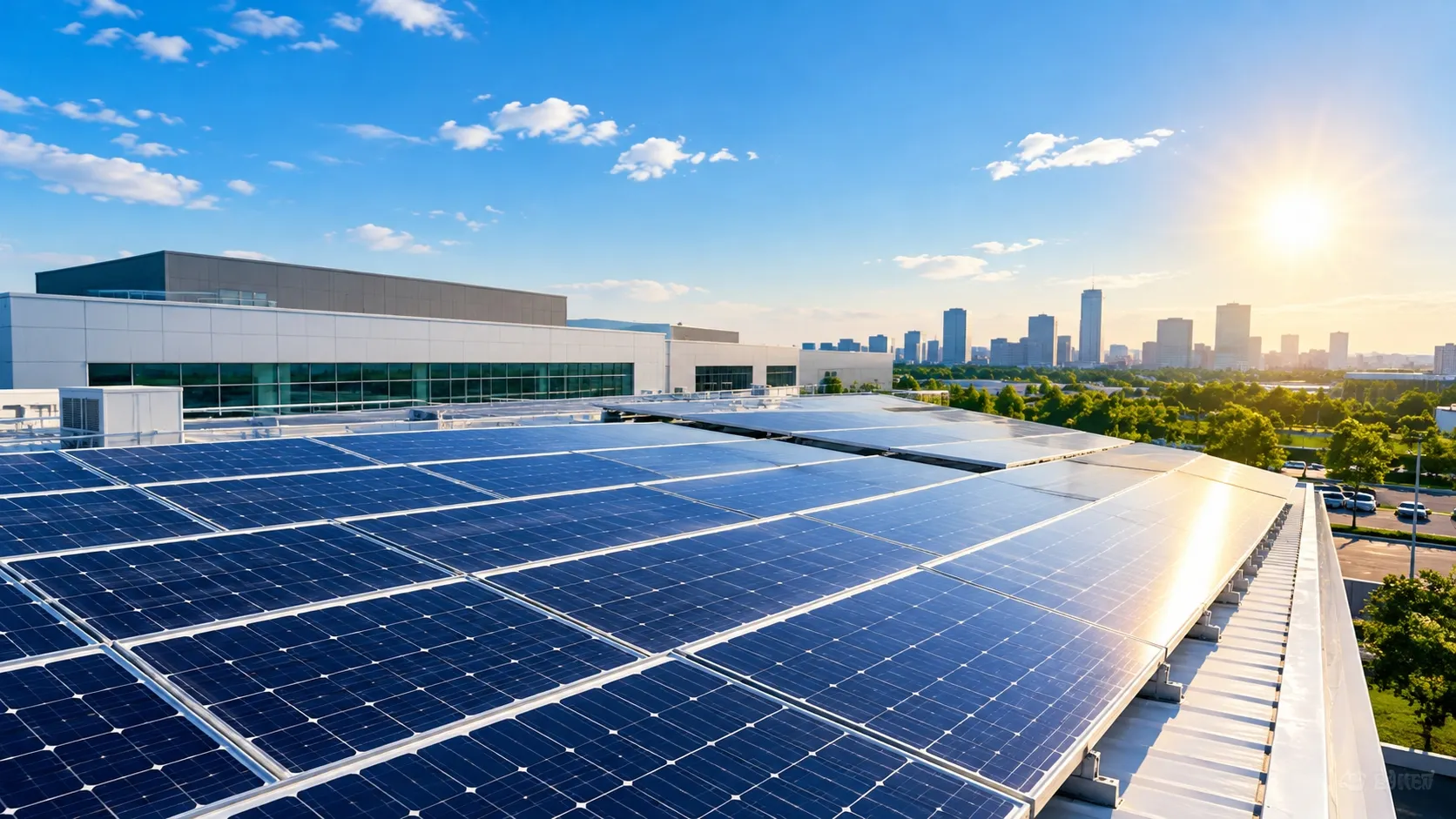
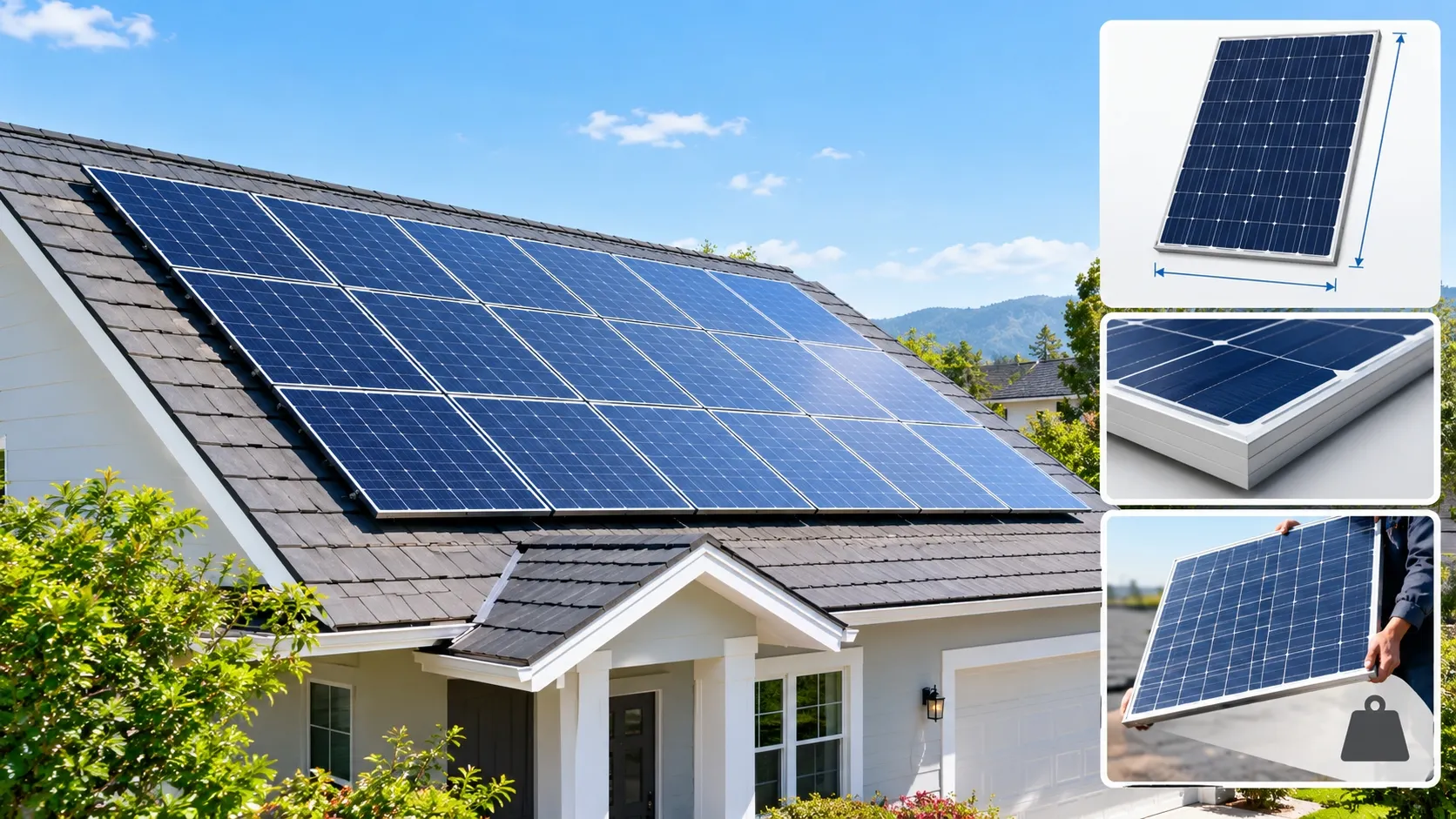
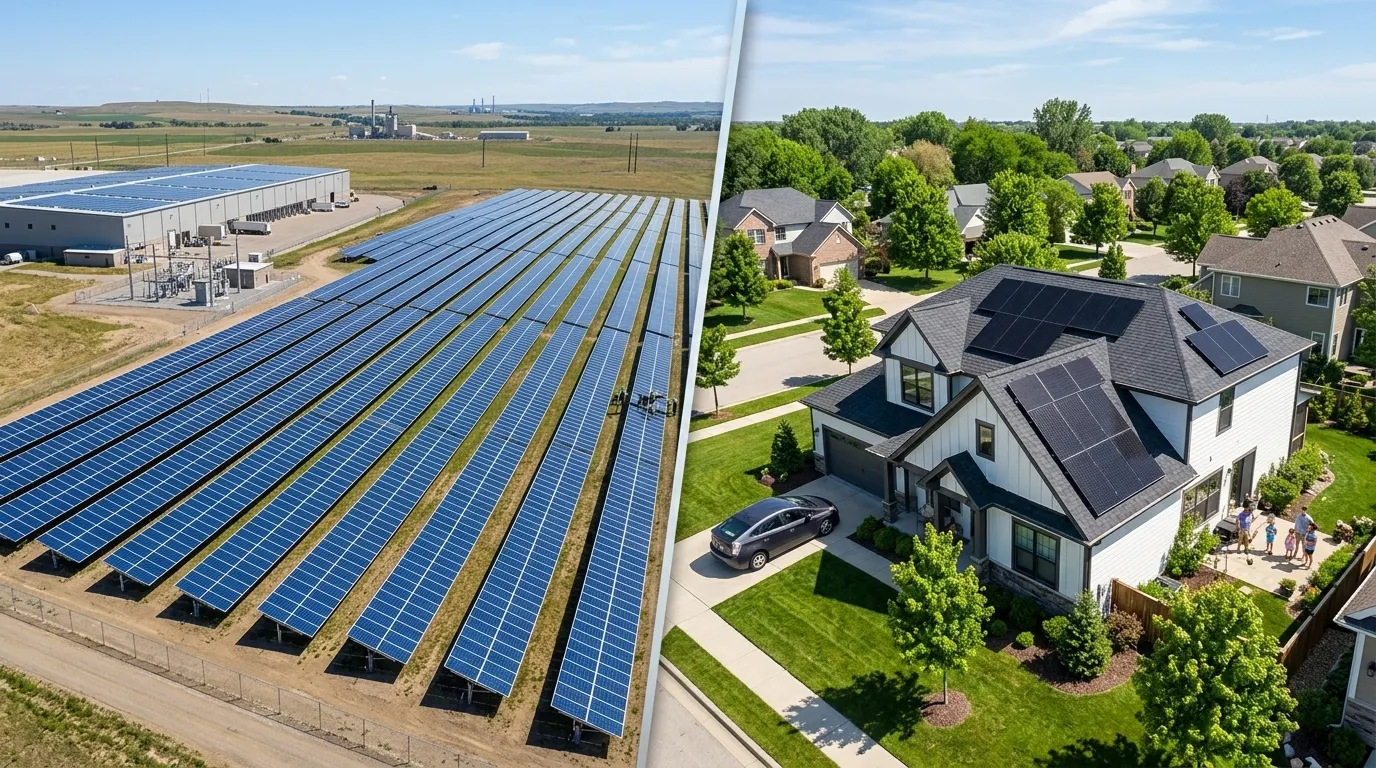
Choosing the right inverter is one of the most important decisions when designing a solar power system. Solar panels generate direct current (DC) electricity, but most homes and businesses use alternating current (AC). An inverter is a device that transforms the electricity produced by the solar panels into usable AC power.
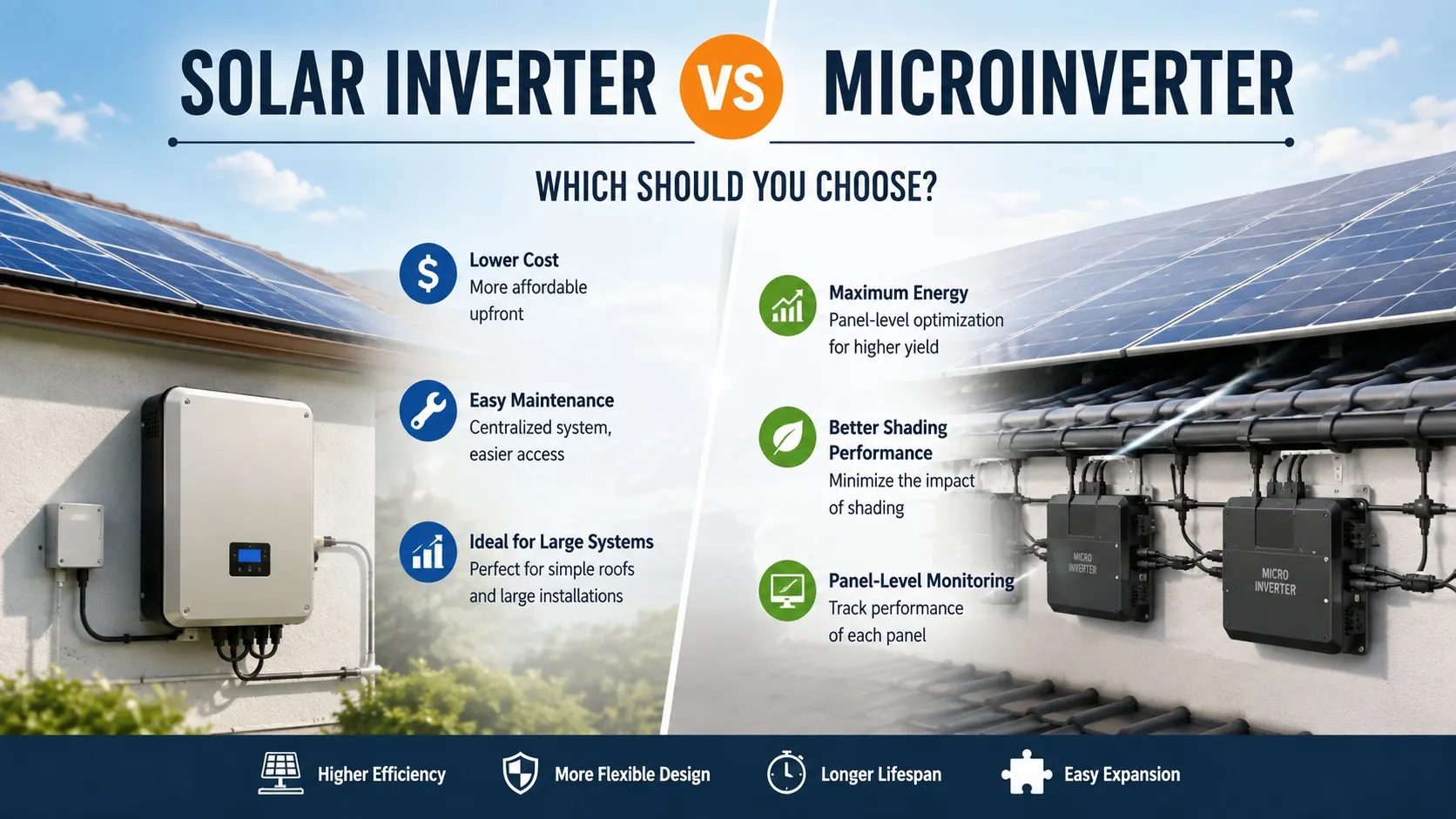
There are two popular choices: string solar inverters and microinverters. Although the technologies are both designed to perform the same task, there are some key differences in energy optimization, system design, installation, monitoring and cost.
Therefore, which one should you select: solar inverter vs microinverter? It will depend on your roof design, cost, shade, system size, and ultimate energy objectives.
What Is a Solar Inverter?
A string inverter, also known as a traditional solar inverter, is a device that series strings (or groups) of solar panels together. The DC electricity is then fed into a central inverter which converts it to AC electricity.
One of the most popular solutions for residential, commercial, and industrial solar applications are string inverters. These are especially applicable in situations where the solar panels are all facing the same direction and are similarly exposed to the sun during the day.
Advantages of Solar String Inverters
1. Lower upfront cost
In general, string inverter cost are lower than string micro inverter for large solar systems, as the string inverter can be used across multiple panels.
2. Simple system architecture
A centralized inverter reduces the number of electronic components to be installed on the roof. This can make installation and maintenance simpler.
3. Easy maintenance
The main inverter is generally mounted somewhere where a technician could access it to check, repair or replace it without needing to go to the roof.
4. Suitable for large solar systems
String inverters are commonly used for commercial and utility-scale solar projects because they can efficiently manage larger amounts of power.
Disadvantages of String Inverters
The biggest limitation is that the panels in a string can affect one another. If one panel produces less electricity because of shade, dirt, snow, or another obstruction, the performance of the entire string may be reduced.
String inverters are therefore less suitable for roofs with significant shading or multiple panel orientations.
What Is a Microinverter?
A microinverter is a small inverter installed directly on or near each individual solar panel. Instead of sending DC electricity from several panels to one central inverter, each panel converts its own electricity from DC to AC.
This design allows every solar panel to operate more independently.
Microinverters are particularly popular in residential solar installations where roofs may have different angles, orientations, or partial shading.
Advantages of Microinverters
1. Panel-level optimization
Each solar panel operates independently. If one panel experiences shading or reduced output, it has less impact on the performance of the other panels.
2. Better performance on complex roofs
If a roof contains multiple sections facing different directions, microinverters can be an excellent solution. Each panel can operate according to its own sunlight conditions.
3. Improved performance under partial shading
For homes surrounded by trees, chimneys, or nearby buildings, microinverters can help maximize energy production by reducing the impact of shaded panels.
4. Panel-level monitoring
Many microinverter systems provide monitoring for individual panels. This makes it easier to identify performance issues and determine which panel may require inspection.
5. Easy system expansion
Some microinverter systems can make adding additional solar panels relatively straightforward because each panel has its own inverter.
Disadvantages of Microinverters
The main disadvantage is the higher initial cost. A microinverter system requires an inverter for each panel, increasing equipment and installation costs.
Because the electronics are installed on the roof, maintenance may also be more difficult if a microinverter fails and requires replacement.
Solar Inverter vs Microinverter: Key Differences
When comparing a solar inverter vs microinverter, consider the following factors:
| Feature | String Solar Inverter | Microinverter |
|---|---|---|
| Installation | Centralized | One per panel |
| Initial Cost | Generally lower | Generally higher |
| Shading Performance | Moderate | Excellent |
| Panel-Level Monitoring | Usually limited | Yes |
| Complex Roofs | Less suitable | Highly suitable |
| Maintenance Access | Easier | Roof access may be required |
| Large Solar Systems | Excellent | Suitable |
| System Expansion | May require inverter planning | Generally flexible |
The right choice depends on the specific requirements of your solar installation.
Which Is Better for Shaded Roofs?
Microinverters may be more suitable if there is partial shade on your roof at various times of the day.
An example of this is a house with 20 solar panels of which a portion will be shaded by a chimney in the morning. Traditional string inverter will lower the output of the string to which it is connected when the shaded panels are in the path of the sun.
Microinverters have the effect of making each panel independent. Even though the shaded panels generate less energy, the resulting drop in output from the shaded panels is significantly less in impact on the other panels.
This is why microinverters are recommended for partially shaded solar systems.
Which Is Better for Large Solar Projects?
String inverters may be more appealing for large commercial or industrial solar projects due to their scalability and reduced equipment costs.
If the project is a large solar installation, there could be hundreds or thousands of solar panels installed. The installation of a microinverter per panel can substantially increase equipment and maintenance demands.
String Inverter for commercial use can be an efficient choice for large scale solar application because of its advance monitoring features, multiple MPPT inputs and high power rating.
Which Is More Cost-Effective?
When the ultimate objective is to lower initial setup expense, a string inverter is usually the less expensive choice.
But, buying price is not the only factor to consider. A solar system is an investment, and homeowners and businesses should look at future system expansion, roof conditions, maintenance, system monitoring, and energy generation.
If the roof is simple, and well-suited to sunlight, the extra expense of microinverters may not be worth it.
If the roof is complicated (shaded, multiple orientations), then the extra energy optimization that microinverters offer can be worth the extra initial cost.
Solar Inverter vs Microinverter: Which Should You Choose?
There is no universal answer to which technology is better.
Choose a string solar inverter if:
- Your roof has a simple design.
- Most panels face the same direction.
- Your solar panels receive consistent sunlight.
- You want a lower initial system cost.
- You are installing a large commercial or industrial system.
- Easy inverter access and maintenance are priorities.
Choose microinverters if:
- Your roof has multiple orientations.
- Some panels experience partial shading.
- You want panel-level monitoring.
- Maximum energy optimization is important.
- You expect to expand the solar system later.
- You are installing a residential system with a complex roof layout.
Additional factors to take into account before taking a final decision include the efficiency of the inverter, warranty coverage of the inverter, maximum system voltage, MPPT configuration, monitoring capabilities, installation specifications, and compatibility with your solar panels and battery storage system.
Final Thoughts
The decision between a solar inverter and microinverter will depend on the design and objectives of your solar project.
For relatively simple and well-oriented solar systems, string inverters are an affordable and efficient choice. They are especially interesting for large residential, commercial and industrial systems where cost and central maintenance are key.
Microinverters offer more independence with the panels and can offer significant benefits for shaded roofs, multi-directional roofs, and/or irregular roof surfaces. They also have a monitoring system that allows them to pinpoint performance problems at a panel level, which makes it easier to identify individual performance problems.
To sum up, string inverters tend to be more suitable for simpler, cost-conscious solar installations, while microinverters work well in more complicated roofing and solar systems where the optimization of each individual panel is important.
The most technologically advanced inverter is not necessarily the best one. It is the inverter architecture that best fits your roof, solar panels, energy needs, budget and longer term system plans.
Share on Social:


