


How Much Does Solar Cost to Install
When it comes to solar power, perhaps one of the foremost questions you will ask is: Solar panel installation costs on a house?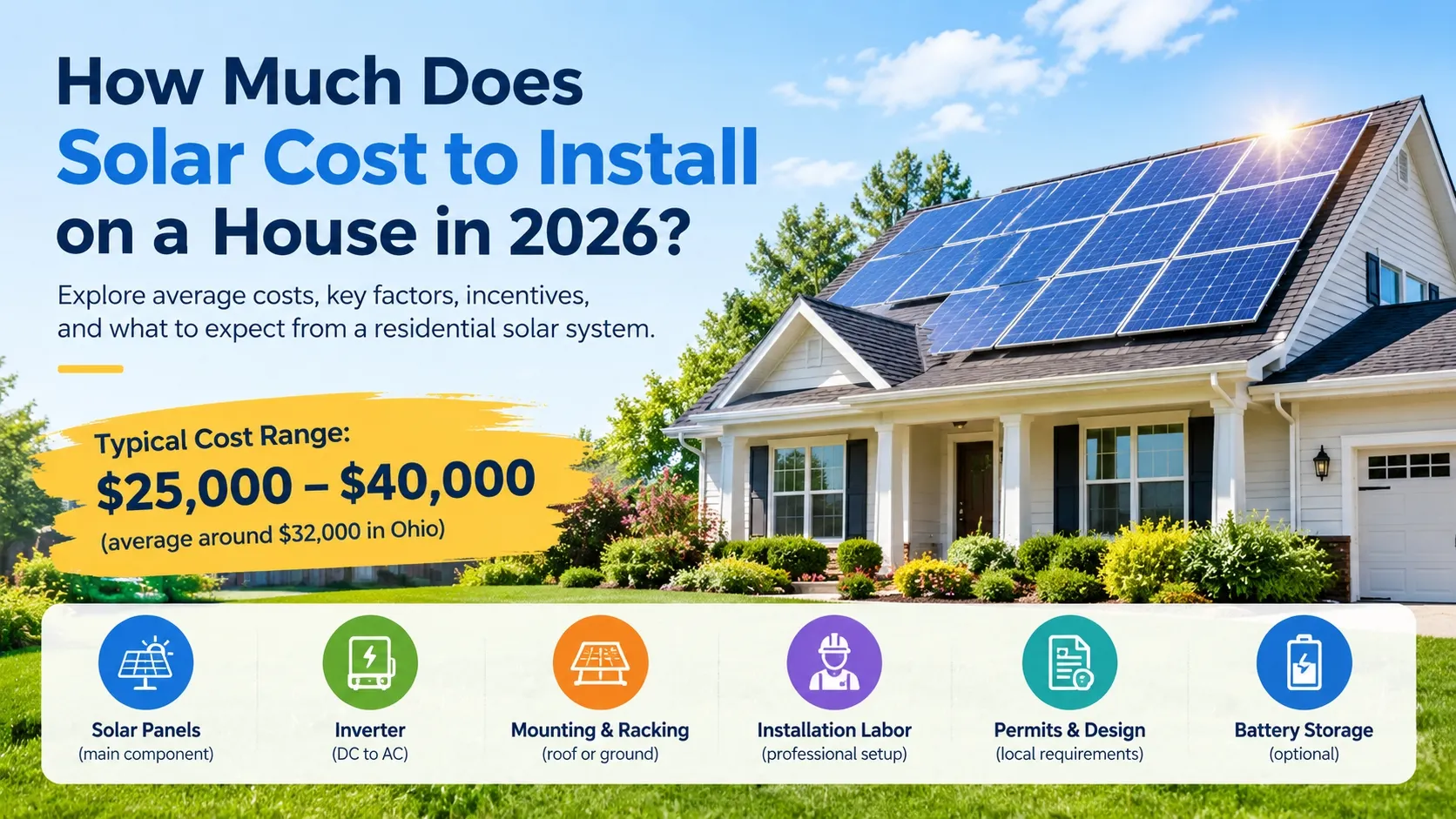
The price of a residential solar system will also vary with the size of the system, the electricity use of the home, the condition of the roof, installation method, equipment used, battery storage, and local permitting requirements in 2026.
On average, a solar system for a typical Ohioian home is about $32,000, with the installation cost often ranging from $25,000 to $40,000, according to Kokosing Solar. For a wider spectrum of residential applications, total system cost ranges from approximately $15,000 to $100,000 or more and varies according to system size, energy use and optional equipment.
Since each home has unique requirements, no homeowner can be quoted a cost for solar installation. The most effective way to do this is to familiarize yourself with the significant factors that influence the cost of solar prior to requesting a tailored solar quote.
What Is Included in the Cost of a Home Solar System?
The overall expense of solar installation is greater than the expense of the solar panels. The different components and services that make up a complete residential solar system are several.
1. Solar Panels
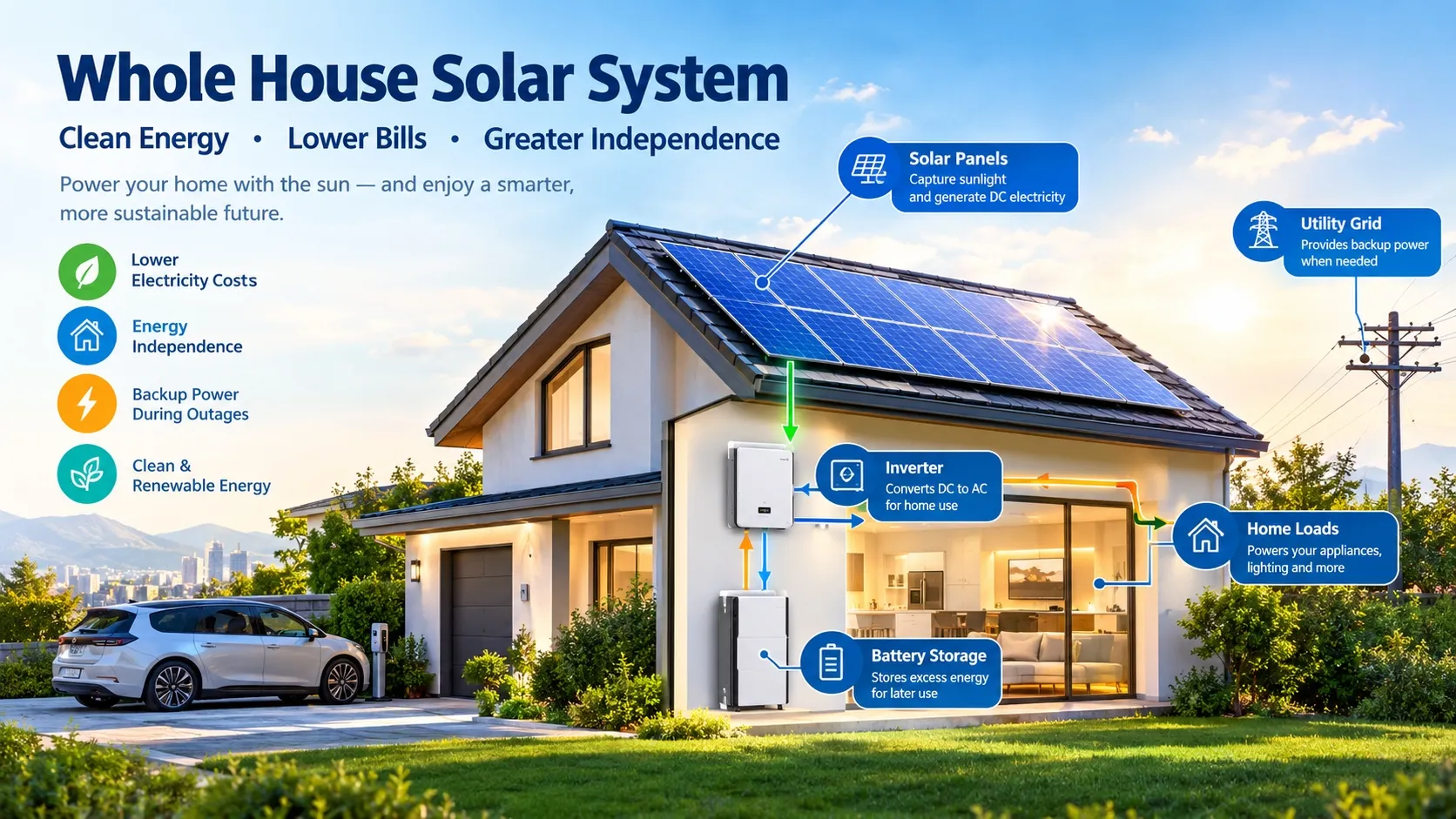
One of the most prominent and significant components of a PV system is the solar panels. They change sunlight into direct current (DC).
The number of panels needed will vary based on the annual electricity usage, roof space available, panel efficiency, sunlight exposure and desired energy offset.
The bigger the house and the more electric energy it uses, the larger the solar array will need to be, and thus the more expensive the project will be.
2. Solar Inverter
The solar panels generate Direct Current (DC) electricity, but most of the appliances in the home require Alternating Current (AC) electricity. The inverter converts the electricity into electricity that can be utilized in the household.
These are just a few examples of potential systems architectures: a string inverter, micro-inverters or other inverter structure.
3. Mounting and Racking
Racking Equipment is used for the installation of Solar Panels on the roof or a stand.
The mounting system should be designed based on the roof type, panel layout, wind conditions, orientation and the structure requirements of the property.
4. Installation Labor
Professional installation involves mounting the panels, installing electrical installation, connecting wiring, configuration of the inverter and various commissioning procedures are completed.
Labor rates may also differ depending on roof complexity, size of system, access to the roof and installation technique.
5. Design, Permitting, and Interconnection
The solar system design may need to be engineered, permits may need to be obtained, inspections must be done, utility coordination and interconnection approval may be needed.
The typical turnkey solar installer typically coordinates these tasks as part of the project.
6. Electrical Components and Other Materials
There are also electrical protection equipment, disconnects, fuses, connectors and other small parts that need to be wired into solar installations.
These items may not be each a significant part of the project's overall cost, but they are all critical to the development of a safe and reliable solar system.
What Factors Affect Solar Installation Cost?
Several factors can make one home's solar installation considerably more expensive than another's.
Solar System Size
System size is one of the biggest factors affecting the cost of residential solar.
A larger system requires more panels, racking, electrical equipment, and labor. However, larger systems can sometimes achieve a lower cost per watt because fixed project costs are distributed across more generating capacity.
The correct system size should therefore be based on electricity consumption rather than simply choosing the largest system that can fit on the roof.
Roof-Mounted vs. Ground-Mounted Solar
Most residential solar systems are installed on rooftops. However, homeowners with suitable land may choose a ground-mounted system.
Ground-mounted solar can provide flexibility in panel orientation and placement, particularly when the roof has shading or limited usable space.
However, additional racking, excavation, trenching, wiring, and site preparation can increase installation costs. Kokosing Solar estimates that ground-mounted systems may add approximately 10% to 15% compared with typical roof-mounted installations.
Battery Storage
A solar battery is an optional component that stores excess electricity for later use.
Battery storage can be particularly useful for homeowners who want to increase solar self-consumption or maintain backup power during grid outages.
However, adding batteries increases the upfront cost of a solar project. Whether battery storage makes financial sense depends on electricity rates, utility compensation for exported energy, backup-power requirements, and the homeowner's goals.
If the primary goal is minimizing the initial solar investment, a battery may not always be necessary. If energy resilience is a major priority, however, storage can provide additional value.
How Large Should a Solar System Be?
A properly sized solar system should be based on actual household energy consumption.
One practical approach is to review your electricity bills from the previous 12 months and calculate annual electricity usage in kilowatt-hours (kWh).
The installer can then evaluate:
- Annual electricity consumption
- Roof size and usable area
- Roof orientation
- Roof pitch
- Shading
- Local solar production
- Future electricity demand
- Electric vehicle charging
- Home electrification plans
- Desired percentage of electricity offset
Kokosing Solar describes designing systems to produce approximately 100% to 120% of annual household electricity consumption, while also considering physical site limitations and future energy needs.
For example, if a household uses 12,000 kWh of electricity per year, an appropriately designed solar system may target annual production around that level or somewhat higher, depending on the homeowner's objectives and local conditions.
Does Solar Cost Less Than Buying Electricity?
The answer depends on the home's electricity rate, solar production, financing method, system price, utility policies, and how long the homeowner plans to remain in the property.
Solar requires a significant upfront investment, but the system can generate electricity for decades.
A homeowner purchasing a solar system should compare the total cost of ownership with the expected cost of electricity from the utility over the same period.
Important financial factors include:
- Initial system price
- Financing costs
- Monthly utility bills
- Electricity-rate changes
- Solar production
- Net-metering or export compensation
- Maintenance requirements
- Battery costs
- Expected system lifespan
Instead of focusing only on the purchase price, homeowners should evaluate the long-term cost per kilowatt-hour and expected savings.
Is There Still a Federal Solar Tax Credit in 2026?
Federal solar incentives changed significantly entering 2026.
According to Kokosing Solar's February 2026 update, the federal residential clean energy tax credit under Section 25D expired at the end of 2025. As a result, homeowners purchasing systems with cash or a loan in 2026 should not assume that the former 30% residential federal tax credit is available.
This makes it especially important to evaluate current federal, state, local, and utility incentives rather than relying on older solar-cost calculators or articles published before 2026.
Third-party ownership models, such as leases and power purchase agreements (PPAs), can have different incentive structures because the system owner may claim applicable incentives.
Because tax rules and eligibility requirements can change, homeowners should verify current incentives with qualified tax and energy professionals before making a purchase decision.
How Long Does a Residential Solar System Last?
Modern solar panels are designed for long-term operation, and a properly designed system can produce electricity for decades.
When evaluating a solar installation, homeowners should look beyond the initial purchase price and consider expected production over the system's useful life.
Panel degradation, inverter replacement, maintenance, roof conditions, and battery replacement should all be considered when estimating long-term ownership costs.
This is one reason why comparing solar proposals based only on the lowest upfront price can provide an incomplete picture.
How Can You Reduce the Cost of Installing Solar?
There are several ways homeowners can potentially improve the economics of a solar project.
Choose the Correct System Size
Oversizing a system can increase the initial investment without necessarily providing proportional financial benefits.
A properly designed system should match your electricity consumption and future energy plans.
Compare Multiple Quotes
Solar prices can vary among installers because of differences in equipment, labor, warranties, financing, system design, and project scope.
When comparing quotes, look at the complete proposal rather than comparing only the total price.
Consider Financing Carefully
A $0-down solar loan can reduce the upfront cash requirement, but financing costs and loan terms affect the total amount paid over time.
Review the interest rate, loan duration, fees, dealer charges, and payment structure before signing a contract.
Evaluate Battery Storage Separately
If backup power is not a priority, a battery may not be necessary.
If outage protection and energy independence are important, compare the additional battery cost against the value of having stored energy available when the grid is unavailable.
Frequently Asked Questions About Solar Installation Costs
How much does it cost to install solar panels on a house?
For a typical Ohio residential installation, a reasonable starting range is approximately $25,000 to $40,000, with an average around $32,000 according to Kokosing Solar. Actual prices can vary substantially depending on system size, site conditions, equipment, and optional batteries.
What is the cheapest way to install solar?
The lowest upfront-cost option depends on your home and energy requirements. A properly sized roof-mounted system without battery storage generally requires less equipment and site work than a ground-mounted system with energy storage.
Does adding a battery make solar more expensive?
Yes. Batteries are an additional component and can significantly increase the total project cost. However, they may provide value through backup power and increased use of self-generated electricity.
Is solar still worth considering in 2026?
The financial case depends on individual circumstances, including electricity rates, system pricing, solar production, financing, utility policies, and available incentives. Homeowners should evaluate these variables using a property-specific solar proposal rather than relying on a national average.
How do I know how many solar panels my house needs?
Always begin with the amount of electricity you use in a year. This means that an installer can then integrate your energy consumption, roof size, orientation, shading, local solar conditions and future electricity requirements to calculate an ideal system size.
Final Thoughts
While the installation price for a solar panel system on a residential home in Ohio may fluctuate significantly, a ballpark estimate for most common systems is between $25,000 and $40,000 for installation in 2026.
Final price is based on system size, equipment, roof, installation, labor, permitting, battery storage, and financing.
Instead of just the question “How much do solar panels cost?” homeowners should ask themselves, “What cost will the energy system add up to for my home, how much electricity will it generate, and what will my long-term energy expenses be?”
A custom solar evaluation can give a much more precise answer and take into account your energy use, available roof or ground space, solar production and energy objectives.
The best way for homeowners to calculate a residential solar investment is to consider all of the project costs, and then compare those costs with the long-term electricity costs.
Share on Social:


- NEXT: Best Solar Inverters in 2026
- NEXT: Whole House Solar System
In This Article
- 1 What Is Included in the Cost of a Home Solar System?
- 2 What Factors Affect Solar Installation Cost?
- 3 How Large Should a Solar System Be?
- 4 Does Solar Cost Less Than Buying Electricity?
- 5 Is There Still a Federal Solar Tax Credit in 2026?
- 6 How Long Does a Residential Solar System Last?
- 7 How Can You Reduce the Cost of Installing Solar?
- 8 Frequently Asked Questions About Solar Installation Costs
- 9 Final Thoughts
