


How Much Does Solar Installation Cost

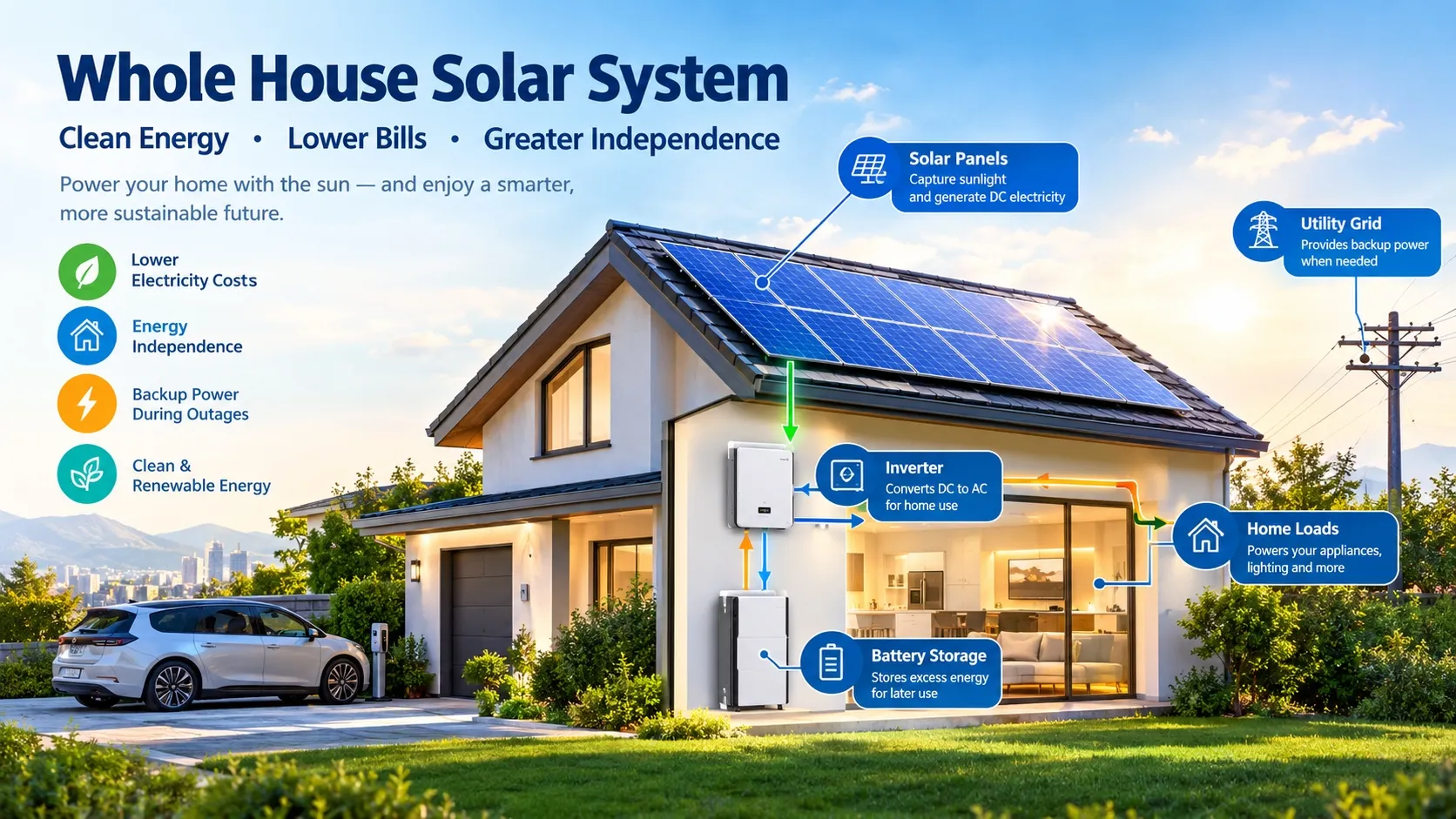
A major question that you will need to consider when you are thinking of installing solar panels at your home is how much does solar installation cost?
The answer is not so simple it's all about the cost of solar panels. The cost can vary depending on the size of the system, equipment type, roof design, installation labor, electrical upgrades, permits, financing, battery storage, location, and local utility policies.
The cost of a residential solar installation in 2026 is estimated to be around $15,000 to $36,000 or higher, before accounting for incentives.The size and complexity of the system largely determines the cost of a residential solar installation in 2026, which is estimated at around $15,000 to $36,000 before accounting for incentives. Typical marketplace pricing for a competitive market is around $2.58 - $2.75/watt, with wider installed price data being higher.
However, having a good grasp of how these costs are determined can make it easier to compare solar quotes and not just the monthly payment.
What Is the Average Cost of Solar Installation in 2026?
The simplest method of estimating the cost of a solar system is by the cost per watt.
The basic formula is:
Solar installation cost = system size in watts × price per watt
For example, an 8 kW solar system contains 8,000 watts. At a price of $2.60 per watt, the estimated installation price would be:
8,000 × $2.60 = $20,800
This is the pre-incentive project price.
As a general reference, 2026 marketplace pricing varies by system size. Smaller systems often have a higher price per watt because fixed installation and permitting costs are spread across fewer watts. Larger systems can have a lower cost per watt while having a higher total project price.
Typical Solar System Costs
| Solar System Size | Approx. Cost Before Incentives |
|---|---|
| 4 kW | $11,440 |
| 5 kW | $13,750 |
| 6 kW | $15,960 |
| 8 kW | $20,880 |
| 10 kW | $25,500 |
| 12 kW | $30,240 |
| 15 kW | $36,600 |
These figures should be used for planning but should not be regarded as a standard quote. The actual cost will vary depending on your property, electricity use, equipment, installer and local market.
How Much Does a Typical Home Solar System Cost?
Requirements for solar systems installed in houses range from about 6 kW to 12 kW, depending on the amount of energy used by each household.
The size of your system is not based on the size of your house but on the amount of electricity that you consume.
For instance, a smaller house with effective appliances and a natural gas furnace would need a smaller solar array than a larger home with air conditioning, an electric furnace, an electric vehicle or heat pump, or a swimming pool.
Look at your last 12 months' electricity bills before you ask for quotes. Solar system sizing is much better started from your annual use of electricity in kilowatt-hours (kWh).
A ballpark figure is around 1100 to 1600 kWh per year per kW of solar installed for residential applications, depending on the climate, roof orientation, shading, and system design.
What Factors Affect Solar Installation Cost?
The cost of a solar installation is more than the cost of the PV panels.
1. Solar System Size
The size of the system is one of the largest costs.
The bigger the system, the more solar panels, mounting hardware, wiring, labor, and possibly larger or additional inverters will be needed. Smaller systems may be more expensive per watt, however, due to the fact that fixed project costs are spread over less capacity.
The objective is not to over systemize! Rather, the system needs to be appropriately sized for your electric consumption and future energy requirements.
2. Solar Panel and Inverter Selection
Solar panels play a key role in the system, but there are other pieces of equipment that are important.
Most of the current installations in the residential sector are monocrystalline panels since they offer high efficiency and fit limited roof space effectively.
The price of the project also depends on the inverters. String Inverters, Microinverters and Power Optimizers come with distinct prices and performance.
More efficient panels and high-end inverter technology can raise the initial cost, but can be worthwhile for people who want to install fewer panels on a roof, or for those who want a specific performance and/or warranty feature.
3. Roof Design and Installation Complexity
A simple, accessible roof is generally easier and less expensive to install solar on.
Installation costs can increase when a property has:
- Multiple roof sections
- Steep roof slopes
- Skylights or dormers
- Tile or fragile roofing
- Significant shading
- Long electrical conduit runs
- Limited usable roof space
- Difficult equipment access
A professional site assessment is therefore important when comparing solar installation quotes.
4. Electrical Upgrades
Some homes need additional electrical work before solar can be installed.
Depending on the property, this may include a main electrical panel upgrade, subpanel installation, rewiring, service modifications, trenching, or other electrical improvements.
A main panel upgrade can add several thousand dollars to a project, so homeowners should confirm whether this work is actually required before signing a contract.
5. Permits and Interconnection
Solar installations typically require permits, inspections, engineering, and utility interconnection approval.
These soft costs can represent a significant portion of the total project price.
The exact amount varies by city, state, utility, system size, and local requirements.
How Much Does Solar Battery Storage Add?
Solar batteries are increasingly being included in residential solar projects.
A battery allows homeowners to store excess solar electricity and use it later, particularly during evening hours or power outages.
In 2026, a typical residential battery installation can add approximately $10,000 to $13,000, depending on battery capacity, equipment, installation requirements, and project complexity.
Battery storage can be particularly useful when:
- Your utility provides low compensation for exported solar power
- You experience frequent power outages
- You want backup power for essential appliances
- Your electricity rates are significantly higher during evening hours
- You want to increase your use of self-generated solar energy
However, a battery is not automatically necessary for every home. The financial value depends heavily on local utility rates and export policies.
Does Financing Increase the Cost of Solar?
The way you pay for solar can significantly affect the total amount you spend.
Cash Purchase
A cash purchase generally provides the clearest comparison because you can evaluate the complete project price without loan interest or financing fees.
Solar Loan
A solar loan reduces the amount of money required upfront, but homeowners should look beyond the monthly payment.
Compare:
- Total contract price
- Interest rate
- Loan term
- Dealer fees
- Total amount paid over the life of the loan
Two installers can offer similar solar equipment but very different financed prices.
Solar Lease or PPA
With a solar lease or power purchase agreement (PPA), a third party typically owns the system while the homeowner pays for the equipment's energy production or use.
These options can reduce upfront costs, but homeowners should carefully review contract terms, annual payment increases, ownership provisions, and home-sale requirements.
Solar Incentives and Tax Credits in 2026
Solar incentives can have a major impact on the final cost of a residential system.
One important change for 2026 is that homeowners should not automatically assume that the previous 30% federal residential clean energy tax credit applies to a new homeowner-owned solar system.
According to the source's 2026 guidance, the federal residential Clean Energy Credit under Section 25D is no longer available for most homeowner-owned systems placed in service after December 31, 2025. Other state, local, utility, and financing incentives may still be available depending on where you live.
This makes it especially important to check current incentive rules rather than relying on older solar articles published in 2023, 2024, or 2025.
Where Does Your Solar Installation Money Go?
Solar panels themselves represent only part of the total project cost.
A residential solar installation can include:
- Solar modules
- Inverters
- Racking
- Electrical wiring
- Installation labor
- Permits and interconnection
- Engineering
- Supply-chain expenses
- Sales and project management
- Overhead
- Installer profit
For example, a 12 kW system cost breakdown cited by NRG Clean Power shows that panels accounted for only about 12% of the modeled project cost, while other expenses such as sales, overhead, electrical work, permitting, inverters, and installation also contributed significantly.
This explains why comparing solar panels alone does not provide an accurate comparison of two complete solar installations.
How to Tell If a Solar Quote Is Reasonable
When comparing solar installers, ask each company for the same information.
A detailed solar quote should clearly identify:
- Total system size in kW
- Number and model of solar panels
- Inverter brand and model
- Estimated annual electricity production
- Total project price
- Price per watt
- Financing terms, if applicable
- Equipment warranties
- Installation and workmanship warranties
- Roof and electrical work included
- Permit and interconnection costs
- Battery costs, if applicable
Be cautious if a proposal focuses heavily on the monthly payment while providing little information about the total contract price.
A transparent quote makes it much easier to compare installers on an apples-to-apples basis.
How to Reduce Solar Installation Costs
You do not necessarily need the cheapest solar system. Instead, look for a system that provides an appropriate balance between price, energy production, equipment quality, warranty coverage, and long-term operating costs.
Here are several practical ways to control your solar installation cost:
Get Multiple Solar Quotes
Comparing several installers can reveal significant differences in system design and pricing.
Compare Cash and Financing Separately
Do not compare a cash quote with a financed quote only by monthly payment. Review the total cost of each option.
Choose Equipment Based on Your Roof
If your roof has plenty of usable space, paying a premium for the highest-efficiency panels may not always provide meaningful additional value.
Evaluate Battery Storage Carefully
A battery can provide backup power and energy-management benefits, but it also adds a substantial upfront cost.
Check Your Roof Before Installation
If your roof is approaching the end of its useful life, replacing the roof before installing solar may prevent future panel removal and reinstallation costs.
Is Solar Worth the Cost in 2026?
Whether solar makes financial sense depends heavily on the individual property.
Solar may have stronger economics when a homeowner has:
- High electricity rates
- Good solar exposure
- Significant annual electricity consumption
- A long expected period of home ownership
- Competitive installation pricing
- Favorable utility policies
- Available local incentives
The financial case can be weaker when a property has extensive shading, very low electricity consumption, expensive financing, or a roof that requires substantial additional work.
The most important number is therefore not simply the solar installation price. It is the relationship between system cost, electricity production, utility rates, export compensation, financing, and expected years of ownership.
Frequently Asked Questions
How much does solar installation cost in 2026?
For many U.S. homes, residential solar can cost approximately $15,000 to $36,000 or more before applicable incentives, depending on system size, location, equipment, and installation complexity.
What is a good solar price per watt in 2026?
Competitive marketplace quotes commonly fall around $2.58 to $2.75 per watt, although broader installed-price data can be higher. The appropriate price depends on what equipment, labor, electrical work, financing, and warranties are included.
How much does a 10 kW solar system cost?
Using the 2026 marketplace figures cited in the source, a 10 kW system is approximately $25,500 before incentives. Actual quotes can vary significantly.
How much does a solar battery cost?
A typical residential battery installation can add approximately $10,000 to $13,000, depending on capacity and installation requirements.
What is the biggest factor affecting solar installation cost?
System size is one of the largest factors, but roof complexity, equipment, labor, financing, electrical upgrades, permitting, location, and battery storage can also substantially affect the final price.
Final Thoughts
It is not possible to simply quote one price for solar installations in 2026. For a realistic solar budget, the size of the system, solar watt cost, equipment, roof qualities, electrical needs, permitting, financing, battery storage, utility policies, and available incentives should be considered.
When assessing a solar option, it is important to take a more holistic approach than just considering panel costs or any monthly payment.
You can do a few things to determine if solar is right for your home: Review your electricity usage, understand the policies of your utility company, get multiple detailed quotes from companies, and estimate the total project cost.
Share on Social:


- NEXT: Best Solar Panels for Your Home
- NEXT: Null
In This Article
- 1 What Is the Average Cost of Solar Installation in 2026?
- 2 How Much Does a Typical Home Solar System Cost?
- 3 What Factors Affect Solar Installation Cost?
- 4 How Much Does Solar Battery Storage Add?
- 5 Does Financing Increase the Cost of Solar?
- 6 Solar Incentives and Tax Credits in 2026
- 7 Where Does Your Solar Installation Money Go?
- 8 How to Tell If a Solar Quote Is Reasonable
- 9 How to Reduce Solar Installation Costs
- 10 Is Solar Worth the Cost in 2026?
- 11 Frequently Asked Questions
- 12 Final Thoughts
