


Best Solar Inverters in 2026

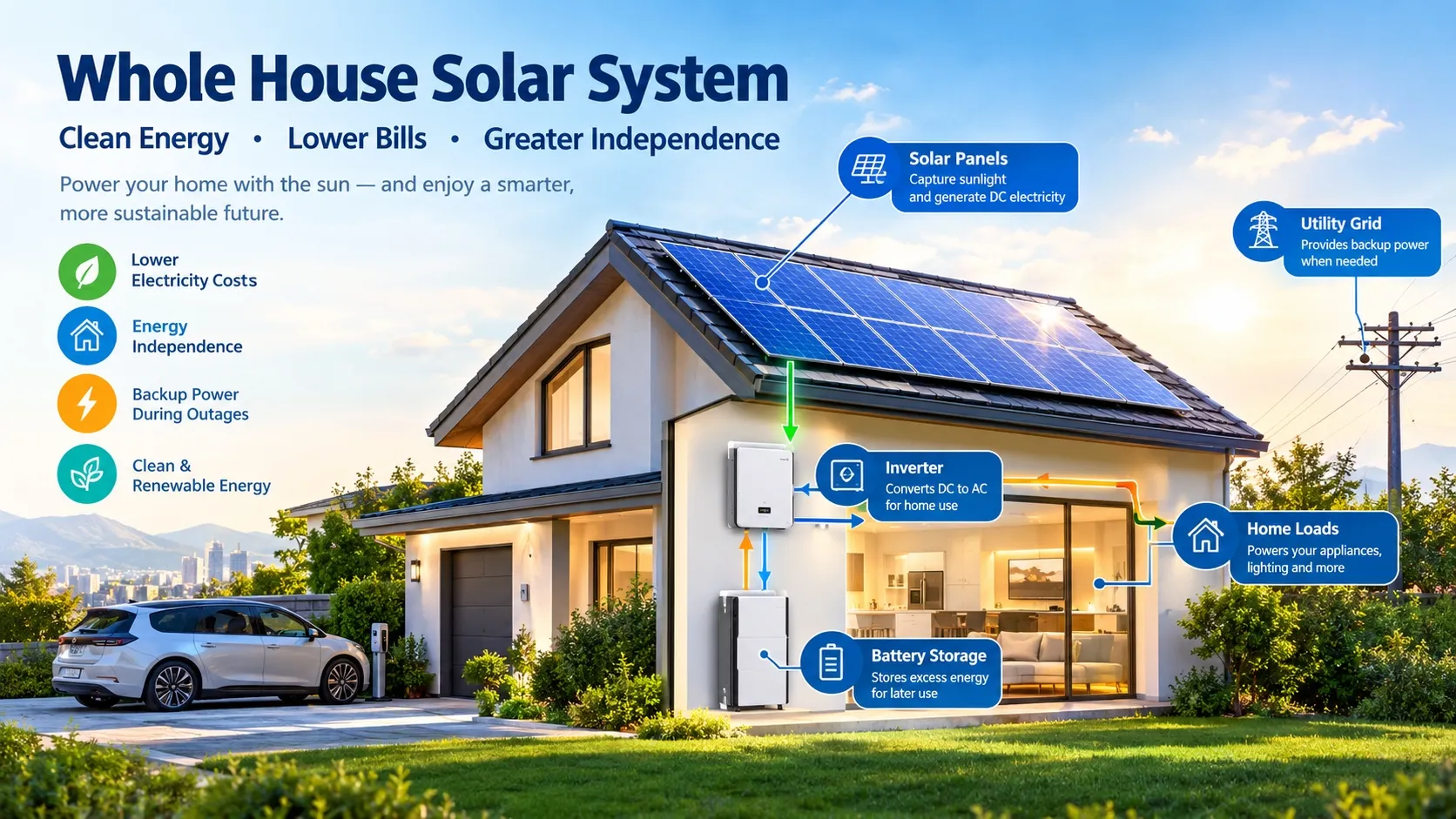
One of the essential parts of a solar energy system for residential use is known as a solar inverter. Solar panels receive energy from sunlight and the inverter transforms the electricity into an AC power that can be used in your home. The right inverter can help you achieve greater energy efficiency, integrate with battery systems, deliver comprehensive monitoring data and ensure your solar system continues to operate efficiently for years to come.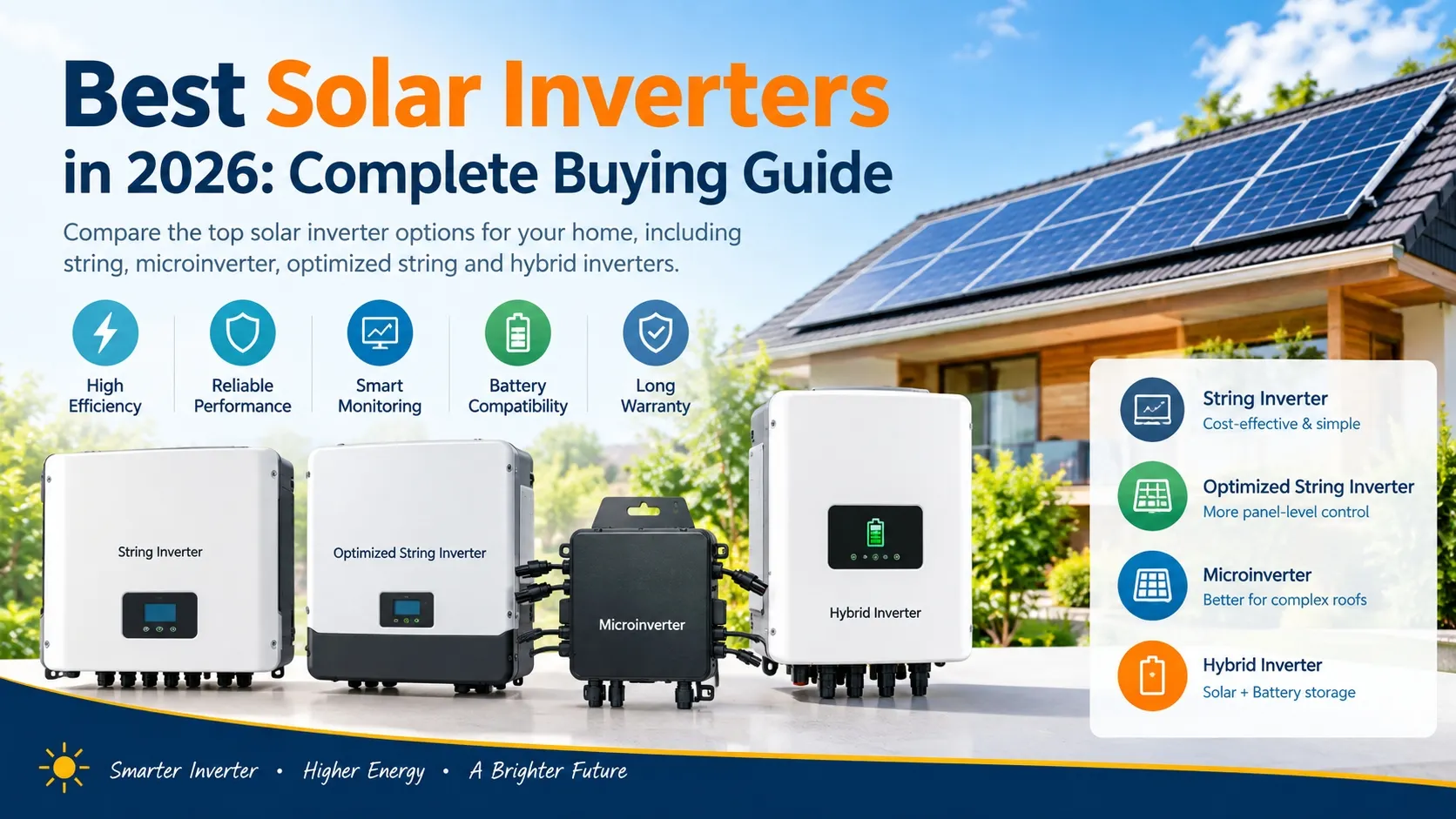
Homeowners have a number of different inverter types to select from in 2026, such as string inverters, optimized string inverters, microinverters, and hybrid inverters. This will depend on the type of roof you have, the shading conditions, the size of your solar system, your battery strategy, your budget considerations, and your long-term energy objectives.
What Is a Solar Inverter?
A solar inverter converts the direct current (DC) electricity generated by solar panels to alternating current (AC) electricity that is used by appliances and the electrical grid.
Modern Solar Inverters are more than just Dc to Ac. Some models include system monitoring, energy management, voltage control, grid communication and battery integration.
Overall, a good solar inverter should offer:
- High conversion efficiency
- Reliable voltage performance
- Long warranty coverage
- Solar panel monitoring
- Battery compatibility when needed
- Appropriate power capacity
- Strong manufacturer support
While price is a key factor in selecting an inverter, it's important to take into account performance, warranty, intelligence, value, and popularity, per EnergySage's 2026 comparison.
The Main Types of Solar Inverters
The three main configurations of the inverter are string inverter, optimized string inverter and microinverter. For solar-plus-storage solutions, there's an additional important category – hybrid inverters.
1. String Inverters
A string inverter is a device used to connect several solar panels to a single string and convert the DC power generated by the solar panel(s) into AC power.
String inverters are frequently appropriate for residences that have:
- Minimal roof shading
- Simple roof designs
- Consistent panel orientation
- Large unobstructed solar arrays
- A focus on lower upfront costs
The relatively simplicity of the system architecture is one of the benefits of string inverters. Having less electronic components on each panel makes the installation and maintenance easy.
But, traditional string inverters cannot optimize each individual panel. A shaded panel or a lower producing performance will affect the output of the string.
2. Optimized String Inverters
Optimized string inverter systems are a mix of a central inverter and a power optimizer at each panel.
This setup offers a lot of the benefits of string inverters but allows more autonomy for each panel.
Optimized systems can be of great value for roofs with:
- Partial shading
- Multiple roof orientations
- Chimneys or other obstructions
- Uneven panel exposure
EnergySage notes that power optimizers can improve panel-level management while retaining the centralized conversion architecture of a string inverter.
3. Microinverters
Microinverters are installed directly at the solar panel level. Instead of using one central inverter for an entire array, each panel has its own inverter.
This design provides several potential benefits:
- Panel-level monitoring
- Better performance on complex roofs
- Greater flexibility in panel placement
- Reduced impact from individual panel shading
- Easier system expansion in some installations
Microinverters can be especially attractive when different parts of a roof receive different amounts of sunlight.
They can also make future solar expansion more flexible because additional panels can be added without necessarily redesigning an entire central inverter system.
What Is a Hybrid Solar Inverter?
A hybrid solar inverter combines solar power conversion and battery management within one system.
This type of inverter is designed for homeowners who want to combine:
Solar panels + inverter + battery storage
A hybrid inverter can help manage when solar electricity is sent to household loads, stored in a battery, or exported to the grid.
For homeowners planning to install energy storage now or in the future, a hybrid inverter can simplify system design and provide a more integrated approach to solar-plus-storage.
However, compatibility is important. Not every solar inverter works with every battery, so homeowners should confirm battery compatibility before selecting equipment.
Key Factors When Choosing the Best Solar Inverter
There is no single solar inverter that is ideal for every home. The best inverter depends on your specific solar system.
1. Inverter Efficiency
Efficiency measures how much of the electricity generated by your solar panels is successfully converted into usable AC electricity.
Modern residential solar inverters can achieve efficiency levels in the high 90% range. For example, EnergySage's 2026 comparison includes models with CEC efficiency ratings ranging from approximately 97% to 99%.
Although a difference of a few percentage points may appear small, efficiency can matter over thousands of operating hours.
2. Roof Shading
Your roof's shading conditions should strongly influence inverter selection.
For a simple, unshaded roof, a traditional string inverter may be sufficient.
For roofs with trees, nearby buildings, chimneys, or multiple orientations, microinverters or optimized string inverter systems can provide greater panel-level control.
3. Battery Compatibility
If you plan to install a solar battery, check whether the inverter is compatible with your preferred battery system.
Hybrid inverters can simplify solar-plus-storage installations because they are designed to manage both solar generation and battery storage.
If battery storage is not currently part of your plan, paying extra for a storage-focused inverter may not always be necessary.
4. Warranty
Solar systems are long-term investments, so warranty coverage is an important consideration.
In EnergySage's 2026 comparison, the evaluated inverter models have warranty periods ranging from 10 to 25 years.
However, homeowners should read the complete warranty terms rather than comparing warranty length alone. Important details may include:
- Product replacement
- Labor coverage
- Communication equipment
- Extended warranty options
- Transferability
- Warranty claim procedures
5. Monitoring Features
Modern solar inverters can provide detailed information about system performance.
Depending on the equipment, monitoring platforms may show:
- Daily solar production
- Energy consumption
- Individual panel performance
- Battery charge levels
- Grid imports and exports
- System alerts
Panel-level monitoring can be particularly useful when troubleshooting a solar array.
Solar Inverter Cost
The total cost of a solar inverter depends on the inverter type, system size, installation requirements, battery integration, and equipment brand.
EnergySage's 2026 data provides examples of system costs associated with different inverter models. Its comparison lists approximate costs ranging from $2.20/W to $2.62/W for the systems evaluated, although these figures represent broader system pricing rather than simply the retail price of the inverter itself.
Therefore, homeowners should avoid comparing inverter prices without considering the entire solar system.
A less expensive inverter may have lower upfront costs but different monitoring, warranty, efficiency, or battery capabilities.
Best Solar Inverter for Different Homeowners
The appropriate inverter configuration can vary depending on the property.
For a simple, sunny roof:
A conventional string inverter may provide a practical balance of cost and performance.
For a partially shaded roof:
A microinverter or optimized string inverter may provide better panel-level performance.
For a complex roof:
Microinverters can provide greater flexibility because each panel operates independently.
For a home adding battery storage:
A hybrid inverter may simplify solar and battery integration.
For homeowners planning future solar expansion:
Microinverters can provide additional flexibility when adding panels.
Solar Inverter vs. Solar Panels: Which Is More Important?
Solar panels and inverters perform completely different functions, so it is not useful to consider one universally more important than the other.
Solar panels determine how much DC electricity your system can generate under sunlight conditions.
The inverter determines how efficiently that electricity is converted and managed for household use.
A high-efficiency solar panel paired with an unsuitable inverter may not deliver the expected system performance. Conversely, an excellent inverter cannot compensate for poorly positioned or undersized solar panels.
The best solar system therefore requires the panels, inverter, battery, electrical design, and installation to work together.
How to Choose a Solar Inverter in 2026
Before purchasing a solar inverter, ask these questions:
- How much solar capacity will my home need?
- Does my roof have significant shading?
- Are all panels facing the same direction?
- Do I want battery storage?
- Will I expand the system later?
- What inverter efficiency do I need?
- How long is the product warranty?
- Does the inverter provide panel-level monitoring?
- Is it compatible with my solar panels and battery?
- Can my installer provide local technical support?
These questions can help narrow down the options before comparing specific models.
Final Thoughts
It isn't always the cheapest or the highest rated solar inverter that's the best solar inverter. It will depend on the roof, solar array, shading situation, energy use, battery plans, budget and long term needs of the system.
String inverters can look good on simple, unobstructed roofs and optimized string inverters offer extra control at the panel level. The micro inverter is helpful for complex roof or shaded roofs, while hybrid inverter can be used by homeowners who desire to have integrated solar and battery storage.
In 2026, you should not only consider efficiency and cost when choosing solar inverters; you should also think about the additional features they offer. The total value of your solar investment can be affected by warranty, monitoring, voltage, battery compatibility, installation and long-term flexibility of your system.
Rather than selecting an inverter, homeowners can evaluate the entire system to design a solar energy system that will function effectively and produce energy over long periods.
Share on Social:


In This Article
- 1 What Is a Solar Inverter?
- 2 The Main Types of Solar Inverters
- 3 What Is a Hybrid Solar Inverter?
- 4 Key Factors When Choosing the Best Solar Inverter
- 5 Solar Inverter Cost
- 6 Best Solar Inverter for Different Homeowners
- 7 Solar Inverter vs. Solar Panels: Which Is More Important?
- 8 How to Choose a Solar Inverter in 2026
- 9 Final Thoughts
