


How Does a Home Solar System Work?
Solar power for homes has been getting more common as a way for homeowners to produce electricity, to lessen reliance on the grid and to build long-term energy independence. However, how does a house solar system function?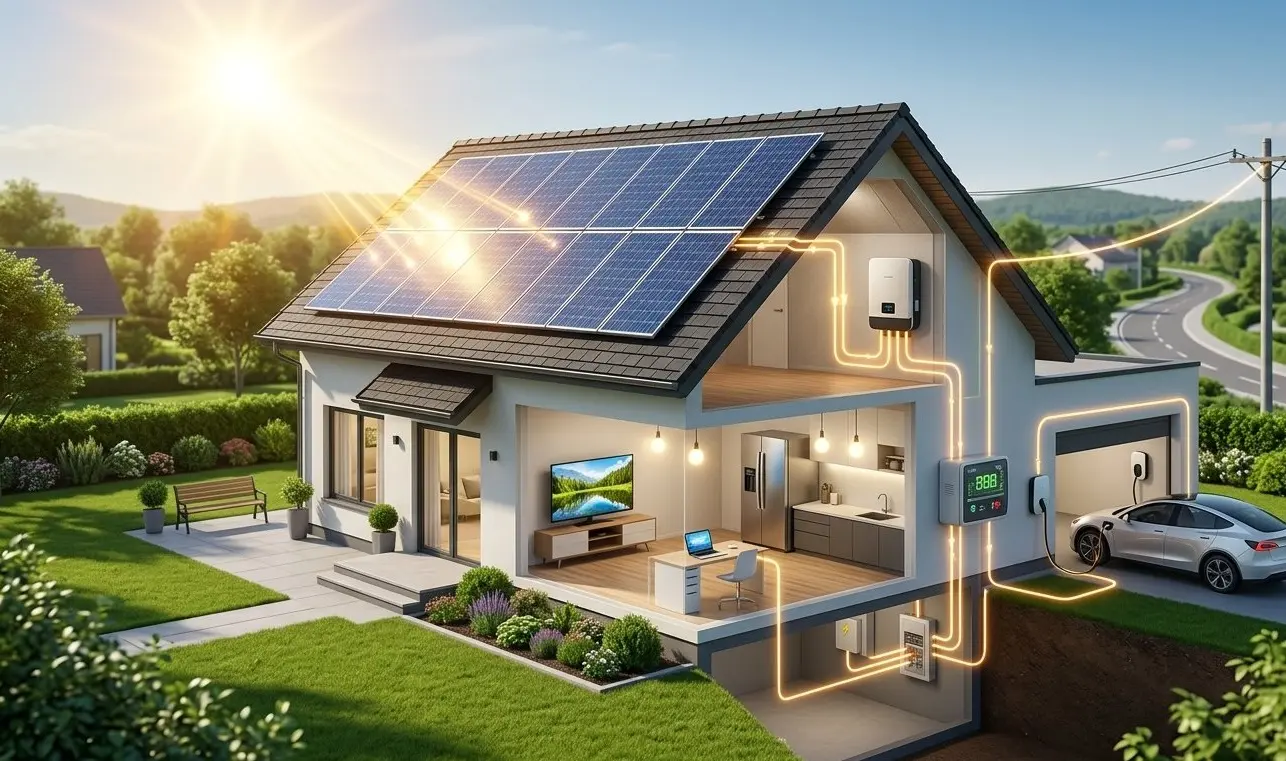
It's simple, the solar panels collect sunlight and generate direct current (DC) power, and a converter changes the DC power to alternating current (AC) power, which is then transferred to your home's other electrical devices, lighting, heating and cooling systems. The excess electricity can be stored in a battery or exported to the grid according to the system configuration and utility regulations.
It will be useful for homeowners to understand how each of these performs if they want to make the best choice for their home solar system.
How Does a Home Solar System Work?
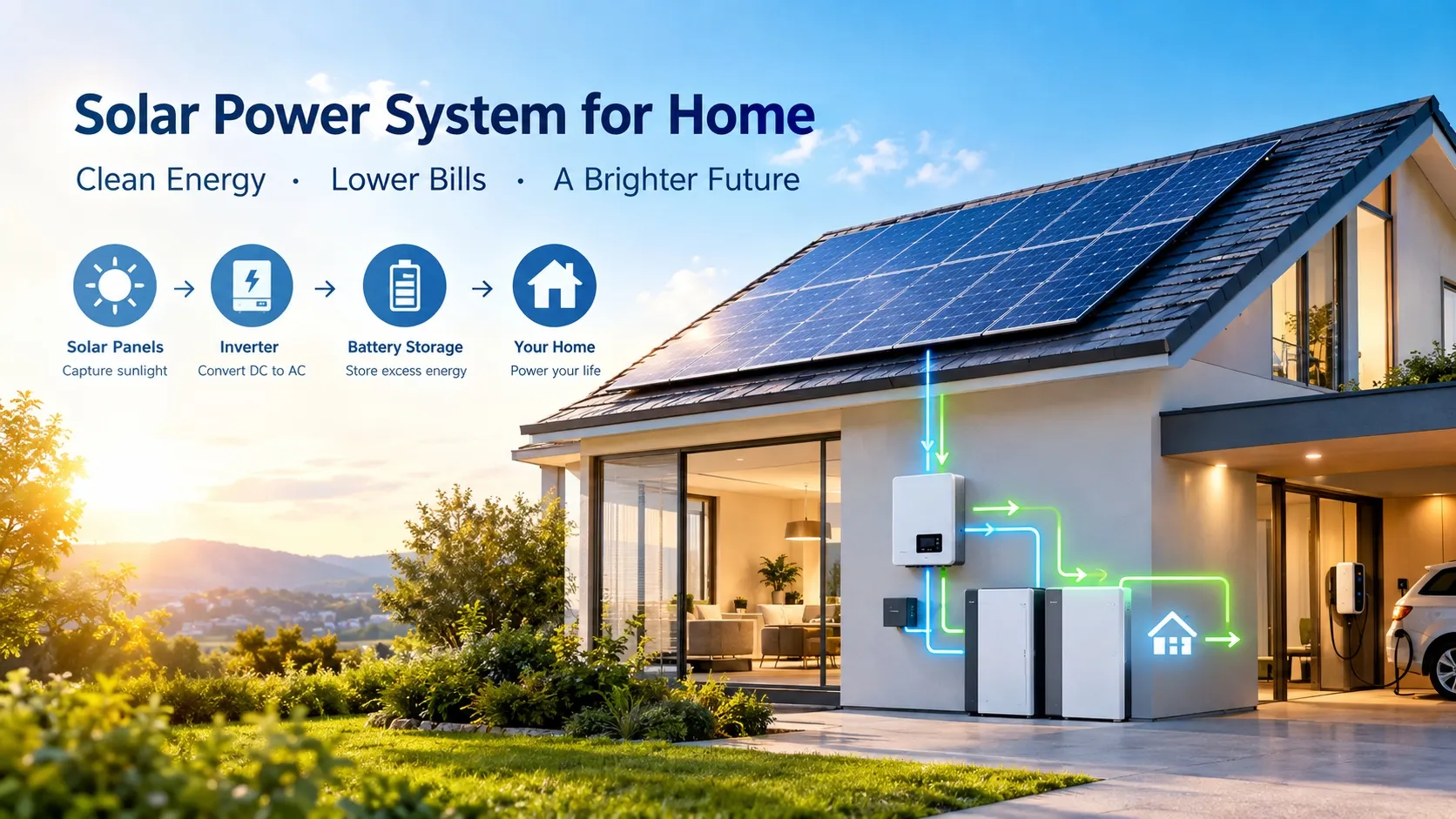
The simple energy flow in a typical residential solar power system is:
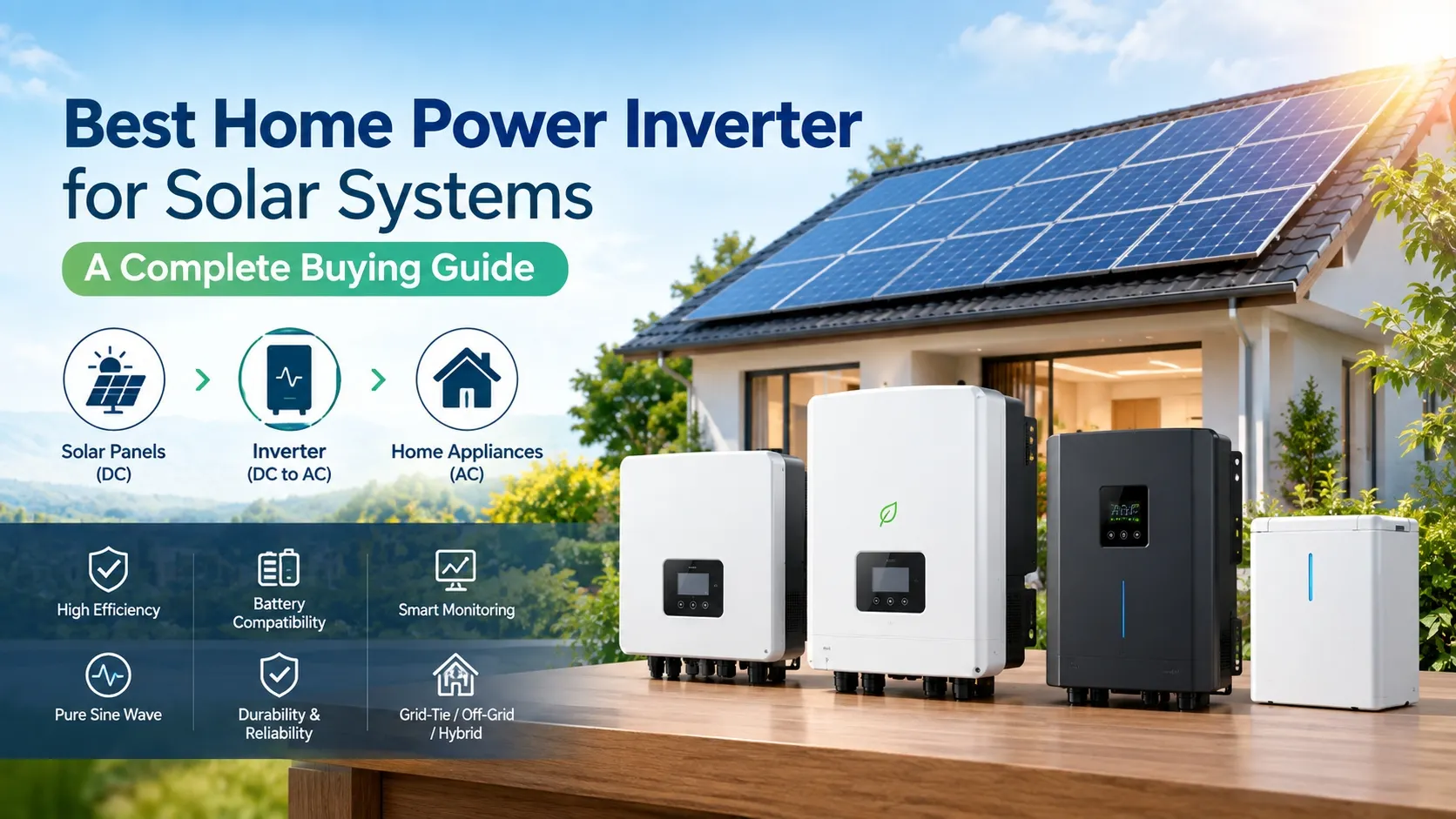
Solar Panels generate electricity that is then converted by an inverter into electricity that can be used by the home appliances.
When the solar panels generate more electricity than the household consumes, the electricity can be stored in a solar battery or exported to the electric grid.
If the sun doesn't produce enough electricity, it can be generated by the battery or by the electrical grid.
This is because a grid connected solar system is not always off-grid. However, a combination of solar generation, decentralized energy storage, and the grid can offer a steady flow of electricity.
1. Solar Panels Capture Sunlight
First step is the solar panels mounted on the roof or any other convenient location.
PV, or photovoltaic cells are found in solar panels. Typically, these cells are produced using semiconductor materials like silicon. Photons transfer energy to electrons inside the semiconductor material when they hit the cells. This action generates an electrical current.
The electricity generated by solar panels is direct current (DC).
There are various types of residential solar panels and they offer varying efficiencies. Monocrystalline panels are popular choices due to their high efficiency and decent power generation in a relatively small space.
But it isn't only the panel that determines the performance of the panel. The amount of electricity a solar array will deliver depends on many factors, such as roof orientation, roof tilt, shading, temperature, weather and system design.
Solar panels are able to produce electricity on cloudy days, though they typically generate less electricity than when they are in full direct sunlight.
2. The Solar Inverter Converts DC to AC
The power produced by the solar panels is direct current (DC), but the power that is required by most household appliances is alternating current (AC).
This is where the solar inverter comes into play.
The inverter converts the DC electricity produced by the solar panels into AC electricity that can be used by the home's electrical system.
In other words, the inverter is the link between electricity generation and consumption in the home.
There are a number of common inverters configurations:
String Inverters
A string inverter connects multiple solar panels into groups, or strings, and converts their combined DC output into AC electricity.
String inverter systems can be relatively simple and cost-effective, particularly when panels receive similar amounts of sunlight.
Microinverters
Microinverters are installed on individual solar panels. Each panel can therefore operate more independently.
This configuration can be useful for roofs with multiple orientations or partial shading because one underperforming panel has less influence on the others.
Power Optimizers
Power optimizers are installed with individual panels but work with a central inverter. They optimize DC electricity before it reaches the inverter and can help reduce performance losses caused by shading or different panel orientations.
Choosing between these technologies depends on the roof design, shading conditions, system size, budget, and desired monitoring capabilities.
3. Electricity Enters Your Home
After the inverter converts solar electricity into AC power, it travels through the home's electrical system.
The electricity typically reaches the main electrical panel, sometimes called the breaker panel or service panel. From there, power is distributed to household circuits.
Your solar energy can then operate everyday electrical loads such as:
- Refrigerators
- Air conditioners
- Washing machines
- Lighting
- Computers
- Water heaters
- Heat pumps
- Electric vehicle chargers
If your home is using electricity at the same time your solar panels are generating it, the solar energy can be consumed immediately.
This is called self-consumption.
Using solar electricity directly can be particularly valuable because it reduces the amount of electricity that needs to be purchased from the utility.
4. What Happens to Excess Solar Electricity?
Solar panels do not produce exactly the same amount of electricity that a home consumes every hour.
For example, solar production may be high around midday while household electricity demand is relatively low. In the evening, however, solar production falls to zero while electricity consumption may increase.
This creates excess solar electricity during certain periods.
There are two major ways to handle this excess power:
Solar Battery Storage
A battery can store excess solar electricity for later use.
For example, a home might generate more electricity than it needs at 1 p.m. The battery can store some of that energy and release it later in the evening when the solar panels are no longer producing electricity.
Battery storage can also provide backup power during certain grid outages, depending on the battery system and installation configuration.
In addition, batteries can help homeowners shift electricity consumption away from expensive peak-rate periods under certain time-of-use electricity plans.
Sending Electricity to the Grid
If there is no battery, or if the battery is already full, excess electricity may be exported to the utility grid.
A bidirectional meter can measure electricity flowing into and out of the home.
Depending on local regulations and the utility's program, homeowners may receive credits or compensation for exported solar electricity. These arrangements are commonly associated with net metering or net billing.
Because compensation rules vary significantly by location, homeowners should check the current requirements of their utility before estimating solar savings.
5. What Happens at Night?
Solar panels require sunlight, so they do not produce electricity at night.
A home with solar can still have power after sunset because electricity can come from other sources.
If the system includes a battery, stored solar energy can supply some or all of the home's electricity needs, depending on battery capacity and household demand.
Without sufficient battery storage, the home can draw electricity from the utility grid.
This is why a grid-connected residential solar system is often better understood as an energy management system, rather than simply a collection of rooftop panels.
6. Can Solar Power Work During a Power Outage?
A common misconception is that solar panels automatically keep a house powered when the grid goes down.
In most standard grid-connected systems, solar equipment shuts down during a grid outage for safety reasons. This prevents electricity from being unintentionally sent onto utility lines while workers may be repairing them.
A solar system designed with appropriate battery storage and backup equipment can provide power to selected or essential household circuits during an outage.
Therefore, homeowners who prioritize backup power should specifically ask about solar-plus-storage systems, backup loads, battery capacity, and outage operation when comparing solar solutions.
7. How Long Does a Home Solar System Last?
Solar panels are designed for long-term operation. Many high-quality panels come with performance warranties covering roughly 25 to 30 years, although actual system service life can extend beyond the warranty period.
Over time, solar panels gradually lose some of their original output. However, they can continue generating electricity for many years.
Other system components have different lifespans. Inverters, batteries, wiring, mounting equipment, and electrical components should therefore be considered when evaluating the total lifecycle of a solar installation.
Regular monitoring can also help identify unexpected drops in production.
8. What Determines Solar System Performance?
The performance of a residential solar system depends on several factors, including:
- Available sunlight
- Roof orientation and angle
- Shading from trees or buildings
- Solar panel efficiency
- System size
- Inverter technology
- Local weather
- Household electricity consumption
- Battery capacity
- Utility electricity rates
- Net metering or net billing policies
The larger the solar array, the better? Not necessarily. The system needs to be designed to meet the energy needs of the home, the roof space available, the amount of solar energy that can be expected, local regulations and financial objectives.
Is a Home Solar System Worth Considering?
If you have space on your home's roof and enough sunlight, solar energy can be a great method to make renewable energy and cut down on reliance on regular electrical power.
The greatest benefit of solar is that it can produce electricity at the point of use. With battery storage, homeowners can also have more control over when that energy can be used.
But solar economics are different in every region. The final ROE can be affected by electricity prices, incentives, installation costs, financing, utility policies, export compensation and battery requirements.
Final Thoughts
So, how does a home solar system work?
The process can be summarized in five steps:
1. Solar panels capture sunlight.
2. PV cells generate DC electricity.
3. An inverter converts DC electricity into AC power.
4. The home's electrical panel distributes power to household appliances.
5. Excess electricity is stored in a battery or exported to the utility grid.
If solar energy isn't produced at night or when it isn't enough, electricity may be provided by stored battery power or from the power grid.
This understanding of the energy flow will aid in comparing solar panels, inverters, batteries, and installation options. When it comes to solar, the most important factor is not necessarily the number of panels; it's the system that's built around the home and its energy needs, roof conditions, utility regulations, and long-term energy objectives.
Share on Social:


In This Article
- 1 How Does a Home Solar System Work?
- 2 1. Solar Panels Capture Sunlight
- 3 2. The Solar Inverter Converts DC to AC
- 4 3. Electricity Enters Your Home
- 5 4. What Happens to Excess Solar Electricity?
- 6 5. What Happens at Night?
- 7 6. Can Solar Power Work During a Power Outage?
- 8 7. How Long Does a Home Solar System Last?
- 9 8. What Determines Solar System Performance?
- 10 Is a Home Solar System Worth Considering?
- 11 Final Thoughts
