


Top 10 Solar Inverter Manufacturers in the World 2026
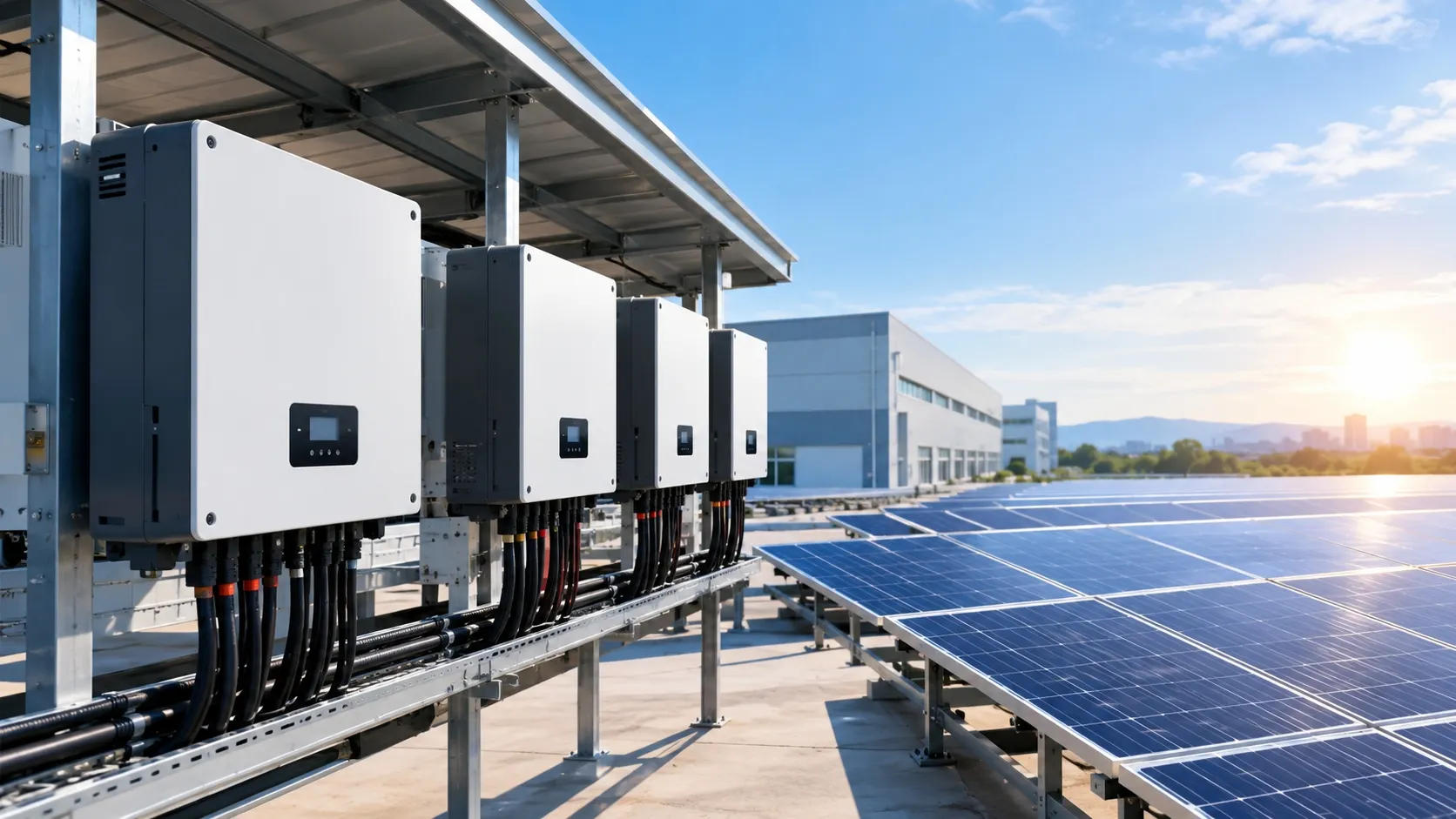
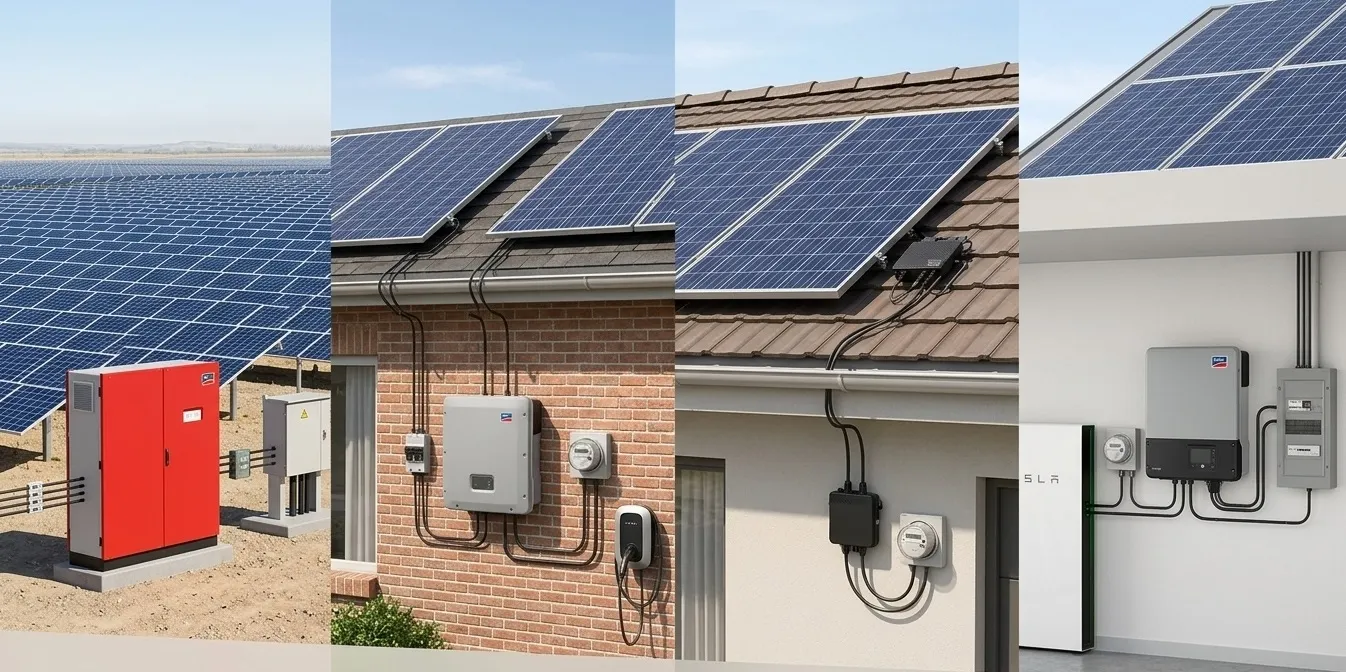
Solar inverters are one of the most important components of a photovoltaic (PV) system. They transform direct current (DC) electricity from solar panels into alternating current (AC) electricity that is capable of powering homes, businesses and electrical grid. Recently, solar inverters also offer energy management, battery integration, monitoring, grid support, and protection for the system.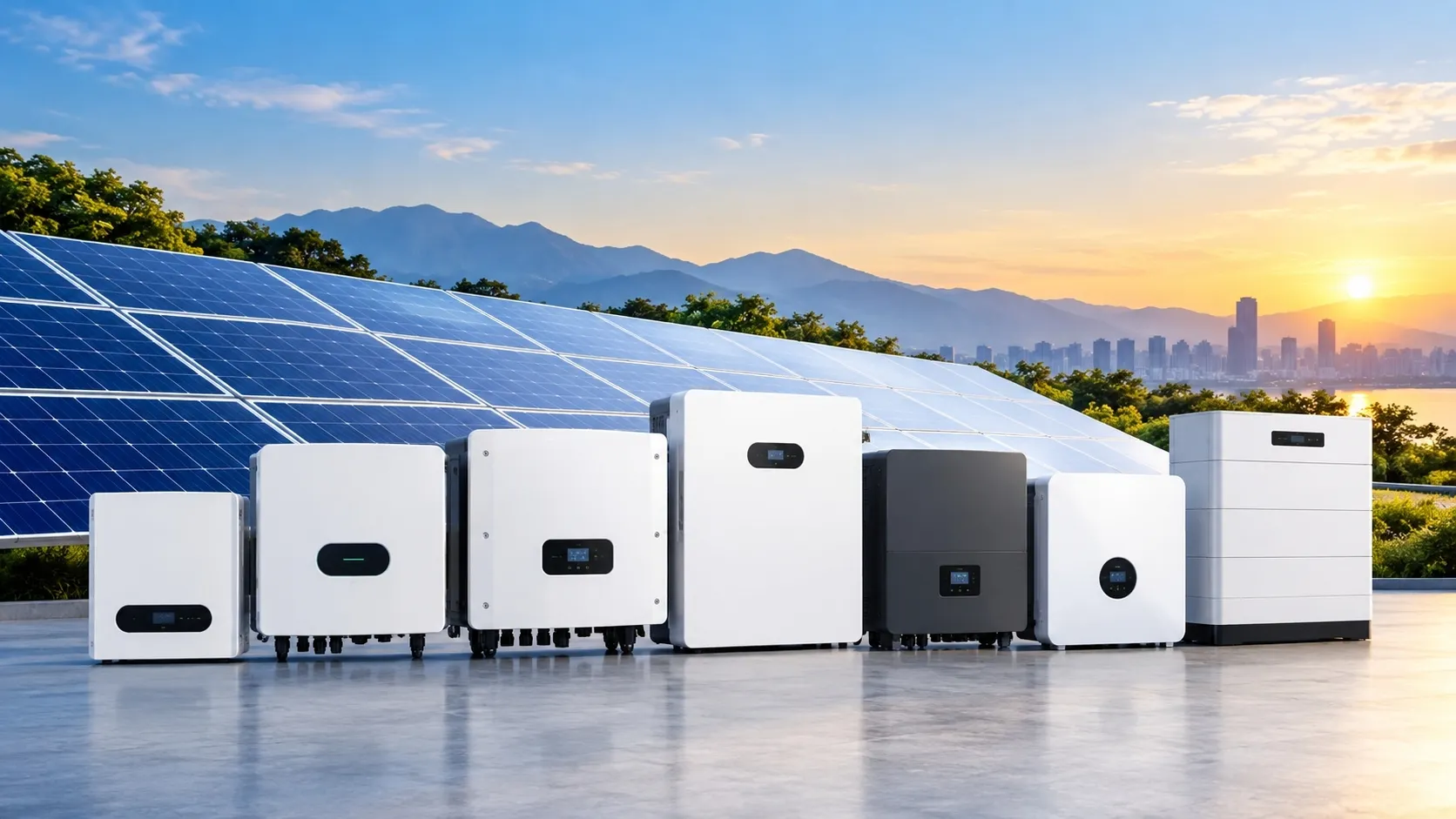
With the rapid growth of solar installations all over the world, it is crucial for homeowners, solar installers, EPC companies, distributors and commercial energy developers to select a dependable solar inverter manufacturers.
Established European inverter manufacturers, major power-electronics companies from China and the other technologies and technologies-specific companies that specialize in microinverters, residential storage, or utility-scale inverter applications are all part of the global inverter market. Wood Mackenzie assessed 23 manufacturers accounting for about 90% of the world's 2025 inverter shipments, using manufacturing resilience, R&D, service, ESG, cybersecurity and financial strength among its evaluation metrics.
To know the 10 major solar inverter manufacturers in 2026 along with their key technology and applications.
What Is a Solar Inverter?
Solar inverter is used to convert the DC power produced by the PV arrays into AC power that can be used by home appliances, commercial electrical equipment or exported to the grid.
Depending on the system design, the inverter can also be used for the management of battery charging and discharging, for supplying power in the event of a power outage, to monitor the performance of the system and to manage the energy according to power demand.
There are several different types of solar inverters, including:
String Inverters
String inverters are used to link up a string of solar panels together, and convert the combined DC output to AC electricity. Because of their comparatively simple design and low installation cost, they are widely used in residential, commercial and industrial PV installations.
Central Inverters
Central inverters are suitable for large utility scale and commercial solar PV installations. They are able to receive high direct current power from many PV modules, and are often employed in the environments where the system capacity and centralized operation are considered important criteria.
Microinverters
Microinverters are installed per solar panel. Highly independent panels can be beneficial when roofs have shading, multiple orientations or complicated roofs. They also offer detailed monitoring on module-level.
Hybrid Inverters
Hybrid inverter is a type of inverter that uses solar power and battery storage technology. They can control energy flow from PV panels to batteries to domestic loads to the electrical grid. Such systems are growing in popularity for solar-plus-storage and backup-power solutions.
Top 10 Solar Inverter Manufacturers in 2026
The following are some key residential solar, commercial and industrial (C&I) PV, energy storage, microinverter and utility-scale companies. This is an overview of the market, not a general rating of the quality.
1. Huawei
Huawei is a leading smart PV and digital energy technology supplier in the world. Its solar business encompasses PV inverters, energy storage solutions, smart controllers and digital energy management technologies.
SUN2000 is a popular Huawei inverter family, with LUNA energy storage solutions specifically developed for solar-plus-storage.
The inverter technology of Huawei is applied in various fields, including residential, commercial, industrial and utility-scale projects. Its overall advantage is the combination of power electronics, monitoring, communications and digital energy management.
Huawei is a key manufacturer to consider for large PV projects and a complex smart-energy system.
2. Sungrow
Sungrow is a world-class inverter and energy storage system manufacturer. Established in China in 1997, the company has grown products for residential, commercial, industrial and utility scale applications.
It has a product line of residential hybrid inverters, commercial string inverters, utility scale products, and battery energy storage systems.
The SG series is applicable in diverse PV applications, and Sungrow's hybrid inverter families cater to residential solar-plus-storage systems.
Sungrow's wide range of products is applicable to the installation, development and deployment of residential solar systems to large-scale renewable energy projects.
3. SMA Solar Technology
One of the world's oldest manufacturers of solar inverters is SMA Solar Technology from Germany. The company has inverter solutions for residential, commercial and utility-scale PV systems.
Its product lines include Sunny Boy, Sunny Tripower and Sunny Boy Smart Energy.
SMA is known for its engineering expertise, integration with the grid, monitoring solutions, and experience with the PV market.
As an important inverter manufacturer in Europe, SMA remains a relevant manufacturer for rooftop installations, commercial buildings and distributed solar projects.
4. SolarEdge
Solar Edge's solar technology is based on power optimization and energy intelligence.
Typically, SolarEdge systems integrate power optimizers on the modules, in addition to a central inverter.SolarEdge systems are often built with power optimizers at the module level and central inverter equipment. This design enables each module to be monitored in detail and may be helpful in solving complex rooftop situations.
The company also offers residential energy management and battery-storage solutions.
SolarEdge is especially relevant when installers have to deal with residential and commercial solar installations, where MLP and energy management are crucial.
5. Enphase Energy
Enphase Energy is a U.S. energy technology company, most famous for its microinverter technology.
Unlike standard string inverters that receive DC electricity from several panels, Enphase microinverters convert DC electricity at the individual module level. This architecture can be well suited for a roof that is not oriented in the same direction or has partial shade or is very complicated in design.
Enphase's IQ8 family of microinverters is one of its most important offerings. The company also has battery storage and energy-management products for residential products.
Enphase is thus especially relevant for the residential solar industry, where homeowners might value module-level monitoring, system flexibility, and integrated battery backup.
6. SRNE
SRNE is a China based solar inverter and energy storage manufacturer specializing in home use, off-grid and commercial and industrial energy storage.
It holds a wide range of products like hybrid inverters, off-grid inverters, energy storage systems, solar charge controllers, and monitoring products.
The representative product families are the HESP hybrid inverter family, the ASP, ASF, HYP and HF inverter families. The products span various system architectures, such as residential energy storage, backup power, off-grid energy storage, and C&I applications.
The SRNE is especially relevant to distributors, installers, OEM/ODM customers and project developers interested in solar inverter and energy storage solutions for various markets.
The product coverage of this PV inverter makes it a manufacturer that should be considered if a project requires a PV inverter that is not just a grid tied PV inverter.
7. GoodWe
GoodWe is a Chinese manufacturer of PV Inverters and energy storage systems for the residential, commercial and industrial markets.
It offers residential hybrid inverter, commercial string inverter, energy storage system, and smart energy-management solutions.
The ES series is for three-phase residential energy storage, and the ET series is for three-phase hybrid applications.
In the years, GoodWe has been expanding its overseas business network and product scope, and has become a professional supplier for PV and storage solutions to the installers, distributors, and EPCs in overseas markets.
Wood Mackenzie's 2026 top five global manufacturer evaluation ranked GoodWe among the top five manufacturers, showcasing its important position in the global inverter market.
8. Growatt
Growatt is a world-leading international solar inverter and energy storage manufacturer, and is well known in residential and distributed energy application.
It has a range of product families in its portfolio including MIN, MOD, SPF and SPH, all encompassing grid connected solar solutions, off-grid power solutions, and battery-storage solutions.
Growatt has various products that can be applied to installations of different sizes, ranging from residential rooftops to larger distributed PV installations.
Growatt is a prominent manufacturer in the global market for homeowners, installers, and distributors seeking a wide range of home solar and home battery options.
9. Ginlong Solis
Another reliable manufacturer is the maker of solar string inverters and energy storage solutions, Ginlong Solis.
The company's product range comprises residential, commercial and industrial inverter products, hybrid systems.
Solis products are typically used in distributed PV systems, such as rooftop and commercial PV systems.
This growing variety of hybrid and storage inverters is also a sign of the times – inverter manufacturers are taking an integrated approach to PV generation, battery storage, backup power and energy management.
10. Fronius
Fronius is an Austrian manufacturer with more than 15 years of experience in power electronics and solar technology.
It is also the manufacturer of solar inverter families like the Primo GEN24, Symo GEN24, Tauro and Verto, for residential and commercial applications.
System efficiency, energy management, backup power and integration with battery storage are key topics for Fronius.
It has been used in Europe as an engineering solution and has a proven installer network, which enables it to be recognised as a suitable choice for PV applications in residential and commercial structures, especially in European markets.
How to Choose a Solar Inverter Manufacturer
The largest manufacturer is not automatically the right choice for every project. Buyers should consider the technical and commercial requirements of the specific installation.
1. System Size
A small residential rooftop may require a single-phase hybrid or string inverter, while a factory or solar farm may require three-phase or high-power equipment.
2. Battery Compatibility
If energy storage is planned now or in the future, check whether the inverter supports the required battery voltage, communication protocol, charging strategy, and backup configuration.
3. Grid Requirements
Different countries and regions have specific grid-connection requirements. Confirm certifications and grid-compliance requirements before purchasing.
4. Efficiency and MPPT Design
Maximum power point tracking (MPPT) performance is important for extracting energy from PV modules. For roofs with multiple orientations or shading, the number and configuration of MPPT inputs can be particularly important.
5. Monitoring and Communication
Modern solar systems increasingly depend on digital monitoring. Check whether the inverter supports Wi-Fi, Ethernet, cellular communication, cloud monitoring, or third-party energy-management platforms as required.
6. Warranty and After-Sales Service
A solar inverter is expected to operate for many years. Warranty terms, technical support, replacement procedures, spare-parts availability, and local service capability should therefore be evaluated alongside the initial equipment price.
7. Supply Chain and Manufacturer Stability
For installers, distributors, and large project developers, consistent product availability can be just as important as technical specifications. Wood Mackenzie's 2026 assessment specifically highlighted supply-chain resilience, after-sales service, cybersecurity, and manufacturing diversification as increasingly important procurement considerations.
The Future of Solar Inverters
The solar inverter market is evolving from the traditional DC to AC conversion.
Inverter systems are expected to deliver an ever greater range of services, including solar generation, battery storage, electric vehicles, smart loads, backup power and grid services, in the future.
The development of inverters is also increasingly focusing on energy storage. Hybrid inverters can manage PV generation and the charging of batteries, household consumption, and grid electricity to boost self-consumption and energy flexibility for users.
Meanwhile, increasing connectivity of solar systems is driving a growth in the significance of cybersecurity and software. Competition is thus being fought not only on the merits of the efficiency of the hardware, but also on the monitoring platforms, digital controls, grid support functions and the long-term ability of the service.
Conclusion
The solar inverter market in 2026 is diverse and has many manufacturers with various applications. The product portfolios and technology architectures differ amongst the respective manufacturers, as does their geographical profile as well as target applications.
The optimal choice for the homeowner, installer, distributor, EPC provider, and the commercial energy developer is determined by a variety of factors including system size, battery needs, grid conditions, installation environment, cost, certifications, warranty, and long-term technical support.
When customers are thinking of buying an inverter, they should be looking for not just the name of the brand but also the full technical specifications of the inverter, storage compatibility, monitoring, service network, supply chain reliability, etc., and the total value of the life cycle of the inverter.
The inverter will be an important component in the development of efficient, flexible and intelligent renewable energy systems as solar-plus-storage systems become more common.
Share on Social:


- NEXT: Commercial Solar Inverters: What Sets Them Apart?
- NEXT: Null
