


Commercial Solar Inverters: What Sets Them Apart?
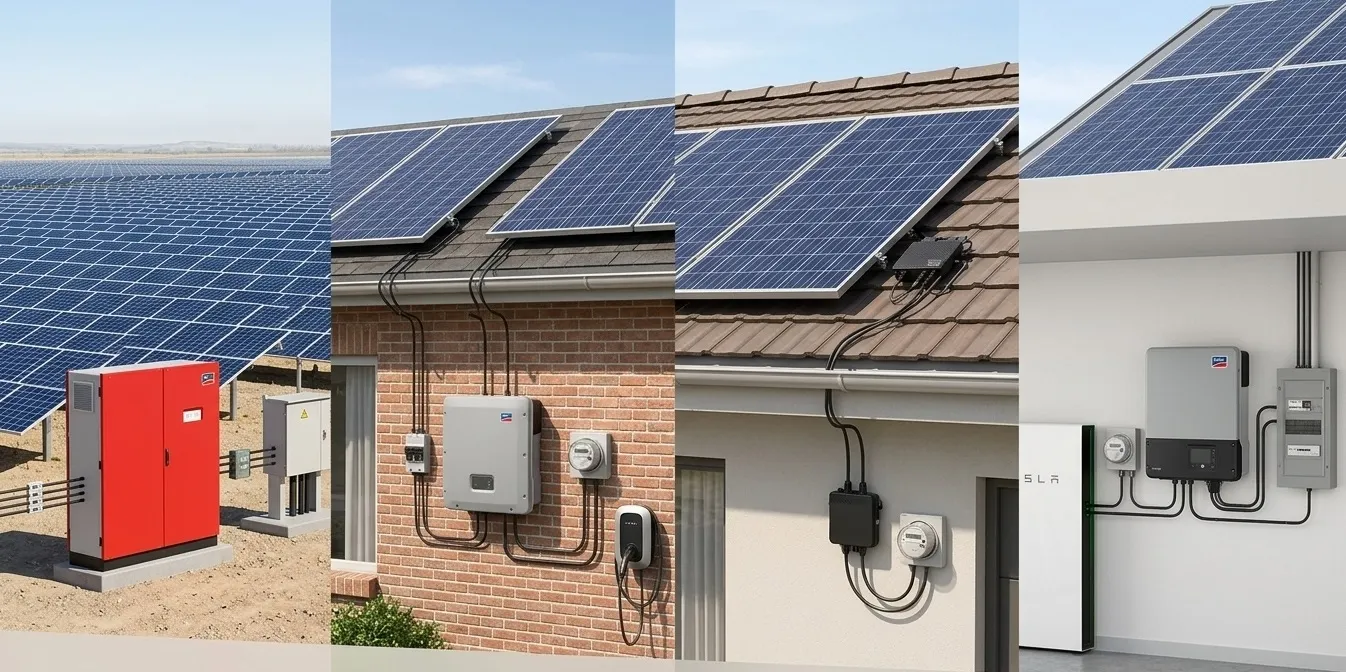
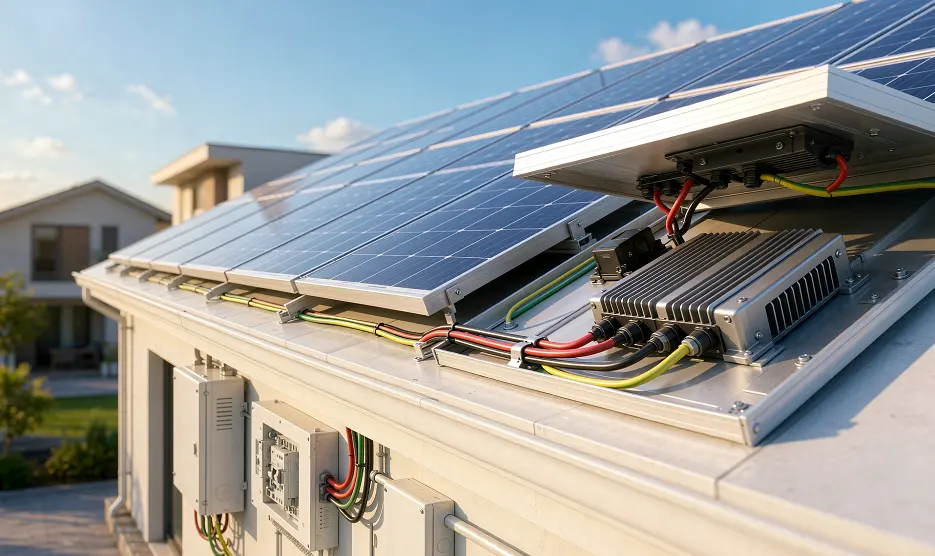
With the increasing popularity of solar power systems in the business world, the commercial solar inverter has emerged as one of the most crucial elements in a photovoltaic (PV) system. Commercial buildings are usually powered by AC, while solar panels produce DC power. The inverter also facilitates energy production, system interaction, protection and monitoring.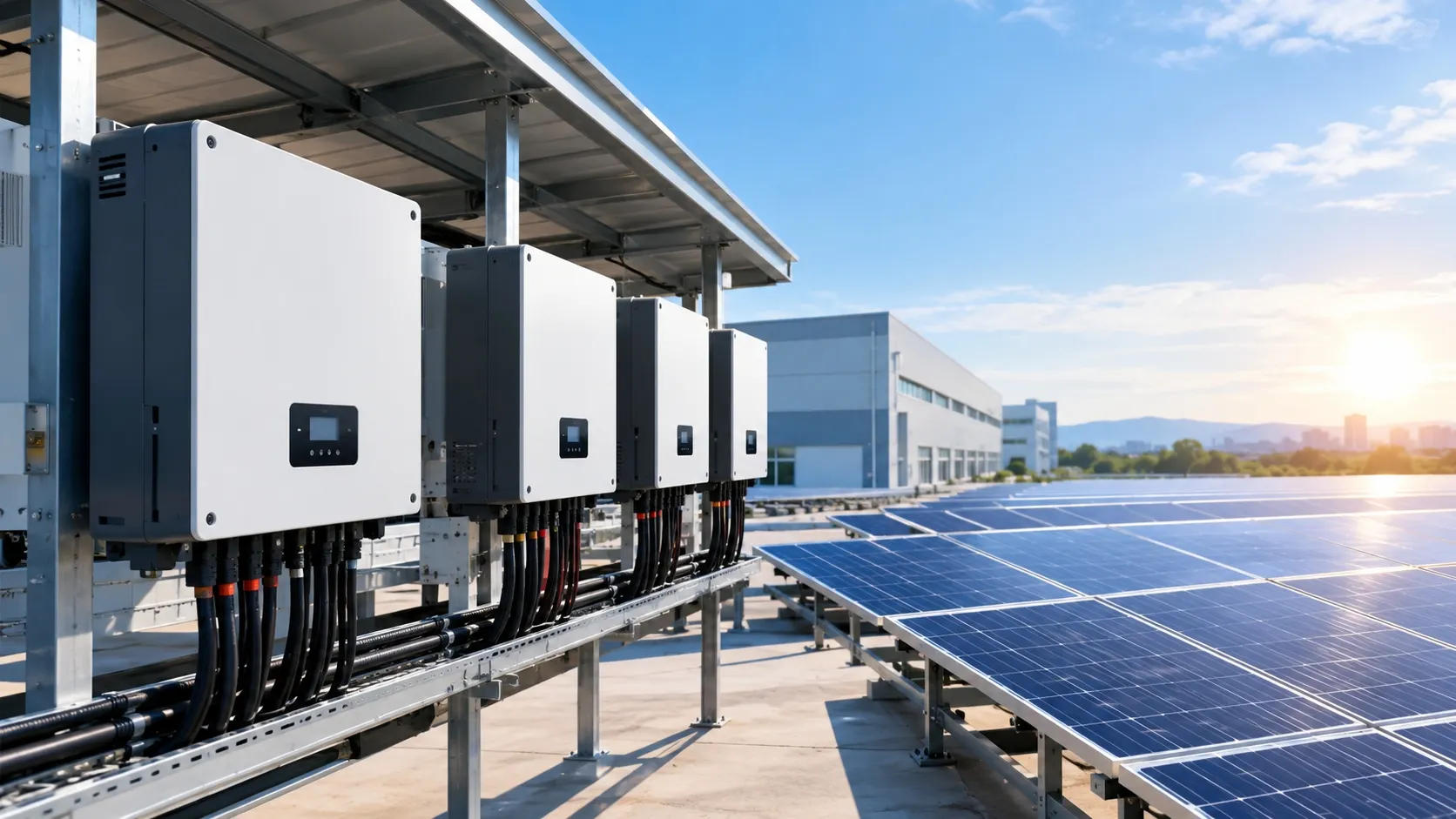
The commercial solar inverters are not just bigger versions of residential solar inverters. They are designed for increased power output, three-phase electric systems, complex PV arrays, rigorous operating conditions and for commercial use over a long period of time.
By understanding the differences between commercial solar inverters, businesses, EPC contractors, solar energy installers, and facility managers can choose the right equipment for their solar projects.
What Is a Commercial Solar Inverter?
A commercial solar inverter is a power-conversion device used for solar power applications that are installed in business buildings, factories, warehouses, office buildings, schools, retail properties, agriculture buildings, and other larger properties.
It is used to transform direct current (DC) from solar panels into alternating current (AC) that can be utilized by the building or sent back into the electrical grid.
But today commercial inverters do more than just convert from DC to AC. They can also provide:
- Maximum Power Point Tracking (MPPT)
- Grid synchronization
- Voltage and frequency control
- Anti-islanding protection
- Overvoltage and overcurrent protection
- Remote system monitoring
- Fault detection and diagnostics
- Reactive power management
- Energy storage integration on compatible systems
Inverter selection is thus not only important for energy conversion efficiency of commercial PV projects, but also for system design, reliability, maintenance and long-term operating costs.
How Are Commercial Solar Inverters Different From Residential Inverters?
The most significant distinction is the scale of the systems and the complexity of the electrical systems.
Typical residential PV projects feature a smaller PV array and a simpler electrical load. Hundreds or thousands of solar panels can be used in commercial projects, and the roof orientations, DC voltage, phase, and grid interconnection needs are more complex.
The following points are usually taken into consideration when designing commercial solar inverters:
Higher Power Capacity
The electricity demand for commercial buildings is typically much higher than that of residential homes. Commercial inverters can then be purchased in much higher power ratings and are often used in more than one unit to power up larger PV systems.
Several inverters can also be connected to form a system of tens of kilowatts, hundreds of kilowatts or even megawatt scale.
Three-Phase Power
Commercial and industrial facilities typically have a three-phase electrical service. Commercial solar inverters are therefore built to be used with three phase electrical systems.
They're ideal for use in a variety of industrial and commercial settings: manufacturing plants, warehouses, shopping centers, office buildings, and agricultural facilities.
Higher DC Input Capability
Long strings of solar panels and higher DC voltages can be employed for large commercial PV systems. The project's panel configuration, voltage range, current demand and string design must therefore be supported by the inverter.
Care should be taken in selecting equipment, especially with regard to maximum DC voltage, MPPT voltage range, and maximum input current.
Multiple MPPT Channels Improve Design Flexibility
Maximum Power Point Tracking (MPPT) is one of the key attributes that make commercial solar inverters special.
Solar panels are not always under the same conditions. The roof sections can be oriented in various directions, have different pitch angles, and be shaded differently.
Several MPPTs enable various sets of PV strings to function under their respective max power point conditions.
For instance, a business warehouse may have:
- A south-facing roof section
- An east-facing roof section
- A west-facing roof section
- Areas affected by partial shading
- Multiple roof elevations
Multi MPPT inputs allow easy design of the PV system to accommodate these conditions instead of considering the entire array as a single unit.
Therefore, the MPPT count should be thought of in conjunction with the actual roof configuration and not as a number found on a spec sheet.
String vs. Central Commercial Solar Inverters
Commercial solar projects commonly use string inverters or central inverters, depending on system size and site characteristics.
Commercial String Inverters
A string inverter manages several strings of solar panels. Multiple string inverters can be distributed across a large commercial installation.
Their advantages can include:
- Modular system design
- Multiple MPPT channels
- Easier expansion
- Reduced impact from individual inverter failures
- Flexible installation
- Easier replacement and maintenance
String inverters are particularly suitable for commercial rooftops with different orientations or moderately complex layouts.
Central Inverters
A central inverter is used to bundle up many DC circuits into a single, high-power inverter.
Central inverter architecture may be suitable for large (relative uniformity) ground-mounted PV systems with similar operating conditions and PV array orientations.
A downside to the centralized system is that it can focus more production capacity in fewer pieces of equipment. If a major inverter is out, a greater percentage of the PV plant can be impacted.
Efficiency Matters, But It Is Not the Only Factor
One of the important specifications of comparing commercial solar inverters is the conversion efficiency.
A highly efficient inverter ensures the generated electricity from the PV array is converted to usable AC electricity with few conversion losses.
But companies shouldn't choose an inverter by its witty efficiency rating.
Other factors may also be just as significant as to lifetime energy production:
- MPPT performance
- Operating temperature
- DC/AC ratio
- Partial shading
- Array orientation
- System availability
- Thermal management
- Maintenance requirements
- Monitoring capabilities
If the inverter is not designed to work well with the PV array, then a higher efficiency rating does not necessarily result in a better performance for the project.
Thermal Management and Durability
Commercial solar inverters are used for many hours a day, and can be used outdoors in harsh conditions.
High temperatures, dust, humidity, rain, and airflow limitations can occur on rooftops. There may be other challenges in industrial environments.
Thermal management is therefore key to this.
Depending on the design, commercial inverter cooling can be forced-air cooling, or other thermal-management technology. Efficient heat removal ensures stable performance and reliability.
In assessing the equipment, companies should take into consideration the working temperature range, enclosure protection, cooling design, installation requirements and setup condition of the project site.
Smart Monitoring Is Increasingly Important
Today, a commercial solar inverter can be more than a power converter. It can be a significant data and control point in the solar energy system.
By remote monitoring, facility managers and operators can monitor information including:
- Current power output
- Daily and lifetime energy production
- DC and AC voltage
- String or MPPT performance
- Inverter temperature
- Fault conditions
- Grid conditions
- Power factor and reactive power
Some advanced commercial systems can also link to SCADA, energy management systems (EMS), building management systems (BMS), meters and other monitoring systems.
The compatibility of communication should be verified prior to the items purchase for larger projects. Protocols and interfaces can range from RS485, Ethernet, Modbus, and other industrial communication protocols.
Grid Support and Safety Features
Commercial solar systems need to be safe and meet the relevant electrical and utility standards.
Commercial Inverters might offer features such as:
- Anti-islanding protection
- Voltage regulation
- Frequency response
- Reactive power control
- Power factor control
- Grid fault response
- Remote power limitation
- Export control
The exact requirements depend on the location, utility, project size, and applicable interconnection rules.
For this reason, the inverter should be evaluated against the project's grid requirements before procurement rather than after installation.
Can Commercial Solar Inverters Work With Battery Storage?
Many modern commercial solar inverter platforms can be integrated with battery energy storage systems (BESS), although compatibility depends on the inverter architecture.
Solar-plus-storage systems can allow businesses to:
- Store excess solar electricity
- Shift energy use to different periods
- Reduce peak demand
- Increase solar self-consumption
- Provide backup power where the system is designed for it
- Improve energy-management flexibility
Commercial hybrid inverter systems may also communicate with battery management systems and energy management platforms.
If battery storage is part of a future expansion plan, it can be useful to consider storage compatibility during the initial inverter selection instead of designing the PV system without future integration in mind.
How to Choose a Commercial Solar Inverter
Businesses should evaluate the complete project rather than selecting an inverter based on price alone.
Consider these key factors:
1. PV system size: Match the inverter's power rating and DC input capabilities to the solar array.
2. Electrical service: Confirm whether the facility requires three-phase or another electrical configuration.
3. MPPT requirements: Consider roof orientation, shading, string configuration, and array complexity.
4. Efficiency: Compare realistic operating efficiency rather than relying only on the maximum rating.
5. Environmental conditions: Check temperature range, enclosure protection, cooling, humidity, dust, and installation location.
6. Monitoring: Look for remote monitoring, diagnostics, data logging, and communication compatibility.
7. Grid requirements: Confirm required certifications, grid-support functions, export controls, and utility requirements.
8. Service and warranty: Evaluate warranty coverage, technical support, spare parts, and service response.
9. Future expansion: Consider whether additional PV capacity, batteries, EV charging, or energy-management functions may be added later.
Frequently Asked Questions
What is the main difference between commercial and residential solar inverters?
Commercial solar inverters are used for larger PV systems, higher power capacity, three-phase electrical systems, more complex arrays and more advanced monitoring and grid management.
Are commercial solar inverters more efficient?
The efficiency of commercial inverters can be very high and can differ depending on the model and operating conditions. The efficiency of the inverter, PV design, MPPT efficiency, temperature, shading and system availability are factors that affect overall system performance.
Are string inverters suitable for commercial solar?
Yes. Commercial string inverters are currently popular in rooftop and other distributed PV applications, due to their modularity, multiple MPPT channels and system flexibility.
What size commercial solar inverter do I need?
It varies according to the PV array capacity, DC/AC ratio, electrical service, predicted PV energy production, load profile, grid requirements, and project design. The inverter size should be determined during the design of the PV system.
Can a commercial inverter support battery storage?
There are some commercial inverters available which are meant to integrate energy storage, and there are other solar-only inverters. Before buying, always check battery voltage, communication, operating modes and system compatibility.
Conclusion
A commercial solar inverter is a much more than just a transformer that transforms DC electricity into AC electricity. It plays a key role in energy conversion, MPPT, system protection, grid interaction, monitoring and energy storage management in compatible systems.
Commercial solar inverters really offer the flexibility to manage larger PV arrays, three-phase power, higher electrical loads, more complicated system layouts, advanced monitoring, and more demanding operating conditions.
In the case of business owners with an interest in a commercial solar system installation, the smart choice is to take a broader look at the system as a whole and not dwell on a particular specification. All of the above factors need to be considered together.
If a commercial solar inverter is matched, a PV system can be more easily monitored, maintained, expanded and operated throughout its service life.
Share on Social:


- NEXT: Types of Solar Inverters: String, Micro & Hybrid Guide
- NEXT: Null
In This Article
- 1 What Is a Commercial Solar Inverter?
- 2 How Are Commercial Solar Inverters Different From Residential Inverters?
- 3 Multiple MPPT Channels Improve Design Flexibility
- 4 String vs. Central Commercial Solar Inverters
- 5 Efficiency Matters, But It Is Not the Only Factor
- 6 Thermal Management and Durability
- 7 Smart Monitoring Is Increasingly Important
- 8 Grid Support and Safety Features
- 9 Can Commercial Solar Inverters Work With Battery Storage?
- 10 How to Choose a Commercial Solar Inverter
-
11
Frequently Asked Questions
- 11.1 What is the main difference between commercial and residential solar inverters?
- 11.2 Are commercial solar inverters more efficient?
- 11.3 Are string inverters suitable for commercial solar?
- 11.4 What size commercial solar inverter do I need?
- 11.5 Can a commercial inverter support battery storage?
- 12 Conclusion
