


Micro Inverter Solar System
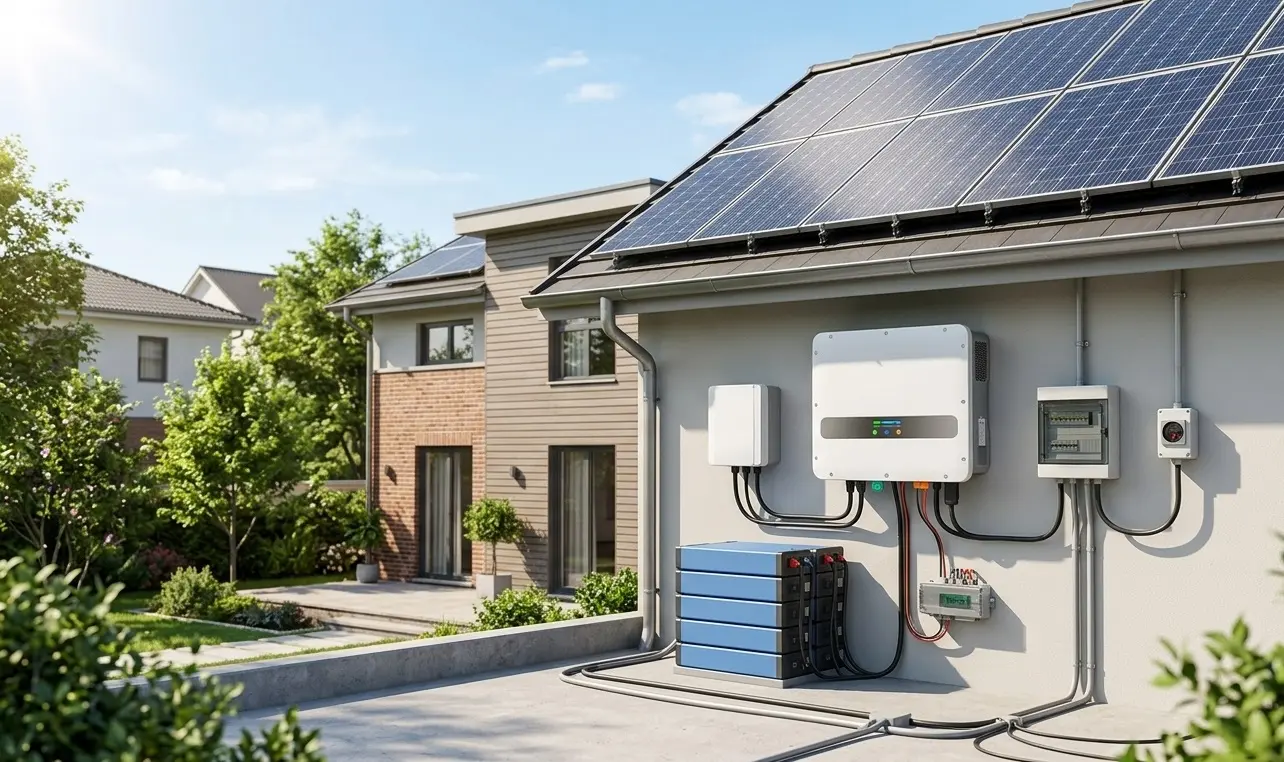
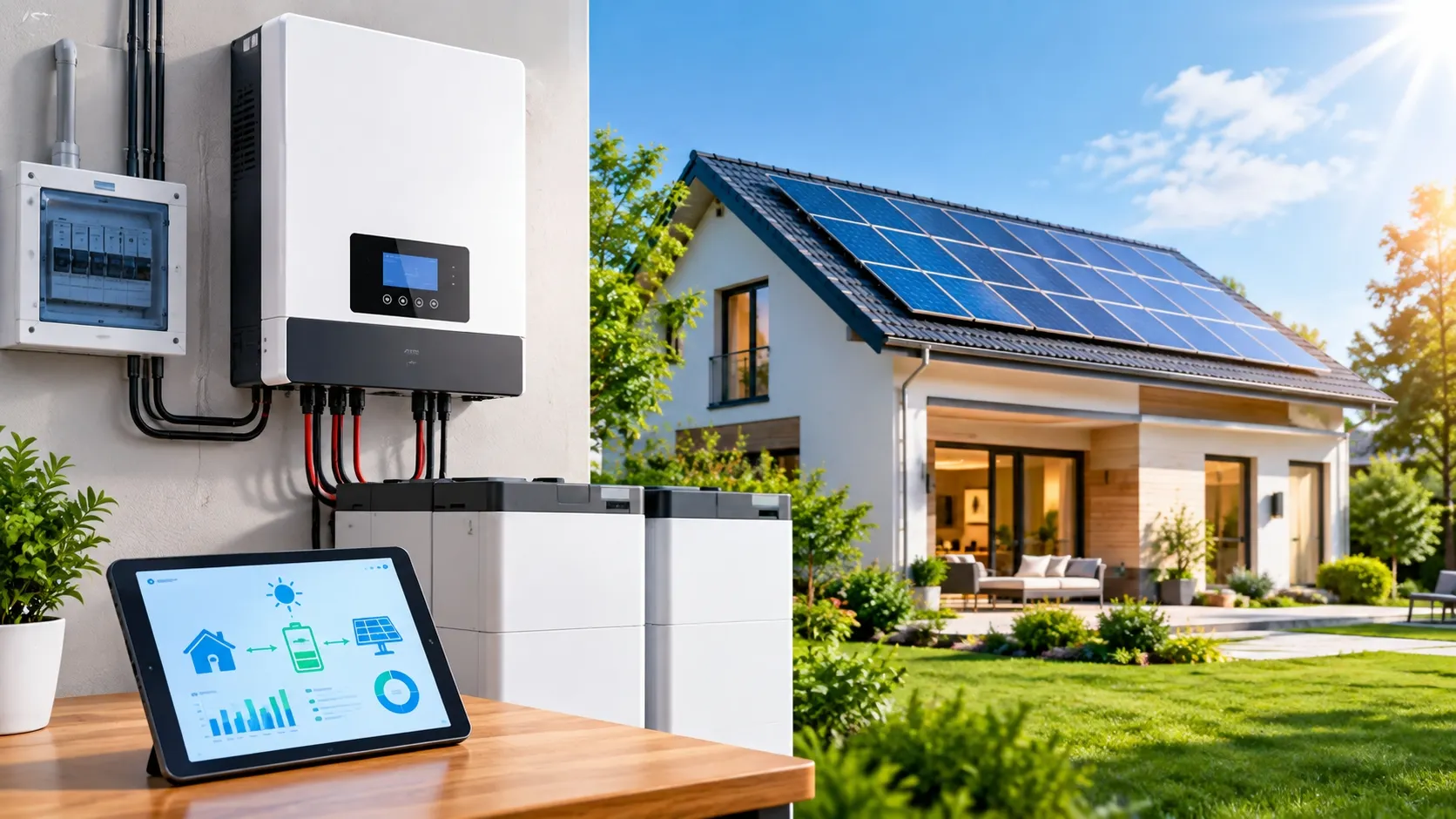
The increasing sophistication of solar energy systems for homes means homeowners have more options than ever when it comes to choosing solar panels, inverters, batteries and monitoring equipment. The microinverter solar system has become another technology that has gained a lot of attention.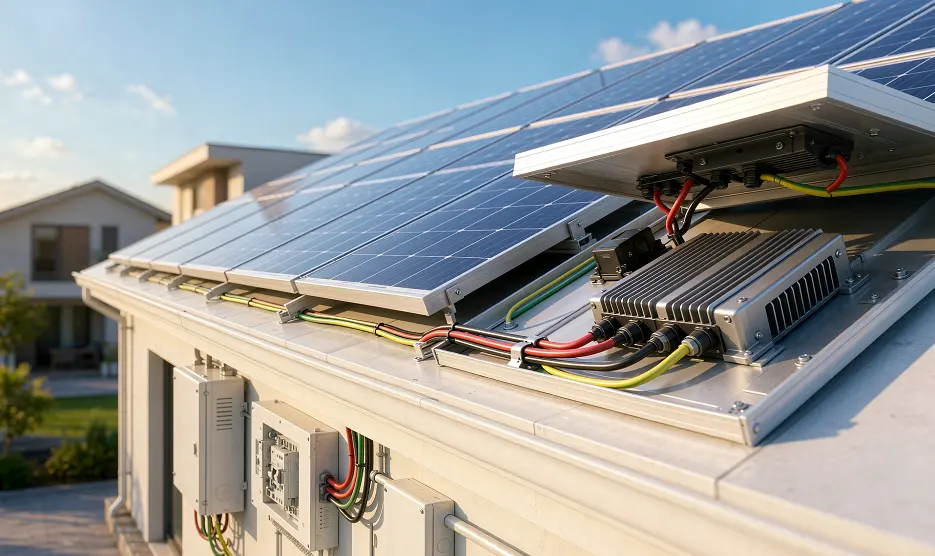
A microinverter solar system is different from the traditional string inverter system which connects multiple solar panels together and has a single inverter at the central part of the solar power system. The module-level approach can help enhance the flexibility, monitoring, and performance of the system when roof conditions are complex.
But what is a microinverter and how does a microinverter solar system operate and what are its advantages for your home? This guide covers the technology, advantages, disadvantages, installation factors, and comparisons between microinverters and string inverters.
What Is a Microinverter Solar System?
Microinverter solar system is a photovoltaic system where the direct current (DC) power produced by the solar panel is converted to alternating current (AC) power near the solar panel.
It should be noted that solar panels generate direct current (DC) power, whereas the majority of domestic electrical appliances and electrical grid operates on alternating current (AC). This is the function of an inverter that converts DC energy to AC energy.
A string inverter system is a typical string inverter system, where multiple panels are connected to each other in a series circuit to form a string. All the DC power is then fed to a common inverter.
Microinverters make the conversion at the module level. Every module is fitted with its own micro inverter, making the modules work more autonomously.
This configuration is especially beneficial for rooftops that face in more than one direction, partial shade, varying roof pitches, or other factors that may result in different PV production for different panels.
How Does a Microinverter Solar System Work?
The basic operating process is straightforward:
- Solar panels capture sunlight.
- Photovoltaic cells convert sunlight into DC electricity.
- A microinverter attached to the panel converts DC electricity into AC electricity.
- AC power from the individual microinverters is combined through the system's electrical wiring.
- Electricity is supplied to the home's electrical loads or exported to the grid.
- A monitoring platform can track system performance at the panel level.
Depending on the power conversion equipment in each panel, the performance of any one module may not directly relate to the output performance of the entire solar array.
One of the most significant advantages of the microinverter architecture over the string inverter architecture is this.
Microinverter vs. String Inverter
It really depends on roof, system size, budget, and the type of monitoring desired whether to use a microinverter or string inverter.
A string inverter links multiple solar panels together to a single inverter. This can be a low cost, relatively simple configuration because all panels are similarly oriented and exposed to similar amounts of sunlight.
A microinverter system is a system that has an inverter in each panel. According to the U.S. Department of Energy, microinverters enable each module to work independently, which can be beneficial in instances of shading.
The main differences include:
| Feature | Microinverter System | String Inverter System |
|---|---|---|
| Inverter location | At each panel | Central location |
| Module-level operation | Yes | Limited |
| Panel-level monitoring | Typically available | Usually system/string level |
| Shading management | Strong module-level advantage | More dependent on system design |
| Complex roof compatibility | Excellent | May require careful string design |
| Initial equipment cost | Generally higher | Generally lower |
| Expandability | Often flexible | Depends on inverter capacity |
Neither architecture is automatically suitable for every property. A professional solar designer should evaluate the roof and electrical requirements before selecting the system architecture.
Key Benefits of Microinverter Solar Systems
1. Better Performance Under Partial Shading
One of the most commonly cited considerations for using microinverters is shading.
Individual panels are shaded at various times of the day by trees, chimneys, adjacent buildings, roof structures, etc. With a conventional string configuration, poor performance from a module can cause degradation of performance from a string.
Each panel can work more independently with microinverters. According to the Department of Energy, the modules don't need to rely on a single central inverter like they do on a standard inverter array as much, making it easier to avoid shading effects on other modules.
But the loss of energy due to shading of a panel is not averted by microinverters. A shaded panel can also generate less electricity. The benefit of this is that the effect can be more targeted.
2. Panel-Level Monitoring
A crucial benefit of a microinverter solar system is detailed system monitoring.
Homeowners can sometimes view individual performance of solar panels, rather than the overall output of the solar array.
This can help in troubleshooting. If, for instance, one panel is generating a lot less energy than the rest of the modules, the system owner or installer could more easily find the issue.
It is also helpful to monitor the system at the module level to monitor the long-term performance of the system and to detect unusual changes in production.
3. Greater Roof Design Flexibility
Not all roofs are rectangular and at right angles to a direction.
Panels can be installed on a residential roof on a south, east, west, or differently angled section of a roof. These more complicated designs can be simpler to design with a microinverter architecture where each panel can work separately.
This can be especially useful for houses where the sheer amount of roof space is more critical than the simplicity of the panel layout.
4. Reduced Impact of Module Mismatch
Solar panels are not necessarily identical. Variations may be due to manufacturing tolerances, aging, temperature, orientation, dirt or shading.
Since the microinverter works at the module level, variations in performance between individual modules are not as likely to cause a similar effect on the overall string of modules, as in a traditional array setup.
The Department of Energy classifies the Microinverter technology as one of the module-level power electronics technologies that can mitigate shading, multiple roof planes and module mismatch effects.
5. Flexible System Expansion
Microinverter systems can facilitate future solar expansion for some residential installations.
Each panel can be accompanied by its own inverter, so adding more panels does not necessarily mean that the inverter must be replaced with a larger version of the same. But the expansion is still subject to local permits and ordinances, electrical capacity, equipment compatibility, and original design of the system.
Please check with qualified installation staff before ordering equipment for expansion.
Potential Disadvantages of Microinverters
Microinverters also have trade-offs.
Higher Initial Cost
One of the most important disadvantages is the potential for a higher upfront equipment cost. Microinverter system is a system that needs several inverter units instead of one central inverter.
According to the Department of Energy, microinverters may cost more upfront than traditional configurations of inverters.
But the overall project economics must take into account the production, monitoring, maintenance, complexity of the roof, warranties and long-term needs of the system, and not just the price of the equipment.
More Electronics on the Roof
With microinverters, there will be more electronic equipment on the roof, since they are placed near the solar modules.
This involves considerations regarding equipment choice, protection of the environment, installation quality and ease of access.
All modern types of microinverter are made with the purpose of being used for solar projects, and installers need to adhere to both the manufacturer's installation guidelines and electrical codes.
Installation Can Be More Complex
While microinverter technology may make some system designs easier to implement, it also demands multiple locations of electrical equipment.
It is best to have it installed by a qualified individual familiar with local electrical, structural, fire and utility needs.
Are Microinverters Good for Solar Batteries?
Microinverters can be applied in solar-plus-storage, and system design is important for battery integration.
A battery is a storage system for electricity that can be used later in the day (e.g., during the night or during a power outage). There are two types of AC coupled and two types of DC coupled solar-plus-battery systems.
According to a report from the Department of Energy, solar energy can be converted to either DC or AC electricity, depending on the design system.
When selecting a microinverter platform, look for battery compatibility, back-up capabilities, energy management, inverter communication and local electrical needs.
Are Microinverters Worth It?
Whether a microinverter solar system is worthwhile depends on the characteristics of the property.
Microinverters may be particularly attractive for:
- Homes with partial roof shading
- Roofs with multiple orientations
- Properties with several roof planes
- Homeowners who want detailed panel-level monitoring
- Solar systems where future expansion is important
- Installations where module-level optimization is valuable
A string inverter may be a practical alternative when the roof is relatively simple, panels have similar orientation and shading conditions, and minimizing upfront equipment costs is a priority.
The right choice should therefore be based on the complete solar system design rather than the inverter technology alone.
What Should You Consider Before Buying a Microinverter?
Before choosing a microinverter solar system, compare several factors:
Panel compatibility: Make sure the microinverter's electrical specifications match the solar panels.
Power rating: The inverter should be appropriately sized for the module's voltage, current, and power characteristics.
Roof conditions: Analyze shading, orientation, tilt, and roof planes.
Monitoring: Check whether the system provides the level of monitoring you want.
Battery compatibility: If energy storage is planned, verify that the inverter and battery architecture are compatible.
Warranty: Compare warranty coverage and understand what equipment and labor are included.
Installation requirements: Make sure the system meets local electrical, building, fire, and utility requirements.
Long-term service: Consider how the equipment will be diagnosed, replaced, and serviced over its operating life.
Frequently Asked Questions
Do microinverters increase solar panel output?
Microinverters do not make a solar panel produce more sunlight-based energy than the panel can physically generate. Their main advantage is that they allow individual modules to operate more independently, which can reduce the system-wide impact of shading and mismatch.
How long do microinverters last?
Lifespan depends on the manufacturer, model, installation environment, and operating conditions. The U.S. Department of Energy notes that microinverters can have lifetimes similar to solar panels, while inverter lifespans vary by technology and product.
Can one failed microinverter shut down the whole solar system?
Generally, a failure of one microinverter affects the associated panel rather than shutting down the entire array. This module-level architecture is one of the fundamental differences between microinverters and centralized string inverters.
Are microinverters better for shaded roofs?
They can be advantageous on partially shaded roofs because the modules operate more independently. However, proper solar design remains essential because a heavily shaded panel will still generate less energy.
Final Thoughts
A microinverter solar system offers a per-module solution to solar power conversion. Microinverters can offer more flexibility in design, detailed monitoring, and reduced panel-to-panel interaction, as they convert the DC electricity to AC electricity at or near each panel.
These can be especially beneficial in unique house designs, houses that are multi-leveled, partially shaded, have an extraordinary requirement for panel-level performance data, or have a south-facing roof.
But microinverters can be more expensive and require more electronics to be spread throughout the solar array. Therefore, the optimal system will be determined by the roof's characteristics, energy targets, budget, battery design, local building codes and regulations, and maintenance expectations.
While the upfront cost of the inverter is important, a homeowner should also consider the amount of energy produced, whether they want to see monitoring data, flexibility in system design, warranty coverage, and total ownership needs when comparing microinverters and string inverters.
When designed and installed properly, microinverters can be a viable system configuration for contemporary residential photovoltaic (PV) solar systems.
Share on Social:


- NEXT: Hybrid Inverter for Solar
- NEXT: Null
In This Article
- 1 What Is a Microinverter Solar System?
- 2 How Does a Microinverter Solar System Work?
- 3 Microinverter vs. String Inverter
- 4 Key Benefits of Microinverter Solar Systems
- 5 Potential Disadvantages of Microinverters
- 6 Are Microinverters Good for Solar Batteries?
- 7 Are Microinverters Worth It?
- 8 What Should You Consider Before Buying a Microinverter?
- 9 Frequently Asked Questions
- 10 Final Thoughts
