


Solar-Powered Tiny House: Complete Solar Energy Guide
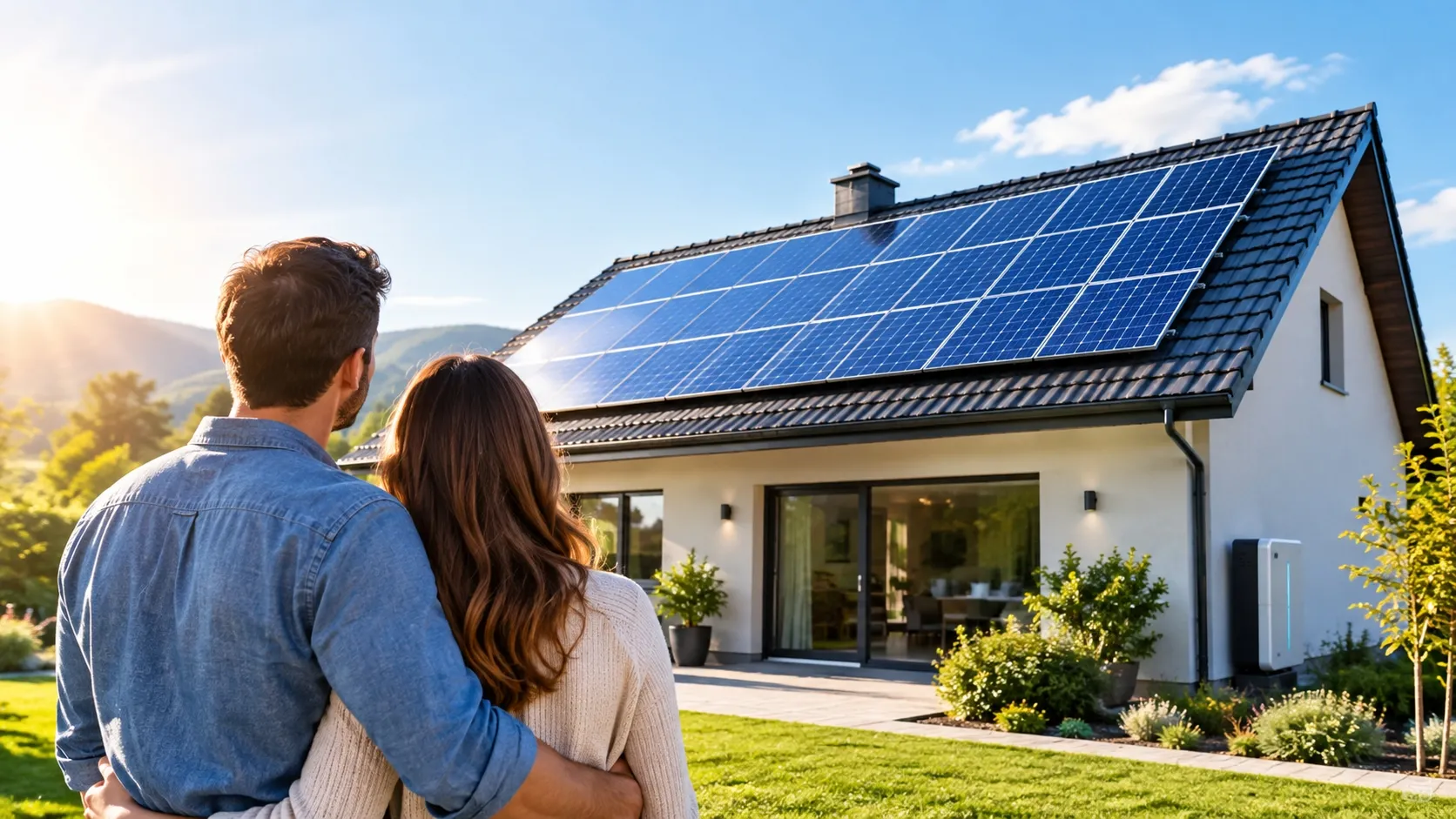
A solar powered, tiny home can be a space that is energy independent, less reliant on the grid, and provides tiny home living. Solar power is a viable solution for tiny homes, both grid-connected and off-grid, as they typically consume less electricity than traditional homes.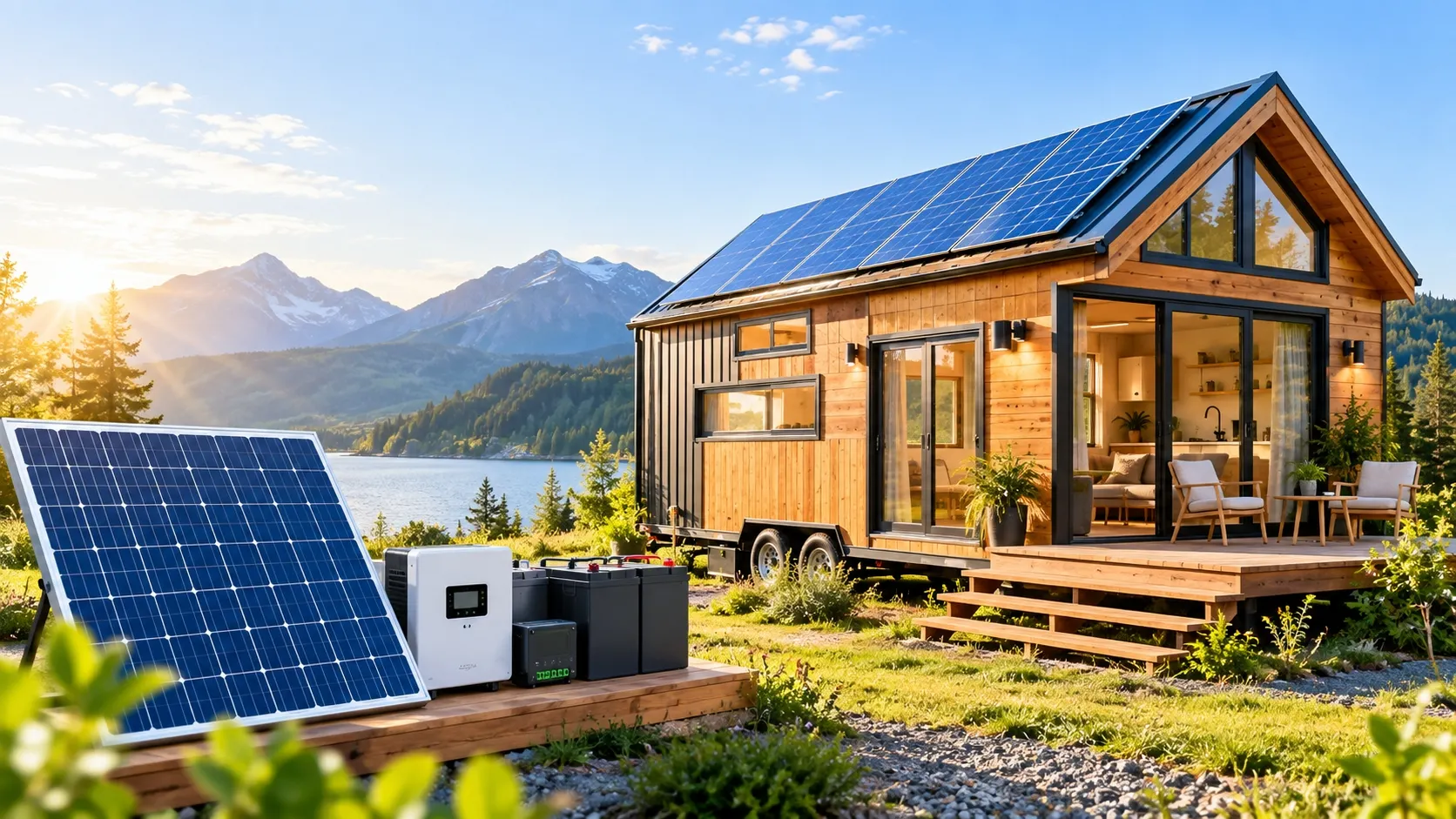
But there is more to installing solar panels on a tiny home than just placing PV panels on the roof. This system should be tailored to how much electricity you use, the amount of sunlight that's available, the amount of battery storage you have, the appliances you use, the location, your lifestyle, etc.
If you're looking to build a solar powered tiny home on the grid or off-grid, this guide explains how a tiny house solar system works, what equipment you need, and what to consider before building.
What Is a Solar-Powered Tiny House?
PV panels harness the sun's energy to produce electricity, which is then used in a solar-powered tiny home. The electricity may be used directly for domestic use or for electricity storage in batteries for future use or used in combination with electricity from electrical utilities, depending on the system design.
An average solar setup for a tiny home could consist of:
- Solar panels
- Solar inverter
- Battery storage
- Charge controller
- Electrical wiring and protection equipment
- Monitoring equipment
- AC household circuits
A modern system doesn't need to be powered exclusively by DC power for a tiny house. Most household appliances require AC electricity, but the electricity produced by a solar panel is DC. Inverter: The inverter transforms the direct current (DC) electricity from the solar cells to alternating current (AC) electricity for use.
This is because it is possible to use conventional refrigerators, computers, televisions, kitchen equipment and other home appliances without having to buy special DC equipment.
How Does Solar Power Work in a Tiny House?
The overall process is fairly simple.
Solar panels generate electric energy during the day. The inverter transforms the electricity into AC electricity that is used in the home. If a system is battery-powered, extra electricity can be stored and utilized when needed.
The battery bank is especially critical on an off-grid tiny home as the solar power fluctuates during the day and between seasons.
A simplified system seems to be like this:
Sunlight → Solar Panels → Inverter → Home Appliances
With battery storage:
Sunlight → Solar Panels → Charge Controller/Inverter → Battery → Home Appliances
A grid-connected system works differently because the utility grid can supply electricity when solar production is insufficient. Depending on local utility rules and system configuration, excess electricity may also be exported to the grid.
How Much Solar Power Does a Tiny House Need?
There is no common standard size for a solar panel for every tiny house.
A small house with LED lights, an efficient refrigerator, a laptop, a water pump and a few kitchen gadgets might use a lot less power than a small house with electric heating, air conditioning, electric water heater, induction cooktop, and other high-powered appliances.
The first step is to work out how much electric you expect to use each day.
Estimate for each appliance:
Power consumption × hours of use = daily energy consumption
For example, if an appliance uses 100 watts and operates for 5 hours per day:
100 W × 5 hours = 500 Wh
Do this calculation for the main appliances and total the figures.
It is also advisable to allow for extra capacity for seasonal variation, cloudy days, new appliances and unforeseen energy requirements. The original source also stresses pre-calculation of electricity needs prior to sizing an off-grid system.
Solar Panels for a Tiny House
Obviously, the solar panels are installed on the roof, but sometimes, this is not the most suitable option.
Tiny houses have restricted roof space and the roof may be blocked by vents, skylights, air conditioning machines or other building features that decrease roof space.
Other factors include roof orientation and shading. Solar production can be significantly impacted by trees, adjacent structures, hills and other site obstructions.
A fixed solar panel system might be more flexible for a stationary tiny home. Panels do not necessarily have to be on the roof if they are placed in a different location with more sunlight.
Portable or separately mounted solar panels can also be helpful for a mobile tiny home. The original article notes that mobility of the panels enables owners to adjust the array's location to suit the sun's position at various parking sites.
Battery Storage for an Off-Grid Tiny House
One of the most important aspects of any off the grid tiny house is the battery storage.
The electricity generated by solar panels is mostly generated during the day but electricity use is often ongoing at night. Batteries overcome this by storing energy for periods when the sun is not being generated, and at night.
Battery capacity does not equal Solar panel capacity.
The amount of energy you can produce depends on the size of your solar panels, and the amount of energy you can save for use later depends on your batteries.
When choosing a battery system, take into account:
- Daily electricity consumption
- Desired backup duration
- Winter solar production
- Battery usable capacity
- Depth of discharge
- Battery chemistry
- Operating temperature
- Expected service life
Lithium-based batteries, particularly lithium iron phosphate (LiFePO4), are commonly considered for modern off-grid applications because of their energy density, cycle life, and usable capacity.
Should You Use AC or DC Appliances?
One common misconception is that a solar-powered tiny house needs to use DC appliances everywhere.
Solar panels produce DC electricity, but most standard household appliances are designed for AC power. A properly sized inverter allows a tiny home to use ordinary AC appliances.
This can simplify the design because homeowners do not have to purchase specialized DC refrigerators, kitchen appliances, computers, or other equipment.
A more practical strategy is often to design the tiny house around normal AC household wiring while using efficient appliances and a properly sized solar inverter.
Some low-voltage DC components may still make sense in specific applications, but there is generally no need to redesign the entire home around DC appliances simply because the energy source is solar. The technical discussion in the source article also notes the role of modern inverters in converting PV-generated DC electricity into household AC power.
Solar Energy and High-Power Appliances
One of the biggest challenges for a tiny house solar system is high electricity consumption.
Electric heating, air conditioning, water heaters, electric dryers, ovens, and induction cooktops can consume considerably more energy than LED lighting or laptop computers.
This does not necessarily mean you cannot use them. It means they must be included when sizing the solar array, inverter, and battery system.
Energy efficiency should therefore be considered before adding more solar panels.
For example, improving insulation, sealing air leaks, choosing an efficient refrigerator, installing LED lighting, and reducing unnecessary standby loads can lower the amount of electricity the solar system needs to produce.
In a tiny home, energy efficiency is especially valuable because limited roof area and limited battery space can make additional generation capacity more difficult to install.
What Happens During Cloudy or Winter Weather?
Solar power is not limited to sunny summer days, but electricity production varies with weather and season.
A system that works comfortably during summer may produce less electricity during shorter winter days or extended periods of cloudy weather.
This is particularly important for an off-grid tiny house.
Possible solutions include:
- Increasing solar panel capacity
- Increasing battery storage
- Reducing electricity consumption
- Using a backup generator
- Connecting to the utility grid
- Combining several energy sources
Where grid electricity is available, a grid-connected system can reduce the need for oversized battery storage. For remote tiny homes, however, careful system sizing and backup planning become much more important.
Solar Panel Maintenance
Most solar panels need very little maintenance, but should be checked periodically.
Solar production can be diminished by dust, leaves, bird droppings, snow and other debris. The real damage will vary based on the local environment, orientation of the panels, weather, and debris on the panels.
Snow may be a relevant factor in cold climates. In some instances, it might be possible to get the snow to melt on its own, but for those who are off the grid, the impetus to remove snow might be greater as every unit of available solar generation can be useful during winter.
Ground mounted panels may also be more readily available and maintainable than roof-mounted panels.
Is a Solar-Powered Tiny House Worth It?
Solar energy can be a viable alternative for those who own a tiny house and want to minimize their reliance on conventional energy sources.
Homes that have the strongest applications are often:
- Low or moderate electricity consumption
- Good solar exposure
- Energy-efficient appliances
- Sufficient space for solar panels
- Appropriate battery storage
- A clear understanding of daily energy needs
When the size of a tiny house is small, the electrical loads are high, little sunlight, heavy tree-shading, or tight space, the economics and practicability become more complex.
The objective isn't just to get as many solar panels installed as possible. It is better to make energy use as low as possible and then plan a solar energy system to meet reasonable daily demands.
Final Thoughts
The solar tiny house allows for a nice bundle of clean power, energy self-sufficiency and minimalist lifestyle. Today, residential solar systems are much more versatile than the initial off-grid systems, thanks to modern solar technology, efficient solar inverters, and battery storage.
The point is, planning right.
Before buying equipment, estimate how much electric power you will require, assess the amount of sunlight available, and determine if you will need batteries or if your tiny home will be “grid-tied” or “all electric.”
Most importantly, installing electrical and solar systems should meet the relevant local codes and safety standards. In cases where you're not sure about the system design, wiring, battery installation and electrical protection, having a professional help you can ensure that the system is sized appropriately and installed safely.
A good solar system doesn't mean having to give up modern conveniences. Rather, it does that by enabling the small space of a painstakingly crafted tiny home to function alongside a well-thought-out way of using appliances, managing energy, and harnessing renewable sources.
Share on Social:


- NEXT: How Much Does Solar Installation Cost
- NEXT: Null
In This Article
- 1 What Is a Solar-Powered Tiny House?
- 2 How Does Solar Power Work in a Tiny House?
- 3 How Much Solar Power Does a Tiny House Need?
- 4 Solar Panels for a Tiny House
- 5 Battery Storage for an Off-Grid Tiny House
- 6 Should You Use AC or DC Appliances?
- 7 Solar Energy and High-Power Appliances
- 8 What Happens During Cloudy or Winter Weather?
- 9 Solar Panel Maintenance
- 10 Is a Solar-Powered Tiny House Worth It?
- 11 Final Thoughts
