


Commercial Solar Energy: Complete Guide for Businesses
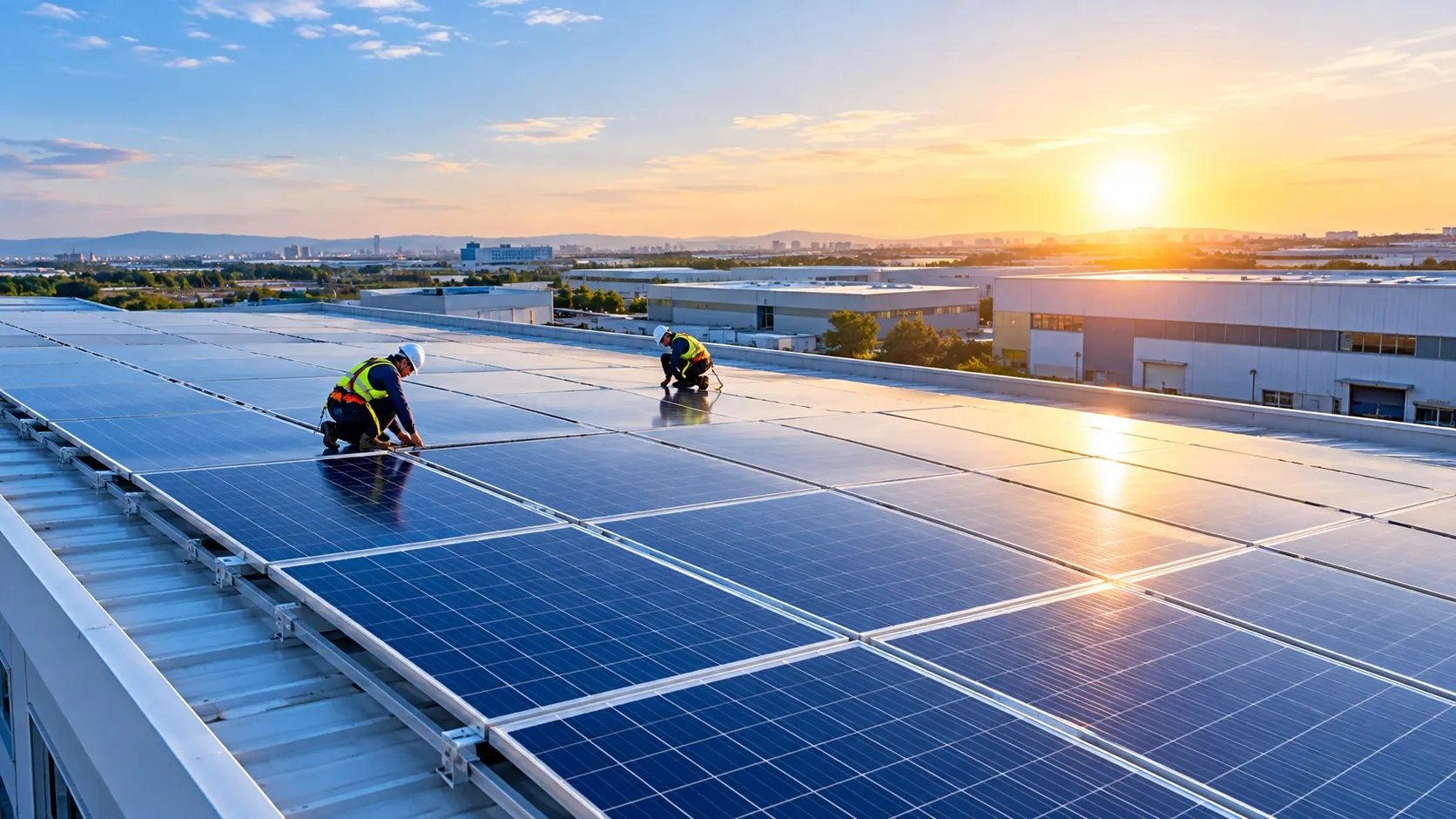
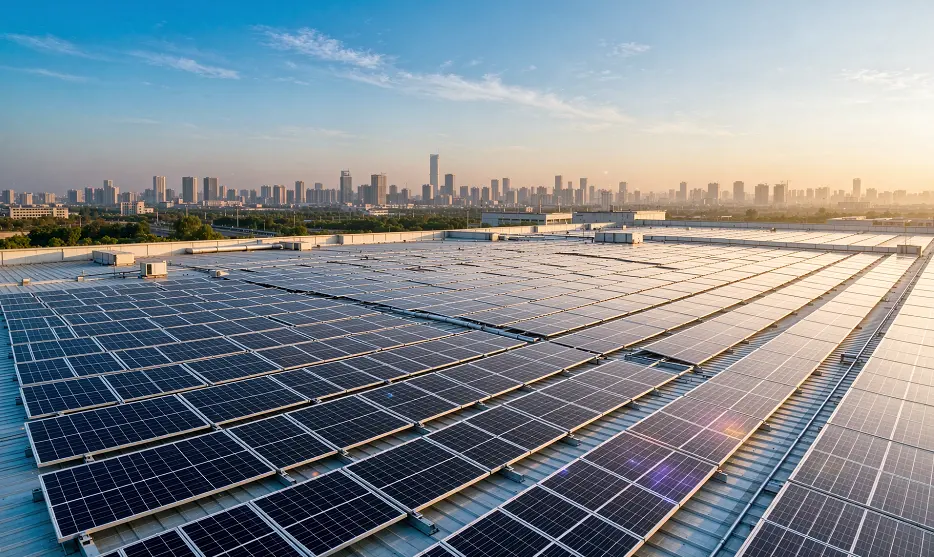
The commercial solar energy is an important solution for businesses to bring electricity cost under control, enhance energy resilience and lessen reliance on traditional energy sources. Commercial solar systems can be customized to meet the varying electricity requirements and site conditions across a range of uses from warehouses and factories, to offices, retail buildings, farms and large industrial facilities.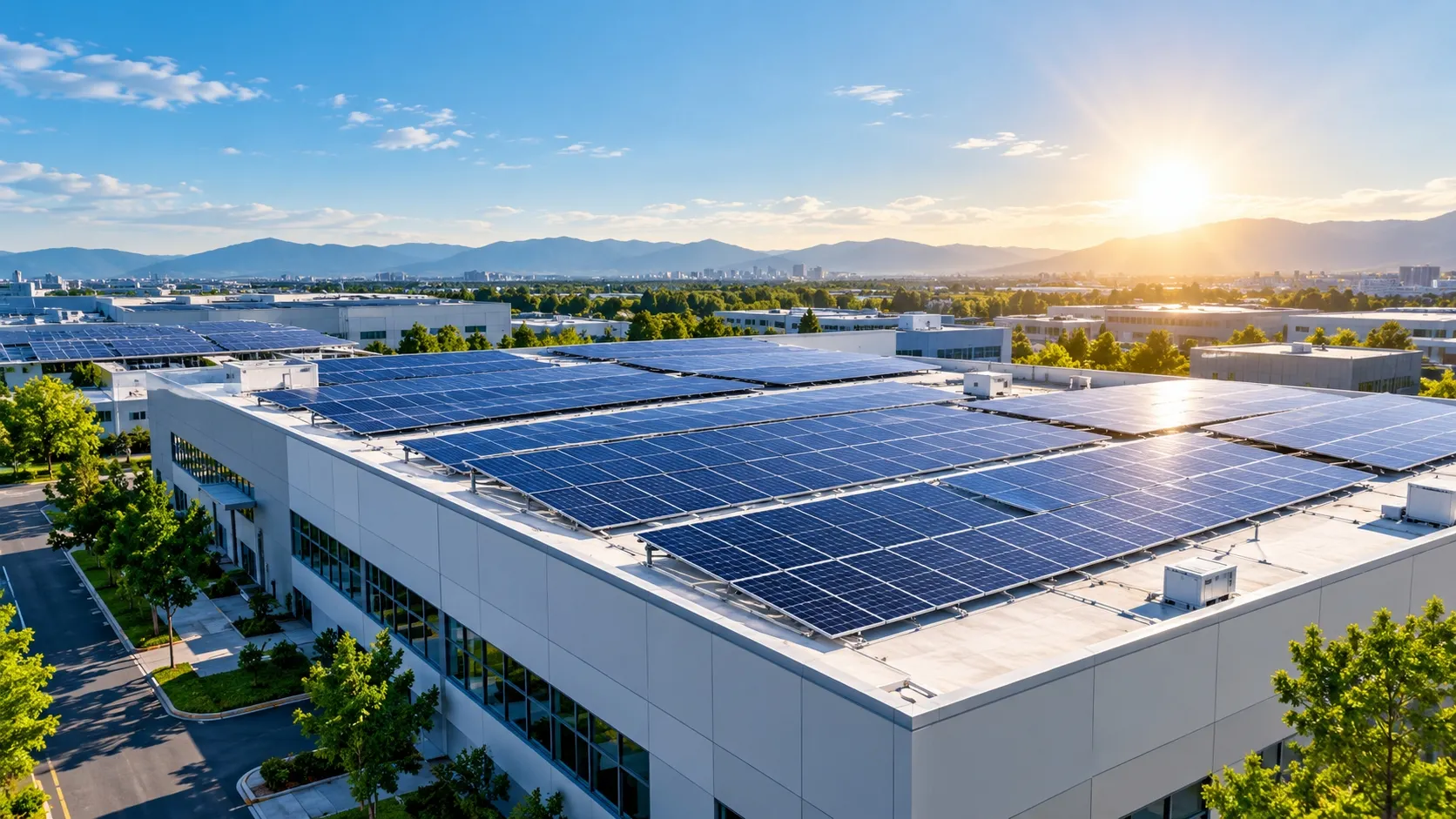
Commercial solar projects typically have higher system sizes, more complicated electrical designs, utility interconnection requirements, and more intricate financial planning when compared to residential solar projects. When deciding whether to invest in solar energy, it is important to understand how commercial solar works and how various factors impact project economics.
What Is Commercial Solar Energy?
Solar energy that is used for commercial or industrial applications is known as commercial solar energy.
Sunlight is converted to direct current (DC) electricity by solar panels. The inverters then change the form of the electricity, from the direct current (DC) to the alternating current (AC) used by the building's electrical equipment and/or supplied to the electricity grid.
Commercial solar panels can be mounted in a variety of ways such as:
- Commercial rooftops
- Manufacturing facilities
- Warehouses and distribution centers
- Agricultural buildings
- Parking lots and solar carports
- Ground-mounted solar sites
- Industrial properties
- Schools and institutional buildings
The system size can be determined based on the electricity demand, installation space, utility needs, solar resource and project goals.
For instance, the PV system for a small commercial building is relatively small while the PV system of an industrial facility with many energy consuming machines is several megawatts or hundreds of kilowatts.
How Does a Commercial Solar System Work?
A typical commercial solar energy system contains several major components.
1. Solar Panels
Solar panels contain photovoltaic cells that convert sunlight into electricity. Modern PV modules are available in different power ratings, efficiency levels, dimensions, and technologies.
Panel selection should consider efficiency, available roof or land area, temperature conditions, degradation rates, warranties, and project economics.
2. Solar Inverters
Solar panels produce DC electricity, while most commercial electrical equipment operates using AC electricity. Solar inverters perform this conversion.
Depending on project size and design, a commercial installation may use string inverters, central inverters, or other inverter architectures.
Inverters can also provide important system-monitoring and grid-interconnection functions.
3. Mounting System
The mounting structure secures solar modules to a roof, ground structure, carport, or other supporting surface.
The design must account for structural loads, wind conditions, roof characteristics, module orientation, and local building requirements.
4. Monitoring Equipment
Commercial solar monitoring systems track electricity production and system performance. Businesses can use monitoring data to identify performance issues, compare actual production with forecasts, and support maintenance decisions.
5. Energy Storage
Battery energy storage can be added to some commercial solar projects.
Solar-plus-storage systems allow businesses to store electricity generated during periods of solar production and use it later. Storage can also support backup power and energy-management strategies, depending on system configuration and utility rules. The U.S. Department of Energy notes that solar combined with storage can contribute to resilience during grid disruptions.
What Are the Benefits of Commercial Solar?
One of the main reasons businesses consider solar is the opportunity to reduce electricity expenses over the long term.
Lower Electricity Costs
A commercial solar system generates electricity onsite, reducing the amount of electricity a business needs to purchase from the utility.
The potential savings depend on factors such as electricity rates, solar production, system size, utility tariffs, and the percentage of generated electricity consumed onsite.
Greater Energy Cost Predictability
Utility electricity prices can change over time. Generating part of a company's electricity onsite can provide greater control over a portion of its energy supply.
For businesses with high and predictable electricity consumption, this can be particularly relevant to long-term energy planning.
Improved Energy Resilience
Solar can be combined with batteries, backup systems, and microgrids to support critical operations during grid interruptions.
However, standard grid-connected solar does not automatically provide electricity during a grid outage. Appropriate equipment and system configuration are required for backup operation.
Sustainability Benefits
Commercial solar can reduce the amount of electricity a business obtains from conventional generation sources.
The DOE identifies solar energy as a technology that can help reduce greenhouse gas emissions while supporting energy security and economic activity.
For companies with sustainability objectives, renewable electricity can also become part of broader environmental reporting and energy-management strategies.
How Much Does Commercial Solar Cost?
There is no single price for a commercial solar installation.
Project costs depend on:
- System capacity
- Solar panel technology
- Inverter selection
- Roof or ground conditions
- Mounting requirements
- Electrical upgrades
- Labor costs
- Permitting
- Interconnection requirements
- Geographic location
- Battery storage
- Project complexity
The U.S. Department of Energy publishes commercial PV cost benchmarks that separate major system cost categories, providing a useful framework for understanding commercial solar economics.
Instead of evaluating a project only by its upfront price, businesses should examine the complete financial model.
Important metrics may include:
- Initial project cost
- Annual electricity savings
- System production
- Operating and maintenance costs
- Financing costs
- Incentives
- Payback period
- Net present value
- Internal rate of return
- Long-term energy costs
A professional solar feasibility analysis should use site-specific electricity consumption and utility-rate information rather than relying on generic estimates.
Commercial Solar Financing Options
Businesses generally have several ways to finance solar projects.
Direct Purchase
With a direct purchase, the business pays for the solar system and becomes its owner.
Ownership can provide greater control over system operation and may allow the business to benefit from applicable tax incentives or depreciation rules.
Solar Loan
A business can finance the system through a loan while retaining ownership of the installation.
This approach may reduce the immediate cash requirement while allowing the company to benefit from system ownership.
Solar Lease
Under a lease arrangement, a third party may own the solar system while the business makes scheduled payments for its use.
The specific financial structure varies by provider and contract.
Power Purchase Agreement
Under a PPA, a third-party provider generally owns the solar installation and sells the electricity it generates to the customer under an agreed pricing structure.
The business may avoid a large upfront capital expenditure, although the contractual terms, electricity price, escalation provisions, maintenance responsibilities, and contract duration should be carefully reviewed.
The right financing model depends on a company's cash position, tax situation, property ownership, energy goals, and preferred level of operational responsibility.
Where Can Commercial Solar Be Installed?
Commercial solar is not limited to traditional rooftops.
Rooftop Solar
Large flat commercial roofs can provide significant space for PV modules. Warehouses, factories, and distribution centers are common examples.
Before installation, engineers should evaluate roof condition, structural capacity, shading, access, drainage, and remaining roof life.
Ground-Mounted Solar
Businesses with available land may consider ground-mounted systems.
Ground-mounted arrays can offer flexibility in orientation and layout but may require additional civil work, site preparation, permitting, fencing, and electrical infrastructure.
Solar Carports
Parking areas can be converted into solar generation sites by installing PV panels above parking spaces.
Solar carports can combine electricity generation with shade and parking infrastructure, making them useful where roof space is limited. The DOE also identifies parking structures and solar-integrated building applications as alternatives to conventional rooftop installations.
What Is the Commercial Solar Installation Process?
A commercial solar project normally follows several stages.
Step 1: Energy Assessment
The project team reviews electricity bills, load profiles, demand patterns, and future energy requirements.
Step 2: Site Evaluation
The roof, land, parking area, electrical infrastructure, shading conditions, and structural characteristics are assessed.
Step 3: System Design
Engineers determine the appropriate panel layout, inverter configuration, electrical equipment, mounting system, and potential battery capacity.
Step 4: Financial Analysis
The expected production, savings, project cost, financing structure, and applicable incentives are evaluated.
Step 5: Permitting and Interconnection
The project must comply with applicable building, electrical, fire, zoning, and utility requirements.
Step 6: Procurement and Construction
Equipment is ordered and the solar system is installed according to the approved engineering design.
Step 7: Inspection and Grid Connection
After construction, the project undergoes required inspections and utility interconnection procedures before normal grid-connected operation.
The timeline can vary considerably. A straightforward commercial rooftop project may take several months, while larger or more complex projects can require substantially longer development periods.
Is Commercial Solar Worth It for a Business?
Commercial solar can be financially attractive for businesses with suitable sites, sufficient electricity consumption, and favorable utility economics. However, the economics are highly project-specific.
Before making a decision, businesses should evaluate:
- Annual electricity consumption
- Electricity rates and demand charges
- Available roof or land area
- Solar resource and shading
- Structural conditions
- Utility interconnection requirements
- Expected system production
- Financing options
- Applicable incentives
- Long-term business plans
Businesses should also consider whether they own or lease the property. A long-term solar investment may require additional planning when a facility is leased or expected to change ownership.
Frequently Asked Questions About Commercial Solar
How large is a commercial solar system?
Commercial solar systems vary significantly in size. Smaller businesses may use systems measured in tens or hundreds of kilowatts, while large industrial or utility-scale projects can reach multiple megawatts.
Can commercial solar eliminate an electricity bill?
Not necessarily. Solar production varies throughout the day and year, and businesses may continue purchasing electricity from the grid. Utility rate structures, system size, onsite consumption, and energy storage all influence the final electricity bill.
Can solar panels power a business at night?
Solar panels do not generate electricity without sufficient sunlight. Batteries or other energy-storage solutions can store solar electricity during the day for later use.
Does commercial solar require battery storage?
No. A commercial PV system can operate without batteries. Storage becomes relevant when a business wants additional energy-management capabilities, backup power, or greater control over when solar-generated electricity is used.
How long does a commercial solar system last?
Solar equipment is engineered for an extended life, but each component will have a different useful life. Typically, solar modules generate electricity for 3 or 4 decades or more, though their performance decreases over time.
Final Thoughts
Commercial solar energy is not simply about putting panels on the roofs of commercial buildings. There are energy use decisions, site considerations, electrical system design, financing decisions, utility regulations, system design and operation decisions, that need to be coordinated in a successful project.
For companies considering solar for 2026, the big question isn't just about the number of panels that can be placed on a building. It's all about how a well-designed system can fit into the company's power usage, budget, building, and future energy plans.
With accurate energy modeling, professional engineering and careful financial analysis, commercial solar can be an important component of a company's long-term energy plan and play a role in reducing operating costs while also providing energy resilience and renewable energy objectives.
Share on Social:


- NEXT: Commercial Solar Panel Installation: Costs & Complete Guide
- NEXT: Null
In This Article
- 1 What Is Commercial Solar Energy?
- 2 How Does a Commercial Solar System Work?
- 3 What Are the Benefits of Commercial Solar?
- 4 How Much Does Commercial Solar Cost?
- 5 Commercial Solar Financing Options
- 6 Where Can Commercial Solar Be Installed?
- 7 What Is the Commercial Solar Installation Process?
- 8 Is Commercial Solar Worth It for a Business?
- 9 Frequently Asked Questions About Commercial Solar
- 10 Final Thoughts
