


Home Solar Electric System With IP66 Outdoor EV Charging: Design and Reliability Considerations
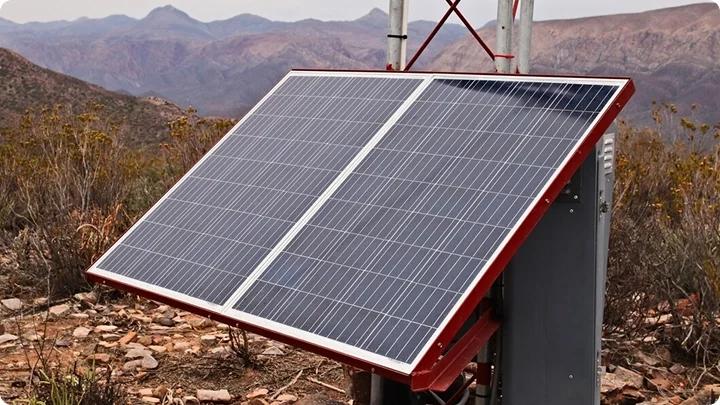
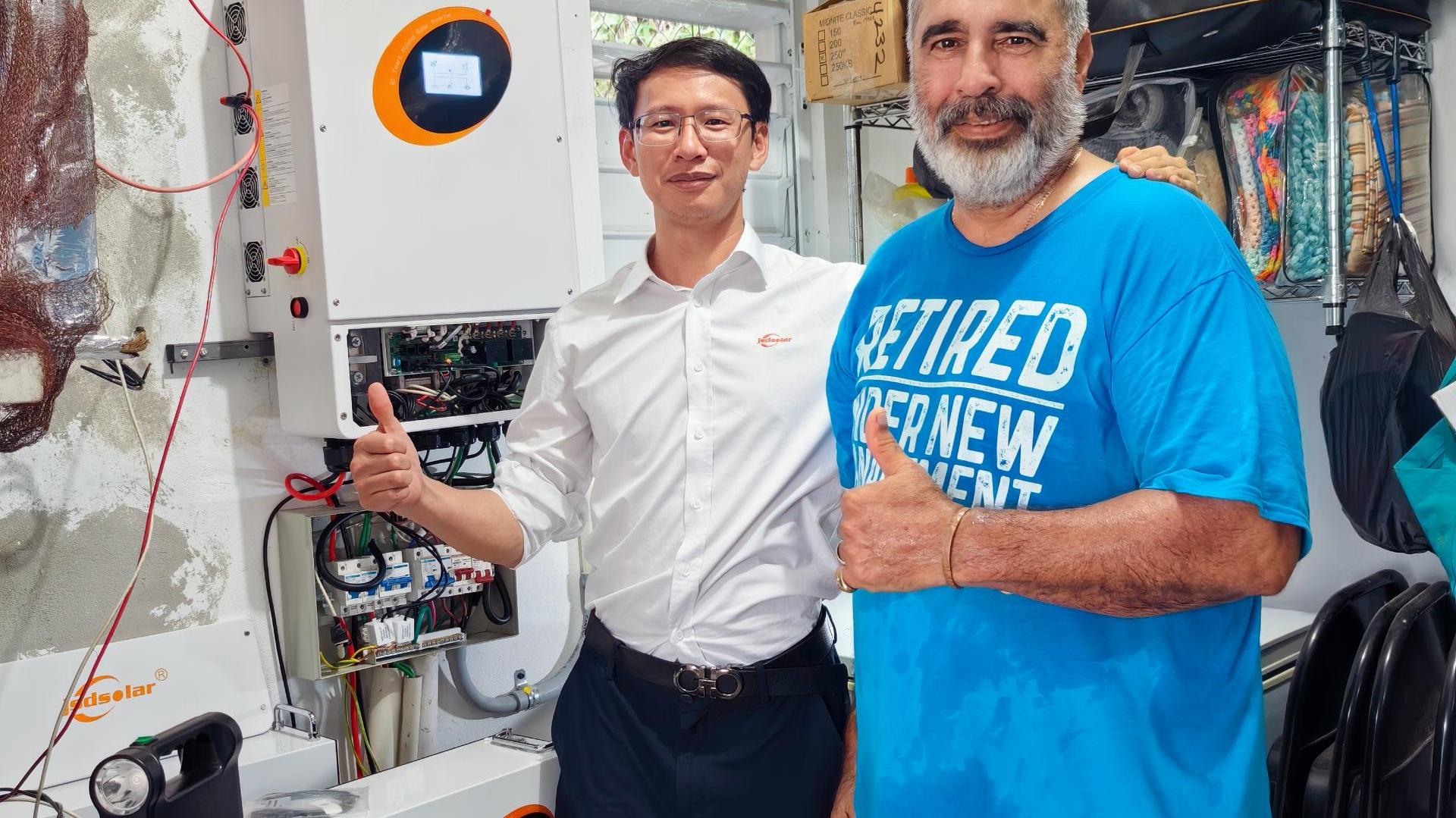
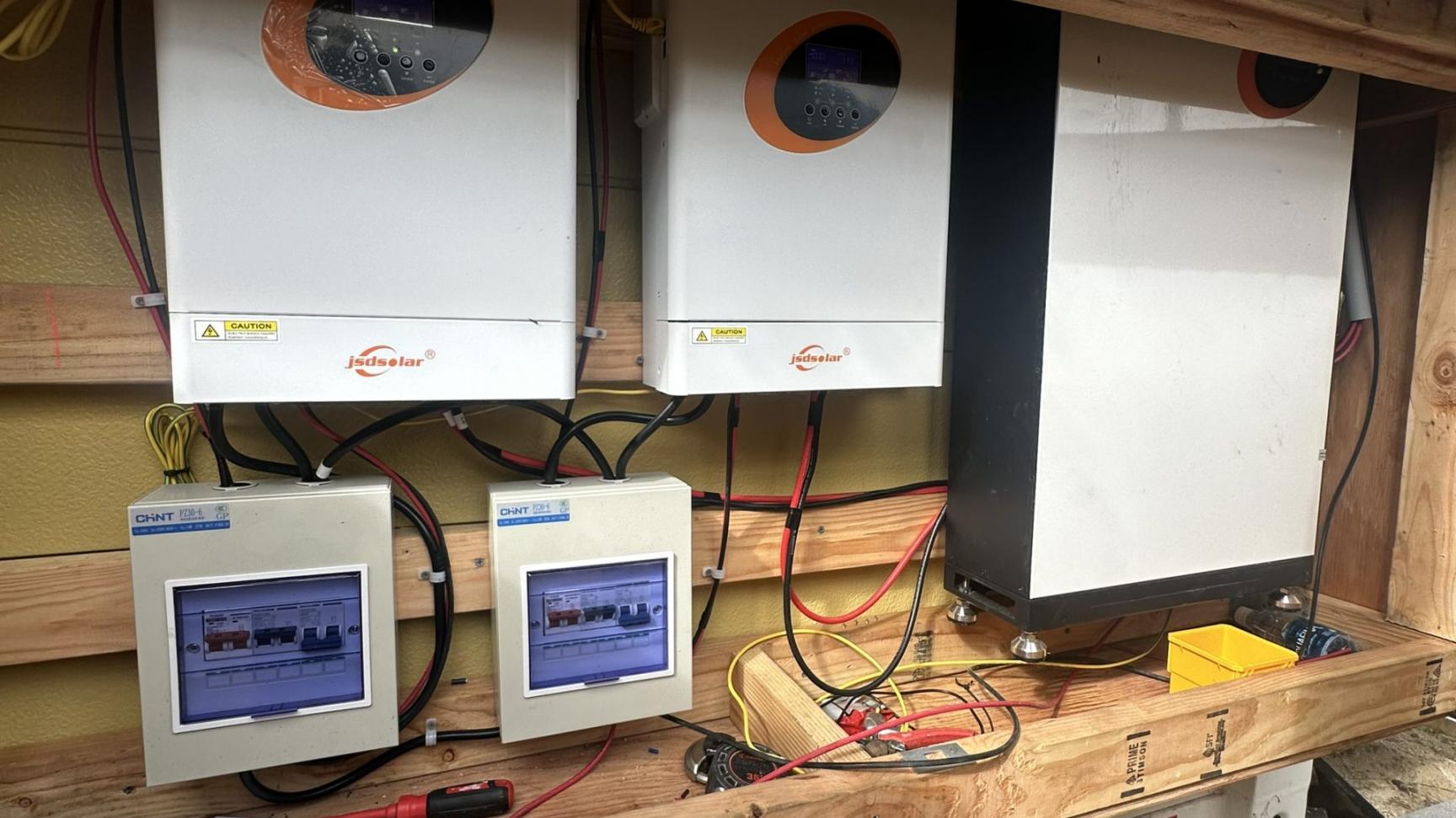
A solar carport charger may pass an IP66 enclosure test yet develop moisture-related electrical faults after installation. The cause is often not the housing itself. Cable glands can lose sealing pressure, improperly routed conduits can channel water into terminals, and repeated thermal cycling can deform gasket interfaces.
For a Home Solar Electric System with outdoor EV charging, enclosure protection must be evaluated alongside electrical loading, temperature rise, photovoltaic output, and installation conditions.
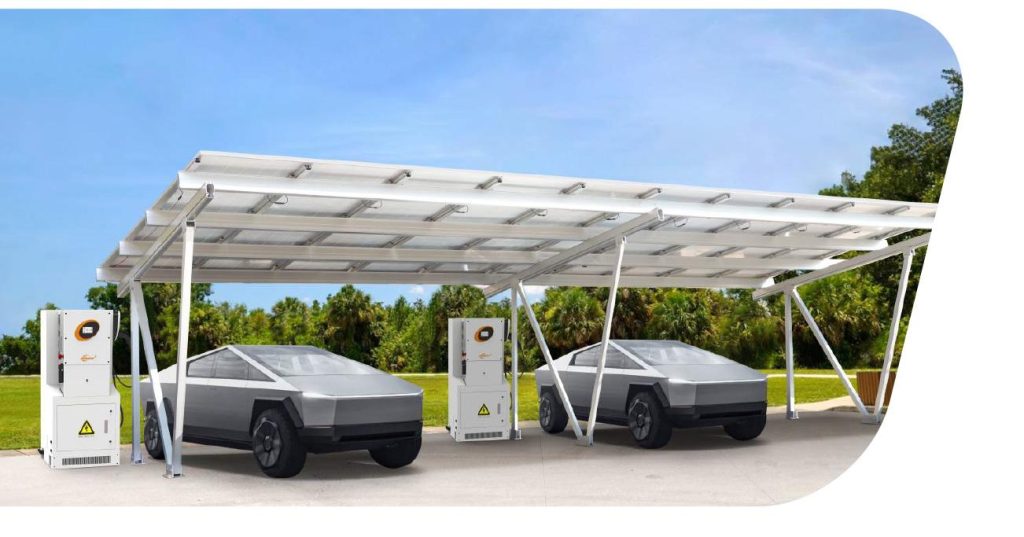
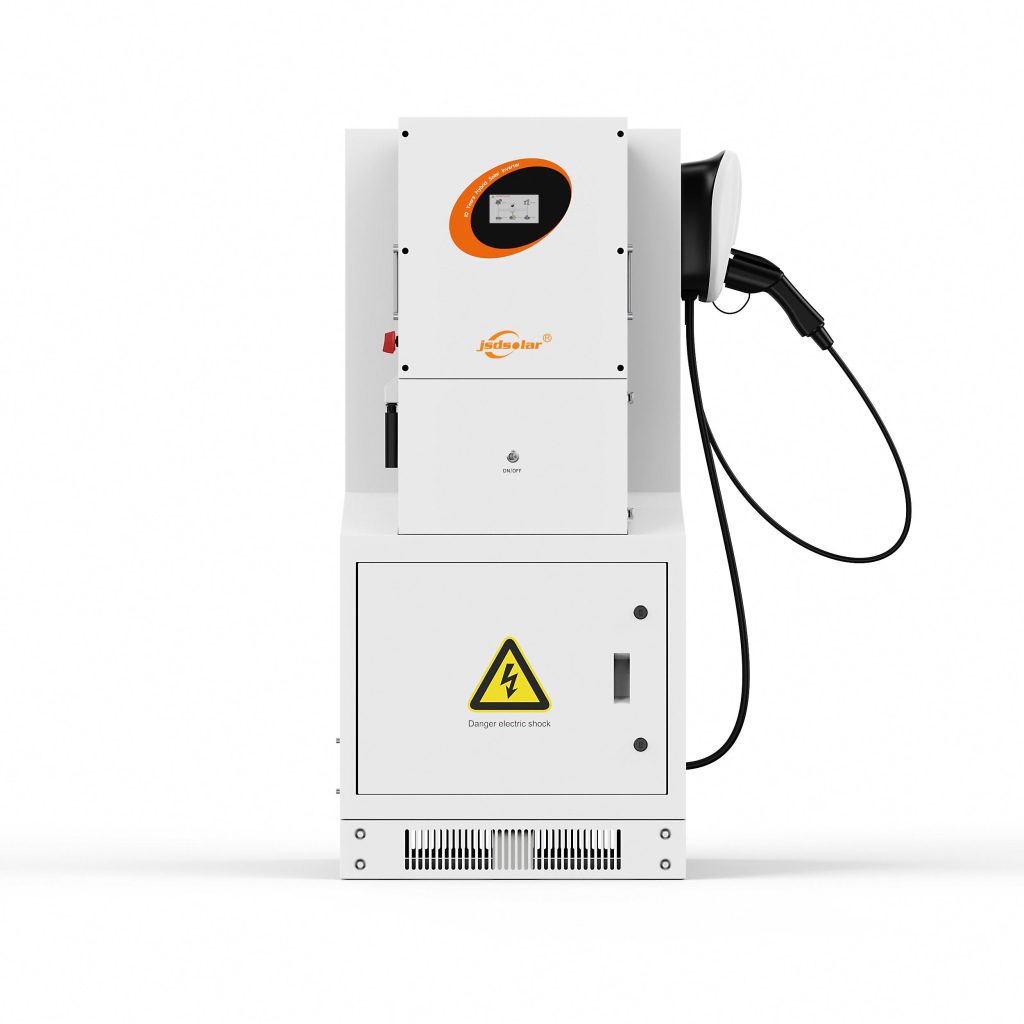
JSDSolar's solar carport configuration combines an IP66-rated 9.6kW AC charger, 8.7kWp photovoltaic array, hybrid inverter, and 32kWh LiFePO4 battery. The equipment ratings describe individual components; they do not automatically establish the environmental or electrical performance of the complete installation.
What IP66 Protection Actually Covers
In the context of the enclosure of electrical or electronic equipment, IP66 identifies two separate requirements.
• IP6X: "Dust-tight." Tested according to ISO 12182.
• IPX6: Protection against powerful water jets, limited ingress permitted.
IP66 enables the protection of internal contactors and control electronics against exposure to dust and rain.
IP66 does not evaluate or identify suitability for immersion, pressure washing, prolonged exposure to the sun, or high-salt-content environments.
IP66 does not require performance of the sealing integrity after maintenance. Compression gaskets can permanently deform, and repeated heating and cooling of the seal can modify the contact pressure between the covers of the enclosure.
JSDSolar offers IP66 protection for the EV charger and IP65 for the hybrid inverter. The product also offers NEMA 4 protection.
Where Does Outdoor EV Charging Equipment Become Vulnerable?
Cable Entries and Connector Exposure
Most installation-related water intrusion follows an interface rather than penetrating an intact enclosure wall.
Three details deserve particular attention:
• Cable glands: Sealing inserts must match the actual cable outside diameter. Incorrect compression can permit moisture migration along the jacket.
• Conduit connections: Top-entry conduit can direct accumulated water toward electrical terminals unless the routing and sealing arrangement prevent it.
• Charging connectors: The EVSE enclosure rating does not necessarily describe protection at the vehicle connector, particularly when disconnected or improperly stored.
Carport installations should provide cable strain relief, suitable connector storage, and routing that avoids standing water.
Condensation is a separate issue. A sealed housing can retain humid air that condenses on cooler internal surfaces during overnight temperature changes. Any pressure-equalization or drainage solution must be compatible with the required enclosure protection.
Thermal Management Inside a Sealed Enclosure
Higher ingress protection can restrict ventilation, transferring greater responsibility for heat dissipation to the enclosure walls and internal thermal design.
Sustained charging can produce heat from resistive losses in the conductor and contacts, as well as the control circuitry. Contact resistance at a loose terminal can lead to a localized hot spot even if the charging current is within the rated limit.
Solar heating of enclosure surfaces can occur in outdoor installations.
When specifying equipment to be used in hot climates, check:
• The charging current derating curve and the maximum operating ambient temperature
• Temperature monitoring and over temperature shutdown
• Terminal torque and conductor temperature rating
• Gasket and seal material aging and resistance to UV exposure
Continuous-load thermal performance. An IP66 test report cannot guarantee continuous-load thermal performance.
Can the Solar and Battery System Support 9.6kW Charging?
The charger rating must be compared with the actual energy supply. JSDSolar's configuration provides the following starting point.
| Component | JSDSolar Specification | Engineering Constraint |
| AC EV charger | 9.6kW, maximum 40A | Available power depends on supply voltage and vehicle acceptance |
| PV array | 15 × 580W = 8.7kWp | Actual output varies with irradiance, module temperature, and system losses |
| Battery | 32kWh LiFePO4, 80% DOD | Usable energy does not establish maximum discharge power |
| Hybrid inverter | 120V/240V split-phase, four MPPT trackers | Continuous AC output and simultaneous load capability require confirmation |
| Equipment enclosures | IP66 EVSE, IP65 inverter | Installation conditions must suit each enclosure |
The Charging Power Mismatch
At 240V and 40A, the maximum nominal AC charging demand is:
240V × 40A = 9.6kW
At 208V, the same current corresponds to approximately 8.32kW.
The photovoltaic array has a nameplate capacity of 8.7kWp. Losses in the inverter and operating temperatures of the modules mean prospective buyers cannot assume that charging at the array's nameplate capacity of 9.6 kWp is achievable. The infrastructure may support solar charging at or above the rated power of the array, but the system controls may limit solar charging.
A 32 kWh battery has a capacity of 25.6 kWh usable DC energy if it can sustain a 80% depth of discharge. Providing a continuous 9.6 kW charge would require the battery system to provide a continuous 200 A. There are conversion losses that must be taken into account, as well as the limits of the battery management system and the inverter.
The onboard charger places a limit on the AC power that a vehicle can accept. In order to charge a vehicle at 9.6 kW, an EVSE at that same power level would need to be used. Charging at that level may not be feasible due to the limits of the onboard charger.
Which Electrical Protections Need Independent Verification?
Water resistant housing will not prevent electric shock from insulation faults, damaged cables, or inadequate protective grounding.
For North American installations, EV charging equipment must be evaluated against appropriate electrical codes.
The NEC allows for a 50A breaker on a 40A continuous load. The final design must consider flexibilty of controls and the ampacity of conductors.
Procurement documentation should also address:
• Ground-fault protection, and personnel protection, including UL 2231.
• EVSE safety evaluation per UL 2594.
• Protection against over/under voltage and other surge conditions.
It is recommended the Buyer verify the compatibility of connectors, including SAE J1772, with any vehicle-specific adapters.
These refer to engineering checks that apply to all outdoor charging stations, not to JSD Solar's certifications.
How Should Buyers Validate Outdoor Charging Reliability?
Buyers must ask for and review evidence and proof that support the enclosure claims.
Ask the supplier to provide an IP66 test report, and confirm the test assembly includes samples of cable entries, covers and sealing components. Separately, evidence of NEMA 4 testing should be provided.
Request evidence of corrosion resistance for exposed fasteners, mounting hardware and enclosure materials for coastal projects.
JSDSolar's carport mounting structures are described as corrosion-resistant. However, suitability for specific projects should be verified.
During commissioning, installers should:
• Check gland compressions and enclosure seals; and inspect cable support and connector storage.
• Check grounding and evaluate insulation using approved tests and procedures.
• Verify settings of charging-current limits and fault protection.
• Observe charger behavior including connection temperatures, and currents and behavior of the charger under load.
• Check and ensure the inverter and battery respond to changes in solar production and EV demand.
• High-pressure spraying of energized equipment is not an appropriate field substitute for standardized ingress testing.
JSDSolar's Outdoor Solar EV Charging Configuration
Buyers requesting a Home Solar Electric System with an outdoor IP66 EV Charging option are referred to JSDSolar for its Solar Carport configuration that includes Solar AC EV Charging, Solar Energy Storage and Solar Energy Generation in one integrated system.
FAQs
Q1. What IP rating does JSDSolar's outdoor EV charger have?
JSDSolar specifies an IP66-rated AC EV charger, providing dust-tight protection and resistance to powerful water jets under IEC 60529 test conditions.
Q2. Is JSDSolar's IP66 EV charger completely waterproof?
No. IP66 does not guarantee protection against immersion, condensation, prolonged UV exposure, or corrosion. Proper cable sealing and installation remain necessary.
Q3. What is the maximum charging power of JSDSolar's solar EV charger?
JSDSolar's AC EV charger is rated at 9.6kW, with a maximum current of 40A. Actual charging power depends on supply voltage and vehicle charging limits.
Q4. How much solar capacity does JSDSolar's EV charging system include?
The configuration uses 15 × 580W solar panels, providing 8.7kWp of installed photovoltaic capacity. Actual production varies with operating conditions.
Q5. What battery capacity is available in JSDSolar's solar carport system?
JSDSolar specifies a 32kWh LiFePO4 battery with 80% depth of discharge, corresponding to approximately 25.6kWh of theoretical usable DC energy before conversion losses.


