


Panel Solar Inverter Charging Modes: Solar First vs Utility First
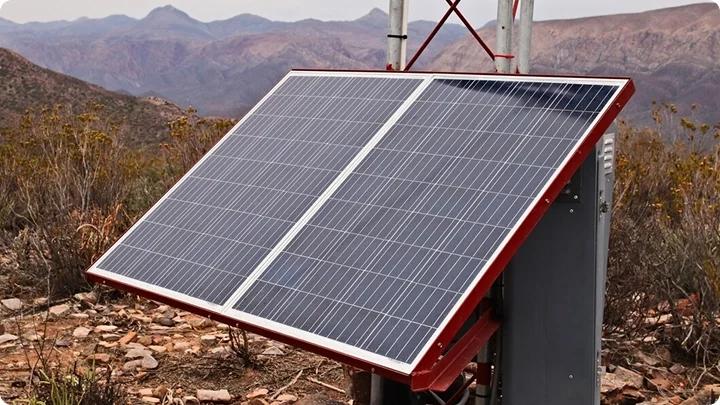

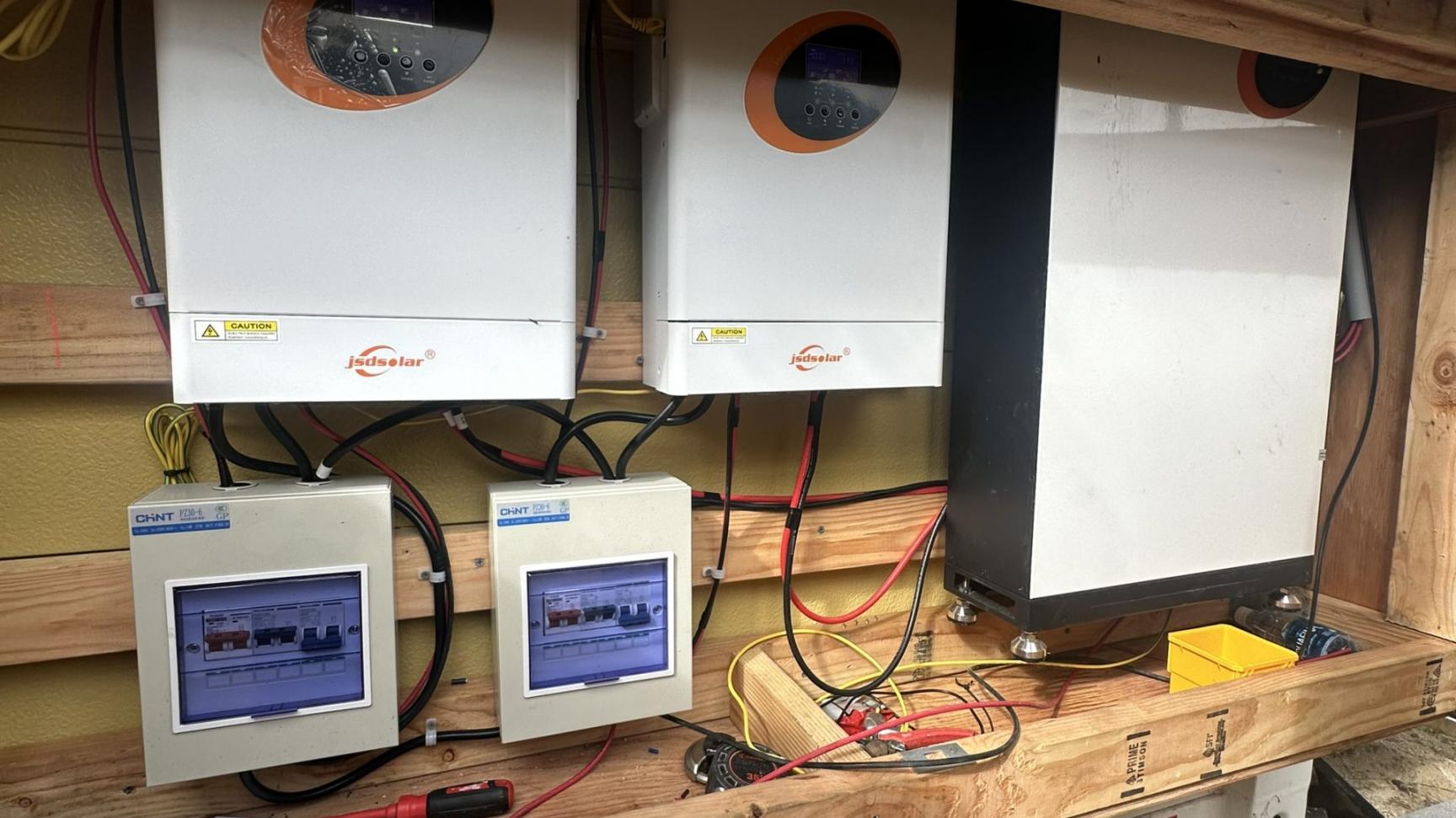
An inverter may run household loads from solar power throughout the afternoon yet leave the battery insufficiently charged for an overnight outage. The opposite can also happen: the battery reaches full charge using utility electricity while usable photovoltaic energy remains available.
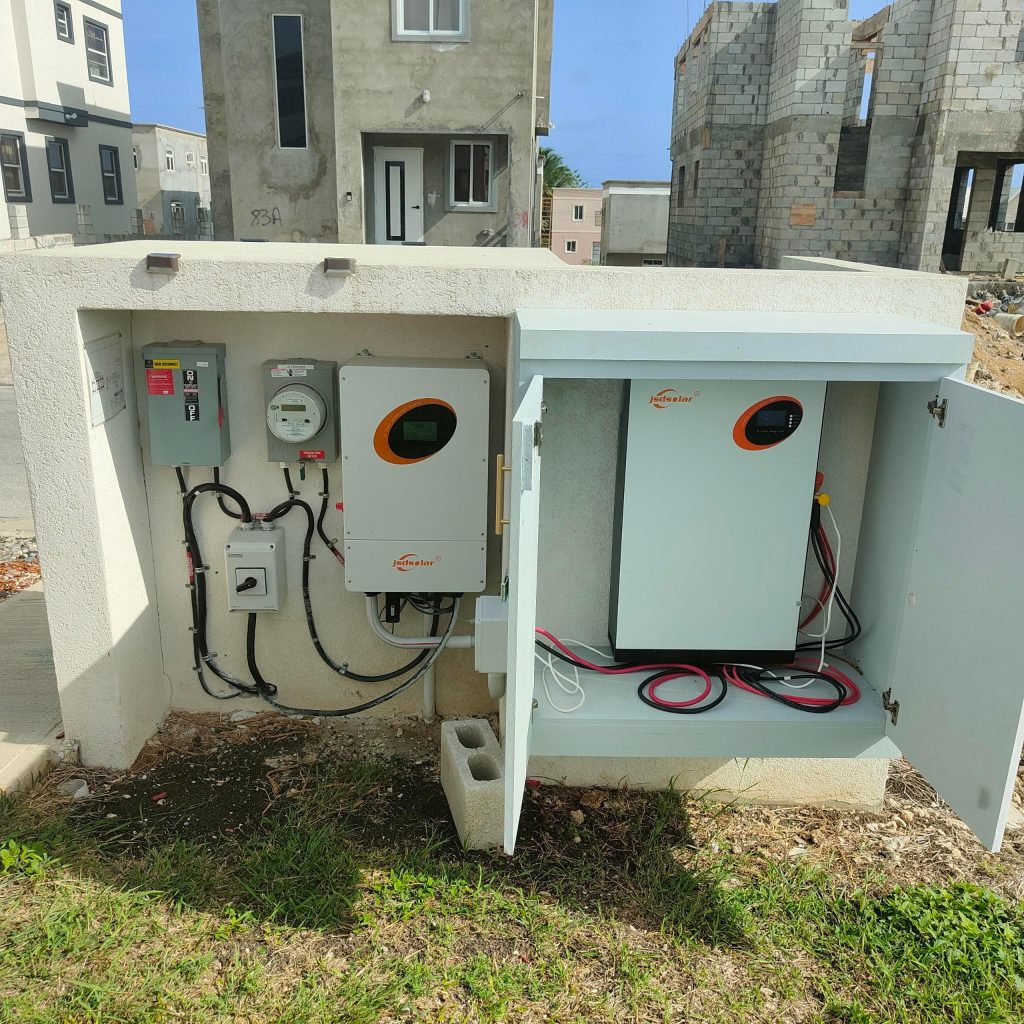
Neither outcome necessarily indicates a faulty MPPT controller. The cause may be the interaction between output-source priority, charger-source priority, and battery protection settings.
For buyers specifying a Panel Solar Inverter, Solar First and Utility First should not be treated as interchangeable charging modes. One setting determines where electricity goes; another determines where it comes from.
1. Why Output Priority and Charging Priority Must Be Configured Separately
A hybrid inverter manages two different power flows: supplying AC loads and charging the DC battery.
Output-source priority determines whether solar, utility, or battery energy supplies connected loads under specified conditions. Charger-source priority determines whether photovoltaic energy, utility input, or both are permitted to recharge the battery.
For example, an inverter operating with utility-first output may still use solar energy for battery charging. Conversely, solar-first output does not guarantee that PV energy will be reserved for charging.
The distinction becomes critical when solar generation falls below daytime consumption.
Suppose a PV array produces 3 kW while the connected load requires 5 kW. The inverter must obtain the remaining power from an allowed source. If the battery supplies the deficit, its state of charge declines even while solar production continues. If utility power supplies the deficit, the battery may retain more capacity for an outage.
Actual power sharing depends on the inverter topology and firmware logic. A source-priority label alone cannot establish whether simultaneous supply is supported.
2. How Solar First and Utility First Affect Battery Charging
Solar First generally gives photovoltaic charging priority and permits AC charging, provided the conditions are programmed in the controller.
Utility First is often used to define load-supply priority, rather than to define battery charging universally. Therefore, battery charging can offer Solar First, Solar and Utility, or solar-only options.
These configurations have different operating outcomes.
| Configuration | Power management behavior | Engineering trade-off |
| Solar First charging | Prefer charging with PV energy; utility charging may be used in fallback | Reliance on AC charging is lowered, but recovery will be PV energy dependent |
| Solar and Utility charging | Charging limits configure both charging sources | Recovery is quicker, but more utility charging is used |
| Only Solar charging | Exclude utility charging for battery charging | No AC charging costs, but may exhaust battery reserve with high solar energy demand |
Utility First output]Prioritize AC loads with utility energy; PV energy may be used in fallback]Battery discharge capacity is preserved; may reduce PV energy utilization
The exact charger-source choices must be checked against the firmware documentation provided.
3. Charging Current Limits Can Override Selected Mode
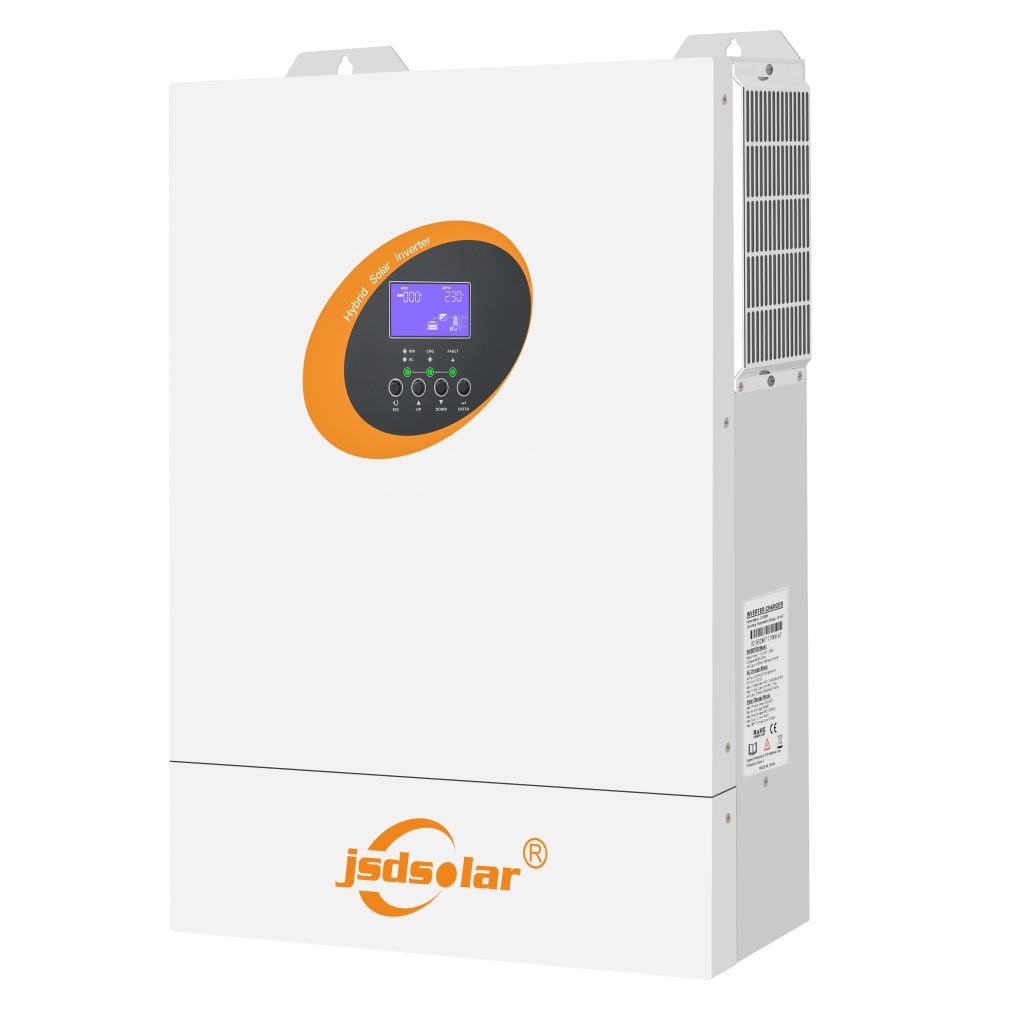
The JSDSolar J11000H has a 48V battery architecture with two MPPT trackers and solar and AC charging.
Its specifications include:
• Maximum solar charging current: 160A
• Maximum AC charging current: 120A
• Maximum combined charging current: 160A
• Maximum PV array power: 5,500W per MPPT
• Battery charging method: CC/CV
• Lithium battery communication: RS485
The 160A combined limit is important for cases when solar and utility charging are enabled at the same time.
A project engineer cannot add the individual 160A and 120A charger limits and specify that a total of 280A can be battery charged. The total should always be below the combined current limit of the inverter.
There can be further battery side restrictions that can lower the charging current limit even further.
For a LiFePO4 installation, available charging current depends on cell temperature, state of charge, battery configuration, and BMS commands. Near the upper charging-voltage limit, a CC/CV controller reduces charging current rather than maintaining maximum output.
Consequently, an underperforming charging system should not immediately be diagnosed as an MPPT problem. The battery may be restricting current, the controller may have entered its constant-voltage stage, or connected loads may be consuming available solar production.
Verification requires simultaneous measurements of PV power, AC input, battery voltage, and battery current—not merely the displayed operating mode.
4. Choosing Priority Settings for Different Load Profiles
Settings for picking priority depend on the relationship between the expected daytime consumption, the size of the battery, and the risk of a power outage.
Daytime Solar Self-Consumption
For sites with substantial daytime demand, solar-priority output can reduce utility imports when sufficient PV generation is available.
However, battery discharge should not be assumed to be economically preferable to utility consumption.
Frequent discharge introduces battery cycling, conversion losses, and eventual replacement costs. Where backup capacity is valuable, solar-first output combined with utility-before-battery fallback may offer a more appropriate operating strategy.
Backup Power for Unstable Utility Supply
Where the objective is maintaining reserve capacity, utility-first output can prevent routine battery discharge while AC input remains acceptable.
The charging-source decision is separate. Solar First charging may reduce utility energy consumption, while combined charging may restore reserve capacity more quickly after repeated outages.
The required recovery time should be calculated using:
• Battery capacity and usable state-of-charge window.
• Available PV generation during the recovery period.
• Maximum permitted battery charging current.
• AC input availability and charger limits.
An installer should also check whether the selected input-voltage acceptance range is appropriate for the connected equipment. Excessively restrictive limits can trigger repeated source transfers on unstable supplies.
5. Battery Communication and Transfer Settings: Common Failure Points
JSDSolar offers RS485 lithium-battery communication for the J11000H.
Before installation, confirm protocol support, charging-voltage requirements, current limits, and the response to communication loss.
Three failure scenarios deserve particular attention:
• Premature transfer to utility: A battery voltage threshold may be reached during a short high-current discharge because of voltage sag, even though usable energy remains.
• Repeated Source Switching: If the transfer and recovery thresholds are not well separated, frequent transitions can occur with variations in battery voltage or solar generation.
• Incomplete battery recovery: The inverter may reduce charging current because of BMS restrictions, insufficient PV output, or charging-stage limits despite a Solar First configuration.
• The J11000H specifies transfer times of 10 ms in its computer setting and 20 ms in its home-appliance setting. Sensitive equipment must be assessed against those interruptions rather than assuming uninterrupted output.
6. Commissioning Tests Before Procurement Acceptance
Acceptance tests verify that actual products demonstrate behaviors of specified products.
• Verify load priority: Determine how the system prioritizes loads based on the input level of solar irradiance.
• Verify charging priority: In case of multiple charging sources being configured, verify the configuration to see if AC charging is permitted.
• Test battery limits: Establish the behaviors of the BMS when limits of battery state of charge (SOC) and/or battery voltage are reached.
• Check current limits: Determine if the system is outside the limits of the Inverter and BMS if charged by both solar and AC at the same time.
• Simulate utility loss: With utility loss, determine if critical loads are permitted to be interrupted.
The JSDSolar J11000H 48V 11kW Hybrid Solar Inverter is a very capable system. We believe the procurement teams considering this unit will find our comments useful when configuring their final system.
FAQs
Q1: What is the difference between Solar First and Utility First in a panel solar inverter?
Solar First prioritizes solar energy, while Utility First generally prioritizes AC utility input for connected loads. Output priority and battery charging priority are separate settings and should be verified individually.
Q2: Which output priority modes does the JSDSolar J11000H support?
The JSDSolar J11000H lists four output priority modes: UTL, SOL, SBU, and SUB. Their exact switching conditions and configurable thresholds should be confirmed using the applicable firmware manual.
Q3: Can the JSDSolar J11000H charge batteries from both solar and utility power?
The J11000H supports solar and AC battery charging, with maximum individual charging currents of 160A and 120A, respectively. Simultaneous charging behavior must be confirmed for the installed firmware.
Q4: What is the maximum combined charging current of the JSDSolar J11000H?
The J11000H specifies a maximum total battery charging current of 160A. Solar and utility charger ratings cannot be added together to exceed this limit.
Q5: Does Utility First prevent solar battery charging?
Not necessarily. Utility First typically describes AC load-supply priority. Solar battery charging may remain available depending on the separately configured charger-source settings.


In This Article
- 1 1. Why Output Priority and Charging Priority Must Be Configured Separately
- 2 2. How Solar First and Utility First Affect Battery Charging
- 3 3. Charging Current Limits Can Override Selected Mode
- 4 4. Choosing Priority Settings for Different Load Profiles
- 5 5. Battery Communication and Transfer Settings: Common Failure Points
- 6 6. Commissioning Tests Before Procurement Acceptance
